EPHA4
Gene Information
- Official Symbol: EPHA4
- Official Name: EPH receptor A4
- Aliases and Previous Symbols: N/A
- Entrez ID: 2043
- UniProt: P54764
- Interactions: BioGRID
- PubMed articles: Open PubMed
- OMIM: Open OMIM
Function Summary
- Entrez Summary: N/A
- UniProt Summary: Receptor tyrosine kinase which binds membrane-bound ephrin family ligands residing on adjacent cells, leading to contact-dependent bidirectional signaling into neighboring cells. The signaling pathway downstream of the receptor is referred to as forward signaling while the signaling pathway downstream of the ephrin ligand is referred to as reverse signaling. Highly promiscuous, it has the unique property among Eph receptors to bind and to be physiologically activated by both GPI-anchored ephrin-A and transmembrane ephrin-B ligands including EFNA1 and EFNB3. Upon activation by ephrin ligands, modulates cell morphology and integrin-dependent cell adhesion through regulation of the Rac, Rap and Rho GTPases activity. Plays an important role in the development of the nervous system controlling different steps of axonal guidance including the establishment of the corticospinal projections. May also control the segregation of motor and sensory axons during neuromuscular circuit development. In addition to its role in axonal guidance plays a role in synaptic plasticity. Activated by EFNA1 phosphorylates CDK5 at 'Tyr-15' which in turn phosphorylates NGEF regulating RHOA and dendritic spine morphogenesis. In the nervous system, plays also a role in repair after injury preventing axonal regeneration and in angiogenesis playing a role in central nervous system vascular formation. Additionally, its promiscuity makes it available to participate in a variety of cell-cell signaling regulating for instance the development of the thymic epithelium. {ECO:0000269|PubMed:17143272}.
Pfam Domains GO Terms
Pfam Domains
| SAM 1 |
| Ephrin lbd |
| SAM 2 |
| Pkinase Tyr |
| fn3 |
| Pkinase |
GO Terms
| positive regulation of Rho guanyl-nucleotide exchange factor activity |
| positive regulation of guanyl-nucleotide exchange factor activity |
| DH domain binding |
| positive regulation of Ras GTPase binding |
| fasciculation of motor neuron axon |
| positive regulation of GTP binding |
| regulation of Ras GTPase binding |
| fasciculation of sensory neuron axon |
| regulation of Rho guanyl-nucleotide exchange factor activity |
| PH domain binding |
| GPI-linked ephrin receptor activity |
| corticospinal tract morphogenesis |
| regulation of guanyl-nucleotide exchange factor activity |
| positive regulation of aspartic-type endopeptidase activity involved in amyloid precursor protein catabolic process |
| positive regulation of aspartic-type peptidase activity |
| regulation of aspartic-type endopeptidase activity involved in amyloid precursor protein catabolic process |
| synapse pruning |
| regulation of aspartic-type peptidase activity |
| nephric duct morphogenesis |
| regulation of GTP binding |
| regulation of modification of synaptic structure |
| negative regulation of long-term synaptic potentiation |
| negative regulation of axon regeneration |
| positive regulation of amyloid-beta formation |
| negative regulation of neuron projection regeneration |
| nephric duct development |
| transmembrane-ephrin receptor activity |
| positive regulation of amyloid precursor protein catabolic process |
| axonal fasciculation |
| neuron projection fasciculation |
| regulation of axon regeneration |
| central nervous system projection neuron axonogenesis |
| protein tyrosine kinase binding |
| regulation of amyloid-beta formation |
| regulation of astrocyte differentiation |
| ephrin receptor binding |
| motor neuron axon guidance |
| axonal growth cone |
| adult walking behavior |
| regulation of neuron projection regeneration |
| walking behavior |
| regulation of amyloid precursor protein catabolic process |
| central nervous system neuron axonogenesis |
| glial cell migration |
| dendritic shaft |
| positive regulation of dendrite morphogenesis |
| cellular response to amyloid-beta |
| regulation of dendritic spine morphogenesis |
| regulation of long-term synaptic potentiation |
| integral component of postsynaptic membrane |
| neuron recognition |
| response to amyloid-beta |
| cochlea development |
| axon terminus |
| transmembrane receptor protein tyrosine kinase activity |
| positive regulation of protein tyrosine kinase activity |
| integral component of presynaptic membrane |
| adherens junction |
| regulation of glial cell differentiation |
| filopodium |
| negative regulation of proteolysis involved in cellular protein catabolic process |
| positive regulation of JUN kinase activity |
| positive regulation of dendrite development |
| regulation of dendritic spine development |
| adult locomotory behavior |
| neuromuscular junction |
| central nervous system neuron development |
| kinase activity |
| amyloid-beta binding |
| Schaffer collateral - CA1 synapse |
| negative regulation of response to wounding |
| regulation of JUN kinase activity |
| ephrin receptor signaling pathway |
| negative regulation of cellular protein catabolic process |
| regulation of protein tyrosine kinase activity |
| regulation of dendrite morphogenesis |
| positive regulation of protein binding |
| regulation of postsynapse organization |
| regulation of gliogenesis |
| kidney epithelium development |
| negative regulation of protein catabolic process |
| perikaryon |
| positive regulation of JNK cascade |
| peptidyl-tyrosine phosphorylation |
| adult behavior |
| peptidyl-tyrosine modification |
| dendritic spine |
| regulation of dendrite development |
| positive regulation of cellular amide metabolic process |
| early endosome membrane |
| negative regulation of neuron projection development |
| positive regulation of cell morphogenesis involved in differentiation |
| mitochondrial outer membrane |
| positive regulation of stress-activated MAPK cascade |
| regulation of response to wounding |
| positive regulation of stress-activated protein kinase signaling cascade |
| positive regulation of endopeptidase activity |
| positive regulation of binding |
| protein stabilization |
| central nervous system neuron differentiation |
| negative regulation of cell projection organization |
| regulation of axonogenesis |
| regulation of JNK cascade |
| regulation of synaptic plasticity |
| positive regulation of peptidyl-tyrosine phosphorylation |
| positive regulation of peptidase activity |
| protein autophosphorylation |
| inner ear development |
| locomotory behavior |
| receptor complex |
| gliogenesis |
| regulation of proteolysis involved in cellular protein catabolic process |
| regulation of synapse organization |
| regulation of protein binding |
| ear development |
| negative regulation of neuron differentiation |
| regulation of synapse structure or activity |
| regulation of stress-activated MAPK cascade |
| regulation of stress-activated protein kinase signaling cascade |
| cell recognition |
| protein kinase activity |
| regulation of cellular protein catabolic process |
| regulation of peptidyl-tyrosine phosphorylation |
| postsynaptic density |
| negative regulation of cellular catabolic process |
| axon guidance |
| neuron projection guidance |
| positive regulation of MAP kinase activity |
| kidney development |
| synapse organization |
| positive regulation of neuron projection development |
| renal system development |
| regulation of protein stability |
| negative regulation of neurogenesis |
| axon |
| regulation of cell morphogenesis involved in differentiation |
| epithelial tube morphogenesis |
| negative regulation of catabolic process |
| negative regulation of nervous system development |
| urogenital system development |
| neuron projection |
| cellular response to peptide |
| negative regulation of cell development |
| positive regulation of protein serine/threonine kinase activity |
| regulation of MAP kinase activity |
| glutamatergic synapse |
| negative regulation of proteolysis |
| positive regulation of proteolysis |
| negative regulation of response to external stimulus |
| positive regulation of neuron differentiation |
| axonogenesis |
| regulation of binding |
| positive regulation of cell projection organization |
| regulation of protein catabolic process |
| cellular component disassembly |
| regulation of cellular amide metabolic process |
| axon development |
| regulation of endopeptidase activity |
| dendrite |
| morphogenesis of an epithelium |
| cell morphogenesis involved in neuron differentiation |
| modulation of chemical synaptic transmission |
| regulation of trans-synaptic signaling |
| regulation of peptidase activity |
| positive regulation of neurogenesis |
| response to peptide |
| neuron projection morphogenesis |
| regulation of GTPase activity |
| plasma membrane bounded cell projection morphogenesis |
| regulation of cell morphogenesis |
| cell projection morphogenesis |
| regulation of neuron projection development |
| transmembrane receptor protein tyrosine kinase signaling pathway |
| cell part morphogenesis |
| regulation of protein serine/threonine kinase activity |
| positive regulation of protein kinase activity |
| positive regulation of nervous system development |
| positive regulation of cell development |
| positive regulation of MAPK cascade |
| sensory organ development |
| chemotaxis |
| taxis |
| cell morphogenesis involved in differentiation |
| tissue morphogenesis |
| behavior |
| positive regulation of kinase activity |
| cellular response to organonitrogen compound |
| cell surface |
| tube morphogenesis |
| regulation of neuron differentiation |
| positive regulation of transferase activity |
| cellular response to nitrogen compound |
| neuron projection development |
| regulation of plasma membrane bounded cell projection organization |
| negative regulation of cellular component organization |
| regulation of cell projection organization |
| negative regulation of cell differentiation |
| enzyme linked receptor protein signaling pathway |
| cell morphogenesis |
| regulation of proteolysis |
| regulation of cellular response to stress |
| regulation of MAPK cascade |
| positive regulation of hydrolase activity |
| regulation of protein kinase activity |
| neuron development |
| regulation of neurogenesis |
| cellular component morphogenesis |
| regulation of cellular catabolic process |
| tube development |
| regulation of kinase activity |
| peptidyl-amino acid modification |
| regulation of nervous system development |
| cell adhesion |
| regulation of cell development |
| biological adhesion |
| negative regulation of developmental process |
| cell migration |
| positive regulation of cell differentiation |
| protein phosphorylation |
| regulation of transferase activity |
| central nervous system development |
| Golgi apparatus |
| regulation of catabolic process |
| response to organonitrogen compound |
| neuron differentiation |
| endoplasmic reticulum |
| positive regulation of protein phosphorylation |
| positive regulation of intracellular signal transduction |
| negative regulation of cellular protein metabolic process |
| cellular response to oxygen-containing compound |
| positive regulation of phosphorylation |
| regulation of anatomical structure morphogenesis |
| identical protein binding |
| localization of cell |
| cell motility |
| response to nitrogen compound |
| regulation of response to external stimulus |
| negative regulation of protein metabolic process |
| epithelium development |
| plasma membrane bounded cell projection organization |
| positive regulation of phosphate metabolic process |
| positive regulation of phosphorus metabolic process |
| cell projection organization |
| negative regulation of multicellular organismal process |
| positive regulation of cellular component organization |
| cellular response to endogenous stimulus |
| positive regulation of protein modification process |
| regulation of hydrolase activity |
| phosphorylation |
| locomotion |
| positive regulation of developmental process |
| integral component of plasma membrane |
| positive regulation of catalytic activity |
| regulation of protein phosphorylation |
| response to endogenous stimulus |
| regulation of response to stress |
| ATP binding |
| generation of neurons |
| movement of cell or subcellular component |
| response to oxygen-containing compound |
| regulation of phosphorylation |
| positive regulation of cellular protein metabolic process |
| negative regulation of response to stimulus |
| neurogenesis |
| cell development |
| positive regulation of signal transduction |
| positive regulation of protein metabolic process |
| positive regulation of multicellular organismal process |
| tissue development |
| positive regulation of molecular function |
| regulation of phosphate metabolic process |
| regulation of phosphorus metabolic process |
| regulation of cell differentiation |
| positive regulation of cell communication |
| positive regulation of signaling |
| regulation of intracellular signal transduction |
| regulation of protein modification process |
CRISPR Data
Compound Hit Most Correlated Genes in Chemogenomics Tissues where Essential in the Avana Dataset (DepMap 20Q1)
Compound Hit
| Screen | Score |
|---|---|
| GW501516 25μM R06 exp285 | -1.92 |
| TRAIL 5ng/ml R00 exp35 | -1.87 |
Most Correlated Genes in Chemogenomics
No correlation found to any other genes in chemogenomics.
Tissues where Essential in the Avana Dataset (DepMap 20Q1)
Global Fraction of Cell Lines Where Essential: 0/739
| Tissue | Fraction Of Cell Lines Where Essential |
|---|---|
| 1290807.0 | 0/1 |
| 909776.0 | 0/1 |
| bile duct | 0/28 |
| blood | 0/28 |
| bone | 0/26 |
| breast | 0/33 |
| central nervous system | 0/56 |
| cervix | 0/4 |
| colorectal | 0/17 |
| esophagus | 0/13 |
| fibroblast | 0/1 |
| gastric | 0/16 |
| kidney | 0/21 |
| liver | 0/20 |
| lung | 0/75 |
| lymphocyte | 0/16 |
| ovary | 0/26 |
| pancreas | 0/24 |
| peripheral nervous system | 0/16 |
| plasma cell | 0/15 |
| prostate | 0/1 |
| skin | 0/24 |
| soft tissue | 0/9 |
| thyroid | 0/2 |
| upper aerodigestive | 0/22 |
| urinary tract | 0/29 |
| uterus | 0/5 |
Essentiality in NALM6
- Essentiality Rank: 8901
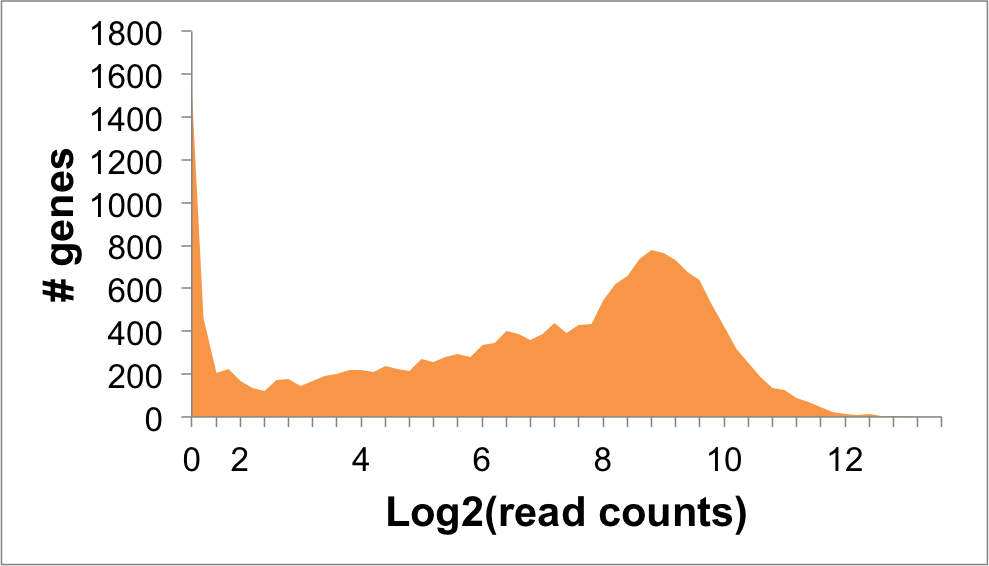
- Expression level (log2 read counts): 0.31
Expression Distribution
EPHA4 Expression in NALM6 Cells: 0.31