PELI1
Gene Information
- Official Symbol: PELI1
- Official Name: pellino E3 ubiquitin protein ligase 1
- Aliases and Previous Symbols: N/A
- Entrez ID: 57162
- UniProt: Q96FA3
- Interactions: BioGRID
- PubMed articles: Open PubMed
- OMIM: Open OMIM
Function Summary
- Entrez Summary: N/A
- UniProt Summary: E3 ubiquitin ligase catalyzing the covalent attachment of ubiquitin moieties onto substrate proteins. Involved in the TLR and IL-1 signaling pathways via interaction with the complex containing IRAK kinases and TRAF6. Mediates 'Lys-63'-linked polyubiquitination of IRAK1 allowing subsequent NF-kappa-B activation. {ECO:0000269|PubMed:12496252, ECO:0000269|PubMed:17675297}.
Pfam Domains GO Terms
Pfam Domains
| Pellino |
GO Terms
| regulation of Toll signaling pathway |
| Toll signaling pathway |
| positive regulation of toll-like receptor 3 signaling pathway |
| positive regulation of toll-like receptor 4 signaling pathway |
| regulation of toll-like receptor 3 signaling pathway |
| negative regulation of necroptotic process |
| negative regulation of programmed necrotic cell death |
| ubiquitin-ubiquitin ligase activity |
| negative regulation of necrotic cell death |
| regulation of necroptotic process |
| regulation of programmed necrotic cell death |
| regulation of toll-like receptor 4 signaling pathway |
| positive regulation of toll-like receptor signaling pathway |
| regulation of necrotic cell death |
| protein K63-linked ubiquitination |
| positive regulation of B cell proliferation |
| response to dsRNA |
| protein K48-linked ubiquitination |
| negative regulation of T cell proliferation |
| regulation of B cell proliferation |
| regulation of toll-like receptor signaling pathway |
| negative regulation of lymphocyte proliferation |
| negative regulation of mononuclear cell proliferation |
| negative regulation of leukocyte proliferation |
| negative regulation of NF-kappaB transcription factor activity |
| interleukin-1-mediated signaling pathway |
| negative regulation of T cell activation |
| positive regulation of protein ubiquitination |
| negative regulation of leukocyte cell-cell adhesion |
| positive regulation of lymphocyte proliferation |
| positive regulation of mononuclear cell proliferation |
| positive regulation of protein modification by small protein conjugation or removal |
| positive regulation of leukocyte proliferation |
| negative regulation of lymphocyte activation |
| regulation of T cell proliferation |
| negative regulation of DNA-binding transcription factor activity |
| positive regulation of B cell activation |
| negative regulation of cell-cell adhesion |
| cellular response to interleukin-1 |
| negative regulation of leukocyte activation |
| positive regulation of I-kappaB kinase/NF-kappaB signaling |
| negative regulation of cell activation |
| response to interleukin-1 |
| regulation of protein ubiquitination |
| regulation of B cell activation |
| regulation of lymphocyte proliferation |
| regulation of mononuclear cell proliferation |
| ubiquitin protein ligase activity |
| regulation of leukocyte proliferation |
| regulation of protein modification by small protein conjugation or removal |
| regulation of I-kappaB kinase/NF-kappaB signaling |
| negative regulation of cell adhesion |
| regulation of leukocyte cell-cell adhesion |
| protein polyubiquitination |
| response to lipopolysaccharide |
| regulation of T cell activation |
| proteasome-mediated ubiquitin-dependent protein catabolic process |
| response to molecule of bacterial origin |
| positive regulation of innate immune response |
| proteasomal protein catabolic process |
| positive regulation of lymphocyte activation |
| positive regulation of response to biotic stimulus |
| regulation of cell-cell adhesion |
| positive regulation of leukocyte activation |
| positive regulation of cell activation |
| regulation of DNA-binding transcription factor activity |
| negative regulation of immune system process |
| positive regulation of cytokine production |
| regulation of innate immune response |
| positive regulation of defense response |
| positive regulation of multi-organism process |
| regulation of lymphocyte activation |
| regulation of response to biotic stimulus |
| ubiquitin-dependent protein catabolic process |
| modification-dependent protein catabolic process |
| modification-dependent macromolecule catabolic process |
| proteolysis involved in cellular protein catabolic process |
| regulation of leukocyte activation |
| positive regulation of response to external stimulus |
| cellular protein catabolic process |
| regulation of cell activation |
| cytokine-mediated signaling pathway |
| negative regulation of cell population proliferation |
| regulation of cell adhesion |
| protein catabolic process |
| protein ubiquitination |
| response to bacterium |
| regulation of cytokine production |
| regulation of defense response |
| protein modification by small protein conjugation |
| regulation of multi-organism process |
| response to lipid |
| positive regulation of immune response |
| negative regulation of programmed cell death |
| cellular macromolecule catabolic process |
| positive regulation of cell population proliferation |
| response to organic cyclic compound |
| protein modification by small protein conjugation or removal |
| negative regulation of cell death |
| cellular response to cytokine stimulus |
| positive regulation of intracellular signal transduction |
| macromolecule catabolic process |
| organonitrogen compound catabolic process |
| response to nitrogen compound |
| regulation of response to external stimulus |
| response to cytokine |
| negative regulation of molecular function |
| positive regulation of immune system process |
| regulation of immune response |
| positive regulation of protein modification process |
| proteolysis |
| response to other organism |
| response to external biotic stimulus |
| response to biotic stimulus |
| regulation of response to stress |
| response to oxygen-containing compound |
| regulation of programmed cell death |
| positive regulation of cellular protein metabolic process |
| regulation of cell population proliferation |
| regulation of immune system process |
| positive regulation of signal transduction |
| regulation of cell death |
| positive regulation of protein metabolic process |
| positive regulation of multicellular organismal process |
| organic substance catabolic process |
| cellular catabolic process |
| positive regulation of cell communication |
| positive regulation of signaling |
| regulation of intracellular signal transduction |
| regulation of protein modification process |
CRISPR Data
Compound Hit Most Correlated Genes in Chemogenomics Tissues where Essential in the Avana Dataset (DepMap 20Q1)
Compound Hit
| Screen | Score |
|---|---|
| ZLN024 50μM R08 exp538 | 1.74 |
| B02 10μM R08 exp453 | 1.83 |
Most Correlated Genes in Chemogenomics
No correlation found to any other genes in chemogenomics.
Tissues where Essential in the Avana Dataset (DepMap 20Q1)
Global Fraction of Cell Lines Where Essential: 0/739
| Tissue | Fraction Of Cell Lines Where Essential |
|---|---|
| 1290807.0 | 0/1 |
| 909776.0 | 0/1 |
| bile duct | 0/28 |
| blood | 0/28 |
| bone | 0/26 |
| breast | 0/33 |
| central nervous system | 0/56 |
| cervix | 0/4 |
| colorectal | 0/17 |
| esophagus | 0/13 |
| fibroblast | 0/1 |
| gastric | 0/16 |
| kidney | 0/21 |
| liver | 0/20 |
| lung | 0/75 |
| lymphocyte | 0/16 |
| ovary | 0/26 |
| pancreas | 0/24 |
| peripheral nervous system | 0/16 |
| plasma cell | 0/15 |
| prostate | 0/1 |
| skin | 0/24 |
| soft tissue | 0/9 |
| thyroid | 0/2 |
| upper aerodigestive | 0/22 |
| urinary tract | 0/29 |
| uterus | 0/5 |
Essentiality in NALM6
- Essentiality Rank: 13303
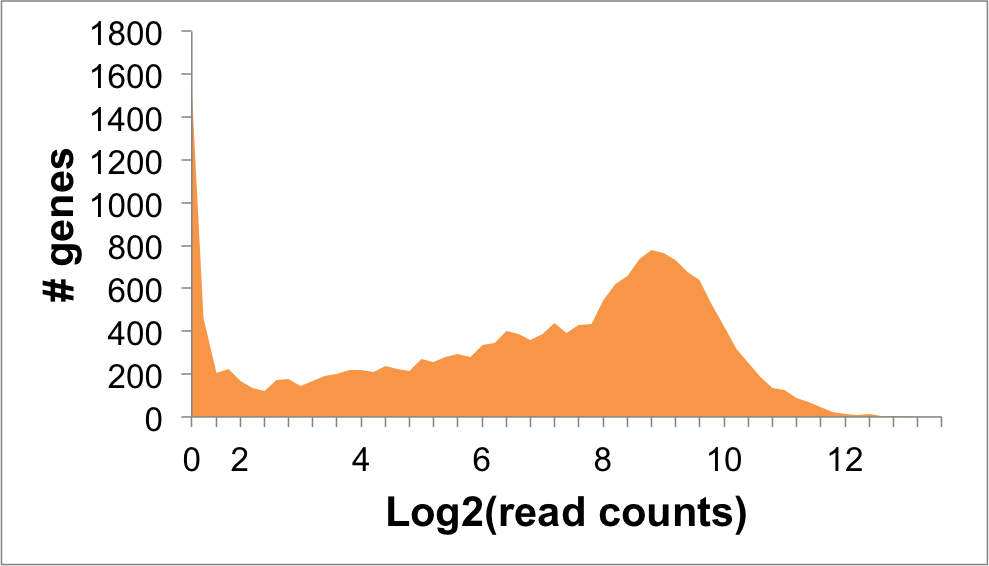
- Expression level (log2 read counts): 4.2
Expression Distribution
PELI1 Expression in NALM6 Cells: 4.2