ACVRL1
Gene Information
- Official Symbol: ACVRL1
- Official Name: activin A receptor like type 1
- Aliases and Previous Symbols: N/A
- Entrez ID: 94
- UniProt: P37023
- Interactions: BioGRID
- PubMed articles: Open PubMed
- OMIM: Open OMIM
Function Summary
- Entrez Summary: This gene encodes a type I cell-surface receptor for the TGF-beta superfamily of ligands. It shares with other type I receptors a high degree of similarity in serine-threonine kinase subdomains, a glycine- and serine-rich region (called the GS domain) preceding the kinase domain, and a short C-terminal tail. The encoded protein, sometimes termed ALK1, shares similar domain structures with other closely related ALK or activin receptor-like kinase proteins that form a subfamily of receptor serine/threonine kinases. Mutations in this gene are associated with hemorrhagic telangiectasia type 2, also known as Rendu-Osler-Weber syndrome 2. [provided by RefSeq, Jul 2008].
- UniProt Summary: Type I receptor for TGF-beta family ligands BMP9/GDF2 and BMP10 and important regulator of normal blood vessel development. On ligand binding, forms a receptor complex consisting of two type II and two type I transmembrane serine/threonine kinases. Type II receptors phosphorylate and activate type I receptors which autophosphorylate, then bind and activate SMAD transcriptional regulators. May bind activin as well. {ECO:0000269|PubMed:22718755, ECO:0000269|PubMed:22799562, ECO:0000269|PubMed:26176610}.
Pfam Domains GO Terms
Pfam Domains
| TGF beta GS |
| Pkinase Tyr |
| Pkinase |
GO Terms
| activin receptor activity, type I |
| endocardial cushion to mesenchymal transition |
| BMP receptor activity |
| transforming growth factor beta receptor activity, type I |
| blood vessel endothelial cell proliferation involved in sprouting angiogenesis |
| activin receptor complex |
| lymphatic endothelial cell differentiation |
| transmembrane receptor protein serine/threonine kinase activity |
| dorsal aorta morphogenesis |
| blood vessel maturation |
| negative regulation of endothelial cell differentiation |
| dorsal aorta development |
| wound healing, spreading of epidermal cells |
| endothelial tube morphogenesis |
| lymphangiogenesis |
| morphogenesis of an endothelium |
| activin binding |
| lymph vessel morphogenesis |
| venous blood vessel development |
| transforming growth factor beta-activated receptor activity |
| positive regulation of endothelial cell differentiation |
| retina vasculature development in camera-type eye |
| negative regulation of focal adhesion assembly |
| negative regulation of adherens junction organization |
| positive regulation of chondrocyte differentiation |
| lymph vessel development |
| transforming growth factor beta binding |
| endothelial cell proliferation |
| negative regulation of cell junction assembly |
| wound healing, spreading of cells |
| epiboly involved in wound healing |
| activin receptor signaling pathway |
| epiboly |
| cardiac epithelial to mesenchymal transition |
| aorta morphogenesis |
| positive regulation of BMP signaling pathway |
| negative regulation of blood vessel endothelial cell migration |
| growth factor binding |
| blood vessel remodeling |
| positive regulation of cartilage development |
| regulation of endothelial cell differentiation |
| endocardial cushion morphogenesis |
| negative regulation of endothelial cell proliferation |
| negative regulation of cell-matrix adhesion |
| negative regulation of DNA biosynthetic process |
| negative regulation of epithelial cell differentiation |
| endocardial cushion development |
| positive regulation of pathway-restricted SMAD protein phosphorylation |
| negative regulation of endothelial cell migration |
| morphogenesis of an epithelial sheet |
| mesenchyme morphogenesis |
| aorta development |
| regulation of chondrocyte differentiation |
| SMAD binding |
| sprouting angiogenesis |
| positive regulation of epithelial cell differentiation |
| regulation of cell-substrate junction assembly |
| regulation of focal adhesion assembly |
| artery morphogenesis |
| regulation of pathway-restricted SMAD protein phosphorylation |
| negative regulation of cell-substrate adhesion |
| negative regulation of epithelial cell migration |
| regulation of adherens junction organization |
| regulation of cartilage development |
| epithelial to mesenchymal transition |
| endothelial cell differentiation |
| artery development |
| epithelial cell proliferation |
| regulation of BMP signaling pathway |
| regulation of cell junction assembly |
| BMP signaling pathway |
| regulation of blood vessel endothelial cell migration |
| positive regulation of endothelial cell proliferation |
| endothelium development |
| tissue remodeling |
| transforming growth factor beta receptor signaling pathway |
| positive regulation of transmembrane receptor protein serine/threonine kinase signaling pathway |
| response to BMP |
| cellular response to BMP stimulus |
| regulation of DNA replication |
| regulation of DNA biosynthetic process |
| regulation of cell-matrix adhesion |
| negative regulation of DNA metabolic process |
| negative regulation of epithelial cell proliferation |
| regulation of endothelial cell proliferation |
| anatomical structure maturation |
| retina development in camera-type eye |
| regulation of epithelial cell differentiation |
| cellular response to transforming growth factor beta stimulus |
| mesenchymal cell differentiation |
| regulation of endothelial cell migration |
| response to transforming growth factor beta |
| positive regulation of angiogenesis |
| regulation of blood pressure |
| negative regulation of cell growth |
| positive regulation of vasculature development |
| positive regulation of epithelial cell proliferation |
| transmembrane receptor protein serine/threonine kinase signaling pathway |
| receptor complex |
| regulation of cell-substrate adhesion |
| regulation of epithelial cell migration |
| mesenchyme development |
| regulation of transmembrane receptor protein serine/threonine kinase signaling pathway |
| developmental maturation |
| negative regulation of growth |
| heart morphogenesis |
| negative regulation of cell migration |
| regulation of cellular response to growth factor stimulus |
| negative regulation of cell adhesion |
| negative regulation of cell motility |
| regulation of angiogenesis |
| epithelial tube morphogenesis |
| negative regulation of cellular component movement |
| camera-type eye development |
| angiogenesis |
| regulation of vasculature development |
| negative regulation of locomotion |
| regulation of epithelial cell proliferation |
| response to hypoxia |
| regulation of DNA metabolic process |
| response to decreased oxygen levels |
| eye development |
| visual system development |
| protein serine/threonine kinase activity |
| sensory system development |
| neuronal cell body |
| in utero embryonic development |
| response to oxygen levels |
| blood circulation |
| circulatory system process |
| blood vessel morphogenesis |
| regulation of cell growth |
| dendrite |
| morphogenesis of an epithelium |
| pattern specification process |
| protein kinase binding |
| wound healing |
| blood vessel development |
| cellular response to growth factor stimulus |
| vasculature development |
| cardiovascular system development |
| heart development |
| response to growth factor |
| sensory organ development |
| cell population proliferation |
| tissue morphogenesis |
| response to wounding |
| cell surface |
| chordate embryonic development |
| embryo development ending in birth or egg hatching |
| tube morphogenesis |
| regulation of growth |
| negative regulation of cell population proliferation |
| regulation of cell adhesion |
| epithelial cell differentiation |
| negative regulation of cellular component organization |
| negative regulation of cell differentiation |
| enzyme linked receptor protein signaling pathway |
| tube development |
| regulation of cell migration |
| circulatory system development |
| anatomical structure formation involved in morphogenesis |
| regulation of cell motility |
| positive regulation of cell population proliferation |
| negative regulation of developmental process |
| animal organ morphogenesis |
| regulation of cellular component biogenesis |
| cell migration |
| positive regulation of cell differentiation |
| protein phosphorylation |
| embryo development |
| regulation of locomotion |
| regulation of cellular component movement |
| positive regulation of protein phosphorylation |
| positive regulation of phosphorylation |
| regulation of anatomical structure morphogenesis |
| localization of cell |
| cell motility |
| epithelium development |
| positive regulation of phosphorus metabolic process |
| positive regulation of phosphate metabolic process |
| response to abiotic stimulus |
| negative regulation of multicellular organismal process |
| positive regulation of transcription by RNA polymerase II |
| cellular response to endogenous stimulus |
| positive regulation of protein modification process |
| phosphorylation |
| locomotion |
| positive regulation of developmental process |
| negative regulation of cellular macromolecule biosynthetic process |
| integral component of plasma membrane |
| negative regulation of nucleobase-containing compound metabolic process |
| regulation of protein phosphorylation |
| negative regulation of macromolecule biosynthetic process |
| response to endogenous stimulus |
| ATP binding |
| negative regulation of cellular biosynthetic process |
| positive regulation of transcription, DNA-templated |
| negative regulation of biosynthetic process |
| movement of cell or subcellular component |
| regulation of phosphorylation |
| positive regulation of cellular protein metabolic process |
| regulation of cell population proliferation |
| positive regulation of nucleic acid-templated transcription |
| positive regulation of RNA biosynthetic process |
| positive regulation of signal transduction |
| positive regulation of protein metabolic process |
| negative regulation of gene expression |
| positive regulation of RNA metabolic process |
| positive regulation of multicellular organismal process |
| tissue development |
| regulation of phosphate metabolic process |
| regulation of phosphorus metabolic process |
| regulation of cell differentiation |
| positive regulation of cell communication |
| positive regulation of signaling |
| regulation of protein modification process |
| positive regulation of nucleobase-containing compound metabolic process |
| positive regulation of macromolecule biosynthetic process |
| system process |
| positive regulation of cellular biosynthetic process |
| positive regulation of gene expression |
| positive regulation of biosynthetic process |
CRISPR Data
Compound Hit Most Correlated Genes in Chemogenomics Tissues where Essential in the Avana Dataset (DepMap 20Q1)
Compound Hit
| Screen | Score |
|---|---|
| Vinblastine 0.002μM R01 exp60 | -1.82 |
| Nicotinate 1000μM R03 exp140 | 1.72 |
| Thalidomide 20μM R07 exp406 | 1.76 |
Most Correlated Genes in Chemogenomics
No correlation found to any other genes in chemogenomics.
Tissues where Essential in the Avana Dataset (DepMap 20Q1)
Global Fraction of Cell Lines Where Essential: 0/739
| Tissue | Fraction Of Cell Lines Where Essential |
|---|---|
| 1290807.0 | 0/1 |
| 909776.0 | 0/1 |
| bile duct | 0/28 |
| blood | 0/28 |
| bone | 0/26 |
| breast | 0/33 |
| central nervous system | 0/56 |
| cervix | 0/4 |
| colorectal | 0/17 |
| esophagus | 0/13 |
| fibroblast | 0/1 |
| gastric | 0/16 |
| kidney | 0/21 |
| liver | 0/20 |
| lung | 0/75 |
| lymphocyte | 0/16 |
| ovary | 0/26 |
| pancreas | 0/24 |
| peripheral nervous system | 0/16 |
| plasma cell | 0/15 |
| prostate | 0/1 |
| skin | 0/24 |
| soft tissue | 0/9 |
| thyroid | 0/2 |
| upper aerodigestive | 0/22 |
| urinary tract | 0/29 |
| uterus | 0/5 |
Essentiality in NALM6
- Essentiality Rank: 9938
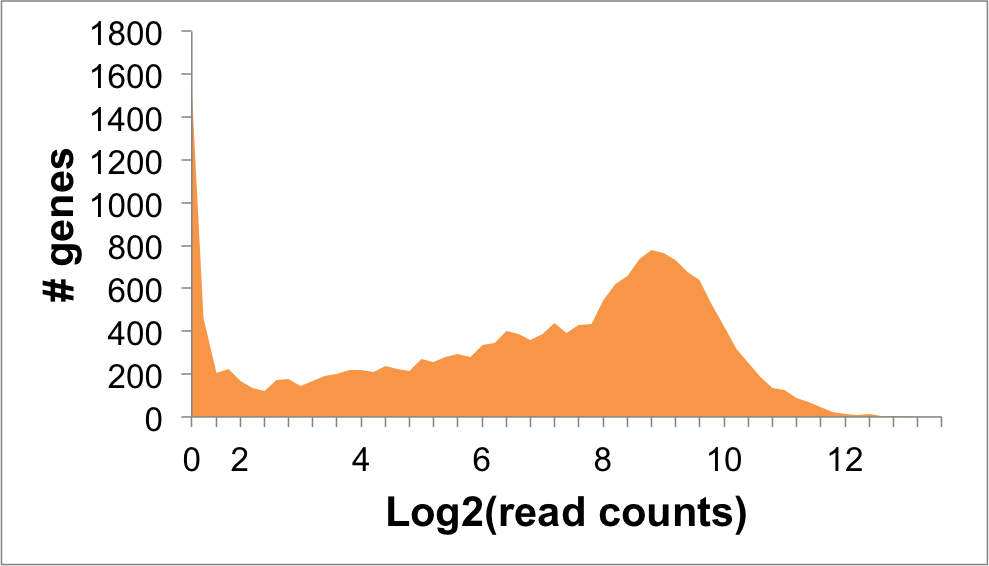
- Expression level (log2 read counts): 0.05
Expression Distribution
ACVRL1 Expression in NALM6 Cells: 0.05