AQP1
Gene Information
- Official Symbol: AQP1
- Official Name: aquaporin 1 (Colton blood group)
- Aliases and Previous Symbols: N/A
- Entrez ID: 358
- UniProt: P29972
- Interactions: BioGRID
- PubMed articles: Open PubMed
- OMIM: Open OMIM
Function Summary
- Entrez Summary: This gene encodes a small integral membrane protein with six bilayer spanning domains that functions as a water channel protein. This protein permits passive transport of water along an osmotic gradient. This gene is a possible candidate for disorders involving imbalance in ocular fluid movement. [provided by RefSeq, Aug 2016].
- UniProt Summary: Forms a water-specific channel that provides the plasma membranes of red cells and kidney proximal tubules with high permeability to water, thereby permitting water to move in the direction of an osmotic gradient. {ECO:0000269|PubMed:1373524}.
Pfam Domains GO Terms
Pfam Domains
| MIP |
GO Terms
| maintenance of symbiont-containing vacuole by host |
| nitric oxide transmembrane transporter activity |
| positive regulation of saliva secretion |
| carbon dioxide transmembrane transporter activity |
| symbiont-containing vacuole |
| glycerol transmembrane transporter activity |
| potassium ion transmembrane transporter activity |
| transepithelial water transport |
| cellular response to mercury ion |
| carbon dioxide transmembrane transport |
| nitric oxide transport |
| cerebrospinal fluid secretion |
| carbon dioxide transport |
| renal water transport |
| water transmembrane transporter activity |
| symbiont-containing vacuole membrane |
| ammonium transmembrane transporter activity |
| regulation of saliva secretion |
| pancreatic juice secretion |
| glycerol transport |
| intracellular cGMP-activated cation channel activity |
| cellular response to salt stress |
| epithelial fluid transport |
| positive regulation of digestive system process |
| lateral ventricle development |
| cellular hyperosmotic response |
| response to mercury ion |
| water channel activity |
| polyol transport |
| establishment or maintenance of actin cytoskeleton polarity |
| one-carbon compound transport |
| cellular response to nitric oxide |
| establishment or maintenance of cytoskeleton polarity |
| ammonium transmembrane transport |
| transepithelial transport |
| gas transport |
| cellular response to reactive nitrogen species |
| response to nitric oxide |
| water transport |
| secretion by tissue |
| response to salt stress |
| hyperosmotic response |
| cGMP-mediated signaling |
| ventricular system development |
| cell volume homeostasis |
| fluid transport |
| potassium channel activity |
| cellular response to dexamethasone stimulus |
| cellular response to copper ion |
| basal plasma membrane |
| renal water homeostasis |
| cellular response to osmotic stress |
| regulation of digestive system process |
| response to dexamethasone |
| bicarbonate transport |
| response to copper ion |
| positive regulation of fibroblast proliferation |
| brush border |
| response to bronchodilator |
| ammonium transport |
| brush border membrane |
| cellular response to cAMP |
| cellular response to glucocorticoid stimulus |
| cellular response to corticosteroid stimulus |
| transmembrane transporter activity |
| multicellular organismal water homeostasis |
| cellular response to retinoic acid |
| drug transmembrane transport |
| cellular response to hydrogen peroxide |
| modification by host of symbiont morphology or physiology |
| apical part of cell |
| body fluid secretion |
| digestive system process |
| water homeostasis |
| carbohydrate transport |
| interaction with symbiont |
| response to osmotic stress |
| cellular response to mechanical stimulus |
| regulation of fibroblast proliferation |
| negative regulation of cysteine-type endopeptidase activity involved in apoptotic process |
| cellular response to UV |
| negative regulation of cysteine-type endopeptidase activity |
| cellular response to ketone |
| response to antineoplastic agent |
| response to cAMP |
| sarcolemma |
| response to retinoic acid |
| modification of morphology or physiology of other organism involved in symbiotic interaction |
| renal system process |
| digestion |
| cellular response to light stimulus |
| cellular response to antibiotic |
| response to hydrogen peroxide |
| odontogenesis |
| cellular response to reactive oxygen species |
| response to organophosphorus |
| organic hydroxy compound transport |
| response to UV |
| response to glucocorticoid |
| drug transport |
| response to purine-containing compound |
| modification of morphology or physiology of other organism |
| potassium ion transmembrane transport |
| response to corticosteroid |
| positive regulation of angiogenesis |
| potassium ion transport |
| cyclic-nucleotide-mediated signaling |
| cellular response to radiation |
| neurotransmitter transport |
| regulation of cell size |
| positive regulation of vasculature development |
| cellular response to xenobiotic stimulus |
| cellular response to hypoxia |
| cellular response to steroid hormone stimulus |
| cellular response to metal ion |
| response to ketone |
| response to reactive oxygen species |
| establishment or maintenance of cell polarity |
| basolateral plasma membrane |
| cellular response to decreased oxygen levels |
| cellular response to acid chemical |
| response to mechanical stimulus |
| cellular response to toxic substance |
| cellular response to oxygen levels |
| regulation of cysteine-type endopeptidase activity involved in apoptotic process |
| cellular response to inorganic substance |
| nuclear membrane |
| cellular response to oxidative stress |
| regulation of cysteine-type endopeptidase activity |
| negative regulation of endopeptidase activity |
| negative regulation of peptidase activity |
| telencephalon development |
| regulation of angiogenesis |
| response to xenobiotic stimulus |
| response to antibiotic |
| response to light stimulus |
| cellular response to environmental stimulus |
| cellular response to abiotic stimulus |
| apical plasma membrane |
| regulation of vasculature development |
| multicellular organismal homeostasis |
| response to steroid hormone |
| cellular response to external stimulus |
| second-messenger-mediated signaling |
| response to hypoxia |
| response to acid chemical |
| negative regulation of proteolysis |
| response to decreased oxygen levels |
| response to metal ion |
| regulation of cellular component size |
| response to oxygen levels |
| forebrain development |
| response to oxidative stress |
| monovalent inorganic cation transport |
| cellular response to drug |
| regulation of endopeptidase activity |
| positive regulation of secretion |
| response to radiation |
| regulation of peptidase activity |
| negative regulation of hydrolase activity |
| organic anion transport |
| actin cytoskeleton organization |
| regulation of body fluid levels |
| response to toxic substance |
| regulation of anatomical structure size |
| cellular response to lipid |
| response to inorganic substance |
| cellular response to organic cyclic compound |
| inorganic cation transmembrane transport |
| actin filament-based process |
| anion transport |
| regulation of system process |
| cellular response to organonitrogen compound |
| cellular response to hormone stimulus |
| cation transmembrane transport |
| metal ion transport |
| inorganic ion transmembrane transport |
| cellular response to nitrogen compound |
| regulation of proteolysis |
| brain development |
| head development |
| symbiotic process |
| negative regulation of catalytic activity |
| regulation of secretion |
| interspecies interaction between organisms |
| cation transport |
| response to lipid |
| negative regulation of apoptotic process |
| cellular homeostasis |
| negative regulation of programmed cell death |
| response to hormone |
| positive regulation of cell population proliferation |
| response to organic cyclic compound |
| ion transmembrane transport |
| animal organ morphogenesis |
| central nervous system development |
| positive regulation of transport |
| negative regulation of cell death |
| response to organonitrogen compound |
| response to drug |
| negative regulation of cellular protein metabolic process |
| cellular response to oxygen-containing compound |
| regulation of anatomical structure morphogenesis |
| identical protein binding |
| response to nitrogen compound |
| negative regulation of protein metabolic process |
| cytoskeleton organization |
| chemical homeostasis |
| secretion |
| negative regulation of molecular function |
| response to abiotic stimulus |
| cellular response to endogenous stimulus |
| regulation of hydrolase activity |
| transmembrane transport |
| positive regulation of developmental process |
| ion transport |
| integral component of plasma membrane |
| response to endogenous stimulus |
| regulation of apoptotic process |
| response to oxygen-containing compound |
| regulation of programmed cell death |
| regulation of cell population proliferation |
| homeostatic process |
| regulation of cell death |
| intracellular signal transduction |
| cellular response to stress |
| positive regulation of multicellular organismal process |
| nitrogen compound transport |
| regulation of transport |
| system process |
CRISPR Data
Compound Hit Most Correlated Genes in Chemogenomics Tissues where Essential in the Avana Dataset (DepMap 20Q1)
Compound Hit
Most Correlated Genes in Chemogenomics
No correlation found to any other genes in chemogenomics.
Tissues where Essential in the Avana Dataset (DepMap 20Q1)
Global Fraction of Cell Lines Where Essential: 0/739
| Tissue | Fraction Of Cell Lines Where Essential |
|---|---|
| 1290807.0 | 0/1 |
| 909776.0 | 0/1 |
| bile duct | 0/28 |
| blood | 0/28 |
| bone | 0/26 |
| breast | 0/33 |
| central nervous system | 0/56 |
| cervix | 0/4 |
| colorectal | 0/17 |
| esophagus | 0/13 |
| fibroblast | 0/1 |
| gastric | 0/16 |
| kidney | 0/21 |
| liver | 0/20 |
| lung | 0/75 |
| lymphocyte | 0/16 |
| ovary | 0/26 |
| pancreas | 0/24 |
| peripheral nervous system | 0/16 |
| plasma cell | 0/15 |
| prostate | 0/1 |
| skin | 0/24 |
| soft tissue | 0/9 |
| thyroid | 0/2 |
| upper aerodigestive | 0/22 |
| urinary tract | 0/29 |
| uterus | 0/5 |
Essentiality in NALM6
- Essentiality Rank: 12865
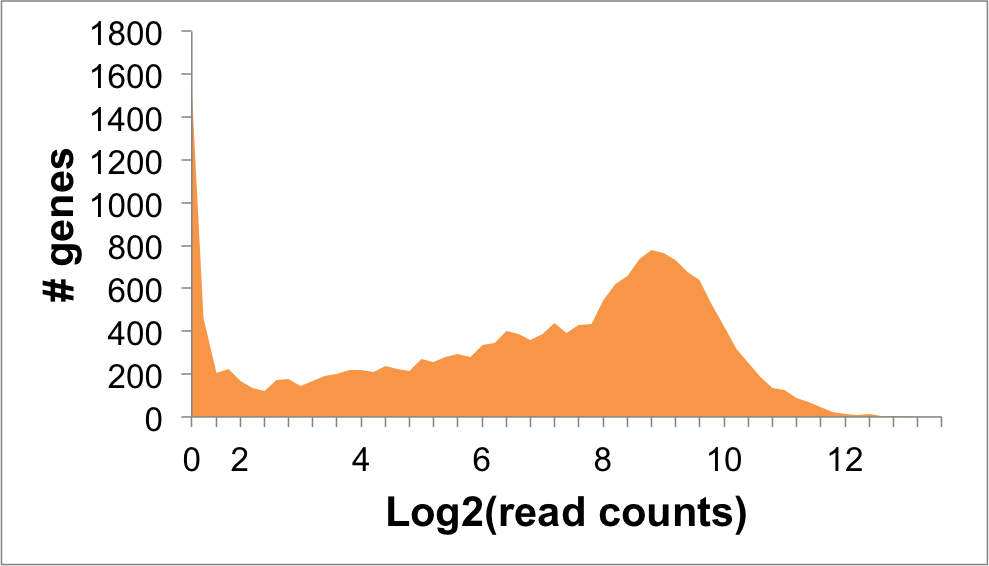
- Expression level (log2 read counts): -4.01
Expression Distribution
AQP1 Expression in NALM6 Cells: -4.01