ATP7A
Gene Information
- Official Symbol: ATP7A
- Official Name: ATPase copper transporting alpha
- Aliases and Previous Symbols: N/A
- Entrez ID: 538
- UniProt: Q04656
- Interactions: BioGRID
- PubMed articles: Open PubMed
- OMIM: Open OMIM
Function Summary
- Entrez Summary: This gene encodes a transmembrane protein that functions in copper transport across membranes. This protein is localized to the trans Golgi network, where it is predicted to supply copper to copper-dependent enzymes in the secretory pathway. It relocalizes to the plasma membrane under conditions of elevated extracellular copper, and functions in the efflux of copper from cells. Mutations in this gene are associated with Menkes disease, X-linked distal spinal muscular atrophy, and occipital horn syndrome. Alternatively-spliced transcript variants have been observed. [provided by RefSeq, Aug 2013].
- UniProt Summary: May supply copper to copper-requiring proteins within the secretory pathway, when localized in the trans-Golgi network. Under conditions of elevated extracellular copper, it relocalized to the plasma membrane where it functions in the efflux of copper from cells.
Pfam Domains GO Terms
Pfam Domains
| HAD |
| E1-E2 ATPase |
| HMA |
| Hydrolase |
GO Terms
| elastin biosynthetic process |
| copper ion export |
| copper transmembrane transporter activity, phosphorylative mechanism |
| copper-dependent protein binding |
| negative regulation of iron ion transmembrane transport |
| epinephrine metabolic process |
| superoxide dismutase copper chaperone activity |
| negative regulation of iron ion transport |
| cellular response to cobalt ion |
| regulation of iron ion transmembrane transport |
| copper ion transmembrane transporter activity |
| regulation of cytochrome-c oxidase activity |
| elastin metabolic process |
| cellular response to lead ion |
| response to iron(III) ion |
| cuprous ion binding |
| copper ion transmembrane transport |
| regulation of electron transfer activity |
| copper ion import |
| regulation of iron ion transport |
| pyramidal neuron development |
| pyramidal neuron differentiation |
| elastic fiber assembly |
| cerebellar Purkinje cell differentiation |
| response to cobalt ion |
| serotonin metabolic process |
| cerebellar Purkinje cell layer formation |
| cellular response to iron ion |
| positive regulation of cell size |
| tryptophan metabolic process |
| removal of superoxide radicals |
| norepinephrine metabolic process |
| primary amino compound metabolic process |
| cerebellar Purkinje cell layer morphogenesis |
| cellular copper ion homeostasis |
| cellular response to superoxide |
| cellular response to oxygen radical |
| detoxification of copper ion |
| trans-Golgi network transport vesicle |
| stress response to copper ion |
| positive regulation of vascular associated smooth muscle cell migration |
| indolalkylamine metabolic process |
| copper ion transport |
| response to superoxide |
| copper ion homeostasis |
| response to oxygen radical |
| stress response to metal ion |
| detoxification of inorganic compound |
| cell differentiation in hindbrain |
| response to manganese ion |
| extracellular matrix assembly |
| positive regulation of lamellipodium assembly |
| cellular response to platelet-derived growth factor stimulus |
| cerebellar cortex formation |
| response to platelet-derived growth factor |
| regulation of proton transport |
| regulation of vascular associated smooth muscle cell migration |
| response to lead ion |
| indole-containing compound metabolic process |
| cerebellar Purkinje cell layer development |
| hair follicle morphogenesis |
| T-helper cell differentiation |
| CD4-positive, alpha-beta T cell differentiation involved in immune response |
| alpha-beta T cell activation involved in immune response |
| alpha-beta T cell differentiation involved in immune response |
| positive regulation of lamellipodium organization |
| dopamine metabolic process |
| epidermis morphogenesis |
| cellular response to copper ion |
| cerebellar cortex morphogenesis |
| regulation of lamellipodium assembly |
| regulation of oxidative phosphorylation |
| forebrain neuron development |
| blood vessel remodeling |
| T cell differentiation involved in immune response |
| response to iron ion |
| CD4-positive, alpha-beta T cell differentiation |
| cerebellum morphogenesis |
| positive regulation of smooth muscle cell migration |
| cellular response to cadmium ion |
| CD4-positive, alpha-beta T cell activation |
| superoxide metabolic process |
| aromatic amino acid family metabolic process |
| hindbrain morphogenesis |
| lung alveolus development |
| cell leading edge |
| regulation of lamellipodium organization |
| catecholamine metabolic process |
| catechol-containing compound metabolic process |
| response to copper ion |
| lactation |
| cerebellar cortex development |
| collagen fibril organization |
| alpha-beta T cell differentiation |
| forebrain neuron differentiation |
| brush border membrane |
| positive regulation of oxidoreductase activity |
| response to zinc ion |
| Rac GTPase binding |
| copper ion binding |
| cellular biogenic amine metabolic process |
| cellular amine metabolic process |
| regulation of smooth muscle cell migration |
| alpha-beta T cell activation |
| microvillus |
| response to cadmium ion |
| positive regulation of response to wounding |
| T cell activation involved in immune response |
| forebrain generation of neurons |
| amine metabolic process |
| cellular response to amino acid stimulus |
| hair follicle development |
| phagocytic vesicle membrane |
| body fluid secretion |
| skin epidermis development |
| molting cycle process |
| hair cycle process |
| central nervous system neuron development |
| negative regulation of cation transmembrane transport |
| phenol-containing compound metabolic process |
| secretory granule |
| cellular oxidant detoxification |
| neurotransmitter metabolic process |
| molting cycle |
| hair cycle |
| pigmentation |
| negative regulation of ion transmembrane transport |
| regulation of oxidoreductase activity |
| cellular detoxification |
| positive regulation of plasma membrane bounded cell projection assembly |
| tissue remodeling |
| chaperone binding |
| cerebellum development |
| cellular transition metal ion homeostasis |
| lymphocyte activation involved in immune response |
| metencephalon development |
| antimicrobial humoral response |
| reactive oxygen species metabolic process |
| response to amino acid |
| negative regulation of transmembrane transport |
| cellular response to antibiotic |
| regulation of ATP metabolic process |
| transition metal ion transport |
| liver development |
| late endosome |
| mammary gland development |
| detoxification |
| hepaticobiliary system development |
| transition metal ion homeostasis |
| cellular response to reactive oxygen species |
| perikaryon |
| T cell differentiation |
| negative regulation of ion transport |
| hindbrain development |
| regulation of generation of precursor metabolites and energy |
| regulation of response to wounding |
| lung development |
| trans-Golgi network |
| cartilage development |
| respiratory tube development |
| central nervous system neuron differentiation |
| regulation of cell size |
| cellular response to hypoxia |
| positive regulation of epithelial cell proliferation |
| cellular response to metal ion |
| ammonium ion metabolic process |
| locomotory behavior |
| response to reactive oxygen species |
| respiratory system development |
| basolateral plasma membrane |
| cellular response to decreased oxygen levels |
| regulation of plasma membrane bounded cell projection assembly |
| regulation of cell projection assembly |
| cellular response to acid chemical |
| alpha-amino acid metabolic process |
| cellular response to toxic substance |
| cellular response to oxygen levels |
| cellular response to inorganic substance |
| connective tissue development |
| membrane raft |
| T cell activation |
| lymphocyte differentiation |
| cellular response to oxidative stress |
| regulation of ion transmembrane transporter activity |
| regulation of transmembrane transporter activity |
| regulation of transporter activity |
| divalent inorganic cation transport |
| response to antibiotic |
| cellular amino acid metabolic process |
| peptidyl-lysine modification |
| apical plasma membrane |
| neuron projection |
| glycoprotein biosynthetic process |
| leukocyte differentiation |
| regulation of cation transmembrane transport |
| regulation of epithelial cell proliferation |
| extracellular matrix organization |
| response to hypoxia |
| response to acid chemical |
| humoral immune response |
| regulation of neurotransmitter levels |
| response to decreased oxygen levels |
| response to metal ion |
| neuronal cell body |
| regulation of cellular component size |
| in utero embryonic development |
| response to oxygen levels |
| positive regulation of cell projection organization |
| lymphocyte activation |
| skin development |
| response to oxidative stress |
| extracellular structure organization |
| forebrain development |
| regulation of metal ion transport |
| glycoprotein metabolic process |
| gland development |
| epidermis development |
| morphogenesis of an epithelium |
| mitochondrion organization |
| organic hydroxy compound metabolic process |
| supramolecular fiber organization |
| regulation of ion transmembrane transport |
| neuron projection morphogenesis |
| plasma membrane bounded cell projection morphogenesis |
| negative regulation of transport |
| blood vessel development |
| cell projection morphogenesis |
| skeletal system development |
| regulation of body fluid levels |
| drug metabolic process |
| cellular response to growth factor stimulus |
| positive regulation of cell migration |
| response to toxic substance |
| vasculature development |
| cell part morphogenesis |
| regulation of anatomical structure size |
| cardiovascular system development |
| positive regulation of cellular component biogenesis |
| positive regulation of cell motility |
| response to growth factor |
| response to inorganic substance |
| positive regulation of cellular component movement |
| positive regulation of locomotion |
| hemopoiesis |
| cellular metal ion homeostasis |
| inorganic cation transmembrane transport |
| regulation of transmembrane transport |
| tissue morphogenesis |
| behavior |
| cellular response to organonitrogen compound |
| hematopoietic or lymphoid organ development |
| cation transmembrane transport |
| carbohydrate derivative biosynthetic process |
| leukocyte activation involved in immune response |
| metal ion homeostasis |
| cell activation involved in immune response |
| cellular cation homeostasis |
| chordate embryonic development |
| metal ion transport |
| cellular ion homeostasis |
| inorganic ion transmembrane transport |
| immune system development |
| embryo development ending in birth or egg hatching |
| cellular response to nitrogen compound |
| neuron projection development |
| regulation of plasma membrane bounded cell projection organization |
| perinuclear region of cytoplasm |
| regulation of ion transport |
| cation homeostasis |
| regulation of cell projection organization |
| inorganic ion homeostasis |
| cell morphogenesis |
| brain development |
| cellular chemical homeostasis |
| head development |
| ion homeostasis |
| negative regulation of catalytic activity |
| neuron development |
| cellular component morphogenesis |
| cation transport |
| tube development |
| regulation of cell migration |
| circulatory system development |
| peptidyl-amino acid modification |
| anatomical structure formation involved in morphogenesis |
| cellular homeostasis |
| carboxylic acid metabolic process |
| regulation of cell motility |
| positive regulation of cell population proliferation |
| leukocyte activation |
| ion transmembrane transport |
| regulation of cellular component biogenesis |
| embryo development |
| central nervous system development |
| regulation of locomotion |
| Golgi apparatus |
| regulation of cellular component movement |
| response to organonitrogen compound |
| oxoacid metabolic process |
| endoplasmic reticulum |
| neuron differentiation |
| organic acid metabolic process |
| carbohydrate derivative metabolic process |
| cellular response to oxygen-containing compound |
| cell activation |
| response to nitrogen compound |
| immune effector process |
| chemical homeostasis |
| epithelium development |
| plasma membrane bounded cell projection organization |
| secretion |
| negative regulation of molecular function |
| cell projection organization |
| response to abiotic stimulus |
| positive regulation of cellular component organization |
| cellular response to endogenous stimulus |
| transmembrane transport |
| response to other organism |
| response to external biotic stimulus |
| response to biotic stimulus |
| ion transport |
| organonitrogen compound biosynthetic process |
| positive regulation of catalytic activity |
| response to endogenous stimulus |
| regulation of response to stress |
| ATP binding |
| generation of neurons |
| response to oxygen-containing compound |
| regulation of phosphorylation |
| regulation of cell population proliferation |
| neurogenesis |
| homeostatic process |
| cell development |
| cellular response to stress |
| cellular macromolecule biosynthetic process |
| small molecule metabolic process |
| tissue development |
| macromolecule biosynthetic process |
| positive regulation of molecular function |
| regulation of phosphate metabolic process |
| regulation of phosphorus metabolic process |
| protein-containing complex subunit organization |
| regulation of transport |
| immune response |
| membrane |
CRISPR Data
Compound Hit Most Correlated Genes in Chemogenomics Tissues where Essential in the Avana Dataset (DepMap 20Q1)
Compound Hit
Most Correlated Genes in Chemogenomics
| Gene | Correlation |
|---|---|
| ATOX1 | 0.506 |
Tissues where Essential in the Avana Dataset (DepMap 20Q1)
Global Fraction of Cell Lines Where Essential: 1/694
| Tissue | Fraction Of Cell Lines Where Essential |
|---|---|
| 1290807.0 | 0/1 |
| 909776.0 | 0/1 |
| bile duct | 0/28 |
| blood | 0/26 |
| bone | 0/26 |
| breast | 0/30 |
| central nervous system | 0/49 |
| cervix | 0/4 |
| colorectal | 0/17 |
| esophagus | 0/11 |
| fibroblast | 0/1 |
| gastric | 0/14 |
| kidney | 1/18 |
| liver | 0/19 |
| lung | 0/72 |
| lymphocyte | 0/16 |
| ovary | 0/25 |
| pancreas | 0/22 |
| peripheral nervous system | 0/15 |
| plasma cell | 0/12 |
| prostate | 0/1 |
| skin | 0/20 |
| soft tissue | 0/9 |
| thyroid | 0/2 |
| upper aerodigestive | 0/22 |
| urinary tract | 0/28 |
| uterus | 0/5 |
Essentiality in NALM6
- Essentiality Rank: 18612
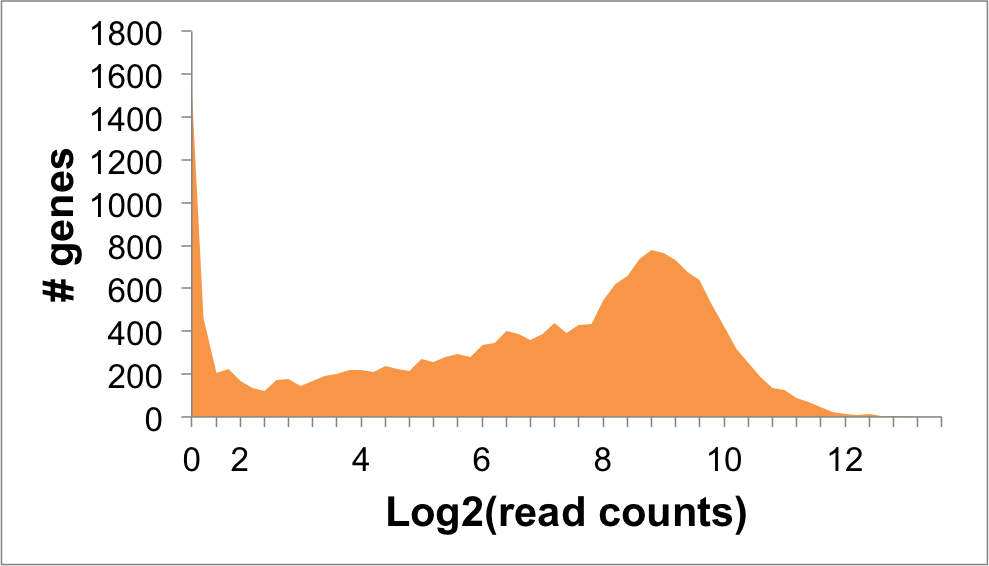
- Expression level (log2 read counts): 4.92
Expression Distribution
ATP7A Expression in NALM6 Cells: 4.92