C5AR1
Gene Information
- Official Symbol: C5AR1
- Official Name: complement C5a receptor 1
- Aliases and Previous Symbols: N/A
- Entrez ID: 728
- UniProt: P21730
- Interactions: BioGRID
- PubMed articles: Open PubMed
- OMIM: Open OMIM
Function Summary
- Entrez Summary: N/A
- UniProt Summary: Receptor for the chemotactic and inflammatory peptide anaphylatoxin C5a (PubMed:1847994, PubMed:8182049, PubMed:7622471, PubMed:9553099, PubMed:10636859, PubMed:15153520). The ligand interacts with at least two sites on the receptor: a high-affinity site on the extracellular N-terminus, and a second site in the transmembrane region which activates downstream signaling events (PubMed:8182049, PubMed:7622471, PubMed:9553099). Receptor activation stimulates chemotaxis, granule enzyme release, intracellular calcium release and superoxide anion production (PubMed:10636859, PubMed:15153520). {ECO:0000269|PubMed:10636859, ECO:0000269|PubMed:15153520, ECO:0000269|PubMed:1847994, ECO:0000269|PubMed:7622471, ECO:0000269|PubMed:8182049, ECO:0000269|PubMed:9553099}.
Pfam Domains GO Terms
Pfam Domains
No Pfam Domain information is available for this gene.
GO Terms
| complement component C5a binding |
| complement component C5a receptor activity |
| complement component C5a signaling pathway |
| cell proliferation in hindbrain |
| response to peptidoglycan |
| regulation of tau-protein kinase activity |
| complement receptor mediated signaling pathway |
| positive regulation of macrophage chemotaxis |
| mRNA transcription by RNA polymerase II |
| astrocyte activation |
| positive regulation of macrophage migration |
| amyloid-beta clearance |
| presynapse organization |
| positive regulation of neutrophil chemotaxis |
| mRNA transcription |
| regulation of macrophage chemotaxis |
| positive regulation of granulocyte chemotaxis |
| positive regulation of vascular endothelial growth factor production |
| positive regulation of neutrophil migration |
| regulation of neutrophil chemotaxis |
| microglial cell activation |
| leukocyte activation involved in inflammatory response |
| activation of phospholipase C activity |
| regulation of vascular endothelial growth factor production |
| regulation of neutrophil migration |
| astrocyte development |
| regulation of macrophage migration |
| glial cell activation |
| neuroinflammatory response |
| regulation of granulocyte chemotaxis |
| positive regulation of phospholipase C activity |
| regulation of mononuclear cell migration |
| regulation of phospholipase C activity |
| macrophage activation |
| astrocyte differentiation |
| cellular defense response |
| positive regulation of phospholipase activity |
| apical part of cell |
| regulation of phospholipase activity |
| positive regulation of lipase activity |
| animal organ regeneration |
| neural precursor cell proliferation |
| neutrophil chemotaxis |
| positive regulation of leukocyte chemotaxis |
| granulocyte chemotaxis |
| neutrophil migration |
| defense response to Gram-positive bacterium |
| phospholipase C-activating G protein-coupled receptor signaling pathway |
| secretory granule membrane |
| regulation of lipase activity |
| granulocyte migration |
| glial cell development |
| regulation of leukocyte chemotaxis |
| regulation of complement activation |
| myeloid leukocyte migration |
| positive regulation of leukocyte migration |
| positive regulation of chemotaxis |
| regulation of humoral immune response |
| leukocyte chemotaxis |
| negative regulation of neuron apoptotic process |
| hindbrain development |
| activation of MAPK activity |
| regeneration |
| positive regulation of angiogenesis |
| glial cell differentiation |
| positive regulation of vasculature development |
| positive regulation of epithelial cell proliferation |
| regulation of leukocyte migration |
| basolateral plasma membrane |
| negative regulation of neuron death |
| regulation of neuron apoptotic process |
| cell chemotaxis |
| positive regulation of ERK1 and ERK2 cascade |
| regulation of chemotaxis |
| gliogenesis |
| positive regulation of MAP kinase activity |
| synapse organization |
| positive regulation of cytosolic calcium ion concentration |
| regulation of angiogenesis |
| regulation of ERK1 and ERK2 cascade |
| cognition |
| regulation of neuron death |
| response to lipopolysaccharide |
| regulation of vasculature development |
| response to molecule of bacterial origin |
| regulation of cytosolic calcium ion concentration |
| activation of protein kinase activity |
| defense response to bacterium |
| regulation of epithelial cell proliferation |
| positive regulation of protein serine/threonine kinase activity |
| regulation of MAP kinase activity |
| leukocyte migration |
| cellular calcium ion homeostasis |
| calcium ion homeostasis |
| immune response-activating cell surface receptor signaling pathway |
| positive regulation of cytokine production |
| regulation of immune effector process |
| cellular divalent inorganic cation homeostasis |
| transcription by RNA polymerase II |
| immune response-regulating cell surface receptor signaling pathway |
| neutrophil degranulation |
| divalent inorganic cation homeostasis |
| neutrophil activation involved in immune response |
| neutrophil mediated immunity |
| inflammatory response |
| positive regulation of cell migration |
| neutrophil activation |
| granulocyte activation |
| leukocyte degranulation |
| regulation of protein serine/threonine kinase activity |
| myeloid leukocyte mediated immunity |
| myeloid cell activation involved in immune response |
| positive regulation of cell motility |
| positive regulation of protein kinase activity |
| sensory perception of chemical stimulus |
| positive regulation of cellular component movement |
| positive regulation of MAPK cascade |
| chemotaxis |
| taxis |
| positive regulation of locomotion |
| cell population proliferation |
| cellular metal ion homeostasis |
| immune response-activating signal transduction |
| positive regulation of kinase activity |
| myeloid leukocyte activation |
| immune response-regulating signaling pathway |
| positive regulation of response to external stimulus |
| cell surface |
| leukocyte activation involved in immune response |
| metal ion homeostasis |
| cell activation involved in immune response |
| activation of immune response |
| cellular cation homeostasis |
| transcription, DNA-templated |
| nucleic acid-templated transcription |
| cellular ion homeostasis |
| RNA biosynthetic process |
| positive regulation of transferase activity |
| response to bacterium |
| regulation of cytokine production |
| mRNA metabolic process |
| regulated exocytosis |
| cation homeostasis |
| inorganic ion homeostasis |
| G protein-coupled receptor activity |
| brain development |
| cellular chemical homeostasis |
| regulation of MAPK cascade |
| leukocyte mediated immunity |
| positive regulation of hydrolase activity |
| head development |
| ion homeostasis |
| exocytosis |
| regulation of protein kinase activity |
| regulation of cell migration |
| response to lipid |
| positive regulation of immune response |
| regulation of kinase activity |
| negative regulation of apoptotic process |
| cellular homeostasis |
| negative regulation of programmed cell death |
| regulation of cell motility |
| positive regulation of cell population proliferation |
| apoptotic process |
| leukocyte activation |
| defense response to other organism |
| cell migration |
| sensory perception |
| regulation of transferase activity |
| central nervous system development |
| regulation of locomotion |
| negative regulation of cell death |
| regulation of cellular component movement |
| response to organonitrogen compound |
| secretion by cell |
| positive regulation of protein phosphorylation |
| positive regulation of intracellular signal transduction |
| export from cell |
| programmed cell death |
| positive regulation of phosphorylation |
| regulation of anatomical structure morphogenesis |
| cell activation |
| localization of cell |
| cell motility |
| response to nitrogen compound |
| cell death |
| immune effector process |
| regulation of response to external stimulus |
| nucleobase-containing compound biosynthetic process |
| chemical homeostasis |
| secretion |
| positive regulation of phosphorus metabolic process |
| positive regulation of phosphate metabolic process |
| positive regulation of immune system process |
| regulation of immune response |
| heterocycle biosynthetic process |
| aromatic compound biosynthetic process |
| positive regulation of protein modification process |
| regulation of hydrolase activity |
| response to other organism |
| organic cyclic compound biosynthetic process |
| response to external biotic stimulus |
| locomotion |
| G protein-coupled receptor signaling pathway |
| response to biotic stimulus |
| defense response |
| positive regulation of developmental process |
| nervous system process |
| integral component of plasma membrane |
| positive regulation of catalytic activity |
| regulation of protein phosphorylation |
| regulation of apoptotic process |
| movement of cell or subcellular component |
| response to oxygen-containing compound |
| regulation of programmed cell death |
| regulation of phosphorylation |
| positive regulation of cellular protein metabolic process |
| regulation of cell population proliferation |
| neurogenesis |
| cellular nitrogen compound biosynthetic process |
| homeostatic process |
| cell development |
| regulation of immune system process |
| positive regulation of signal transduction |
| RNA metabolic process |
| regulation of cell death |
| positive regulation of protein metabolic process |
| cellular macromolecule biosynthetic process |
| positive regulation of multicellular organismal process |
| macromolecule biosynthetic process |
| positive regulation of molecular function |
| regulation of phosphate metabolic process |
| regulation of phosphorus metabolic process |
| positive regulation of cell communication |
| positive regulation of signaling |
| regulation of intracellular signal transduction |
| regulation of protein modification process |
| immune response |
| vesicle-mediated transport |
| system process |
| gene expression |
CRISPR Data
Compound Hit Most Correlated Genes in Chemogenomics Tissues where Essential in the Avana Dataset (DepMap 20Q1)
Compound Hit
| Screen | Score |
|---|---|
| Vinblastine 0.002μM R01 exp60 | -2.42 |
| Deguelin 0.15μM R05 exp209 | -1.76 |
| Bisphenol A 100μM R06 exp269 | 1.81 |
| ABT-702 0.1μM R06 exp260 | 2.31 |
Most Correlated Genes in Chemogenomics
No correlation found to any other genes in chemogenomics.
Tissues where Essential in the Avana Dataset (DepMap 20Q1)
Global Fraction of Cell Lines Where Essential: 0/739
| Tissue | Fraction Of Cell Lines Where Essential |
|---|---|
| 1290807.0 | 0/1 |
| 909776.0 | 0/1 |
| bile duct | 0/28 |
| blood | 0/28 |
| bone | 0/26 |
| breast | 0/33 |
| central nervous system | 0/56 |
| cervix | 0/4 |
| colorectal | 0/17 |
| esophagus | 0/13 |
| fibroblast | 0/1 |
| gastric | 0/16 |
| kidney | 0/21 |
| liver | 0/20 |
| lung | 0/75 |
| lymphocyte | 0/16 |
| ovary | 0/26 |
| pancreas | 0/24 |
| peripheral nervous system | 0/16 |
| plasma cell | 0/15 |
| prostate | 0/1 |
| skin | 0/24 |
| soft tissue | 0/9 |
| thyroid | 0/2 |
| upper aerodigestive | 0/22 |
| urinary tract | 0/29 |
| uterus | 0/5 |
Essentiality in NALM6
- Essentiality Rank: 7775
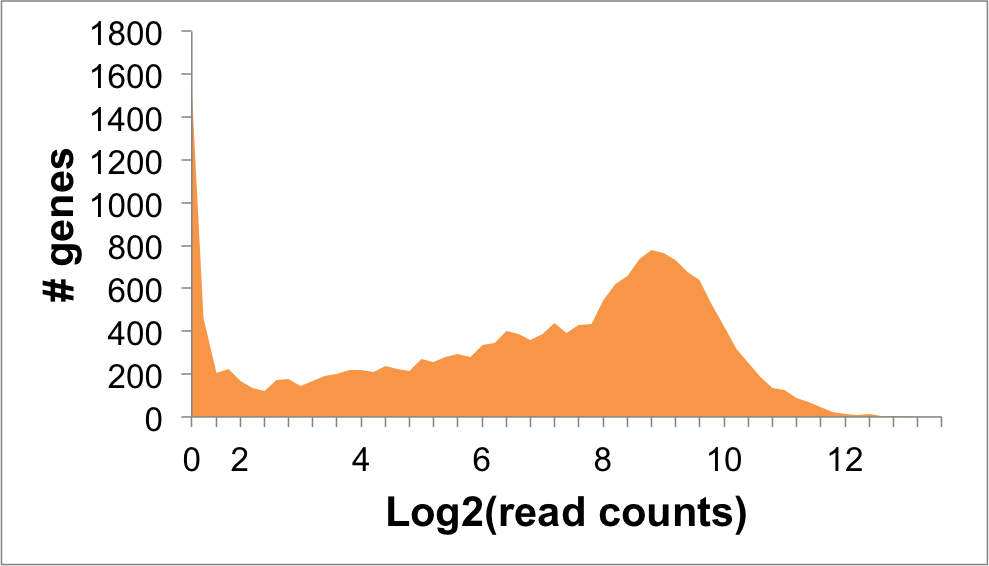
- Expression level (log2 read counts): 1.97
Expression Distribution
C5AR1 Expression in NALM6 Cells: 1.97