FAM107A
Gene Information
- Official Symbol: FAM107A
- Official Name: family with sequence similarity 107 member A
- Aliases and Previous Symbols: N/A
- Entrez ID: 11170
- UniProt: O95990
- Interactions: BioGRID
- PubMed articles: Open PubMed
- OMIM: Open OMIM
Function Summary
- Entrez Summary: N/A
- UniProt Summary: When transfected into cell lines in which it is not expressed, suppresses cell growth. May play a role in tumor development. {ECO:0000269|PubMed:10564580}.
Pfam Domains GO Terms
Pfam Domains
| DUF1151 |
GO Terms
| negative regulation of long-term synaptic potentiation |
| negative regulation of focal adhesion assembly |
| negative regulation of adherens junction organization |
| negative regulation of cell junction assembly |
| actin filament polymerization |
| negative regulation of cell-matrix adhesion |
| regulation of long-term synaptic potentiation |
| actin polymerization or depolymerization |
| cellular response to glucocorticoid stimulus |
| cellular response to corticosteroid stimulus |
| regulation of focal adhesion assembly |
| regulation of cell-substrate junction assembly |
| negative regulation of cell-substrate adhesion |
| actin filament bundle assembly |
| actin filament bundle organization |
| regulation of adherens junction organization |
| stress fiber |
| protein polymerization |
| regulation of cell junction assembly |
| ruffle membrane |
| negative regulation of G1/S transition of mitotic cell cycle |
| negative regulation of cell cycle G1/S phase transition |
| regulation of cell-matrix adhesion |
| positive regulation of protein ubiquitination |
| positive regulation of protein modification by small protein conjugation or removal |
| response to glucocorticoid |
| regulation of G1/S transition of mitotic cell cycle |
| response to corticosteroid |
| regulation of cell cycle G1/S phase transition |
| cellular response to steroid hormone stimulus |
| regulation of synaptic plasticity |
| regulation of microtubule cytoskeleton organization |
| regulation of protein ubiquitination |
| regulation of cell-substrate adhesion |
| negative regulation of mitotic cell cycle phase transition |
| actin cytoskeleton |
| regulation of microtubule-based process |
| regulation of protein modification by small protein conjugation or removal |
| negative regulation of cell cycle phase transition |
| cellular response to nutrient levels |
| actin filament organization |
| cellular response to extracellular stimulus |
| actin binding |
| synapse |
| negative regulation of cell adhesion |
| regulation of protein stability |
| cognition |
| negative regulation of mitotic cell cycle |
| neuron projection |
| negative regulation of cell cycle process |
| response to steroid hormone |
| cellular response to external stimulus |
| regulation of actin cytoskeleton organization |
| regulation of actin filament-based process |
| nuclear speck |
| regulation of mitotic cell cycle phase transition |
| focal adhesion |
| regulation of cell growth |
| modulation of chemical synaptic transmission |
| regulation of trans-synaptic signaling |
| regulation of cell cycle phase transition |
| supramolecular fiber organization |
| actin cytoskeleton organization |
| response to nutrient levels |
| positive regulation of cell migration |
| cellular response to lipid |
| positive regulation of cell motility |
| response to extracellular stimulus |
| positive regulation of cellular component movement |
| regulation of cytoskeleton organization |
| cellular response to organic cyclic compound |
| positive regulation of locomotion |
| actin filament-based process |
| negative regulation of cell cycle |
| cellular response to hormone stimulus |
| regulation of mitotic cell cycle |
| regulation of growth |
| regulation of cell adhesion |
| negative regulation of cellular component organization |
| regulation of cell cycle process |
| molecular function |
| cellular protein-containing complex assembly |
| regulation of cell migration |
| response to lipid |
| response to hormone |
| regulation of cell motility |
| response to organic cyclic compound |
| regulation of cellular component biogenesis |
| regulation of locomotion |
| regulation of cellular component movement |
| cytoskeleton organization |
| regulation of cell cycle |
| cellular response to endogenous stimulus |
| positive regulation of protein modification process |
| regulation of organelle organization |
| cell cycle |
| nervous system process |
| response to endogenous stimulus |
| protein-containing complex assembly |
| positive regulation of cellular protein metabolic process |
| positive regulation of protein metabolic process |
| regulation of protein modification process |
| protein-containing complex subunit organization |
| system process |
CRISPR Data
Compound Hit Most Correlated Genes in Chemogenomics Tissues where Essential in the Avana Dataset (DepMap 20Q1)
Compound Hit
No hits were found.
Most Correlated Genes in Chemogenomics
No correlation found to any other genes in chemogenomics.
Tissues where Essential in the Avana Dataset (DepMap 20Q1)
Global Fraction of Cell Lines Where Essential: 0/739
| Tissue | Fraction Of Cell Lines Where Essential |
|---|---|
| 1290807.0 | 0/1 |
| 909776.0 | 0/1 |
| bile duct | 0/28 |
| blood | 0/28 |
| bone | 0/26 |
| breast | 0/33 |
| central nervous system | 0/56 |
| cervix | 0/4 |
| colorectal | 0/17 |
| esophagus | 0/13 |
| fibroblast | 0/1 |
| gastric | 0/16 |
| kidney | 0/21 |
| liver | 0/20 |
| lung | 0/75 |
| lymphocyte | 0/16 |
| ovary | 0/26 |
| pancreas | 0/24 |
| peripheral nervous system | 0/16 |
| plasma cell | 0/15 |
| prostate | 0/1 |
| skin | 0/24 |
| soft tissue | 0/9 |
| thyroid | 0/2 |
| upper aerodigestive | 0/22 |
| urinary tract | 0/29 |
| uterus | 0/5 |
Essentiality in NALM6
- Essentiality Rank: 10067
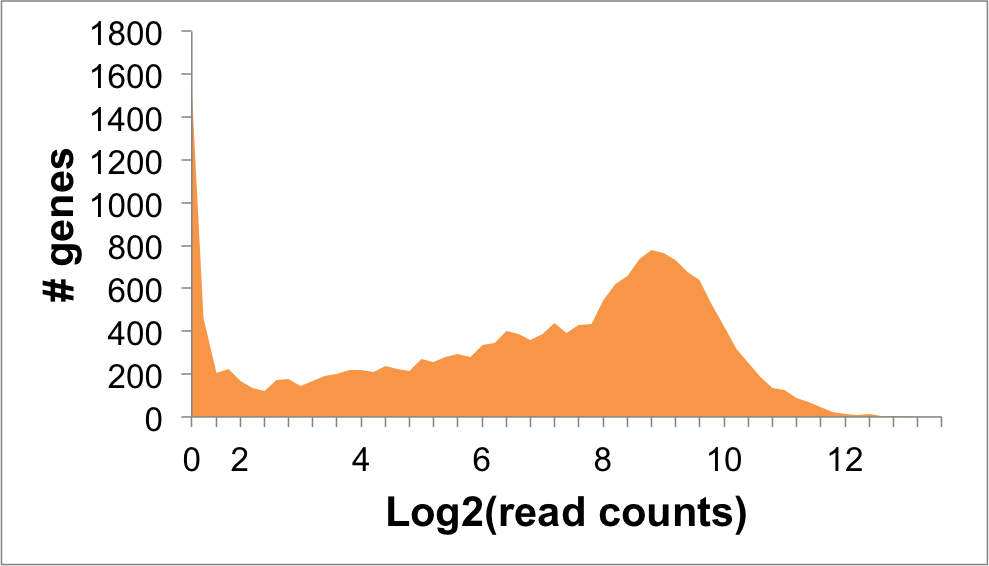
- Expression level (log2 read counts): 0.61
Expression Distribution
FAM107A Expression in NALM6 Cells: 0.61