TNFRSF1A
Gene Information
- Official Symbol: TNFRSF1A
- Official Name: TNF receptor superfamily member 1A
- Aliases and Previous Symbols: N/A
- Entrez ID: 7132
- UniProt: P19438
- Interactions: BioGRID
- PubMed articles: Open PubMed
- OMIM: Open OMIM
Function Summary
- Entrez Summary: This gene encodes a member of the TNF receptor superfamily of proteins. The encoded receptor is found in membrane-bound and soluble forms that interact with membrane-bound and soluble forms, respectively, of its ligand, tumor necrosis factor alpha. Binding of membrane-bound tumor necrosis factor alpha to the membrane-bound receptor induces receptor trimerization and activation, which plays a role in cell survival, apoptosis, and inflammation. Proteolytic processing of the encoded receptor results in release of the soluble form of the receptor, which can interact with free tumor necrosis factor alpha to inhibit inflammation. Mutations in this gene underlie tumor necrosis factor receptor-associated periodic syndrome (TRAPS), characterized by fever, abdominal pain and other features. Mutations in this gene may also be associated with multiple sclerosis in human patients. [provided by RefSeq, Sep 2016].
- UniProt Summary: N/A
Pfam Domains GO Terms
Pfam Domains
| Death |
| TNFR c6 |
GO Terms
| tumor necrosis factor receptor superfamily complex |
| tumor necrosis factor binding |
| negative regulation of extracellular matrix constituent secretion |
| positive regulation of apoptotic process involved in morphogenesis |
| positive regulation of apoptotic process involved in development |
| regulation of extracellular matrix constituent secretion |
| death-inducing signaling complex assembly |
| tumor necrosis factor-activated receptor activity |
| positive regulation of sphingolipid biosynthetic process |
| positive regulation of ceramide biosynthetic process |
| negative regulation of extracellular matrix organization |
| regulation of apoptotic process involved in morphogenesis |
| regulation of apoptotic process involved in development |
| regulation of endothelial cell development |
| regulation of establishment of endothelial barrier |
| regulation of membrane lipid metabolic process |
| regulation of ceramide biosynthetic process |
| regulation of sphingolipid biosynthetic process |
| pulmonary valve development |
| negative regulation of cardiac muscle hypertrophy |
| negative regulation of muscle hypertrophy |
| aortic valve development |
| regulation of endothelial cell differentiation |
| extrinsic apoptotic signaling pathway via death domain receptors |
| prostanoid metabolic process |
| prostaglandin metabolic process |
| semi-lunar valve development |
| regulation of extracellular matrix organization |
| regulation of cardiac muscle hypertrophy |
| regulation of tumor necrosis factor-mediated signaling pathway |
| regulation of muscle hypertrophy |
| heart valve development |
| positive regulation of tyrosine phosphorylation of STAT protein |
| I-kappaB kinase/NF-kappaB signaling |
| intrinsic apoptotic signaling pathway in response to DNA damage |
| regulation of tyrosine phosphorylation of STAT protein |
| positive regulation of lipid biosynthetic process |
| cellular response to mechanical stimulus |
| positive regulation of receptor signaling pathway via JAK-STAT |
| regulation of muscle adaptation |
| positive regulation of receptor signaling pathway via STAT |
| extrinsic apoptotic signaling pathway |
| unsaturated fatty acid metabolic process |
| icosanoid metabolic process |
| tumor necrosis factor-mediated signaling pathway |
| regulation of receptor signaling pathway via JAK-STAT |
| regulation of receptor signaling pathway via STAT |
| negative regulation of inflammatory response |
| positive regulation of inflammatory response |
| regulation of epithelial cell differentiation |
| positive regulation of lipid metabolic process |
| intrinsic apoptotic signaling pathway |
| positive regulation of cellular amide metabolic process |
| regulation of cytokine-mediated signaling pathway |
| fatty acid derivative metabolic process |
| regulation of response to cytokine stimulus |
| protein localization to plasma membrane |
| positive regulation of I-kappaB kinase/NF-kappaB signaling |
| regulation of lipid biosynthetic process |
| positive regulation of peptidyl-tyrosine phosphorylation |
| negative regulation of secretion by cell |
| receptor complex |
| negative regulation of defense response |
| response to mechanical stimulus |
| membrane raft |
| protein localization to cell periphery |
| negative regulation of secretion |
| regulation of I-kappaB kinase/NF-kappaB signaling |
| regulation of muscle system process |
| cellular response to tumor necrosis factor |
| regulation of peptidyl-tyrosine phosphorylation |
| response to tumor necrosis factor |
| apoptotic signaling pathway |
| cellular response to abiotic stimulus |
| cellular response to environmental stimulus |
| fatty acid metabolic process |
| defense response to bacterium |
| cellular response to external stimulus |
| regulation of inflammatory response |
| negative regulation of response to external stimulus |
| regulation of lipid metabolic process |
| regulation of cellular amide metabolic process |
| positive regulation of defense response |
| protein localization to membrane |
| negative regulation of transport |
| inflammatory response |
| heart development |
| monocarboxylic acid metabolic process |
| regulation of system process |
| positive regulation of response to external stimulus |
| cell surface |
| Golgi membrane |
| positive regulation of apoptotic process |
| positive regulation of programmed cell death |
| cytokine-mediated signaling pathway |
| response to bacterium |
| positive regulation of cell death |
| viral process |
| negative regulation of cellular component organization |
| regulation of secretion by cell |
| regulation of defense response |
| cellular response to DNA damage stimulus |
| symbiotic process |
| regulation of secretion |
| interspecies interaction between organisms |
| circulatory system development |
| carboxylic acid metabolic process |
| apoptotic process |
| regulation of cell development |
| defense response to other organism |
| cellular lipid metabolic process |
| regulation of cellular component biogenesis |
| oxoacid metabolic process |
| cellular response to cytokine stimulus |
| positive regulation of protein phosphorylation |
| positive regulation of intracellular signal transduction |
| organic acid metabolic process |
| programmed cell death |
| positive regulation of phosphorylation |
| regulation of anatomical structure morphogenesis |
| cell death |
| regulation of response to external stimulus |
| response to cytokine |
| positive regulation of phosphorus metabolic process |
| positive regulation of phosphate metabolic process |
| response to abiotic stimulus |
| negative regulation of multicellular organismal process |
| lipid metabolic process |
| positive regulation of transcription by RNA polymerase II |
| positive regulation of protein modification process |
| mitochondrion |
| response to other organism |
| response to external biotic stimulus |
| response to biotic stimulus |
| defense response |
| positive regulation of developmental process |
| integral component of plasma membrane |
| regulation of protein phosphorylation |
| regulation of response to stress |
| positive regulation of transcription, DNA-templated |
| regulation of apoptotic process |
| protein-containing complex assembly |
| regulation of programmed cell death |
| cellular protein localization |
| regulation of phosphorylation |
| extracellular space |
| cellular macromolecule localization |
| positive regulation of cellular protein metabolic process |
| negative regulation of response to stimulus |
| positive regulation of nucleic acid-templated transcription |
| positive regulation of RNA biosynthetic process |
| positive regulation of signal transduction |
| regulation of cell death |
| intracellular signal transduction |
| cellular response to stress |
| positive regulation of protein metabolic process |
| positive regulation of RNA metabolic process |
| small molecule metabolic process |
| regulation of phosphate metabolic process |
| regulation of phosphorus metabolic process |
| regulation of cell differentiation |
| positive regulation of cell communication |
| positive regulation of signaling |
| regulation of intracellular signal transduction |
| regulation of protein modification process |
| protein-containing complex subunit organization |
| regulation of transport |
| positive regulation of nucleobase-containing compound metabolic process |
| positive regulation of macromolecule biosynthetic process |
| extracellular region |
| positive regulation of cellular biosynthetic process |
| positive regulation of gene expression |
| membrane |
| positive regulation of biosynthetic process |
CRISPR Data
Compound Hit Most Correlated Genes in Chemogenomics Tissues where Essential in the Avana Dataset (DepMap 20Q1)
Compound Hit
| Screen | Score |
|---|---|
| RO-3306 3 to 4μM on day4 R04 exp165 | -1.95 |
Most Correlated Genes in Chemogenomics
No correlation found to any other genes in chemogenomics.
Tissues where Essential in the Avana Dataset (DepMap 20Q1)
Global Fraction of Cell Lines Where Essential: 0/739
| Tissue | Fraction Of Cell Lines Where Essential |
|---|---|
| 1290807.0 | 0/1 |
| 909776.0 | 0/1 |
| bile duct | 0/28 |
| blood | 0/28 |
| bone | 0/26 |
| breast | 0/33 |
| central nervous system | 0/56 |
| cervix | 0/4 |
| colorectal | 0/17 |
| esophagus | 0/13 |
| fibroblast | 0/1 |
| gastric | 0/16 |
| kidney | 0/21 |
| liver | 0/20 |
| lung | 0/75 |
| lymphocyte | 0/16 |
| ovary | 0/26 |
| pancreas | 0/24 |
| peripheral nervous system | 0/16 |
| plasma cell | 0/15 |
| prostate | 0/1 |
| skin | 0/24 |
| soft tissue | 0/9 |
| thyroid | 0/2 |
| upper aerodigestive | 0/22 |
| urinary tract | 0/29 |
| uterus | 0/5 |
Essentiality in NALM6
- Essentiality Rank: 5409
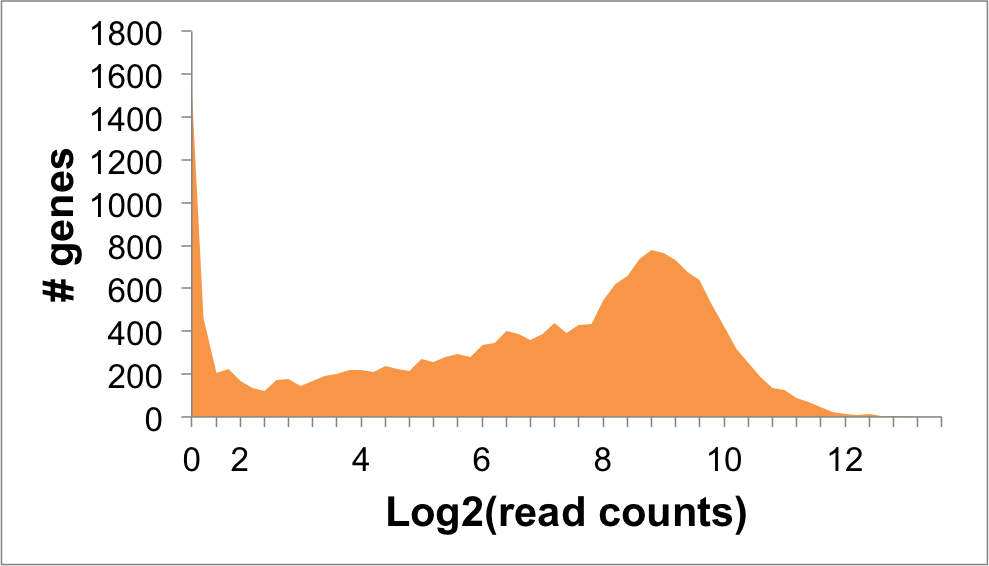
- Expression level (log2 read counts): 3.49
Expression Distribution
TNFRSF1A Expression in NALM6 Cells: 3.49