ANKRD1
Gene Information
- Official Symbol: ANKRD1
- Official Name: ankyrin repeat domain 1
- Aliases and Previous Symbols: N/A
- Entrez ID: 27063
- UniProt: Q15327
- Interactions: BioGRID
- PubMed articles: Open PubMed
- OMIM: Open OMIM
Function Summary
- Entrez Summary: The protein encoded by this gene is localized to the nucleus of endothelial cells and is induced by IL-1 and TNF-alpha stimulation. Studies in rat cardiomyocytes suggest that this gene functions as a transcription factor. Interactions between this protein and the sarcomeric proteins myopalladin and titin suggest that it may also be involved in the myofibrillar stretch-sensor system. [provided by RefSeq, Jul 2008].
- UniProt Summary: May play an important role in endothelial cell activation. May act as a nuclear transcription factor that negatively regulates the expression of cardiac genes. Induction seems to be correlated with apoptotic cell death in hepatoma cells. {ECO:0000269|PubMed:15805281, ECO:0000269|PubMed:7730328}.
Pfam Domains GO Terms
Pfam Domains
| Ank 2 |
| Ank |
GO Terms
| RNA polymerase II-specific DNA-binding transcription factor binding |
| titin binding |
| positive regulation of DNA damage response, signal transduction by p53 class mediator |
| response to muscle stretch |
| I band |
| positive regulation of signal transduction by p53 class mediator |
| R-SMAD binding |
| regulation of DNA damage response, signal transduction by p53 class mediator |
| negative regulation of DNA biosynthetic process |
| sarcomere organization |
| RNA polymerase II transcription factor binding |
| myofibril assembly |
| p53 binding |
| cardiac muscle tissue morphogenesis |
| cellular response to mechanical stimulus |
| muscle tissue morphogenesis |
| muscle organ morphogenesis |
| positive regulation of response to DNA damage stimulus |
| cellular component assembly involved in morphogenesis |
| histone deacetylase binding |
| regulation of DNA biosynthetic process |
| actomyosin structure organization |
| negative regulation of DNA metabolic process |
| skeletal muscle tissue development |
| skeletal muscle organ development |
| fibrillar center |
| striated muscle cell development |
| muscle cell development |
| cellular response to transforming growth factor beta stimulus |
| response to transforming growth factor beta |
| cardiac muscle tissue development |
| cellular response to interleukin-1 |
| regulation of signal transduction by p53 class mediator |
| cellular response to lipopolysaccharide |
| cellular response to hypoxia |
| cellular response to molecule of bacterial origin |
| cellular response to decreased oxygen levels |
| response to interleukin-1 |
| striated muscle cell differentiation |
| response to mechanical stimulus |
| cellular response to biotic stimulus |
| cellular response to oxygen levels |
| regulation of response to DNA damage stimulus |
| cellular response to tumor necrosis factor |
| transcription corepressor activity |
| muscle cell differentiation |
| heart morphogenesis |
| response to tumor necrosis factor |
| positive regulation of protein secretion |
| positive regulation of neuron projection development |
| transcription coactivator activity |
| striated muscle tissue development |
| positive regulation of peptide secretion |
| muscle organ development |
| muscle tissue development |
| response to lipopolysaccharide |
| cellular response to abiotic stimulus |
| cellular response to environmental stimulus |
| response to molecule of bacterial origin |
| cellular response to external stimulus |
| response to hypoxia |
| regulation of DNA metabolic process |
| response to decreased oxygen levels |
| positive regulation of neuron differentiation |
| response to oxygen levels |
| positive regulation of cell projection organization |
| regulation of lipid metabolic process |
| positive regulation of secretion by cell |
| positive regulation of protein transport |
| positive regulation of secretion |
| supramolecular fiber organization |
| positive regulation of establishment of protein localization |
| regulation of protein secretion |
| positive regulation of neurogenesis |
| muscle structure development |
| actin cytoskeleton organization |
| regulation of peptide secretion |
| regulation of neuron projection development |
| cellular response to growth factor stimulus |
| cellular response to lipid |
| heart development |
| response to growth factor |
| positive regulation of nervous system development |
| cellular response to organic cyclic compound |
| positive regulation of cell development |
| tissue morphogenesis |
| actin filament-based process |
| positive regulation of apoptotic process |
| positive regulation of programmed cell death |
| regulation of neuron differentiation |
| response to bacterium |
| regulation of plasma membrane bounded cell projection organization |
| positive regulation of cell death |
| regulation of protein transport |
| regulation of cell projection organization |
| regulation of cellular response to stress |
| regulation of peptide transport |
| regulation of establishment of protein localization |
| regulation of secretion by cell |
| organelle assembly |
| regulation of secretion |
| regulation of neurogenesis |
| cellular component morphogenesis |
| response to lipid |
| negative regulation of transcription by RNA polymerase II |
| circulatory system development |
| anatomical structure formation involved in morphogenesis |
| response to organic cyclic compound |
| regulation of nervous system development |
| regulation of cell development |
| animal organ morphogenesis |
| positive regulation of cell differentiation |
| positive regulation of transport |
| cellular response to cytokine stimulus |
| positive regulation of intracellular signal transduction |
| regulation of protein localization |
| cellular response to oxygen-containing compound |
| response to cytokine |
| cytoskeleton organization |
| response to abiotic stimulus |
| negative regulation of transcription, DNA-templated |
| positive regulation of cellular component organization |
| cellular response to endogenous stimulus |
| negative regulation of nucleic acid-templated transcription |
| negative regulation of RNA biosynthetic process |
| response to other organism |
| response to external biotic stimulus |
| response to biotic stimulus |
| negative regulation of RNA metabolic process |
| positive regulation of developmental process |
| negative regulation of cellular macromolecule biosynthetic process |
| negative regulation of nucleobase-containing compound metabolic process |
| DNA binding |
| negative regulation of macromolecule biosynthetic process |
| response to endogenous stimulus |
| regulation of response to stress |
| negative regulation of cellular biosynthetic process |
| generation of neurons |
| regulation of apoptotic process |
| negative regulation of biosynthetic process |
| response to oxygen-containing compound |
| regulation of programmed cell death |
| neurogenesis |
| positive regulation of nucleic acid-templated transcription |
| positive regulation of RNA biosynthetic process |
| cell development |
| positive regulation of signal transduction |
| regulation of cell death |
| cellular response to stress |
| negative regulation of gene expression |
| positive regulation of RNA metabolic process |
| positive regulation of multicellular organismal process |
| tissue development |
| regulation of cell differentiation |
| positive regulation of cell communication |
| positive regulation of signaling |
| regulation of intracellular signal transduction |
| regulation of transport |
| positive regulation of nucleobase-containing compound metabolic process |
| positive regulation of macromolecule biosynthetic process |
| positive regulation of cellular biosynthetic process |
| positive regulation of biosynthetic process |
CRISPR Data
Compound Hit Most Correlated Genes in Chemogenomics Tissues where Essential in the Avana Dataset (DepMap 20Q1)
Compound Hit
| Screen | Score |
|---|---|
| ABT-702 5μM plus Dimethyloxaloylglycine 11μM R07 exp319 | 1.98 |
Most Correlated Genes in Chemogenomics
No correlation found to any other genes in chemogenomics.
Tissues where Essential in the Avana Dataset (DepMap 20Q1)
Global Fraction of Cell Lines Where Essential: 0/726
| Tissue | Fraction Of Cell Lines Where Essential |
|---|---|
| 1290807.0 | 0/1 |
| 909776.0 | 0/1 |
| bile duct | 0/28 |
| blood | 0/28 |
| bone | 0/25 |
| breast | 0/33 |
| central nervous system | 0/56 |
| cervix | 0/4 |
| colorectal | 0/17 |
| esophagus | 0/13 |
| fibroblast | 0/1 |
| gastric | 0/15 |
| kidney | 0/21 |
| liver | 0/20 |
| lung | 0/75 |
| lymphocyte | 0/14 |
| ovary | 0/26 |
| pancreas | 0/24 |
| peripheral nervous system | 0/16 |
| plasma cell | 0/15 |
| prostate | 0/1 |
| skin | 0/24 |
| soft tissue | 0/7 |
| thyroid | 0/2 |
| upper aerodigestive | 0/22 |
| urinary tract | 0/29 |
| uterus | 0/5 |
Essentiality in NALM6
- Essentiality Rank: 17456
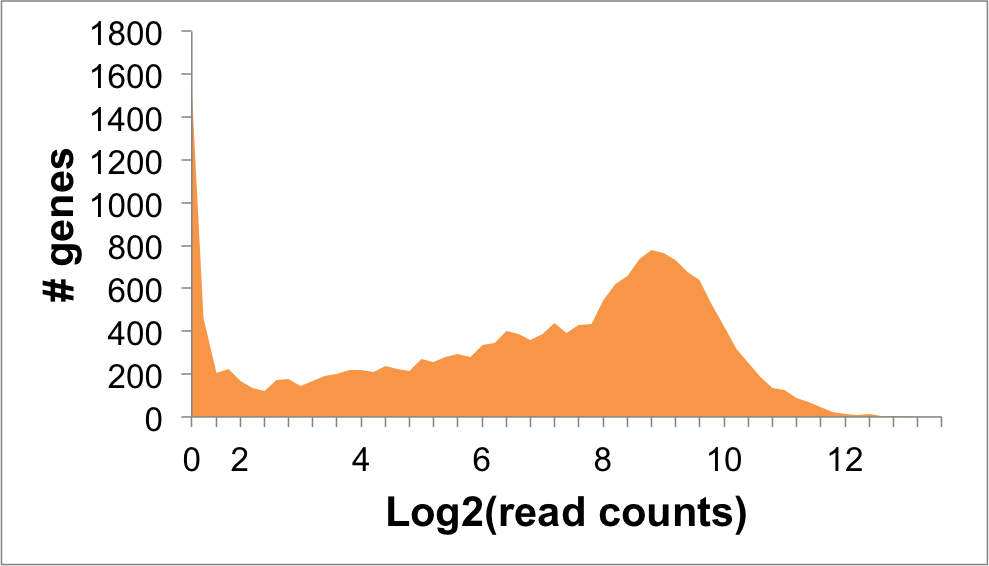
- Expression level (log2 read counts): -2.28
Expression Distribution
ANKRD1 Expression in NALM6 Cells: -2.28