ATAD5
Gene Information
- Official Symbol: ATAD5
- Official Name: ATPase family AAA domain containing 5
- Aliases and Previous Symbols: N/A
- Entrez ID: 79915
- UniProt: Q96QE3
- Interactions: BioGRID
- PubMed articles: Open PubMed
- OMIM: Open OMIM
Function Summary
- Entrez Summary: N/A
- UniProt Summary: Involved in DNA damage response. Involved in a RAD9A- related damage checkpoint, a pathway that is important in determining whether DNA damage is compatible with cell survival or whether it requires cell elimination by apoptosis. Modulates the RAD9A interaction with BCL2 and thereby induces DNA damages- induced apoptosis. {ECO:0000269|PubMed:15983387}.
Pfam Domains GO Terms
Pfam Domains
| AAA |
GO Terms
| DNA clamp unloading |
| DNA clamp unloader activity |
| Elg1 RFC-like complex |
| positive regulation of isotype switching to IgG isotypes |
| regulation of isotype switching to IgG isotypes |
| negative regulation of intrinsic apoptotic signaling pathway in response to DNA damage by p53 class mediator |
| regulation of intrinsic apoptotic signaling pathway in response to DNA damage by p53 class mediator |
| somatic recombination of immunoglobulin genes involved in immune response |
| isotype switching |
| somatic diversification of immunoglobulins involved in immune response |
| negative regulation of intrinsic apoptotic signaling pathway by p53 class mediator |
| somatic recombination of immunoglobulin gene segments |
| positive regulation of isotype switching |
| immunoglobulin production involved in immunoglobulin mediated immune response |
| intrinsic apoptotic signaling pathway in response to DNA damage by p53 class mediator |
| positive regulation of cell cycle G2/M phase transition |
| regulation of intrinsic apoptotic signaling pathway by p53 class mediator |
| negative regulation of intrinsic apoptotic signaling pathway in response to DNA damage |
| negative regulation of signal transduction by p53 class mediator |
| regulation of isotype switching |
| somatic cell DNA recombination |
| somatic diversification of immune receptors via germline recombination within a single locus |
| positive regulation of DNA replication |
| somatic diversification of immunoglobulins |
| positive regulation of immunoglobulin mediated immune response |
| positive regulation of B cell mediated immunity |
| positive regulation of DNA recombination |
| regulation of intrinsic apoptotic signaling pathway in response to DNA damage |
| positive regulation of B cell proliferation |
| B cell proliferation |
| positive regulation of immunoglobulin production |
| B cell activation involved in immune response |
| nuclear DNA replication |
| cell cycle DNA replication |
| somatic diversification of immune receptors |
| intrinsic apoptotic signaling pathway by p53 class mediator |
| regulation of immunoglobulin mediated immune response |
| regulation of B cell mediated immunity |
| regulation of B cell proliferation |
| regulation of immunoglobulin production |
| intrinsic apoptotic signaling pathway in response to DNA damage |
| negative regulation of response to DNA damage stimulus |
| lymphocyte proliferation |
| mononuclear cell proliferation |
| positive regulation of cell cycle phase transition |
| negative regulation of intrinsic apoptotic signaling pathway |
| positive regulation of production of molecular mediator of immune response |
| leukocyte proliferation |
| positive regulation of adaptive immune response based on somatic recombination of immune receptors built from immunoglobulin superfamily domains |
| signal transduction in response to DNA damage |
| regulation of DNA recombination |
| positive regulation of adaptive immune response |
| positive regulation of lymphocyte mediated immunity |
| regulation of DNA replication |
| lymphocyte activation involved in immune response |
| DNA-dependent DNA replication |
| signal transduction by p53 class mediator |
| positive regulation of lymphocyte proliferation |
| positive regulation of mononuclear cell proliferation |
| positive regulation of leukocyte mediated immunity |
| positive regulation of leukocyte proliferation |
| regulation of production of molecular mediator of immune response |
| regulation of adaptive immune response based on somatic recombination of immune receptors built from immunoglobulin superfamily domains |
| intrinsic apoptotic signaling pathway |
| regulation of lymphocyte mediated immunity |
| B cell activation |
| immunoglobulin production |
| regulation of intrinsic apoptotic signaling pathway |
| regulation of adaptive immune response |
| positive regulation of B cell activation |
| production of molecular mediator of immune response |
| regulation of signal transduction by p53 class mediator |
| positive regulation of DNA metabolic process |
| regulation of leukocyte mediated immunity |
| immunoglobulin mediated immune response |
| regulation of B cell activation |
| B cell mediated immunity |
| regulation of lymphocyte proliferation |
| regulation of mononuclear cell proliferation |
| regulation of cell cycle G2/M phase transition |
| DNA replication |
| regulation of response to DNA damage stimulus |
| positive regulation of immune effector process |
| DNA recombination |
| regulation of leukocyte proliferation |
| negative regulation of apoptotic signaling pathway |
| lymphocyte mediated immunity |
| adaptive immune response based on somatic recombination of immune receptors built from immunoglobulin superfamily domains |
| apoptotic signaling pathway |
| positive regulation of cell cycle process |
| nucleic acid phosphodiester bond hydrolysis |
| regulation of DNA metabolic process |
| positive regulation of lymphocyte activation |
| positive regulation of cell cycle |
| lymphocyte activation |
| regulation of apoptotic signaling pathway |
| positive regulation of leukocyte activation |
| regulation of mitotic cell cycle phase transition |
| positive regulation of cell activation |
| regulation of cell cycle phase transition |
| regulation of immune effector process |
| negative regulation of intracellular signal transduction |
| regulation of lymphocyte activation |
| cell population proliferation |
| regulation of leukocyte activation |
| adaptive immune response |
| leukocyte activation involved in immune response |
| cell activation involved in immune response |
| regulation of mitotic cell cycle |
| regulation of cell activation |
| immune system development |
| regulation of cellular response to stress |
| DNA metabolic process |
| regulation of cell cycle process |
| leukocyte mediated immunity |
| cellular response to DNA damage stimulus |
| positive regulation of immune response |
| negative regulation of apoptotic process |
| negative regulation of programmed cell death |
| positive regulation of cell population proliferation |
| apoptotic process |
| leukocyte activation |
| negative regulation of cell death |
| cell cycle process |
| programmed cell death |
| cell activation |
| cell death |
| immune effector process |
| positive regulation of immune system process |
| regulation of immune response |
| regulation of cell cycle |
| negative regulation of signal transduction |
| cell cycle |
| negative regulation of cell communication |
| negative regulation of signaling |
| positive regulation of developmental process |
| DNA binding |
| regulation of response to stress |
| ATP binding |
| regulation of apoptotic process |
| regulation of programmed cell death |
| regulation of cell population proliferation |
| negative regulation of response to stimulus |
| regulation of immune system process |
| regulation of cell death |
| intracellular signal transduction |
| cellular response to stress |
| cellular macromolecule biosynthetic process |
| positive regulation of multicellular organismal process |
| macromolecule biosynthetic process |
| regulation of intracellular signal transduction |
| immune response |
| positive regulation of nucleobase-containing compound metabolic process |
| positive regulation of macromolecule biosynthetic process |
| positive regulation of cellular biosynthetic process |
| positive regulation of biosynthetic process |
CRISPR Data
Compound Hit Most Correlated Genes in Chemogenomics Tissues where Essential in the Avana Dataset (DepMap 20Q1)
Compound Hit
| Screen | Score |
|---|---|
| FK-506 5μM R07 exp358 | 1.74 |
| VER-155008 3.9μM R06 exp301 | 2.09 |
| Thapsigargin 0.005μM R07 exp407 | 2.1 |
Most Correlated Genes in Chemogenomics
No correlation found to any other genes in chemogenomics.
Tissues where Essential in the Avana Dataset (DepMap 20Q1)
Global Fraction of Cell Lines Where Essential: 0/739
| Tissue | Fraction Of Cell Lines Where Essential |
|---|---|
| 1290807.0 | 0/1 |
| 909776.0 | 0/1 |
| bile duct | 0/28 |
| blood | 0/28 |
| bone | 0/26 |
| breast | 0/33 |
| central nervous system | 0/56 |
| cervix | 0/4 |
| colorectal | 0/17 |
| esophagus | 0/13 |
| fibroblast | 0/1 |
| gastric | 0/16 |
| kidney | 0/21 |
| liver | 0/20 |
| lung | 0/75 |
| lymphocyte | 0/16 |
| ovary | 0/26 |
| pancreas | 0/24 |
| peripheral nervous system | 0/16 |
| plasma cell | 0/15 |
| prostate | 0/1 |
| skin | 0/24 |
| soft tissue | 0/9 |
| thyroid | 0/2 |
| upper aerodigestive | 0/22 |
| urinary tract | 0/29 |
| uterus | 0/5 |
Essentiality in NALM6
- Essentiality Rank: 711
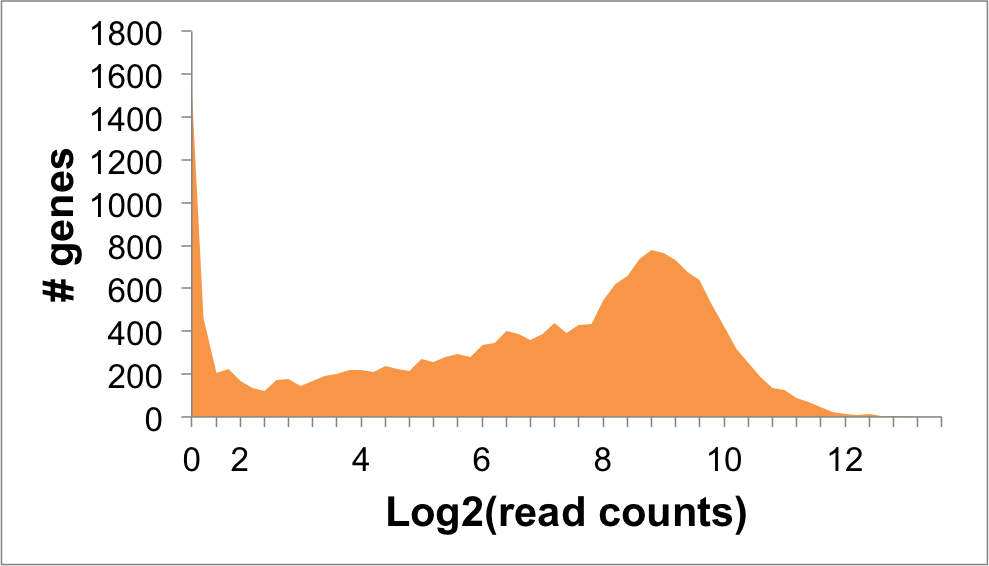
- Expression level (log2 read counts): 6.86
Expression Distribution
ATAD5 Expression in NALM6 Cells: 6.86