CCR1
Gene Information
- Official Symbol: CCR1
- Official Name: C-C motif chemokine receptor 1
- Aliases and Previous Symbols: N/A
- Entrez ID: 1230
- UniProt: P32246
- Interactions: BioGRID
- PubMed articles: Open PubMed
- OMIM: Open OMIM
Function Summary
- Entrez Summary: N/A
- UniProt Summary: Receptor for a C-C type chemokine. Binds to MIP-1-alpha, MIP-1-delta, RANTES, and MCP-3 and, less efficiently, to MIP-1- beta or MCP-1 and subsequently transduces a signal by increasing the intracellular calcium ions level. Responsible for affecting stem cell proliferation.
Pfam Domains GO Terms
Pfam Domains
| 7tm 1 |
| 7TM GPCR Srsx |
GO Terms
| chemokine (C-C motif) ligand 5 binding |
| chemokine (C-C motif) ligand 7 binding |
| chemokine receptor activity |
| positive regulation of monocyte chemotaxis |
| dendritic cell chemotaxis |
| negative regulation of bone mineralization |
| dendritic cell migration |
| C-C chemokine receptor activity |
| C-C chemokine binding |
| positive regulation of mononuclear cell migration |
| chemokine binding |
| regulation of monocyte chemotaxis |
| positive regulation of osteoclast differentiation |
| phosphatidylinositol phospholipase C activity |
| negative regulation of biomineral tissue development |
| negative regulation of biomineralization |
| regulation of mononuclear cell migration |
| positive regulation of myeloid leukocyte differentiation |
| regulation of osteoclast differentiation |
| negative regulation of ossification |
| regulation of bone mineralization |
| chemokine-mediated signaling pathway |
| positive regulation of leukocyte chemotaxis |
| response to chemokine |
| cellular response to chemokine |
| positive regulation of myeloid cell differentiation |
| regulation of biomineral tissue development |
| regulation of biomineralization |
| regulation of leukocyte chemotaxis |
| regulation of myeloid leukocyte differentiation |
| positive regulation of calcium ion transport |
| positive regulation of leukocyte migration |
| positive regulation of chemotaxis |
| leukocyte chemotaxis |
| calcium-mediated signaling |
| positive regulation of leukocyte differentiation |
| positive regulation of hemopoiesis |
| regulation of ossification |
| regulation of leukocyte migration |
| cell chemotaxis |
| positive regulation of ERK1 and ERK2 cascade |
| regulation of chemotaxis |
| regulation of myeloid cell differentiation |
| G protein-coupled receptor signaling pathway, coupled to cyclic nucleotide second messenger |
| regulation of calcium ion transport |
| calcium ion transport |
| regulation of leukocyte differentiation |
| positive regulation of ion transport |
| positive regulation of cytosolic calcium ion concentration |
| regulation of ERK1 and ERK2 cascade |
| divalent metal ion transport |
| divalent inorganic cation transport |
| regulation of cytosolic calcium ion concentration |
| second-messenger-mediated signaling |
| leukocyte migration |
| regulation of metal ion transport |
| external side of plasma membrane |
| cellular calcium ion homeostasis |
| calcium ion homeostasis |
| regulation of hemopoiesis |
| cellular divalent inorganic cation homeostasis |
| divalent inorganic cation homeostasis |
| inflammatory response |
| positive regulation of cell migration |
| positive regulation of cell motility |
| positive regulation of cellular component movement |
| positive regulation of MAPK cascade |
| chemotaxis |
| positive regulation of locomotion |
| taxis |
| cellular metal ion homeostasis |
| response to wounding |
| positive regulation of response to external stimulus |
| metal ion homeostasis |
| cellular cation homeostasis |
| metal ion transport |
| cellular ion homeostasis |
| cytokine-mediated signaling pathway |
| regulation of ion transport |
| cation homeostasis |
| inorganic ion homeostasis |
| cellular chemical homeostasis |
| regulation of MAPK cascade |
| ion homeostasis |
| exocytosis |
| cation transport |
| regulation of cell migration |
| cellular homeostasis |
| regulation of cell motility |
| cell adhesion |
| biological adhesion |
| negative regulation of developmental process |
| cell migration |
| positive regulation of cell differentiation |
| regulation of locomotion |
| positive regulation of transport |
| regulation of cellular component movement |
| secretion by cell |
| cellular response to cytokine stimulus |
| positive regulation of protein phosphorylation |
| positive regulation of intracellular signal transduction |
| export from cell |
| positive regulation of phosphorylation |
| localization of cell |
| cell motility |
| regulation of response to external stimulus |
| response to cytokine |
| chemical homeostasis |
| cell-cell signaling |
| secretion |
| positive regulation of phosphate metabolic process |
| positive regulation of phosphorus metabolic process |
| positive regulation of immune system process |
| negative regulation of multicellular organismal process |
| positive regulation of protein modification process |
| locomotion |
| G protein-coupled receptor signaling pathway |
| defense response |
| positive regulation of developmental process |
| ion transport |
| integral component of plasma membrane |
| regulation of protein phosphorylation |
| movement of cell or subcellular component |
| regulation of phosphorylation |
| positive regulation of cellular protein metabolic process |
| homeostatic process |
| positive regulation of signal transduction |
| regulation of immune system process |
| intracellular signal transduction |
| positive regulation of protein metabolic process |
| negative regulation of gene expression |
| positive regulation of multicellular organismal process |
| regulation of phosphate metabolic process |
| regulation of phosphorus metabolic process |
| regulation of cell differentiation |
| positive regulation of cell communication |
| positive regulation of signaling |
| regulation of intracellular signal transduction |
| regulation of protein modification process |
| regulation of transport |
| immune response |
| vesicle-mediated transport |
CRISPR Data
Compound Hit Most Correlated Genes in Chemogenomics Tissues where Essential in the Avana Dataset (DepMap 20Q1)
Compound Hit
| Screen | Score |
|---|---|
| THZ531 0.11 to 0.125 to 0.35μM on day4 then day6 R07 exp412 | 1.83 |
Most Correlated Genes in Chemogenomics
| Gene | Correlation |
|---|---|
| RRM1 | 0.526 |
Tissues where Essential in the Avana Dataset (DepMap 20Q1)
Global Fraction of Cell Lines Where Essential: 0/739
| Tissue | Fraction Of Cell Lines Where Essential |
|---|---|
| 1290807.0 | 0/1 |
| 909776.0 | 0/1 |
| bile duct | 0/28 |
| blood | 0/28 |
| bone | 0/26 |
| breast | 0/33 |
| central nervous system | 0/56 |
| cervix | 0/4 |
| colorectal | 0/17 |
| esophagus | 0/13 |
| fibroblast | 0/1 |
| gastric | 0/16 |
| kidney | 0/21 |
| liver | 0/20 |
| lung | 0/75 |
| lymphocyte | 0/16 |
| ovary | 0/26 |
| pancreas | 0/24 |
| peripheral nervous system | 0/16 |
| plasma cell | 0/15 |
| prostate | 0/1 |
| skin | 0/24 |
| soft tissue | 0/9 |
| thyroid | 0/2 |
| upper aerodigestive | 0/22 |
| urinary tract | 0/29 |
| uterus | 0/5 |
Essentiality in NALM6
- Essentiality Rank: 9276
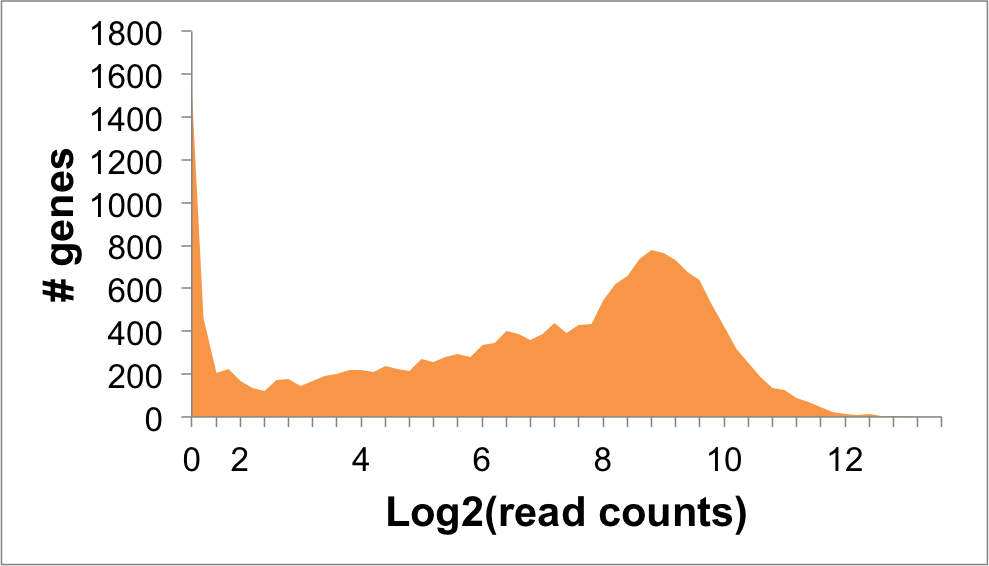
- Expression level (log2 read counts): 1.11
Expression Distribution
CCR1 Expression in NALM6 Cells: 1.11