DEFA1
Gene Information
- Official Symbol: DEFA1
- Official Name: defensin alpha 1
- Aliases and Previous Symbols: N/A
- Entrez ID: 1667
- UniProt: P59665
- Interactions: BioGRID
- PubMed articles: Open PubMed
- OMIM: Open OMIM
Function Summary
- Entrez Summary: N/A
- UniProt Summary: Defensin 1 and defensin 2 have antibacterial, fungicide and antiviral activities. Has antimicrobial activity against Gram- negative and Gram-positive bacteria. Defensins are thought to kill microbes by permeabilizing their plasma membrane. {ECO:0000269|PubMed:15616305, ECO:0000269|PubMed:17452329}.
Pfam Domains GO Terms
Pfam Domains
| Defensin propep |
| Defensin 1 |
GO Terms
| modification by symbiont of host structure |
| modification of cellular component in other organism involved in symbiotic interaction |
| modification by organism of membrane in other organism involved in symbiotic interaction |
| modification of structure of other organism involved in symbiotic interaction |
| modification by symbiont of host cell membrane |
| modification by symbiont of host cellular component |
| pore formation in membrane of other organism during symbiotic interaction |
| pore formation in membrane of other organism |
| membrane disruption in other organism |
| disruption by host of symbiont cells |
| T cell chemotaxis |
| disruption of cells of other organism involved in symbiotic interaction |
| innate immune response in mucosa |
| intracellular estrogen receptor signaling pathway |
| defense response to protozoan |
| response to protozoan |
| T cell migration |
| mucosal immune response |
| organ or tissue specific immune response |
| defense response to fungus |
| antibacterial humoral response |
| modification by symbiont of host morphology or physiology |
| lymphocyte chemotaxis |
| response to fungus |
| disruption of cells of other organism |
| killing of cells of other organism |
| antimicrobial humoral immune response mediated by antimicrobial peptide |
| lymphocyte migration |
| intracellular steroid hormone receptor signaling pathway |
| modification by host of symbiont morphology or physiology |
| interaction with symbiont |
| defense response to Gram-negative bacterium |
| cell killing |
| azurophil granule lumen |
| defense response to Gram-positive bacterium |
| Golgi lumen |
| modification of morphology or physiology of other organism involved in symbiotic interaction |
| antimicrobial humoral response |
| steroid hormone mediated signaling pathway |
| leukocyte chemotaxis |
| modification of morphology or physiology of other organism |
| interaction with host |
| intracellular receptor signaling pathway |
| hormone-mediated signaling pathway |
| cellular response to lipopolysaccharide |
| cellular response to steroid hormone stimulus |
| cellular response to molecule of bacterial origin |
| defense response to virus |
| cell chemotaxis |
| cellular response to biotic stimulus |
| response to virus |
| response to lipopolysaccharide |
| response to molecule of bacterial origin |
| response to steroid hormone |
| defense response to bacterium |
| humoral immune response |
| collagen-containing extracellular matrix |
| leukocyte migration |
| neutrophil degranulation |
| neutrophil activation involved in immune response |
| neutrophil mediated immunity |
| neutrophil activation |
| granulocyte activation |
| leukocyte degranulation |
| myeloid leukocyte mediated immunity |
| cellular response to lipid |
| myeloid cell activation involved in immune response |
| cellular response to organic cyclic compound |
| chemotaxis |
| taxis |
| myeloid leukocyte activation |
| cellular response to hormone stimulus |
| leukocyte activation involved in immune response |
| cell activation involved in immune response |
| response to bacterium |
| regulated exocytosis |
| innate immune response |
| leukocyte mediated immunity |
| symbiotic process |
| exocytosis |
| interspecies interaction between organisms |
| response to lipid |
| response to hormone |
| response to organic cyclic compound |
| leukocyte activation |
| defense response to other organism |
| cell migration |
| secretion by cell |
| export from cell |
| cellular response to oxygen-containing compound |
| cell activation |
| localization of cell |
| cell motility |
| immune effector process |
| secretion |
| cellular response to endogenous stimulus |
| response to other organism |
| response to external biotic stimulus |
| locomotion |
| response to biotic stimulus |
| defense response |
| response to endogenous stimulus |
| movement of cell or subcellular component |
| response to oxygen-containing compound |
| extracellular space |
| immune response |
| extracellular region |
| vesicle-mediated transport |
CRISPR Data
Compound Hit Most Correlated Genes in Chemogenomics Tissues where Essential in the Avana Dataset (DepMap 20Q1)
Compound Hit
No hits were found.
Most Correlated Genes in Chemogenomics
No correlation found to any other genes in chemogenomics.
Tissues where Essential in the Avana Dataset (DepMap 20Q1)
Global Fraction of Cell Lines Where Essential: 0/739
| Tissue | Fraction Of Cell Lines Where Essential |
|---|---|
| 1290807.0 | 0/1 |
| 909776.0 | 0/1 |
| bile duct | 0/28 |
| blood | 0/28 |
| bone | 0/26 |
| breast | 0/33 |
| central nervous system | 0/56 |
| cervix | 0/4 |
| colorectal | 0/17 |
| esophagus | 0/13 |
| fibroblast | 0/1 |
| gastric | 0/16 |
| kidney | 0/21 |
| liver | 0/20 |
| lung | 0/75 |
| lymphocyte | 0/16 |
| ovary | 0/26 |
| pancreas | 0/24 |
| peripheral nervous system | 0/16 |
| plasma cell | 0/15 |
| prostate | 0/1 |
| skin | 0/24 |
| soft tissue | 0/9 |
| thyroid | 0/2 |
| upper aerodigestive | 0/22 |
| urinary tract | 0/29 |
| uterus | 0/5 |
Essentiality in NALM6
- Essentiality Rank: 14167
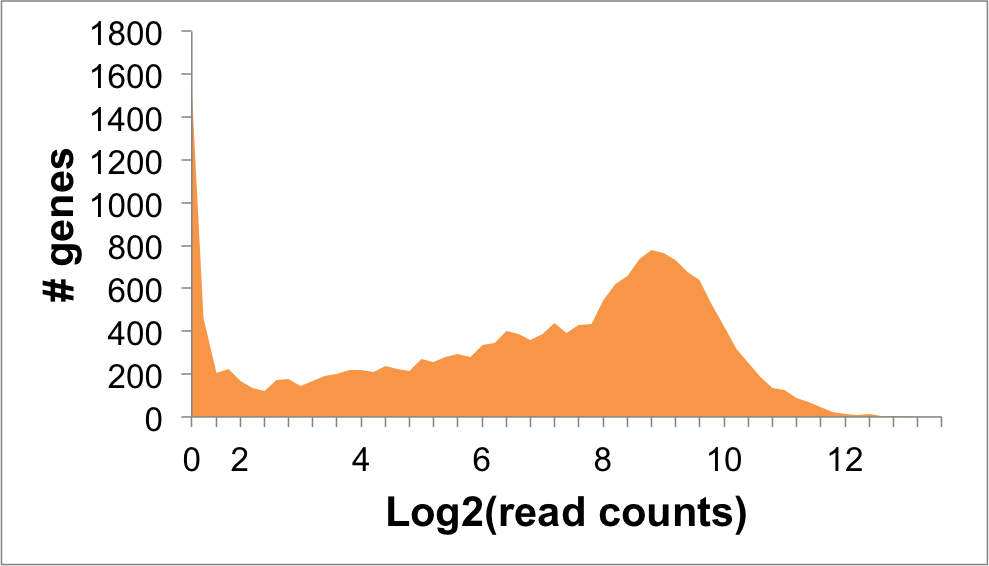
- Expression level (log2 read counts): -7.68
Expression Distribution
DEFA1 Expression in NALM6 Cells: -7.68