DRD2
Gene Information
- Official Symbol: DRD2
- Official Name: dopamine receptor D2
- Aliases and Previous Symbols: N/A
- Entrez ID: 1813
- UniProt: P14416
- Interactions: BioGRID
- PubMed articles: Open PubMed
- OMIM: Open OMIM
Function Summary
- Entrez Summary: This gene encodes the D2 subtype of the dopamine receptor. This G-protein coupled receptor inhibits adenylyl cyclase activity. A missense mutation in this gene causes myoclonus dystonia; other mutations have been associated with schizophrenia. Alternative splicing of this gene results in two transcript variants encoding different isoforms. A third variant has been described, but it has not been determined whether this form is normal or due to aberrant splicing. [provided by RefSeq, Jul 2008].
- UniProt Summary: Dopamine receptor whose activity is mediated by G proteins which inhibit adenylyl cyclase. {ECO:0000269|PubMed:21645528}.
Pfam Domains GO Terms
Pfam Domains
| 7TM GPCR Srsx |
| 7TM GPCR Srx |
| 7tm 1 |
GO Terms
| positive regulation of glial cell-derived neurotrophic factor secretion |
| regulation of glial cell-derived neurotrophic factor secretion |
| negative regulation of dopamine secretion |
| positive regulation of dopamine uptake involved in synaptic transmission |
| positive regulation of catecholamine uptake involved in synaptic transmission |
| orbitofrontal cortex development |
| negative regulation of dopamine receptor signaling pathway |
| branching morphogenesis of a nerve |
| negative regulation of circadian sleep/wake cycle, sleep |
| positive regulation of neurotransmitter uptake |
| regulation of locomotion involved in locomotory behavior |
| interneuron migration |
| cerebral cortex GABAergic interneuron migration |
| phospholipase C-activating dopamine receptor signaling pathway |
| positive regulation of synaptic transmission, dopaminergic |
| regulation of synapse structural plasticity |
| cerebral cortex GABAergic interneuron development |
| dopamine neurotransmitter receptor activity, coupled via Gi/Go |
| regulation of catecholamine uptake involved in synaptic transmission |
| neuron-neuron synaptic transmission |
| regulation of dopamine uptake involved in synaptic transmission |
| positive regulation of growth hormone secretion |
| negative regulation of synaptic transmission, glutamatergic |
| interneuron migration from the subpallium to the cortex |
| drinking behavior |
| adenylate cyclase-inhibiting dopamine receptor signaling pathway |
| behavioral response to ethanol |
| peristalsis |
| response to histamine |
| nervous system process involved in regulation of systemic arterial blood pressure |
| cerebral cortex GABAergic interneuron differentiation |
| regulation of dopamine receptor signaling pathway |
| substrate-independent telencephalic tangential migration |
| substrate-independent telencephalic tangential interneuron migration |
| negative regulation of cytosolic calcium ion concentration |
| adenohypophysis development |
| auditory behavior |
| dopaminergic synapse |
| G protein-coupled receptor internalization |
| dopamine binding |
| regulation of growth hormone secretion |
| negative regulation of voltage-gated calcium channel activity |
| grooming behavior |
| positive regulation of urine volume |
| positive regulation of renal sodium excretion |
| response to inactivity |
| GABAergic neuron differentiation |
| negative regulation of circadian rhythm |
| negative regulation of catecholamine secretion |
| prepulse inhibition |
| mechanosensory behavior |
| regulation of synaptic transmission, dopaminergic |
| postsynaptic modulation of chemical synaptic transmission |
| regulation of circadian sleep/wake cycle, sleep |
| adrenergic receptor activity |
| negative regulation of behavior |
| phasic smooth muscle contraction |
| striatum development |
| negative adaptation of signaling pathway |
| synaptic transmission, dopaminergic |
| desensitization of G protein-coupled receptor signaling pathway |
| regulation of neurotransmitter uptake |
| adaptation of signaling pathway |
| negative regulation of cellular response to drug |
| behavioral response to cocaine |
| positive regulation of long-term synaptic potentiation |
| regulation of renal sodium excretion |
| regulation of circadian sleep/wake cycle |
| regulation of urine volume |
| positive regulation of neuroblast proliferation |
| adrenergic receptor signaling pathway |
| adenylate cyclase-activating adrenergic receptor signaling pathway |
| arachidonate transport |
| regulation of excretion |
| arachidonic acid secretion |
| cerebral cortex neuron differentiation |
| subpallium development |
| positive regulation of receptor internalization |
| negative regulation of amine transport |
| response to auditory stimulus |
| icosanoid secretion |
| startle response |
| regulation of long-term neuronal synaptic plasticity |
| positive regulation of G protein-coupled receptor signaling pathway |
| negative regulation of response to drug |
| dopamine metabolic process |
| adult walking behavior |
| temperature homeostasis |
| forebrain neuron development |
| walking behavior |
| icosanoid transport |
| fatty acid derivative transport |
| positive regulation of multicellular organism growth |
| positive regulation of response to drug |
| non-motile cilium |
| regulation of synaptic transmission, GABAergic |
| long-term memory |
| response to amphetamine |
| regulation of neuroblast proliferation |
| response to isoquinoline alkaloid |
| ionotropic glutamate receptor binding |
| response to morphine |
| response to iron ion |
| regulation of renal system process |
| regulation of voltage-gated calcium channel activity |
| dopamine receptor signaling pathway |
| negative regulation of calcium ion transmembrane transporter activity |
| regulation of cellular response to drug |
| positive regulation of amine transport |
| positive regulation of neurotransmitter transport |
| negative regulation of insulin secretion |
| positive regulation of stem cell proliferation |
| positive regulation of cytokinesis |
| negative regulation of calcium ion transmembrane transport |
| regulation of dopamine secretion |
| pituitary gland development |
| negative regulation of cation channel activity |
| catecholamine metabolic process |
| sperm flagellum |
| catechol-containing compound metabolic process |
| regulation of long-term synaptic potentiation |
| integral component of postsynaptic membrane |
| negative regulation of peptide hormone secretion |
| negative regulation of blood pressure |
| response to amine |
| negative regulation of protein kinase B signaling |
| negative regulation of G protein-coupled receptor signaling pathway |
| visual learning |
| response to axon injury |
| response to nicotine |
| forebrain neuron differentiation |
| response to bronchodilator |
| positive regulation of neural precursor cell proliferation |
| positive regulation of receptor-mediated endocytosis |
| smooth muscle contraction |
| axon terminus |
| regulation of neuronal synaptic plasticity |
| visual behavior |
| ciliary membrane |
| regulation of receptor internalization |
| response to cocaine |
| release of sequestered calcium ion into cytosol |
| negative regulation of innate immune response |
| lateral plasma membrane |
| drug binding |
| negative regulation of sequestering of calcium ion |
| telencephalon cell migration |
| endocytic vesicle |
| long-chain fatty acid transport |
| integral component of presynaptic membrane |
| negative regulation of calcium ion transport |
| negative regulation of synaptic transmission |
| forebrain cell migration |
| regulation of catecholamine secretion |
| circadian regulation of gene expression |
| receptor internalization |
| negative regulation of hormone secretion |
| excitatory postsynaptic potential |
| regulation of stem cell proliferation |
| regulation of multicellular organism growth |
| forebrain generation of neurons |
| calcium ion transmembrane import into cytosol |
| chemical synaptic transmission, postsynaptic |
| GABA-ergic synapse |
| synaptic vesicle membrane |
| regulation of synaptic transmission, glutamatergic |
| negative regulation of ion transmembrane transporter activity |
| regulation of behavior |
| fatty acid transport |
| calcium ion transport into cytosol |
| diencephalon development |
| adult locomotory behavior |
| associative learning |
| response to anesthetic |
| regulation of synaptic vesicle exocytosis |
| negative regulation of transporter activity |
| acid secretion |
| central nervous system neuron development |
| negative regulation of cation transmembrane transport |
| phenol-containing compound metabolic process |
| adenylate cyclase-inhibiting G protein-coupled receptor signaling pathway |
| cellular response to dopamine |
| feeding behavior |
| positive regulation of cell division |
| response to dopamine |
| acrosomal vesicle |
| regulation of sodium ion transport |
| regulation of neural precursor cell proliferation |
| regulation of calcium ion transmembrane transporter activity |
| cytosolic calcium ion transport |
| regulation of cytokinesis |
| pigmentation |
| negative regulation of response to biotic stimulus |
| signal transduction involved in cellular response to ammonium ion |
| synapse assembly |
| regulation of amine transport |
| regulation of systemic arterial blood pressure |
| phospholipase C-activating G protein-coupled receptor signaling pathway |
| negative regulation of ion transmembrane transport |
| regulation of potassium ion transport |
| regulation of heart rate |
| positive regulation of peptide hormone secretion |
| regulation of response to drug |
| regulation of receptor-mediated endocytosis |
| positive regulation of endocytosis |
| regulation of postsynaptic membrane potential |
| cellular response to catecholamine stimulus |
| cellular response to monoamine stimulus |
| regulation of neurotransmitter secretion |
| receptor metabolic process |
| response to catecholamine |
| response to monoamine |
| neuromuscular process |
| limbic system development |
| renal system process |
| response to alkaloid |
| regulation of synaptic vesicle cycle |
| regulation of circadian rhythm |
| negative regulation of transmembrane transport |
| regulation of phosphoprotein phosphatase activity |
| memory |
| neuron migration |
| endocrine system development |
| regulation of sequestering of calcium ion |
| response to ethanol |
| positive regulation of hormone secretion |
| adenylate cyclase-activating G protein-coupled receptor signaling pathway |
| cellular response to ammonium ion |
| negative regulation of protein secretion |
| perikaryon |
| monocarboxylic acid transport |
| negative regulation of peptide secretion |
| positive regulation of cytokine secretion |
| regulation of protein dephosphorylation |
| circadian rhythm |
| regulation of G protein-coupled receptor signaling pathway |
| regulation of neurotransmitter transport |
| adult behavior |
| learning |
| cAMP-mediated signaling |
| negative regulation of ion transport |
| regulation of calcium ion transmembrane transport |
| negative regulation of immune response |
| dendritic spine |
| positive regulation of synaptic transmission |
| regulation of regulated secretory pathway |
| morphogenesis of a branching structure |
| regulation of cell division |
| positive regulation of developmental growth |
| cyclic-nucleotide-mediated signaling |
| regulation of cation channel activity |
| regulation of phosphatase activity |
| regulation of insulin secretion |
| central nervous system neuron differentiation |
| negative regulation of protein transport |
| regulation of blood pressure |
| response to ammonium ion |
| negative regulation of establishment of protein localization |
| regulation of synaptic plasticity |
| ammonium ion metabolic process |
| locomotory behavior |
| calcium ion transmembrane transport |
| cilium |
| negative regulation of secretion by cell |
| regulation of cytokine secretion |
| regulation of endocytosis |
| negative regulation of defense response |
| adenylate cyclase-modulating G protein-coupled receptor signaling pathway |
| regulation of peptide hormone secretion |
| regulation of dephosphorylation |
| positive regulation of ERK1 and ERK2 cascade |
| response to mechanical stimulus |
| negative regulation of multi-organism process |
| regulation of synapse organization |
| regulation of protein kinase B signaling |
| regulation of exocytosis |
| regulation of synapse structure or activity |
| negative regulation of secretion |
| response to alcohol |
| receptor-mediated endocytosis |
| regulation of heart contraction |
| G protein-coupled receptor signaling pathway, coupled to cyclic nucleotide second messenger |
| regulation of calcium ion transport |
| calcium ion transport |
| muscle contraction |
| postsynaptic density |
| telencephalon development |
| regulation of ion transmembrane transporter activity |
| negative regulation of cell migration |
| learning or memory |
| positive regulation of growth |
| autophagy |
| process utilizing autophagic mechanism |
| regulation of transmembrane transporter activity |
| regulation of hormone secretion |
| positive regulation of protein secretion |
| synapse organization |
| negative regulation of cell motility |
| positive regulation of ion transport |
| rhythmic process |
| regulation of transporter activity |
| positive regulation of cytosolic calcium ion concentration |
| positive regulation of cell cycle process |
| regulation of blood circulation |
| positive regulation of peptide secretion |
| organic acid transport |
| carboxylic acid transport |
| regulation of ERK1 and ERK2 cascade |
| axon |
| divalent metal ion transport |
| lipid transport |
| cognition |
| muscle system process |
| response to xenobiotic stimulus |
| divalent inorganic cation transport |
| response to antibiotic |
| response to light stimulus |
| negative regulation of cellular component movement |
| lipid localization |
| negative regulation of locomotion |
| multicellular organismal homeostasis |
| regulation of cytosolic calcium ion concentration |
| activation of protein kinase activity |
| regulation of developmental growth |
| regulation of cation transmembrane transport |
| second-messenger-mediated signaling |
| response to hypoxia |
| glutamatergic synapse |
| regulation of neurotransmitter levels |
| cell-cell signaling by wnt |
| response to decreased oxygen levels |
| Wnt signaling pathway |
| negative regulation of response to external stimulus |
| response to metal ion |
| axonogenesis |
| positive regulation of cell cycle |
| response to oxygen levels |
| forebrain development |
| regulation of metal ion transport |
| blood circulation |
| circulatory system process |
| cellular response to drug |
| positive regulation of secretion by cell |
| negative regulation of protein phosphorylation |
| axon development |
| gland development |
| dendrite |
| chemical synaptic transmission |
| anterograde trans-synaptic signaling |
| positive regulation of protein transport |
| cell surface receptor signaling pathway involved in cell-cell signaling |
| regulation of membrane potential |
| cell morphogenesis involved in neuron differentiation |
| positive regulation of secretion |
| cellular calcium ion homeostasis |
| trans-synaptic signaling |
| response to radiation |
| negative regulation of immune system process |
| modulation of chemical synaptic transmission |
| regulation of trans-synaptic signaling |
| negative regulation of phosphorylation |
| calcium ion homeostasis |
| positive regulation of cytokine production |
| regulation of innate immune response |
| organic hydroxy compound metabolic process |
| organic anion transport |
| positive regulation of establishment of protein localization |
| synaptic signaling |
| sensory perception of smell |
| regulation of protein secretion |
| cellular divalent inorganic cation homeostasis |
| positive regulation of neurogenesis |
| regulation of ion transmembrane transport |
| neuron projection morphogenesis |
| plasma membrane bounded cell projection morphogenesis |
| negative regulation of transport |
| protein heterodimerization activity |
| divalent inorganic cation homeostasis |
| cell projection morphogenesis |
| regulation of peptide secretion |
| regulation of body fluid levels |
| drug metabolic process |
| negative regulation of intracellular signal transduction |
| response to toxic substance |
| cell part morphogenesis |
| regulation of response to biotic stimulus |
| positive regulation of protein kinase activity |
| regulation of hormone levels |
| response to inorganic substance |
| positive regulation of nervous system development |
| sensory perception of chemical stimulus |
| cellular response to organic cyclic compound |
| positive regulation of cell development |
| positive regulation of MAPK cascade |
| regulation of vesicle-mediated transport |
| endocytosis |
| cell morphogenesis involved in differentiation |
| cellular metal ion homeostasis |
| negative regulation of phosphate metabolic process |
| inorganic cation transmembrane transport |
| negative regulation of phosphorus metabolic process |
| regulation of transmembrane transport |
| response to wounding |
| behavior |
| positive regulation of kinase activity |
| anion transport |
| regulation of system process |
| negative regulation of protein modification process |
| cellular response to organonitrogen compound |
| cation transmembrane transport |
| metal ion homeostasis |
| cellular cation homeostasis |
| metal ion transport |
| cellular ion homeostasis |
| inorganic ion transmembrane transport |
| positive regulation of transferase activity |
| cellular response to nitrogen compound |
| neuron projection development |
| regulation of growth |
| import into cell |
| negative regulation of cell population proliferation |
| regulation of cytokine production |
| regulation of ion transport |
| cation homeostasis |
| regulation of protein transport |
| inorganic ion homeostasis |
| cell morphogenesis |
| regulation of peptide transport |
| brain development |
| cellular chemical homeostasis |
| regulation of establishment of protein localization |
| regulation of secretion by cell |
| regulation of cell cycle process |
| regulation of MAPK cascade |
| regulation of defense response |
| regulation of multi-organism process |
| head development |
| ion homeostasis |
| regulation of protein kinase activity |
| regulation of secretion |
| neuron development |
| regulation of neurogenesis |
| cellular component morphogenesis |
| cation transport |
| regulation of cell migration |
| regulation of kinase activity |
| protein homodimerization activity |
| cellular homeostasis |
| regulation of cell motility |
| regulation of cellular localization |
| positive regulation of cell population proliferation |
| response to organic cyclic compound |
| regulation of nervous system development |
| regulation of cell development |
| ion transmembrane transport |
| cell migration |
| positive regulation of cell differentiation |
| sensory perception |
| regulation of transferase activity |
| central nervous system development |
| regulation of locomotion |
| positive regulation of transport |
| negative regulation of cell death |
| regulation of cellular component movement |
| response to organonitrogen compound |
| neuron differentiation |
| positive regulation of protein phosphorylation |
| response to drug |
| positive regulation of intracellular signal transduction |
| regulation of protein localization |
| negative regulation of cellular protein metabolic process |
| cellular response to oxygen-containing compound |
| positive regulation of phosphorylation |
| identical protein binding |
| cell motility |
| localization of cell |
| response to nitrogen compound |
| regulation of response to external stimulus |
| negative regulation of protein metabolic process |
| chemical homeostasis |
| cell-cell signaling |
| secretion |
| plasma membrane bounded cell projection organization |
| positive regulation of phosphorus metabolic process |
| positive regulation of phosphate metabolic process |
| negative regulation of molecular function |
| regulation of immune response |
| cell projection organization |
| response to abiotic stimulus |
| regulation of cell cycle |
| negative regulation of multicellular organismal process |
| positive regulation of cellular component organization |
| positive regulation of transcription by RNA polymerase II |
| cellular response to endogenous stimulus |
| positive regulation of protein modification process |
| negative regulation of signal transduction |
| regulation of hydrolase activity |
| transmembrane transport |
| locomotion |
| G protein-coupled receptor signaling pathway |
| negative regulation of cell communication |
| negative regulation of signaling |
| positive regulation of developmental process |
| ion transport |
| nervous system process |
| integral component of plasma membrane |
| positive regulation of catalytic activity |
| regulation of protein phosphorylation |
| response to endogenous stimulus |
| regulation of response to stress |
| generation of neurons |
| positive regulation of transcription, DNA-templated |
| movement of cell or subcellular component |
| response to oxygen-containing compound |
| regulation of phosphorylation |
| positive regulation of cellular protein metabolic process |
| regulation of cell population proliferation |
| negative regulation of response to stimulus |
| neurogenesis |
| positive regulation of nucleic acid-templated transcription |
| positive regulation of RNA biosynthetic process |
| homeostatic process |
| cell development |
| positive regulation of signal transduction |
| regulation of immune system process |
| regulation of cell death |
| intracellular signal transduction |
| positive regulation of protein metabolic process |
| positive regulation of RNA metabolic process |
| positive regulation of multicellular organismal process |
| positive regulation of molecular function |
| regulation of phosphate metabolic process |
| regulation of phosphorus metabolic process |
| cellular catabolic process |
| regulation of cell differentiation |
| positive regulation of cell communication |
| positive regulation of signaling |
| regulation of intracellular signal transduction |
| establishment of localization in cell |
| regulation of protein modification process |
| regulation of transport |
| positive regulation of nucleobase-containing compound metabolic process |
| positive regulation of macromolecule biosynthetic process |
| vesicle-mediated transport |
| system process |
| positive regulation of cellular biosynthetic process |
| positive regulation of gene expression |
| positive regulation of biosynthetic process |
CRISPR Data
Compound Hit Most Correlated Genes in Chemogenomics Tissues where Essential in the Avana Dataset (DepMap 20Q1)
Compound Hit
| Screen | Score |
|---|---|
| CB-5083 0.4μM R08 exp468 | -2.42 |
| Vemurafenib 6.6μM R02 exp89 | -2.01 |
| All-trans-Retinoic-Acid 40μM R07 exp334 | 1.73 |
Most Correlated Genes in Chemogenomics
No correlation found to any other genes in chemogenomics.
Tissues where Essential in the Avana Dataset (DepMap 20Q1)
Global Fraction of Cell Lines Where Essential: 0/739
| Tissue | Fraction Of Cell Lines Where Essential |
|---|---|
| 1290807.0 | 0/1 |
| 909776.0 | 0/1 |
| bile duct | 0/28 |
| blood | 0/28 |
| bone | 0/26 |
| breast | 0/33 |
| central nervous system | 0/56 |
| cervix | 0/4 |
| colorectal | 0/17 |
| esophagus | 0/13 |
| fibroblast | 0/1 |
| gastric | 0/16 |
| kidney | 0/21 |
| liver | 0/20 |
| lung | 0/75 |
| lymphocyte | 0/16 |
| ovary | 0/26 |
| pancreas | 0/24 |
| peripheral nervous system | 0/16 |
| plasma cell | 0/15 |
| prostate | 0/1 |
| skin | 0/24 |
| soft tissue | 0/9 |
| thyroid | 0/2 |
| upper aerodigestive | 0/22 |
| urinary tract | 0/29 |
| uterus | 0/5 |
Essentiality in NALM6
- Essentiality Rank: 4269
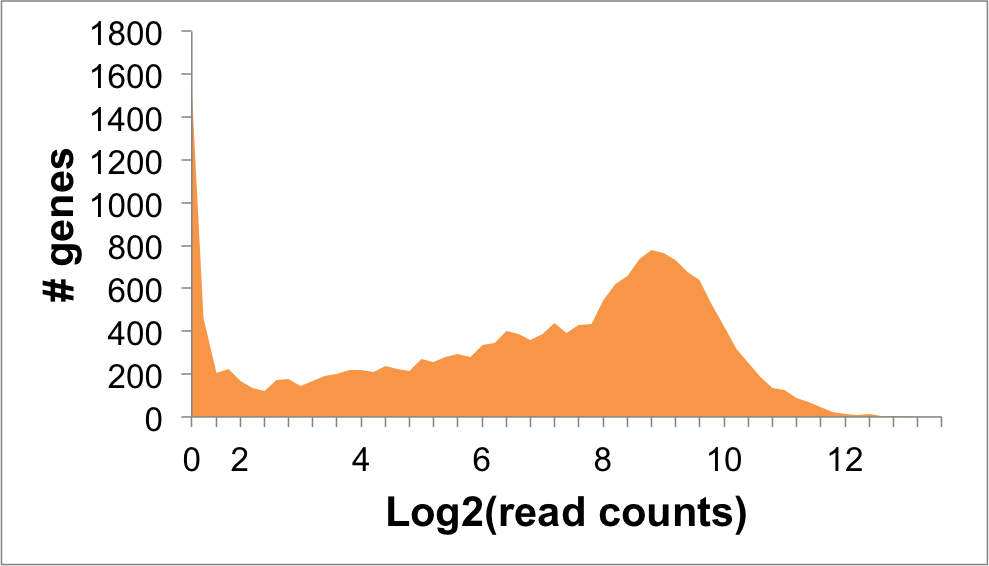
- Expression level (log2 read counts): -4.43
Expression Distribution
DRD2 Expression in NALM6 Cells: -4.43