EGR3
Gene Information
- Official Symbol: EGR3
- Official Name: early growth response 3
- Aliases and Previous Symbols: N/A
- Entrez ID: 1960
- UniProt: Q06889
- Interactions: BioGRID
- PubMed articles: Open PubMed
- OMIM: Open OMIM
Function Summary
- Entrez Summary: N/A
- UniProt Summary: Probable transcription factor involved in muscle spindle development.
Pfam Domains GO Terms
Pfam Domains
| DUF3446 |
GO Terms
| regulation of gamma-delta T cell differentiation |
| regulation of gamma-delta T cell activation |
| endothelial cell chemotaxis |
| positive regulation of T cell differentiation in thymus |
| cell migration involved in sprouting angiogenesis |
| regulation of T cell differentiation in thymus |
| blood vessel endothelial cell migration |
| neuromuscular synaptic transmission |
| cellular response to vascular endothelial growth factor stimulus |
| sprouting angiogenesis |
| endothelial cell migration |
| peripheral nervous system development |
| positive regulation of T cell differentiation |
| epithelial cell migration |
| epithelium migration |
| positive regulation of endothelial cell proliferation |
| positive regulation of lymphocyte differentiation |
| tissue migration |
| cellular response to fibroblast growth factor stimulus |
| response to fibroblast growth factor |
| regulation of endothelial cell proliferation |
| regulation of T cell differentiation |
| circadian rhythm |
| positive regulation of leukocyte differentiation |
| regulation of lymphocyte differentiation |
| ameboidal-type cell migration |
| positive regulation of hemopoiesis |
| positive regulation of epithelial cell proliferation |
| positive regulation of T cell activation |
| cell chemotaxis |
| positive regulation of leukocyte cell-cell adhesion |
| positive regulation of cell-cell adhesion |
| regulation of leukocyte differentiation |
| rhythmic process |
| muscle organ development |
| regulation of leukocyte cell-cell adhesion |
| RNA polymerase II regulatory region sequence-specific DNA binding |
| regulation of T cell activation |
| angiogenesis |
| regulation of epithelial cell proliferation |
| positive regulation of lymphocyte activation |
| regulation of cell-cell adhesion |
| positive regulation of leukocyte activation |
| positive regulation of cell adhesion |
| blood vessel morphogenesis |
| positive regulation of cell activation |
| anterograde trans-synaptic signaling |
| chemical synaptic transmission |
| trans-synaptic signaling |
| regulation of hemopoiesis |
| synaptic signaling |
| muscle structure development |
| blood vessel development |
| cellular response to growth factor stimulus |
| vasculature development |
| regulation of lymphocyte activation |
| cardiovascular system development |
| response to growth factor |
| chemotaxis |
| taxis |
| regulation of leukocyte activation |
| regulation of cell activation |
| tube morphogenesis |
| DNA-binding transcription factor activity |
| regulation of cell adhesion |
| tube development |
| circulatory system development |
| negative regulation of apoptotic process |
| anatomical structure formation involved in morphogenesis |
| negative regulation of programmed cell death |
| positive regulation of cell population proliferation |
| cell migration |
| positive regulation of cell differentiation |
| negative regulation of cell death |
| localization of cell |
| cell motility |
| cell-cell signaling |
| positive regulation of immune system process |
| positive regulation of transcription by RNA polymerase II |
| cellular response to endogenous stimulus |
| locomotion |
| positive regulation of developmental process |
| response to endogenous stimulus |
| regulation of apoptotic process |
| positive regulation of transcription, DNA-templated |
| movement of cell or subcellular component |
| DNA-binding transcription factor activity, RNA polymerase II-specific |
| regulation of programmed cell death |
| regulation of cell population proliferation |
| positive regulation of nucleic acid-templated transcription |
| positive regulation of RNA biosynthetic process |
| regulation of immune system process |
| regulation of cell death |
| positive regulation of RNA metabolic process |
| positive regulation of multicellular organismal process |
| regulation of cell differentiation |
| positive regulation of nucleobase-containing compound metabolic process |
| positive regulation of macromolecule biosynthetic process |
| positive regulation of cellular biosynthetic process |
| positive regulation of gene expression |
| positive regulation of biosynthetic process |
CRISPR Data
Compound Hit Most Correlated Genes in Chemogenomics Tissues where Essential in the Avana Dataset (DepMap 20Q1)
Compound Hit
Most Correlated Genes in Chemogenomics
No correlation found to any other genes in chemogenomics.
Tissues where Essential in the Avana Dataset (DepMap 20Q1)
Global Fraction of Cell Lines Where Essential: 0/739
| Tissue | Fraction Of Cell Lines Where Essential |
|---|---|
| 1290807.0 | 0/1 |
| 909776.0 | 0/1 |
| bile duct | 0/28 |
| blood | 0/28 |
| bone | 0/26 |
| breast | 0/33 |
| central nervous system | 0/56 |
| cervix | 0/4 |
| colorectal | 0/17 |
| esophagus | 0/13 |
| fibroblast | 0/1 |
| gastric | 0/16 |
| kidney | 0/21 |
| liver | 0/20 |
| lung | 0/75 |
| lymphocyte | 0/16 |
| ovary | 0/26 |
| pancreas | 0/24 |
| peripheral nervous system | 0/16 |
| plasma cell | 0/15 |
| prostate | 0/1 |
| skin | 0/24 |
| soft tissue | 0/9 |
| thyroid | 0/2 |
| upper aerodigestive | 0/22 |
| urinary tract | 0/29 |
| uterus | 0/5 |
Essentiality in NALM6
- Essentiality Rank: 18894
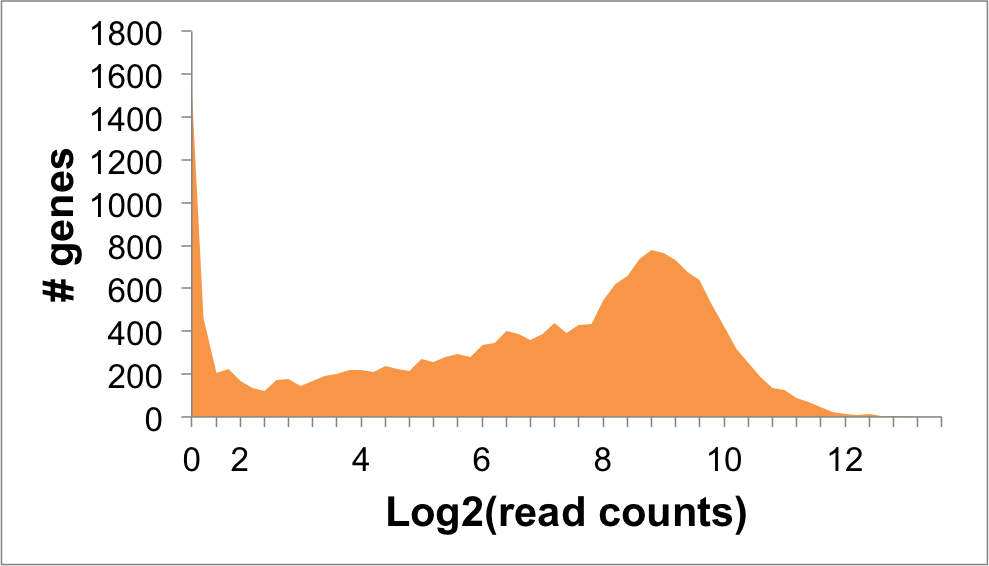
- Expression level (log2 read counts): 0.55
Expression Distribution
EGR3 Expression in NALM6 Cells: 0.55