GIP
Gene Information
- Official Symbol: GIP
- Official Name: gastric inhibitory polypeptide
- Aliases and Previous Symbols: N/A
- Entrez ID: 2695
- UniProt: P09681
- Interactions: BioGRID
- PubMed articles: Open PubMed
- OMIM: Open OMIM
Function Summary
- Entrez Summary: N/A
- UniProt Summary: Potent stimulator of insulin secretion and relatively poor inhibitor of gastric acid secretion.
Pfam Domains GO Terms
Pfam Domains
| Hormone 2 |
GO Terms
| positive regulation of glucagon secretion |
| regulation of glucagon secretion |
| response to selenium ion |
| response to acidic pH |
| positive regulation of cAMP-mediated signaling |
| exploration behavior |
| triglyceride homeostasis |
| acylglycerol homeostasis |
| endocrine pancreas development |
| response to pH |
| positive regulation of glucose transmembrane transport |
| regulation of fatty acid biosynthetic process |
| long-term synaptic potentiation |
| regulation of cAMP-mediated signaling |
| response to axon injury |
| pancreas development |
| positive regulation of insulin secretion |
| regulation of glucose transmembrane transport |
| sensory perception of pain |
| adult locomotory behavior |
| regulation of fatty acid metabolic process |
| positive regulation of peptide hormone secretion |
| hormone activity |
| response to amino acid |
| secretory granule lumen |
| memory |
| endocrine system development |
| positive regulation of hormone secretion |
| lipid homeostasis |
| response to glucose |
| response to hexose |
| digestive system development |
| adult behavior |
| response to monosaccharide |
| positive regulation of synaptic transmission |
| regulation of cellular ketone metabolic process |
| response to carbohydrate |
| regulation of insulin secretion |
| female pregnancy |
| regulation of lipid biosynthetic process |
| regulation of synaptic plasticity |
| response to starvation |
| locomotory behavior |
| positive regulation of transmembrane transport |
| regulation of peptide hormone secretion |
| multi-multicellular organism process |
| learning or memory |
| regulation of hormone secretion |
| positive regulation of protein secretion |
| positive regulation of peptide secretion |
| cognition |
| endoplasmic reticulum lumen |
| response to acid chemical |
| neuronal cell body |
| response to peptide hormone |
| regulation of lipid metabolic process |
| positive regulation of secretion by cell |
| positive regulation of protein transport |
| regulation of small molecule metabolic process |
| positive regulation of secretion |
| modulation of chemical synaptic transmission |
| regulation of trans-synaptic signaling |
| positive regulation of establishment of protein localization |
| regulation of protein secretion |
| response to peptide |
| regulation of peptide secretion |
| response to nutrient levels |
| response to extracellular stimulus |
| response to inorganic substance |
| regulation of hormone levels |
| regulation of transmembrane transport |
| behavior |
| response to wounding |
| regulation of protein transport |
| regulation of peptide transport |
| regulation of establishment of protein localization |
| regulation of secretion by cell |
| regulation of secretion |
| response to lipid |
| response to hormone |
| response to organic cyclic compound |
| sensory perception |
| positive regulation of transport |
| multi-organism reproductive process |
| response to organonitrogen compound |
| response to drug |
| positive regulation of intracellular signal transduction |
| regulation of protein localization |
| response to nitrogen compound |
| chemical homeostasis |
| response to abiotic stimulus |
| G protein-coupled receptor signaling pathway |
| nervous system process |
| reproductive process |
| reproduction |
| response to endogenous stimulus |
| response to oxygen-containing compound |
| extracellular space |
| homeostatic process |
| positive regulation of signal transduction |
| positive regulation of cell communication |
| positive regulation of signaling |
| regulation of intracellular signal transduction |
| regulation of transport |
| extracellular region |
| system process |
CRISPR Data
Compound Hit Most Correlated Genes in Chemogenomics Tissues where Essential in the Avana Dataset (DepMap 20Q1)
Compound Hit
| Screen | Score |
|---|---|
| Atovaquone 15μM R08 exp451 | -1.81 |
Most Correlated Genes in Chemogenomics
No correlation found to any other genes in chemogenomics.
Tissues where Essential in the Avana Dataset (DepMap 20Q1)
Global Fraction of Cell Lines Where Essential: 0/739
| Tissue | Fraction Of Cell Lines Where Essential |
|---|---|
| 1290807.0 | 0/1 |
| 909776.0 | 0/1 |
| bile duct | 0/28 |
| blood | 0/28 |
| bone | 0/26 |
| breast | 0/33 |
| central nervous system | 0/56 |
| cervix | 0/4 |
| colorectal | 0/17 |
| esophagus | 0/13 |
| fibroblast | 0/1 |
| gastric | 0/16 |
| kidney | 0/21 |
| liver | 0/20 |
| lung | 0/75 |
| lymphocyte | 0/16 |
| ovary | 0/26 |
| pancreas | 0/24 |
| peripheral nervous system | 0/16 |
| plasma cell | 0/15 |
| prostate | 0/1 |
| skin | 0/24 |
| soft tissue | 0/9 |
| thyroid | 0/2 |
| upper aerodigestive | 0/22 |
| urinary tract | 0/29 |
| uterus | 0/5 |
Essentiality in NALM6
- Essentiality Rank: 7214
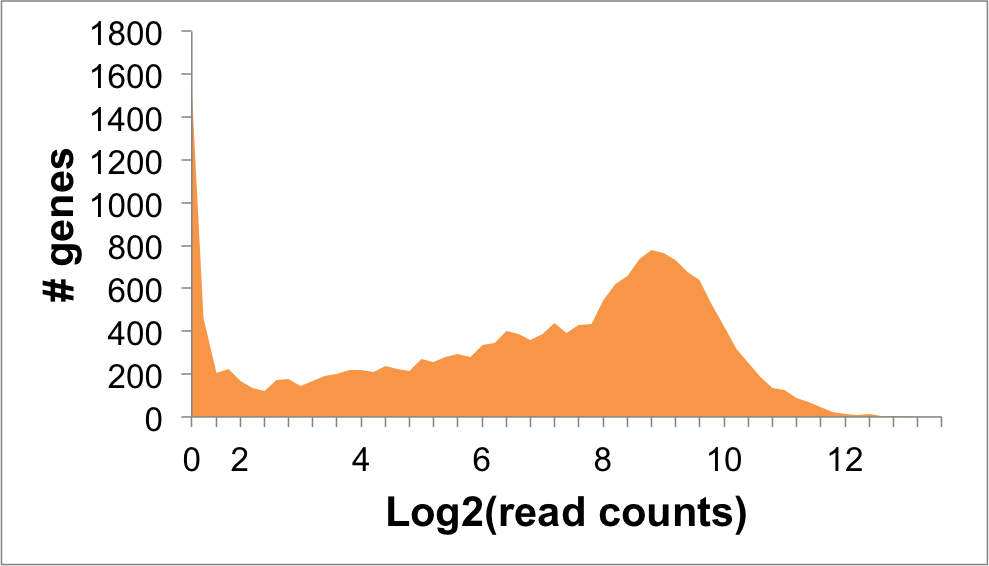
- Expression level (log2 read counts): -7.68
Expression Distribution
GIP Expression in NALM6 Cells: -7.68