IL2
Gene Information
- Official Symbol: IL2
- Official Name: interleukin 2
- Aliases and Previous Symbols: N/A
- Entrez ID: 3558
- UniProt: P60568
- Interactions: BioGRID
- PubMed articles: Open PubMed
- OMIM: Open OMIM
Function Summary
- Entrez Summary: The protein encoded by this gene is a secreted cytokine that is important for the proliferation of T and B lymphocytes. The receptor of this cytokine is a heterotrimeric protein complex whose gamma chain is also shared by interleukin 4 (IL4) and interleukin 7 (IL7). The expression of this gene in mature thymocytes is monoallelic, which represents an unusual regulatory mode for controlling the precise expression of a single gene. The targeted disruption of a similar gene in mice leads to ulcerative colitis-like disease, which suggests an essential role of this gene in the immune response to antigenic stimuli. [provided by RefSeq, Jul 2008].
- UniProt Summary: Produced by T-cells in response to antigenic or mitogenic stimulation, this protein is required for T-cell proliferation and other activities crucial to regulation of the immune response. Can stimulate B-cells, monocytes, lymphokine- activated killer cells, natural killer cells, and glioma cells.
Pfam Domains GO Terms
Pfam Domains
| IL2 |
GO Terms
| kappa-type opioid receptor binding |
| regulation of T cell homeostatic proliferation |
| interleukin-2 receptor binding |
| glycosphingolipid binding |
| kinase activator activity |
| negative regulation of T-helper 17 cell differentiation |
| negative regulation of T-helper 17 type immune response |
| positive regulation of isotype switching to IgG isotypes |
| negative regulation of B cell apoptotic process |
| interleukin-2-mediated signaling pathway |
| regulation of isotype switching to IgG isotypes |
| cellular response to interleukin-2 |
| positive regulation of immunoglobulin secretion |
| response to interleukin-2 |
| positive regulation of regulatory T cell differentiation |
| negative regulation of T-helper cell differentiation |
| regulation of T-helper 17 cell differentiation |
| regulation of B cell apoptotic process |
| positive regulation of interleukin-17 production |
| regulation of immunoglobulin secretion |
| regulation of T-helper 17 type immune response |
| negative regulation of CD4-positive, alpha-beta T cell differentiation |
| positive regulation of activated T cell proliferation |
| negative regulation of alpha-beta T cell differentiation |
| negative regulation of heart contraction |
| positive regulation of isotype switching |
| protein kinase C-activating G protein-coupled receptor signaling pathway |
| negative regulation of lymphocyte apoptotic process |
| regulation of interleukin-17 production |
| negative regulation of CD4-positive, alpha-beta T cell activation |
| regulation of regulatory T cell differentiation |
| signal transduction in absence of ligand |
| positive regulation of tissue remodeling |
| extrinsic apoptotic signaling pathway in absence of ligand |
| negative regulation of blood circulation |
| regulation of isotype switching |
| regulation of T-helper cell differentiation |
| regulation of activated T cell proliferation |
| positive regulation of B cell mediated immunity |
| positive regulation of immunoglobulin mediated immune response |
| negative regulation of alpha-beta T cell activation |
| positive regulation of DNA recombination |
| negative regulation of adaptive immune response based on somatic recombination of immune receptors built from immunoglobulin superfamily domains |
| positive regulation of B cell proliferation |
| positive regulation of immunoglobulin production |
| negative regulation of T cell differentiation |
| positive regulation of dendritic spine development |
| negative regulation of adaptive immune response |
| regulation of CD4-positive, alpha-beta T cell differentiation |
| negative regulation of leukocyte apoptotic process |
| regulation of immunoglobulin mediated immune response |
| regulation of B cell mediated immunity |
| regulation of lymphocyte apoptotic process |
| negative regulation of lymphocyte differentiation |
| natural killer cell activation |
| regulation of CD4-positive, alpha-beta T cell activation |
| regulation of B cell proliferation |
| regulation of alpha-beta T cell differentiation |
| regulation of immunoglobulin production |
| positive regulation of interferon-gamma production |
| positive regulation of tyrosine phosphorylation of STAT protein |
| regulation of dendritic spine development |
| regulation of tissue remodeling |
| positive regulation of dendrite development |
| negative regulation of lymphocyte proliferation |
| negative regulation of mononuclear cell proliferation |
| negative regulation of leukocyte proliferation |
| regulation of tyrosine phosphorylation of STAT protein |
| cell |
| regulation of leukocyte apoptotic process |
| positive regulation of T cell differentiation |
| positive regulation of receptor signaling pathway via JAK-STAT |
| positive regulation of receptor signaling pathway via STAT |
| regulation of alpha-beta T cell activation |
| positive regulation of lymphocyte differentiation |
| positive regulation of T cell proliferation |
| extrinsic apoptotic signaling pathway |
| positive regulation of production of molecular mediator of immune response |
| regulation of interferon-gamma production |
| positive regulation of adaptive immune response based on somatic recombination of immune receptors built from immunoglobulin superfamily domains |
| negative regulation of leukocyte differentiation |
| regulation of DNA recombination |
| positive regulation of adaptive immune response |
| positive regulation of lymphocyte mediated immunity |
| negative regulation of T cell activation |
| negative regulation of immune effector process |
| negative regulation of leukocyte cell-cell adhesion |
| response to ethanol |
| positive regulation of lymphocyte proliferation |
| regulation of receptor signaling pathway via JAK-STAT |
| positive regulation of mononuclear cell proliferation |
| positive regulation of leukocyte mediated immunity |
| regulation of receptor signaling pathway via STAT |
| T cell differentiation |
| negative regulation of hemopoiesis |
| negative regulation of inflammatory response |
| positive regulation of leukocyte proliferation |
| regulation of T cell differentiation |
| positive regulation of inflammatory response |
| regulation of production of molecular mediator of immune response |
| negative regulation of lymphocyte activation |
| regulation of adaptive immune response based on somatic recombination of immune receptors built from immunoglobulin superfamily domains |
| positive regulation of leukocyte differentiation |
| negative regulation of immune response |
| regulation of lymphocyte mediated immunity |
| regulation of dendrite development |
| regulation of T cell proliferation |
| regulation of adaptive immune response |
| growth factor activity |
| positive regulation of cell growth |
| positive regulation of B cell activation |
| regulation of lymphocyte differentiation |
| cytokine activity |
| carbohydrate binding |
| negative regulation of cell-cell adhesion |
| negative regulation of leukocyte activation |
| positive regulation of hemopoiesis |
| positive regulation of peptidyl-tyrosine phosphorylation |
| positive regulation of DNA metabolic process |
| negative regulation of cell activation |
| positive regulation of T cell activation |
| regulation of leukocyte mediated immunity |
| negative regulation of defense response |
| regulation of B cell activation |
| regulation of lymphocyte proliferation |
| regulation of mononuclear cell proliferation |
| positive regulation of leukocyte cell-cell adhesion |
| positive regulation of immune effector process |
| regulation of leukocyte proliferation |
| response to alcohol |
| T cell activation |
| lymphocyte differentiation |
| regulation of heart contraction |
| regulation of peptidyl-tyrosine phosphorylation |
| positive regulation of cell-cell adhesion |
| positive regulation of growth |
| positive regulation of protein secretion |
| negative regulation of cell adhesion |
| regulation of leukocyte differentiation |
| positive regulation of neuron projection development |
| positive regulation of cytosolic calcium ion concentration |
| apoptotic signaling pathway |
| regulation of blood circulation |
| positive regulation of peptide secretion |
| regulation of leukocyte cell-cell adhesion |
| response to antibiotic |
| regulation of T cell activation |
| regulation of cytosolic calcium ion concentration |
| leukocyte differentiation |
| regulation of inflammatory response |
| regulation of DNA metabolic process |
| positive regulation of lymphocyte activation |
| negative regulation of response to external stimulus |
| positive regulation of neuron differentiation |
| MAPK cascade |
| positive regulation of cell projection organization |
| lymphocyte activation |
| signal transduction by protein phosphorylation |
| regulation of cell-cell adhesion |
| positive regulation of secretion by cell |
| positive regulation of cell adhesion |
| positive regulation of leukocyte activation |
| negative regulation of protein phosphorylation |
| positive regulation of cell activation |
| regulation of cell growth |
| positive regulation of protein transport |
| positive regulation of secretion |
| cellular calcium ion homeostasis |
| negative regulation of immune system process |
| negative regulation of phosphorylation |
| calcium ion homeostasis |
| positive regulation of cytokine production |
| regulation of hemopoiesis |
| positive regulation of establishment of protein localization |
| regulation of protein secretion |
| regulation of immune effector process |
| cellular divalent inorganic cation homeostasis |
| positive regulation of neurogenesis |
| positive regulation of defense response |
| divalent inorganic cation homeostasis |
| regulation of peptide secretion |
| regulation of neuron projection development |
| response to toxic substance |
| regulation of lymphocyte activation |
| positive regulation of nervous system development |
| positive regulation of cell development |
| hemopoiesis |
| cellular metal ion homeostasis |
| negative regulation of phosphate metabolic process |
| negative regulation of phosphorus metabolic process |
| positive regulation of kinase activity |
| regulation of system process |
| negative regulation of protein modification process |
| positive regulation of response to external stimulus |
| regulation of leukocyte activation |
| hematopoietic or lymphoid organ development |
| adaptive immune response |
| leukocyte activation involved in immune response |
| metal ion homeostasis |
| cell activation involved in immune response |
| cellular cation homeostasis |
| regulation of cell activation |
| cellular ion homeostasis |
| immune system development |
| positive regulation of transferase activity |
| regulation of neuron differentiation |
| regulation of growth |
| cytokine-mediated signaling pathway |
| negative regulation of cell population proliferation |
| regulation of cell adhesion |
| regulation of cytokine production |
| regulation of plasma membrane bounded cell projection organization |
| regulation of protein transport |
| cation homeostasis |
| regulation of cell projection organization |
| negative regulation of cell differentiation |
| inorganic ion homeostasis |
| regulation of peptide transport |
| cellular chemical homeostasis |
| regulation of establishment of protein localization |
| regulation of secretion by cell |
| regulation of defense response |
| ion homeostasis |
| regulation of secretion |
| regulation of neurogenesis |
| positive regulation of immune response |
| regulation of kinase activity |
| negative regulation of apoptotic process |
| cellular homeostasis |
| negative regulation of programmed cell death |
| positive regulation of cell population proliferation |
| apoptotic process |
| regulation of nervous system development |
| leukocyte activation |
| cell adhesion |
| regulation of cell development |
| biological adhesion |
| negative regulation of developmental process |
| positive regulation of cell differentiation |
| protein phosphorylation |
| regulation of transferase activity |
| positive regulation of transport |
| negative regulation of cell death |
| cellular response to cytokine stimulus |
| positive regulation of protein phosphorylation |
| response to drug |
| regulation of protein localization |
| negative regulation of cellular protein metabolic process |
| programmed cell death |
| positive regulation of phosphorylation |
| cell activation |
| immune effector process |
| cell death |
| regulation of response to external stimulus |
| response to cytokine |
| negative regulation of protein metabolic process |
| chemical homeostasis |
| cell-cell signaling |
| positive regulation of phosphorus metabolic process |
| positive regulation of phosphate metabolic process |
| positive regulation of immune system process |
| regulation of immune response |
| negative regulation of multicellular organismal process |
| positive regulation of cellular component organization |
| positive regulation of transcription by RNA polymerase II |
| positive regulation of protein modification process |
| phosphorylation |
| G protein-coupled receptor signaling pathway |
| positive regulation of developmental process |
| positive regulation of catalytic activity |
| regulation of protein phosphorylation |
| regulation of response to stress |
| generation of neurons |
| positive regulation of transcription, DNA-templated |
| regulation of apoptotic process |
| response to oxygen-containing compound |
| regulation of programmed cell death |
| regulation of phosphorylation |
| extracellular space |
| positive regulation of cellular protein metabolic process |
| regulation of cell population proliferation |
| negative regulation of response to stimulus |
| neurogenesis |
| positive regulation of nucleic acid-templated transcription |
| positive regulation of RNA biosynthetic process |
| homeostatic process |
| regulation of immune system process |
| positive regulation of signal transduction |
| regulation of cell death |
| intracellular signal transduction |
| positive regulation of protein metabolic process |
| positive regulation of RNA metabolic process |
| positive regulation of multicellular organismal process |
| positive regulation of molecular function |
| regulation of phosphate metabolic process |
| regulation of phosphorus metabolic process |
| regulation of cell differentiation |
| positive regulation of cell communication |
| positive regulation of signaling |
| regulation of protein modification process |
| regulation of transport |
| immune response |
| positive regulation of nucleobase-containing compound metabolic process |
| positive regulation of macromolecule biosynthetic process |
| extracellular region |
| positive regulation of cellular biosynthetic process |
| positive regulation of gene expression |
| positive regulation of biosynthetic process |
CRISPR Data
Compound Hit Most Correlated Genes in Chemogenomics Tissues where Essential in the Avana Dataset (DepMap 20Q1)
Compound Hit
| Screen | Score |
|---|---|
| Nicotinate 1000μM R03 exp140 | 1.78 |
Most Correlated Genes in Chemogenomics
No correlation found to any other genes in chemogenomics.
Tissues where Essential in the Avana Dataset (DepMap 20Q1)
Global Fraction of Cell Lines Where Essential: 0/739
| Tissue | Fraction Of Cell Lines Where Essential |
|---|---|
| 1290807.0 | 0/1 |
| 909776.0 | 0/1 |
| bile duct | 0/28 |
| blood | 0/28 |
| bone | 0/26 |
| breast | 0/33 |
| central nervous system | 0/56 |
| cervix | 0/4 |
| colorectal | 0/17 |
| esophagus | 0/13 |
| fibroblast | 0/1 |
| gastric | 0/16 |
| kidney | 0/21 |
| liver | 0/20 |
| lung | 0/75 |
| lymphocyte | 0/16 |
| ovary | 0/26 |
| pancreas | 0/24 |
| peripheral nervous system | 0/16 |
| plasma cell | 0/15 |
| prostate | 0/1 |
| skin | 0/24 |
| soft tissue | 0/9 |
| thyroid | 0/2 |
| upper aerodigestive | 0/22 |
| urinary tract | 0/29 |
| uterus | 0/5 |
Essentiality in NALM6
- Essentiality Rank: 14130
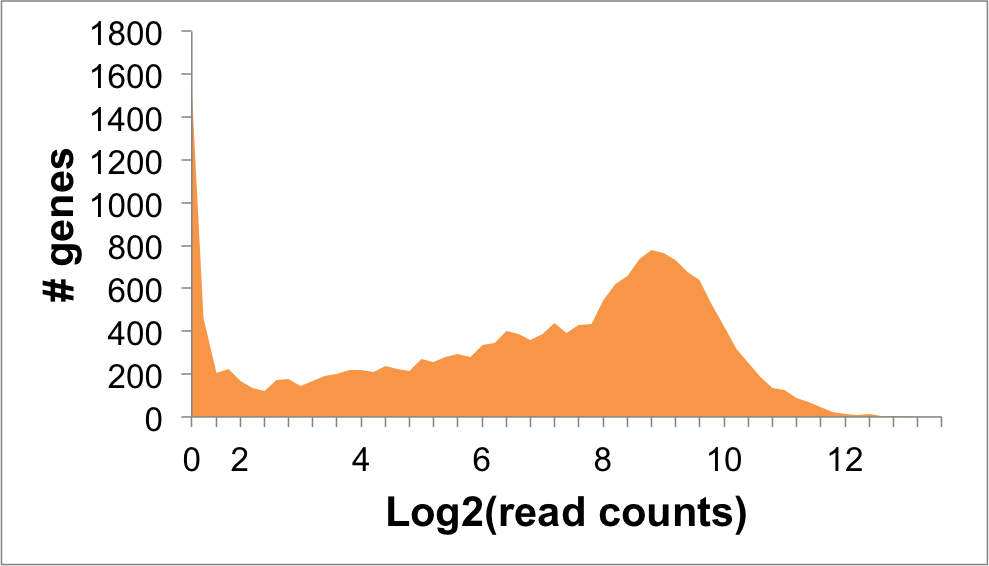
- Expression level (log2 read counts): -7.68
Expression Distribution
IL2 Expression in NALM6 Cells: -7.68