PKD2
Gene Information
- Official Symbol: PKD2
- Official Name: polycystin 2, transient receptor potential cation channel
- Aliases and Previous Symbols: N/A
- Entrez ID: 5311
- UniProt: Q13563
- Interactions: BioGRID
- PubMed articles: Open PubMed
- OMIM: Open OMIM
Function Summary
- Entrez Summary: This gene encodes a member of the polycystin protein family. The encoded protein is a multi-pass membrane protein that functions as a calcium permeable cation channel, and is involved in calcium transport and calcium signaling in renal epithelial cells. This protein interacts with polycystin 1, and they may be partners in a common signaling cascade involved in tubular morphogenesis. Mutations in this gene are associated with autosomal dominant polycystic kidney disease type 2. [provided by RefSeq, Mar 2011].
- UniProt Summary: Functions as a cation channel involved in fluid-flow mechanosensation by the primary cilium in renal epithelium (PubMed:18695040). Functions as outward-rectifying K(+) channel, but is also permeable to Ca(2+), and to a much lesser degree also to Na(+) (PubMed:11854751, PubMed:15692563, PubMed:27071085, PubMed:27991905). May contribute to the release of Ca(2+) stores from the endoplasmic reticulum (PubMed:11854751, PubMed:20881056). Together with TRPV4, forms mechano- and thermosensitive channels in cilium (PubMed:18695040). PKD1 and PKD2 may function through a common signaling pathway that is necessary to maintain the normal, differentiated state of renal tubule cells. Acts as a regulator of cilium length, together with PKD1. The dynamic control of cilium length is essential in the regulation of mechanotransductive signaling. The cilium length response creates a negative feedback loop whereby fluid shear-mediated deflection of the primary cilium, which decreases intracellular cAMP, leads to cilium shortening and thus decreases flow-induced signaling. Also involved in left-right axis specification via its role in sensing nodal flow; forms a complex with PKD1L1 in cilia to facilitate flow detection in left-right patterning. Detection of asymmetric nodal flow gives rise to a Ca(2+) signal that is required for normal, asymmetric expression of genes involved in the specification of body left-right laterality (By similarity). {ECO:0000250|UniProtKB:O35245, ECO:0000269|PubMed:11854751, ECO:0000269|PubMed:15692563, ECO:0000269|PubMed:16551655, ECO:0000269|PubMed:18695040, ECO:0000269|PubMed:20881056, ECO:0000269|PubMed:27991905, ECO:0000305}.
Pfam Domains GO Terms
Pfam Domains
| Ion trans |
| PKD channel |
GO Terms
| renal cortex development |
| metanephric cortical collecting duct development |
| cellular response to hydrostatic pressure |
| metanephric cortex development |
| cortical collecting duct development |
| metanephric smooth muscle tissue development |
| renal artery morphogenesis |
| kidney smooth muscle tissue development |
| polycystin complex |
| detection of nodal flow |
| HLH domain binding |
| calcium-induced calcium release activity |
| ascending thin limb development |
| metanephric ascending thin limb development |
| positive regulation of inositol 1,4,5-trisphosphate-sensitive calcium-release channel activity |
| metanephric part of ureteric bud development |
| detection of endogenous stimulus |
| voltage-gated cation channel activity |
| cellular response to water stimulus |
| basal cortex |
| metanephric S-shaped body morphogenesis |
| regulation of inositol 1,4,5-trisphosphate-sensitive calcium-release channel activity |
| metanephric loop of Henle development |
| response to hydrostatic pressure |
| determination of liver left/right asymmetry |
| integral component of cytoplasmic side of endoplasmic reticulum membrane |
| metanephric distal tubule development |
| renal system vasculature morphogenesis |
| S-shaped body morphogenesis |
| kidney vasculature morphogenesis |
| mesonephric duct development |
| cation channel complex |
| loop of Henle development |
| actinin binding |
| distal tubule development |
| outward rectifier potassium channel activity |
| negative regulation of ryanodine-sensitive calcium-release channel activity |
| metanephric mesenchyme development |
| negative regulation of release of sequestered calcium ion into cytosol |
| response to water |
| metanephric nephron tubule development |
| positive regulation of sequestering of calcium ion |
| nephric duct development |
| metanephric nephron epithelium development |
| smooth muscle tissue development |
| cytoplasmic sequestering of transcription factor |
| cation channel activity |
| negative regulation of calcium ion transport into cytosol |
| cellular response to fluid shear stress |
| metanephric tubule development |
| kidney mesenchyme development |
| voltage-gated sodium channel activity |
| metanephric nephron morphogenesis |
| renal system vasculature development |
| kidney vasculature development |
| metanephric epithelium development |
| muscle alpha-actinin binding |
| cytoplasmic sequestering of protein |
| regulation of ryanodine-sensitive calcium-release channel activity |
| metanephros morphogenesis |
| potassium channel activity |
| integral component of lumenal side of endoplasmic reticulum membrane |
| placenta blood vessel development |
| negative regulation of calcium-mediated signaling |
| centrosome duplication |
| positive regulation of cyclin-dependent protein serine/threonine kinase activity |
| metanephric nephron development |
| protein heterotetramerization |
| non-motile cilium |
| filamentous actin |
| response to fluid shear stress |
| basal plasma membrane |
| positive regulation of cyclin-dependent protein kinase activity |
| phosphoprotein binding |
| cellular response to osmotic stress |
| negative regulation of calcium ion transmembrane transporter activity |
| receptor signaling pathway via JAK-STAT |
| positive regulation of calcium ion transmembrane transporter activity |
| negative regulation of calcium ion transmembrane transport |
| positive regulation of nitric oxide biosynthetic process |
| regulation of calcium ion import |
| receptor signaling pathway via STAT |
| voltage-gated calcium channel activity |
| positive regulation of release of sequestered calcium ion into cytosol |
| positive regulation of nitric oxide metabolic process |
| negative regulation of cation channel activity |
| positive regulation of calcium-mediated signaling |
| voltage-gated ion channel activity |
| branching involved in ureteric bud morphogenesis |
| detection of mechanical stimulus |
| positive regulation of reactive oxygen species biosynthetic process |
| aorta development |
| ureteric bud morphogenesis |
| calcium channel activity |
| positive regulation of calcium ion transport into cytosol |
| cellular response to cAMP |
| mesonephric tubule morphogenesis |
| ciliary membrane |
| release of sequestered calcium ion into cytosol |
| regulation of nitric oxide biosynthetic process |
| negative regulation of sequestering of calcium ion |
| negative regulation of calcium ion transport |
| heart looping |
| voltage-gated potassium channel activity |
| artery morphogenesis |
| nephron tubule morphogenesis |
| determination of heart left/right asymmetry |
| embryonic heart tube morphogenesis |
| nephron epithelium morphogenesis |
| nephron morphogenesis |
| calcium ion transmembrane import into cytosol |
| renal tubule morphogenesis |
| positive regulation of cation channel activity |
| positive regulation of calcium ion transmembrane transport |
| negative regulation of ion transmembrane transporter activity |
| calcium ion transport into cytosol |
| embryonic heart tube development |
| cytoskeletal protein binding |
| nephron tubule development |
| response to osmotic stress |
| mitotic spindle |
| regulation of release of sequestered calcium ion into cytosol |
| negative regulation of transporter activity |
| positive regulation of cell cycle arrest |
| ATPase binding |
| renal tubule development |
| centrosome cycle |
| negative regulation of cation transmembrane transport |
| cellular response to calcium ion |
| metanephros development |
| kidney morphogenesis |
| regulation of reactive oxygen species biosynthetic process |
| artery development |
| ureteric bud development |
| mesonephric tubule development |
| embryonic placenta development |
| mesonephric epithelium development |
| regulation of calcium ion transmembrane transporter activity |
| cytosolic calcium ion transport |
| sodium ion transmembrane transport |
| mesonephros development |
| microtubule organizing center organization |
| protein homotetramerization |
| positive regulation of reactive oxygen species metabolic process |
| negative regulation of ion transmembrane transport |
| regulation of calcium-mediated signaling |
| nephron epithelium development |
| regulation of cyclin-dependent protein serine/threonine kinase activity |
| response to cAMP |
| regulation of calcium ion transport into cytosol |
| motile cilium |
| negative regulation of G1/S transition of mitotic cell cycle |
| regulation of cyclin-dependent protein kinase activity |
| positive regulation of ion transmembrane transporter activity |
| negative regulation of cell cycle G1/S phase transition |
| maintenance of protein location |
| protein heterooligomerization |
| spinal cord development |
| regulation of cell cycle arrest |
| positive regulation of transporter activity |
| negative regulation of transmembrane transport |
| determination of left/right symmetry |
| detection of external stimulus |
| positive regulation of calcium ion transport |
| detection of abiotic stimulus |
| determination of bilateral symmetry |
| specification of symmetry |
| nephron development |
| regulation of sequestering of calcium ion |
| ion channel binding |
| liver development |
| hepaticobiliary system development |
| kidney epithelium development |
| branching morphogenesis of an epithelial tube |
| cellular response to reactive oxygen species |
| ciliary basal body |
| response to organophosphorus |
| positive regulation of cation transmembrane transport |
| cytoplasmic vesicle membrane |
| cell cycle arrest |
| regulation of calcium ion transmembrane transport |
| negative regulation of ion transport |
| protein tetramerization |
| regulation of G1/S transition of mitotic cell cycle |
| response to calcium ion |
| response to purine-containing compound |
| placenta development |
| sodium ion transport |
| positive regulation of ion transmembrane transport |
| potassium ion transmembrane transport |
| morphogenesis of a branching epithelium |
| neural tube development |
| negative regulation of DNA-binding transcription factor activity |
| maintenance of location |
| regulation of cell cycle G1/S phase transition |
| potassium ion transport |
| morphogenesis of a branching structure |
| cell-cell junction |
| regulation of cation channel activity |
| lamellipodium |
| regulation of reactive oxygen species metabolic process |
| cellular response to metal ion |
| response to reactive oxygen species |
| calcium ion transmembrane transport |
| cilium |
| positive regulation of transmembrane transport |
| cellular response to acid chemical |
| negative regulation of mitotic cell cycle phase transition |
| response to mechanical stimulus |
| cellular response to inorganic substance |
| mesenchyme development |
| negative regulation of cell cycle phase transition |
| cellular response to oxidative stress |
| regulation of calcium ion transport |
| calcium ion transport |
| heart morphogenesis |
| regulation of ion transmembrane transporter activity |
| regulation of transmembrane transporter activity |
| kidney development |
| positive regulation of ion transport |
| regulation of transporter activity |
| positive regulation of cytosolic calcium ion concentration |
| renal system development |
| positive regulation of cell cycle process |
| embryonic organ morphogenesis |
| divalent metal ion transport |
| muscle tissue development |
| divalent inorganic cation transport |
| negative regulation of mitotic cell cycle |
| epithelial tube morphogenesis |
| cellular response to environmental stimulus |
| cellular response to abiotic stimulus |
| urogenital system development |
| negative regulation of cell cycle process |
| regulation of cytosolic calcium ion concentration |
| regulation of cation transmembrane transport |
| signaling receptor binding |
| positive regulation of protein serine/threonine kinase activity |
| protein homooligomerization |
| response to acid chemical |
| regulation of neurotransmitter levels |
| Wnt signaling pathway |
| cell-cell signaling by wnt |
| cilium organization |
| response to metal ion |
| in utero embryonic development |
| positive regulation of cell cycle |
| regulation of metal ion transport |
| response to oxidative stress |
| monovalent inorganic cation transport |
| blood vessel morphogenesis |
| gland development |
| regulation of mitotic cell cycle phase transition |
| reproductive structure development |
| cell surface receptor signaling pathway involved in cell-cell signaling |
| regulation of DNA-binding transcription factor activity |
| reproductive system development |
| morphogenesis of an epithelium |
| embryonic organ development |
| pattern specification process |
| cellular calcium ion homeostasis |
| regulation of cell cycle phase transition |
| calcium ion homeostasis |
| cellular divalent inorganic cation homeostasis |
| microtubule cytoskeleton organization |
| regulation of ion transmembrane transport |
| negative regulation of transport |
| blood vessel development |
| divalent inorganic cation homeostasis |
| negative regulation of intracellular signal transduction |
| vasculature development |
| regulation of protein serine/threonine kinase activity |
| cardiovascular system development |
| protein complex oligomerization |
| heart development |
| response to inorganic substance |
| positive regulation of protein kinase activity |
| cellular response to organic cyclic compound |
| cellular metal ion homeostasis |
| inorganic cation transmembrane transport |
| regulation of transmembrane transport |
| tissue morphogenesis |
| embryonic morphogenesis |
| negative regulation of cell cycle |
| positive regulation of kinase activity |
| cellular response to organonitrogen compound |
| cation transmembrane transport |
| metal ion homeostasis |
| regulation of mitotic cell cycle |
| chordate embryonic development |
| cellular cation homeostasis |
| metal ion transport |
| cellular ion homeostasis |
| inorganic ion transmembrane transport |
| embryo development ending in birth or egg hatching |
| tube morphogenesis |
| positive regulation of transferase activity |
| cellular response to nitrogen compound |
| developmental process involved in reproduction |
| microtubule-based process |
| negative regulation of cell population proliferation |
| detection of stimulus |
| regulation of ion transport |
| cation homeostasis |
| inorganic ion homeostasis |
| calcium ion binding |
| cellular chemical homeostasis |
| regulation of cell cycle process |
| ion homeostasis |
| regulation of protein kinase activity |
| cation transport |
| tube development |
| circulatory system development |
| regulation of kinase activity |
| protein homodimerization activity |
| cellular homeostasis |
| regulation of cellular localization |
| response to organic cyclic compound |
| endoplasmic reticulum membrane |
| ion transmembrane transport |
| animal organ morphogenesis |
| regulation of transferase activity |
| embryo development |
| central nervous system development |
| Golgi apparatus |
| positive regulation of transport |
| cell cycle process |
| response to organonitrogen compound |
| endoplasmic reticulum |
| positive regulation of protein phosphorylation |
| positive regulation of intracellular signal transduction |
| cellular response to oxygen-containing compound |
| positive regulation of phosphorylation |
| identical protein binding |
| response to nitrogen compound |
| cytoskeleton organization |
| chemical homeostasis |
| epithelium development |
| cell-cell signaling |
| plasma membrane bounded cell projection organization |
| positive regulation of phosphate metabolic process |
| positive regulation of phosphorus metabolic process |
| negative regulation of molecular function |
| response to abiotic stimulus |
| cell projection organization |
| regulation of cell cycle |
| positive regulation of transcription by RNA polymerase II |
| cellular response to endogenous stimulus |
| positive regulation of protein modification process |
| negative regulation of signal transduction |
| transmembrane transport |
| cell cycle |
| negative regulation of cell communication |
| negative regulation of signaling |
| ion transport |
| integral component of plasma membrane |
| reproductive process |
| reproduction |
| positive regulation of catalytic activity |
| regulation of protein phosphorylation |
| response to endogenous stimulus |
| positive regulation of transcription, DNA-templated |
| response to oxygen-containing compound |
| protein-containing complex assembly |
| regulation of phosphorylation |
| positive regulation of cellular protein metabolic process |
| regulation of cell population proliferation |
| negative regulation of response to stimulus |
| positive regulation of nucleic acid-templated transcription |
| positive regulation of RNA biosynthetic process |
| homeostatic process |
| positive regulation of signal transduction |
| cellular response to stress |
| positive regulation of protein metabolic process |
| positive regulation of RNA metabolic process |
| tissue development |
| positive regulation of molecular function |
| regulation of phosphate metabolic process |
| regulation of phosphorus metabolic process |
| positive regulation of cell communication |
| positive regulation of signaling |
| regulation of intracellular signal transduction |
| establishment of localization in cell |
| regulation of protein modification process |
| protein-containing complex subunit organization |
| regulation of transport |
| positive regulation of nucleobase-containing compound metabolic process |
| positive regulation of macromolecule biosynthetic process |
| positive regulation of cellular biosynthetic process |
| positive regulation of gene expression |
| membrane |
| positive regulation of biosynthetic process |
CRISPR Data
Compound Hit Most Correlated Genes in Chemogenomics Tissues where Essential in the Avana Dataset (DepMap 20Q1)
Compound Hit
| Screen | Score |
|---|---|
| GSK461364A 0.1μM R03 exp126 | -2.17 |
| UM131593 0.2μM R03 exp106 | -1.86 |
| CB-839 10μM R05 exp224 | -1.73 |
| Rucaparib 6.5μM R08 exp520 | -1.72 |
| UM0011500 5μM R05 exp245 | 1.97 |
| Geldanamycin 0.015 to 0.05μM on day4 R07 exp317 | 2.93 |
Most Correlated Genes in Chemogenomics
No correlation found to any other genes in chemogenomics.
Tissues where Essential in the Avana Dataset (DepMap 20Q1)
Global Fraction of Cell Lines Where Essential: 0/739
| Tissue | Fraction Of Cell Lines Where Essential |
|---|---|
| 1290807.0 | 0/1 |
| 909776.0 | 0/1 |
| bile duct | 0/28 |
| blood | 0/28 |
| bone | 0/26 |
| breast | 0/33 |
| central nervous system | 0/56 |
| cervix | 0/4 |
| colorectal | 0/17 |
| esophagus | 0/13 |
| fibroblast | 0/1 |
| gastric | 0/16 |
| kidney | 0/21 |
| liver | 0/20 |
| lung | 0/75 |
| lymphocyte | 0/16 |
| ovary | 0/26 |
| pancreas | 0/24 |
| peripheral nervous system | 0/16 |
| plasma cell | 0/15 |
| prostate | 0/1 |
| skin | 0/24 |
| soft tissue | 0/9 |
| thyroid | 0/2 |
| upper aerodigestive | 0/22 |
| urinary tract | 0/29 |
| uterus | 0/5 |
Essentiality in NALM6
- Essentiality Rank: 6351
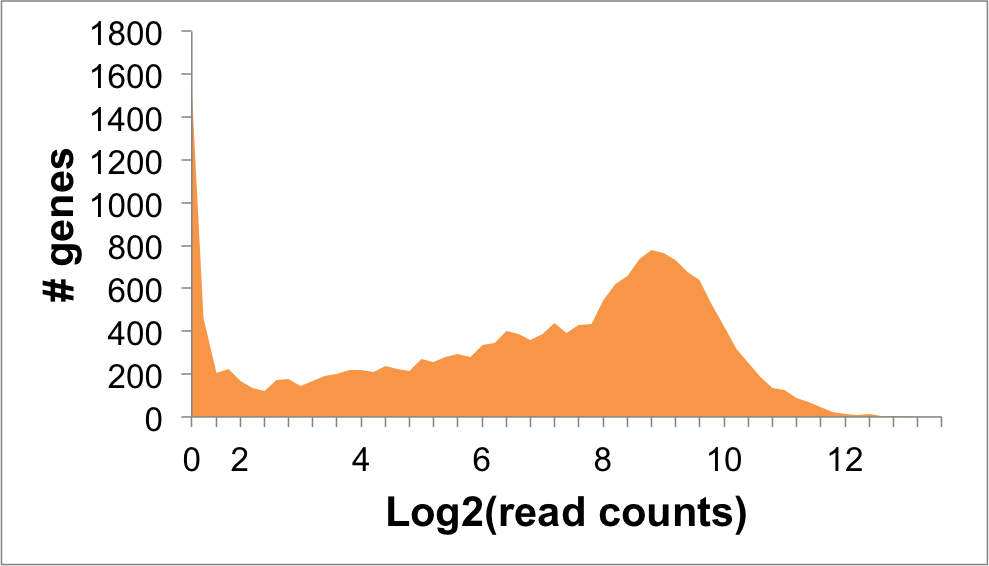
- Expression level (log2 read counts): 7.1
Expression Distribution
PKD2 Expression in NALM6 Cells: 7.1