SREBF1
Gene Information
- Official Symbol: SREBF1
- Official Name: sterol regulatory element binding transcription factor 1
- Aliases and Previous Symbols: N/A
- Entrez ID: 6720
- UniProt: P36956
- Interactions: BioGRID
- PubMed articles: Open PubMed
- OMIM: Open OMIM
Function Summary
- Entrez Summary: This gene encodes a basic helix-loop-helix-leucine zipper (bHLH-Zip) transcription factor that binds to the sterol regulatory element-1 (SRE1), which is a motif that is found in the promoter of the low density lipoprotein receptor gene and other genes involved in sterol biosynthesis. The encoded protein is synthesized as a precursor that is initially attached to the nuclear membrane and endoplasmic reticulum. Following cleavage, the mature protein translocates to the nucleus and activates transcription. This cleaveage is inhibited by sterols. This gene is located within the Smith-Magenis syndrome region on chromosome 17. Alternative promoter usage and splicing result in multiple transcript variants, including SREBP-1a and SREBP-1c, which correspond to RefSeq transcript variants 2 and 3, respectively. [provided by RefSeq, Nov 2017].
- UniProt Summary: N/A
Pfam Domains GO Terms
Pfam Domains
| HLH |
GO Terms
| sterol response element binding |
| regulation of heart rate by chemical signal |
| positive regulation of cholesterol biosynthetic process |
| positive regulation of sterol biosynthetic process |
| positive regulation of cholesterol metabolic process |
| positive regulation of triglyceride biosynthetic process |
| regulation of triglyceride biosynthetic process |
| positive regulation of steroid biosynthetic process |
| positive regulation of histone deacetylation |
| mRNA transcription by RNA polymerase II |
| positive regulation of triglyceride metabolic process |
| response to food |
| positive regulation of protein deacetylation |
| positive regulation of alcohol biosynthetic process |
| mRNA transcription |
| positive regulation of steroid metabolic process |
| regulation of histone deacetylation |
| positive regulation of pri-miRNA transcription by RNA polymerase II |
| regulation of triglyceride metabolic process |
| response to glucagon |
| negative regulation of insulin secretion |
| regulation of autophagy of mitochondrion |
| regulation of pri-miRNA transcription by RNA polymerase II |
| regulation of cholesterol biosynthetic process |
| regulation of protein deacetylation |
| regulation of sterol biosynthetic process |
| regulation of protein targeting to mitochondrion |
| negative regulation of peptide hormone secretion |
| response to progesterone |
| nuclear receptor activity |
| ER to Golgi transport vesicle membrane |
| cellular response to fatty acid |
| regulation of cholesterol metabolic process |
| negative regulation of hormone secretion |
| regulation of establishment of protein localization to mitochondrion |
| regulation of alcohol biosynthetic process |
| positive regulation of lipid biosynthetic process |
| regulation of protein targeting |
| response to fatty acid |
| regulation of fatty acid metabolic process |
| regulation of steroid biosynthetic process |
| insulin receptor signaling pathway |
| positive regulation of histone modification |
| regulation of heart rate |
| response to cAMP |
| positive regulation of chromatin organization |
| fat cell differentiation |
| response to retinoic acid |
| regulation of steroid metabolic process |
| cholesterol metabolic process |
| secondary alcohol metabolic process |
| negative regulation of protein secretion |
| sterol metabolic process |
| response to organophosphorus |
| response to glucose |
| positive regulation of small molecule metabolic process |
| negative regulation of peptide secretion |
| circadian rhythm |
| positive regulation of lipid metabolic process |
| response to hexose |
| regulation of histone modification |
| response to monosaccharide |
| cellular response to starvation |
| response to purine-containing compound |
| protein dimerization activity |
| cellular response to insulin stimulus |
| intracellular receptor signaling pathway |
| lung development |
| response to carbohydrate |
| regulation of cellular ketone metabolic process |
| respiratory tube development |
| positive regulation of chromosome organization |
| regulation of insulin secretion |
| nuclear envelope |
| regulation of mitochondrion organization |
| negative regulation of protein transport |
| negative regulation of establishment of protein localization |
| regulation of lipid biosynthetic process |
| regulation of chromatin organization |
| response to starvation |
| response to ketone |
| respiratory system development |
| negative regulation of secretion by cell |
| cellular response to acid chemical |
| regulation of peptide hormone secretion |
| response to insulin |
| regulation of intracellular protein transport |
| negative regulation of secretion |
| cellular response to nutrient levels |
| regulation of heart contraction |
| steroid metabolic process |
| cellular response to extracellular stimulus |
| cellular response to peptide hormone stimulus |
| protein-containing complex binding |
| regulation of hormone secretion |
| rhythmic process |
| aging |
| regulation of protein stability |
| regulation of blood circulation |
| RNA polymerase II regulatory region sequence-specific DNA binding |
| alcohol metabolic process |
| cellular response to peptide |
| response to steroid hormone |
| regulation of autophagy |
| cellular response to external stimulus |
| response to acid chemical |
| regulation of chromosome organization |
| regulation of intracellular transport |
| response to peptide hormone |
| chromatin binding |
| regulation of lipid metabolic process |
| regulation of small molecule metabolic process |
| DNA-binding transcription activator activity, RNA polymerase II-specific |
| organic hydroxy compound metabolic process |
| protein kinase binding |
| regulation of protein secretion |
| response to peptide |
| transcription by RNA polymerase II |
| negative regulation of transport |
| regulation of peptide secretion |
| response to nutrient levels |
| RNA polymerase II proximal promoter sequence-specific DNA binding |
| transmembrane receptor protein tyrosine kinase signaling pathway |
| cellular response to lipid |
| response to extracellular stimulus |
| regulation of hormone levels |
| regulation of cellular protein localization |
| lipid biosynthetic process |
| regulation of system process |
| protein-containing complex |
| cellular response to organonitrogen compound |
| cellular response to hormone stimulus |
| Golgi membrane |
| positive regulation of organelle organization |
| transcription, DNA-templated |
| nucleic acid-templated transcription |
| RNA biosynthetic process |
| cellular response to nitrogen compound |
| DNA-binding transcription factor activity |
| mRNA metabolic process |
| regulation of protein transport |
| enzyme linked receptor protein signaling pathway |
| regulation of peptide transport |
| regulation of establishment of protein localization |
| regulation of secretion by cell |
| regulation of secretion |
| regulation of cellular catabolic process |
| tube development |
| response to lipid |
| negative regulation of transcription by RNA polymerase II |
| response to hormone |
| regulation of cellular localization |
| response to organic cyclic compound |
| endoplasmic reticulum membrane |
| regulation of catabolic process |
| response to organonitrogen compound |
| response to drug |
| regulation of protein localization |
| cellular response to oxygen-containing compound |
| response to nitrogen compound |
| nucleobase-containing compound biosynthetic process |
| heterocycle biosynthetic process |
| aromatic compound biosynthetic process |
| negative regulation of transcription, DNA-templated |
| positive regulation of cellular component organization |
| lipid metabolic process |
| positive regulation of transcription by RNA polymerase II |
| cellular response to endogenous stimulus |
| positive regulation of protein modification process |
| negative regulation of nucleic acid-templated transcription |
| negative regulation of RNA biosynthetic process |
| regulation of organelle organization |
| organic cyclic compound biosynthetic process |
| negative regulation of RNA metabolic process |
| negative regulation of cell communication |
| negative regulation of signaling |
| negative regulation of cellular macromolecule biosynthetic process |
| negative regulation of nucleobase-containing compound metabolic process |
| DNA binding |
| negative regulation of macromolecule biosynthetic process |
| response to endogenous stimulus |
| negative regulation of cellular biosynthetic process |
| positive regulation of transcription, DNA-templated |
| negative regulation of biosynthetic process |
| response to oxygen-containing compound |
| DNA-binding transcription factor activity, RNA polymerase II-specific |
| positive regulation of cellular protein metabolic process |
| cellular nitrogen compound biosynthetic process |
| positive regulation of nucleic acid-templated transcription |
| positive regulation of RNA biosynthetic process |
| RNA metabolic process |
| cellular response to stress |
| positive regulation of protein metabolic process |
| cellular macromolecule biosynthetic process |
| negative regulation of gene expression |
| positive regulation of RNA metabolic process |
| small molecule metabolic process |
| macromolecule biosynthetic process |
| regulation of protein modification process |
| regulation of transport |
| positive regulation of nucleobase-containing compound metabolic process |
| positive regulation of macromolecule biosynthetic process |
| positive regulation of cellular biosynthetic process |
| positive regulation of gene expression |
| gene expression |
| positive regulation of biosynthetic process |
CRISPR Data
Compound Hit Most Correlated Genes in Chemogenomics Tissues where Essential in the Avana Dataset (DepMap 20Q1)
Compound Hit
Most Correlated Genes in Chemogenomics
No correlation found to any other genes in chemogenomics.
Tissues where Essential in the Avana Dataset (DepMap 20Q1)
Global Fraction of Cell Lines Where Essential: 64/739
| Tissue | Fraction Of Cell Lines Where Essential |
|---|---|
| 1290807.0 | 0/1 |
| 909776.0 | 0/1 |
| bile duct | 5/28 |
| blood | 5/28 |
| bone | 1/26 |
| breast | 2/33 |
| central nervous system | 3/56 |
| cervix | 1/4 |
| colorectal | 0/17 |
| esophagus | 3/13 |
| fibroblast | 0/1 |
| gastric | 1/16 |
| kidney | 4/21 |
| liver | 1/20 |
| lung | 6/75 |
| lymphocyte | 0/16 |
| ovary | 1/26 |
| pancreas | 4/24 |
| peripheral nervous system | 0/16 |
| plasma cell | 0/15 |
| prostate | 0/1 |
| skin | 0/24 |
| soft tissue | 0/9 |
| thyroid | 0/2 |
| upper aerodigestive | 4/22 |
| urinary tract | 4/29 |
| uterus | 0/5 |
Essentiality in NALM6
- Essentiality Rank: 10856
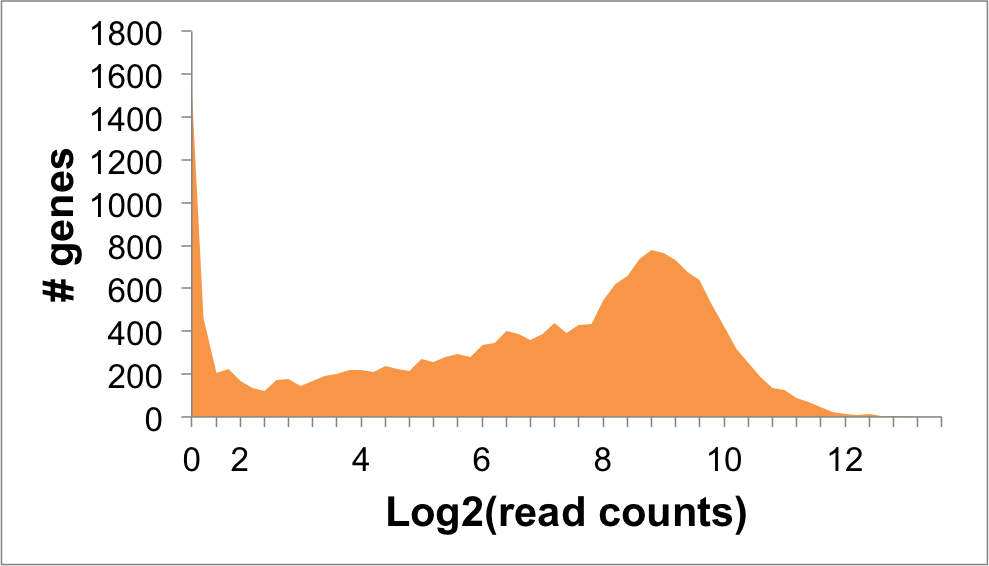
- Expression level (log2 read counts): 7.62
Expression Distribution
SREBF1 Expression in NALM6 Cells: 7.62