CASP8
Gene Information
- Official Symbol: CASP8
- Official Name: caspase 8
- Aliases and Previous Symbols: N/A
- Entrez ID: 841
- UniProt: Q14790
- Interactions: BioGRID
- PubMed articles: Open PubMed
- OMIM: Open OMIM
Function Summary
- Entrez Summary: This gene encodes a member of the cysteine-aspartic acid protease (caspase) family. Sequential activation of caspases plays a central role in the execution-phase of cell apoptosis. Caspases exist as inactive proenzymes composed of a prodomain, a large protease subunit, and a small protease subunit. Activation of caspases requires proteolytic processing at conserved internal aspartic residues to generate a heterodimeric enzyme consisting of the large and small subunits. This protein is involved in the programmed cell death induced by Fas and various apoptotic stimuli. The N-terminal FADD-like death effector domain of this protein suggests that it may interact with Fas-interacting protein FADD. This protein was detected in the insoluble fraction of the affected brain region from Huntington disease patients but not in those from normal controls, which implicated the role in neurodegenerative diseases. Many alternatively spliced transcript variants encoding different isoforms have been described, although not all variants have had their full-length sequences determined. [provided by RefSeq, Jul 2008].
- UniProt Summary: N/A
Pfam Domains GO Terms
Pfam Domains
| Peptidase C14 |
| DED |
GO Terms
| modulation by symbiont of host catalytic activity |
| suppression by virus of host cysteine-type endopeptidase activity involved in apoptotic process |
| negative regulation by symbiont of host catalytic activity |
| modulation by virus of host catalytic activity |
| suppression by virus of host catalytic activity |
| modulation by virus of host molecular function |
| modulation by symbiont of host molecular function |
| negative regulation by symbiont of host molecular function |
| suppression by virus of host molecular function |
| negative regulation of catalytic activity in other organism involved in symbiotic interaction |
| suppression by virus of host apoptotic process |
| syncytiotrophoblast cell differentiation involved in labyrinthine layer development |
| negative regulation by symbiont of host apoptotic process |
| modulation of catalytic activity in other organism involved in symbiotic interaction |
| negative regulation by symbiont of host programmed cell death |
| modulation by virus of host apoptotic process |
| activation of cysteine-type endopeptidase activity involved in apoptotic signaling pathway |
| death effector domain binding |
| TRAIL-activated apoptotic signaling pathway |
| modulation by symbiont of host apoptotic process |
| modulation of programmed cell death in other organism |
| modulation of programmed cell death in other organism involved in symbiotic interaction |
| modulation by organism of apoptotic process in other organism involved in symbiotic interaction |
| ripoptosome |
| modulation of apoptotic process in other organism |
| CD95 death-inducing signaling complex |
| death-inducing signaling complex |
| death-inducing signaling complex assembly |
| cysteine-type endopeptidase activity involved in apoptotic signaling pathway |
| modulation by symbiont of host programmed cell death |
| negative regulation of molecular function in other organism involved in symbiotic interaction |
| negative regulation of molecular function in other organism |
| modulation of molecular function in other organism |
| response to cobalt ion |
| modulation of molecular function in other organism involved in symbiotic interaction |
| toll-like receptor 3 signaling pathway |
| positive regulation of cysteine-type endopeptidase activity involved in apoptotic signaling pathway |
| positive regulation of macrophage differentiation |
| activation of cysteine-type endopeptidase activity |
| death receptor binding |
| cysteine-type endopeptidase activity involved in apoptotic process |
| regulation of cysteine-type endopeptidase activity involved in apoptotic signaling pathway |
| regulation of necroptotic process |
| modulation by virus of host cellular process |
| regulation of programmed necrotic cell death |
| regulation of macrophage differentiation |
| macrophage differentiation |
| positive regulation of protein insertion into mitochondrial membrane involved in apoptotic signaling pathway |
| cell differentiation involved in embryonic placenta development |
| modulation by symbiont of host cellular process |
| regulation of protein insertion into mitochondrial membrane involved in apoptotic signaling pathway |
| nucleotide-binding oligomerization domain containing signaling pathway |
| nucleotide-binding domain, leucine rich repeat containing receptor signaling pathway |
| regulation of necrotic cell death |
| cysteine-type peptidase activity |
| TRIF-dependent toll-like receptor signaling pathway |
| tumor necrosis factor receptor binding |
| modulation by virus of host morphology or physiology |
| MyD88-independent toll-like receptor signaling pathway |
| extrinsic apoptotic signaling pathway via death domain receptors |
| cytoplasmic pattern recognition receptor signaling pathway |
| positive regulation of mitochondrial outer membrane permeabilization involved in apoptotic signaling pathway |
| negative regulation of extrinsic apoptotic signaling pathway via death domain receptors |
| modification by symbiont of host morphology or physiology |
| zymogen activation |
| negative regulation of I-kappaB kinase/NF-kappaB signaling |
| regulation of mitochondrial outer membrane permeabilization involved in apoptotic signaling pathway |
| labyrinthine layer development |
| response to cold |
| positive regulation of interleukin-1 beta production |
| execution phase of apoptosis |
| positive regulation of myeloid leukocyte differentiation |
| regulation of extrinsic apoptotic signaling pathway via death domain receptors |
| natural killer cell activation |
| regulation of tumor necrosis factor-mediated signaling pathway |
| positive regulation of interleukin-1 production |
| positive regulation of establishment of protein localization to mitochondrion |
| scaffold protein binding |
| regulation of mitochondrial membrane permeability |
| cell body |
| regulation of establishment of protein localization to mitochondrion |
| cellular response to mechanical stimulus |
| peptidase activity |
| regulation of interleukin-1 beta production |
| regulation of membrane permeability |
| embryonic placenta development |
| activation of cysteine-type endopeptidase activity involved in apoptotic process |
| positive regulation of neuron death |
| cysteine-type endopeptidase activity |
| positive regulation of myeloid cell differentiation |
| regulation of interleukin-1 production |
| extrinsic apoptotic signaling pathway |
| toll-like receptor signaling pathway |
| negative regulation of extrinsic apoptotic signaling pathway |
| modification of morphology or physiology of other organism involved in symbiotic interaction |
| myeloid leukocyte differentiation |
| positive regulation of mitochondrion organization |
| regulation of myeloid leukocyte differentiation |
| positive regulation of protein localization to membrane |
| response to ethanol |
| pattern recognition receptor signaling pathway |
| mitochondrial membrane organization |
| positive regulation of cysteine-type endopeptidase activity involved in apoptotic process |
| response to estradiol |
| positive regulation of leukocyte differentiation |
| positive regulation of cysteine-type endopeptidase activity |
| placenta development |
| B cell activation |
| regulation of extrinsic apoptotic signaling pathway |
| modification of morphology or physiology of other organism |
| interaction with host |
| protein processing |
| mitochondrial outer membrane |
| intracellular receptor signaling pathway |
| regulation of cytokine-mediated signaling pathway |
| positive regulation of endopeptidase activity |
| positive regulation of apoptotic signaling pathway |
| regulation of response to cytokine stimulus |
| response to temperature stimulus |
| regulation of mitochondrion organization |
| positive regulation of I-kappaB kinase/NF-kappaB signaling |
| positive regulation of hemopoiesis |
| regulation of protein localization to membrane |
| positive regulation of peptidase activity |
| response to mechanical stimulus |
| regulation of cysteine-type endopeptidase activity involved in apoptotic process |
| mitochondrial transport |
| myeloid cell differentiation |
| regulation of myeloid cell differentiation |
| negative regulation of apoptotic signaling pathway |
| protein maturation |
| membrane raft |
| response to alcohol |
| innate immune response-activating signal transduction |
| regulation of I-kappaB kinase/NF-kappaB signaling |
| T cell activation |
| regulation of cysteine-type endopeptidase activity |
| activation of innate immune response |
| response to tumor necrosis factor |
| protein-containing complex binding |
| regulation of leukocyte differentiation |
| apoptotic signaling pathway |
| ubiquitin protein ligase binding |
| response to antibiotic |
| regulation of neuron death |
| cellular response to environmental stimulus |
| cellular response to abiotic stimulus |
| response to lipopolysaccharide |
| neuron projection |
| positive regulation of cellular protein localization |
| response to molecule of bacterial origin |
| leukocyte differentiation |
| cellular response to external stimulus |
| positive regulation of innate immune response |
| positive regulation of proteolysis |
| positive regulation of response to biotic stimulus |
| cytoskeleton |
| response to metal ion |
| in utero embryonic development |
| lymphocyte activation |
| regulation of apoptotic signaling pathway |
| regulation of endopeptidase activity |
| reproductive structure development |
| reproductive system development |
| embryonic organ development |
| mitochondrion organization |
| regulation of peptidase activity |
| positive regulation of cytokine production |
| regulation of hemopoiesis |
| regulation of innate immune response |
| positive regulation of establishment of protein localization |
| positive regulation of defense response |
| negative regulation of intracellular signal transduction |
| response to toxic substance |
| positive regulation of multi-organism process |
| regulation of response to biotic stimulus |
| response to inorganic substance |
| regulation of cellular protein localization |
| cellular response to organic cyclic compound |
| hemopoiesis |
| immune response-activating signal transduction |
| proteolysis involved in cellular protein catabolic process |
| immune response-regulating signaling pathway |
| protein-containing complex |
| positive regulation of response to external stimulus |
| hematopoietic or lymphoid organ development |
| cellular protein catabolic process |
| positive regulation of organelle organization |
| activation of immune response |
| chordate embryonic development |
| positive regulation of apoptotic process |
| immune system development |
| positive regulation of programmed cell death |
| embryo development ending in birth or egg hatching |
| developmental process involved in reproduction |
| protein catabolic process |
| response to bacterium |
| regulation of cytokine production |
| positive regulation of cell death |
| viral process |
| regulation of proteolysis |
| regulation of establishment of protein localization |
| regulation of defense response |
| positive regulation of hydrolase activity |
| regulation of multi-organism process |
| symbiotic process |
| negative regulation of catalytic activity |
| interspecies interaction between organisms |
| response to lipid |
| membrane organization |
| positive regulation of immune response |
| negative regulation of apoptotic process |
| negative regulation of programmed cell death |
| cellular macromolecule catabolic process |
| response to hormone |
| regulation of cellular localization |
| response to organic cyclic compound |
| apoptotic process |
| leukocyte activation |
| positive regulation of cell differentiation |
| embryo development |
| positive regulation of transport |
| negative regulation of cell death |
| response to drug |
| positive regulation of intracellular signal transduction |
| regulation of protein localization |
| macromolecule catabolic process |
| programmed cell death |
| organonitrogen compound catabolic process |
| identical protein binding |
| cell activation |
| cell death |
| regulation of response to external stimulus |
| response to cytokine |
| negative regulation of molecular function |
| positive regulation of immune system process |
| regulation of immune response |
| response to abiotic stimulus |
| positive regulation of cellular component organization |
| mitochondrion |
| negative regulation of signal transduction |
| proteolysis |
| regulation of hydrolase activity |
| regulation of organelle organization |
| response to other organism |
| response to external biotic stimulus |
| response to biotic stimulus |
| negative regulation of cell communication |
| negative regulation of signaling |
| positive regulation of developmental process |
| reproductive process |
| reproduction |
| positive regulation of catalytic activity |
| response to endogenous stimulus |
| regulation of response to stress |
| regulation of apoptotic process |
| response to oxygen-containing compound |
| protein-containing complex assembly |
| regulation of programmed cell death |
| positive regulation of cellular protein metabolic process |
| negative regulation of response to stimulus |
| regulation of immune system process |
| positive regulation of signal transduction |
| regulation of cell death |
| intracellular signal transduction |
| positive regulation of protein metabolic process |
| positive regulation of multicellular organismal process |
| organic substance catabolic process |
| positive regulation of molecular function |
| cellular catabolic process |
| regulation of cell differentiation |
| positive regulation of cell communication |
| positive regulation of signaling |
| regulation of intracellular signal transduction |
| protein-containing complex subunit organization |
| regulation of transport |
| gene expression |
CRISPR Data
Compound Hit Most Correlated Genes in Chemogenomics Tissues where Essential in the Avana Dataset (DepMap 20Q1)
Compound Hit
| Screen | Score |
|---|---|
| Taxol 0.004μM R03 exp103 | 1.77 |
| Docetaxel 0.002μM R01 exp45 | 1.79 |
| Vinblastine 0.002μM R01 exp60 | 1.82 |
| TNF-alpha 44ng/ml R08 exp533 | 1.98 |
| TRAIL 50ng/ml R00 exp36 | 8.49 |
| TRAIL 5ng/ml R00 exp35 | 8.49 |
Tissues where Essential in the Avana Dataset (DepMap 20Q1)
Global Fraction of Cell Lines Where Essential: 0/739
| Tissue | Fraction Of Cell Lines Where Essential |
|---|---|
| 1290807.0 | 0/1 |
| 909776.0 | 0/1 |
| bile duct | 0/28 |
| blood | 0/28 |
| bone | 0/26 |
| breast | 0/33 |
| central nervous system | 0/56 |
| cervix | 0/4 |
| colorectal | 0/17 |
| esophagus | 0/13 |
| fibroblast | 0/1 |
| gastric | 0/16 |
| kidney | 0/21 |
| liver | 0/20 |
| lung | 0/75 |
| lymphocyte | 0/16 |
| ovary | 0/26 |
| pancreas | 0/24 |
| peripheral nervous system | 0/16 |
| plasma cell | 0/15 |
| prostate | 0/1 |
| skin | 0/24 |
| soft tissue | 0/9 |
| thyroid | 0/2 |
| upper aerodigestive | 0/22 |
| urinary tract | 0/29 |
| uterus | 0/5 |
Essentiality in NALM6
- Essentiality Rank: 6969
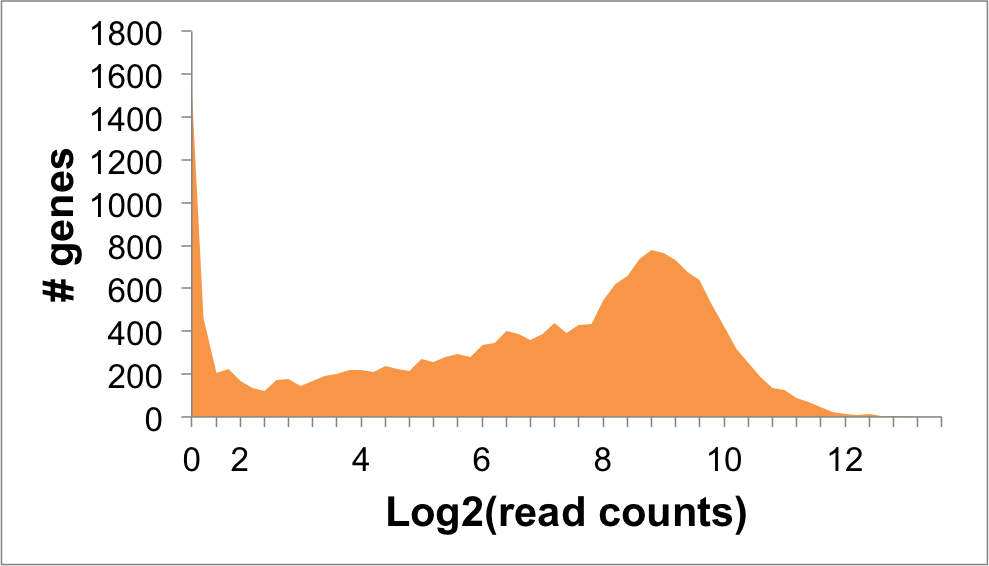
- Expression level (log2 read counts): 6.17
Expression Distribution
CASP8 Expression in NALM6 Cells: 6.17