RC3H1
Gene Information
- Official Symbol: RC3H1
- Official Name: ring finger and CCCH-type domains 1
- Aliases and Previous Symbols: N/A
- Entrez ID: 149041
- UniProt: Q5TC82
- Interactions: BioGRID
- PubMed articles: Open PubMed
- OMIM: Open OMIM
Function Summary
- Entrez Summary: N/A
- UniProt Summary: Post-transcriptional repressor of mRNAs containing a conserved stem loop motif, called constitutive decay element (CDE), which is often located in the 3'-UTR, as in HMGXB3, ICOS, IER3, NFKBID, NFKBIZ, PPP1R10, TNF and in many more mRNAs (By similarity). Cleaves translationally inactive mRNAs harboring a stem-loop (SL), often located in their 3'-UTRs, during the early phase of inflammation in a helicase UPF1-independent manner (By similarity). Binds to CDE and promotes mRNA deadenylation and degradation. This process does not involve miRNAs (By similarity). In follicular helper T (Tfh) cells, represses of ICOS and TNFRSF4 expression, thus preventing spontaneous Tfh cell differentiation, germinal center B-cell differentiation in the absence of immunization and autoimmunity (By similarity). In resting or LPS- stimulated macrophages, controls inflammation by suppressing TNF expression (By similarity). Also recognizes CDE in its own mRNA and in that of paralogous RC3H2, possibly leading to feedback loop regulation (By similarity). {ECO:0000250|UniProtKB:Q4VGL6}.
Pfam Domains GO Terms
Pfam Domains
No Pfam Domain information is available for this gene.
GO Terms
| negative regulation of germinal center formation |
| T follicular helper cell differentiation |
| negative regulation of T-helper 17 cell differentiation |
| regulation of germinal center formation |
| negative regulation of T-helper 17 type immune response |
| regulation of miRNA metabolic process |
| negative regulation of activated T cell proliferation |
| cytoplasmic mRNA processing body assembly |
| negative regulation of T-helper cell differentiation |
| negative regulation of B cell proliferation |
| 3-UTR-mediated mRNA destabilization |
| lymph node development |
| regulation of T-helper 17 cell differentiation |
| regulation of T-helper 17 type immune response |
| negative regulation of CD4-positive, alpha-beta T cell differentiation |
| RNA stem-loop binding |
| negative regulation of alpha-beta T cell differentiation |
| B cell homeostasis |
| CD4-positive, alpha-beta T cell differentiation involved in immune response |
| T-helper cell differentiation |
| alpha-beta T cell activation involved in immune response |
| alpha-beta T cell differentiation involved in immune response |
| negative regulation of CD4-positive, alpha-beta T cell activation |
| mRNA destabilization |
| miRNA binding |
| negative regulation of B cell activation |
| RNA destabilization |
| T cell differentiation involved in immune response |
| spleen development |
| T cell homeostasis |
| regulation of T-helper cell differentiation |
| CD4-positive, alpha-beta T cell differentiation |
| regulation of activated T cell proliferation |
| negative regulation of alpha-beta T cell activation |
| T cell proliferation |
| regulation of T cell receptor signaling pathway |
| CD4-positive, alpha-beta T cell activation |
| negative regulation of adaptive immune response based on somatic recombination of immune receptors built from immunoglobulin superfamily domains |
| negative regulation of T cell differentiation |
| negative regulation of adaptive immune response |
| regulation of CD4-positive, alpha-beta T cell differentiation |
| positive regulation of mRNA catabolic process |
| alpha-beta T cell differentiation |
| negative regulation of lymphocyte differentiation |
| lymphocyte homeostasis |
| nuclear-transcribed mRNA catabolic process, deadenylation-dependent decay |
| negative regulation of T cell proliferation |
| regulation of CD4-positive, alpha-beta T cell activation |
| regulation of B cell proliferation |
| alpha-beta T cell activation |
| regulation of alpha-beta T cell differentiation |
| regulation of antigen receptor-mediated signaling pathway |
| T cell activation involved in immune response |
| cytoplasmic stress granule |
| leukocyte homeostasis |
| double-stranded RNA binding |
| negative regulation of lymphocyte proliferation |
| negative regulation of mononuclear cell proliferation |
| mRNA 3-UTR binding |
| positive regulation of NIK/NF-kappaB signaling |
| positive regulation of mRNA metabolic process |
| negative regulation of leukocyte proliferation |
| lymphocyte proliferation |
| P-body |
| mononuclear cell proliferation |
| regulation of alpha-beta T cell activation |
| leukocyte proliferation |
| negative regulation of leukocyte differentiation |
| regulation of NIK/NF-kappaB signaling |
| negative regulation of T cell activation |
| lymphocyte activation involved in immune response |
| negative regulation of immune effector process |
| negative regulation of leukocyte cell-cell adhesion |
| negative regulation of translation |
| T cell differentiation |
| negative regulation of hemopoiesis |
| regulation of T cell differentiation |
| negative regulation of lymphocyte activation |
| regulation of adaptive immune response based on somatic recombination of immune receptors built from immunoglobulin superfamily domains |
| negative regulation of cellular amide metabolic process |
| negative regulation of immune response |
| regulation of T cell proliferation |
| regulation of adaptive immune response |
| regulation of lymphocyte differentiation |
| cellular response to interleukin-1 |
| negative regulation of cell-cell adhesion |
| negative regulation of leukocyte activation |
| T cell receptor signaling pathway |
| regulation of mRNA stability |
| regulation of RNA stability |
| negative regulation of cell activation |
| nuclear-transcribed mRNA catabolic process |
| response to interleukin-1 |
| homeostasis of number of cells |
| regulation of mRNA catabolic process |
| regulation of B cell activation |
| regulation of lymphocyte proliferation |
| regulation of mononuclear cell proliferation |
| mRNA catabolic process |
| ubiquitin protein ligase activity |
| regulation of leukocyte proliferation |
| ribonucleoprotein complex assembly |
| T cell activation |
| lymphocyte differentiation |
| ribonucleoprotein complex subunit organization |
| ubiquitin-protein transferase activity |
| RNA catabolic process |
| negative regulation of cell adhesion |
| regulation of leukocyte differentiation |
| antigen receptor-mediated signaling pathway |
| regulation of leukocyte cell-cell adhesion |
| protein polyubiquitination |
| regulation of T cell activation |
| regulation of mRNA metabolic process |
| leukocyte differentiation |
| regulation of translation |
| positive regulation of cellular catabolic process |
| nucleobase-containing compound catabolic process |
| lymphocyte activation |
| regulation of cell-cell adhesion |
| regulation of cellular amide metabolic process |
| positive regulation of catabolic process |
| heterocycle catabolic process |
| cellular nitrogen compound catabolic process |
| negative regulation of immune system process |
| aromatic compound catabolic process |
| immune response-activating cell surface receptor signaling pathway |
| regulation of hemopoiesis |
| ribonucleoprotein complex biogenesis |
| regulation of immune effector process |
| organic cyclic compound catabolic process |
| immune response-regulating cell surface receptor signaling pathway |
| regulation of lymphocyte activation |
| posttranscriptional regulation of gene expression |
| cell population proliferation |
| hemopoiesis |
| immune response-activating signal transduction |
| immune response-regulating signaling pathway |
| regulation of leukocyte activation |
| hematopoietic or lymphoid organ development |
| leukocyte activation involved in immune response |
| cell activation involved in immune response |
| activation of immune response |
| regulation of cell activation |
| immune system development |
| negative regulation of cell population proliferation |
| regulation of cell adhesion |
| protein ubiquitination |
| mRNA metabolic process |
| negative regulation of cell differentiation |
| organelle assembly |
| protein modification by small protein conjugation |
| regulation of cellular catabolic process |
| zinc ion binding |
| cellular protein-containing complex assembly |
| positive regulation of immune response |
| cellular macromolecule catabolic process |
| leukocyte activation |
| negative regulation of developmental process |
| protein modification by small protein conjugation or removal |
| regulation of catabolic process |
| cellular response to cytokine stimulus |
| positive regulation of intracellular signal transduction |
| negative regulation of cellular protein metabolic process |
| macromolecule catabolic process |
| regulation of anatomical structure morphogenesis |
| cell activation |
| immune effector process |
| response to cytokine |
| negative regulation of protein metabolic process |
| positive regulation of immune system process |
| regulation of immune response |
| negative regulation of multicellular organismal process |
| negative regulation of cellular macromolecule biosynthetic process |
| RNA binding |
| negative regulation of macromolecule biosynthetic process |
| negative regulation of cellular biosynthetic process |
| negative regulation of biosynthetic process |
| protein-containing complex assembly |
| regulation of cell population proliferation |
| negative regulation of response to stimulus |
| homeostatic process |
| regulation of immune system process |
| positive regulation of signal transduction |
| RNA metabolic process |
| negative regulation of gene expression |
| positive regulation of RNA metabolic process |
| organic substance catabolic process |
| cellular catabolic process |
| regulation of cell differentiation |
| positive regulation of cell communication |
| positive regulation of signaling |
| regulation of intracellular signal transduction |
| protein-containing complex subunit organization |
| immune response |
| positive regulation of nucleobase-containing compound metabolic process |
CRISPR Data
Compound Hit Most Correlated Genes in Chemogenomics Tissues where Essential in the Avana Dataset (DepMap 20Q1)
Compound Hit
| Screen | Score |
|---|---|
| BML-284 0.09μM R08 exp460 | -2.68 |
| Nutlin-3A 1.6μM R06 exp294 | -2.19 |
| Azithromycin 100μM R08 exp452 | -2.13 |
| IWR1 50μM R08 exp495 | -2.07 |
| Vinblastine 0.002μM R01 exp60 | -2.07 |
| HMS-I1 1μM R01 exp46 | -1.97 |
| Taxol 0.002μM R01 exp54 | -1.85 |
| Mdivi-1 15μM R05 exp217 | -1.82 |
| Chloroquine 32μM R08 exp470 | -1.71 |
| Docetaxel 0.002μM R01 exp45 | -1.7 |
| LY2090314 0.003μM R08 exp499 | 2.4 |
Most Correlated Genes in Chemogenomics
No correlation found to any other genes in chemogenomics.
Tissues where Essential in the Avana Dataset (DepMap 20Q1)
Global Fraction of Cell Lines Where Essential: 0/739
| Tissue | Fraction Of Cell Lines Where Essential |
|---|---|
| 1290807.0 | 0/1 |
| 909776.0 | 0/1 |
| bile duct | 0/28 |
| blood | 0/28 |
| bone | 0/26 |
| breast | 0/33 |
| central nervous system | 0/56 |
| cervix | 0/4 |
| colorectal | 0/17 |
| esophagus | 0/13 |
| fibroblast | 0/1 |
| gastric | 0/16 |
| kidney | 0/21 |
| liver | 0/20 |
| lung | 0/75 |
| lymphocyte | 0/16 |
| ovary | 0/26 |
| pancreas | 0/24 |
| peripheral nervous system | 0/16 |
| plasma cell | 0/15 |
| prostate | 0/1 |
| skin | 0/24 |
| soft tissue | 0/9 |
| thyroid | 0/2 |
| upper aerodigestive | 0/22 |
| urinary tract | 0/29 |
| uterus | 0/5 |
Essentiality in NALM6
- Essentiality Rank: 11716
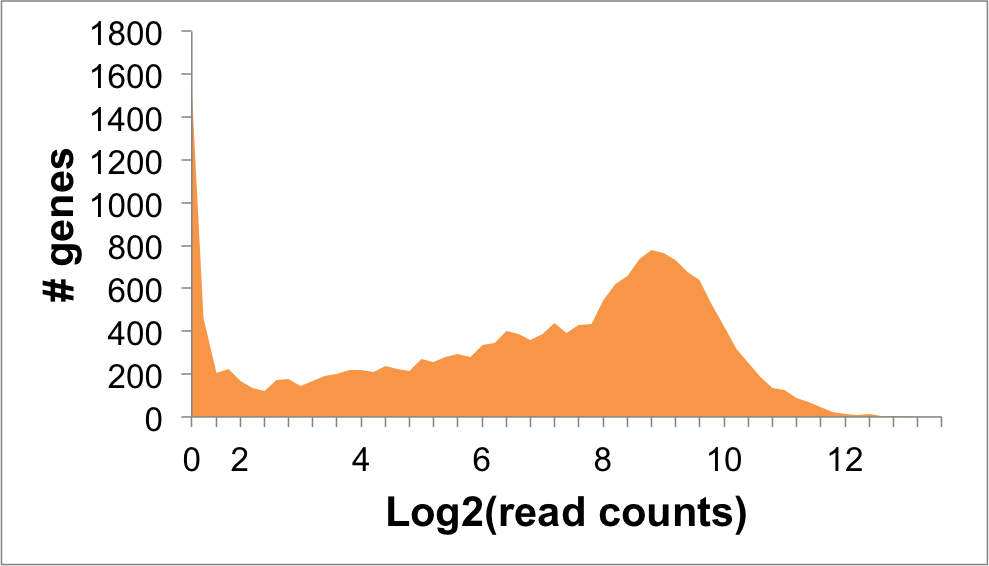
- Expression level (log2 read counts): 5.76
Expression Distribution
RC3H1 Expression in NALM6 Cells: 5.76