UVSSA
Gene Information
- Official Symbol: UVSSA
- Official Name: UV stimulated scaffold protein A
- Aliases and Previous Symbols: N/A
- Entrez ID: 57654
- UniProt: Q2YD98
- Interactions: BioGRID
- PubMed articles: Open PubMed
- OMIM: Open OMIM
Function Summary
- Entrez Summary: The protein encoded by this gene appears to be involved in ubiquitination and dephosphorylation of RNA polymerase II subunits that stall after UV irradiation. The encoded protein interacts with several members of the nucleotide excision repair complex, and is thought to be involved in the transcription-coupled nucleotide excision repair (TC-NER) pathway to help remove lesions in the DNA that block transcription. Defects in this gene can cause UV-sensitive syndrome 3. Alternative splicing results in multiple transcript variants. [provided by RefSeq, Dec 2015].
- UniProt Summary: Factor involved in transcription-coupled nucleotide excision repair (TC-NER) in response to UV damage. TC-NER allows RNA polymerase II-blocking lesions to be rapidly removed from the transcribed strand of active genes. Acts by promoting stabilization of ERCC6 by recruiting deubiquitinating enzyme USP7 to TC-NER complexes, preventing UV-induced degradation of ERCC6 by the proteasome. Interacts with the elongating form of RNA polymerase II (RNA pol IIo) and facilitates its ubiquitination at UV damage sites, leading to promote RNA pol IIo backtracking to allow access to the nucleotide excision repair machinery. Not involved in processing oxidative damage. {ECO:0000269|PubMed:22466610, ECO:0000269|PubMed:22466611, ECO:0000269|PubMed:22466612}.
CRISPR Data
Essentiality in NALM6
- Essentiality Rank: 4340
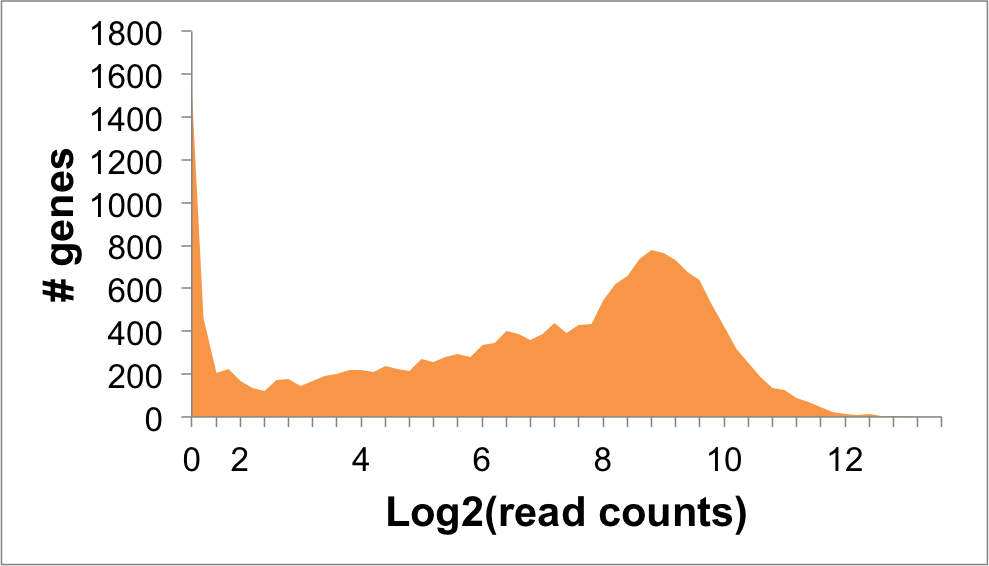
- Expression level (log2 read counts): 4.61
UVSSA Expression in NALM6 Cells: 4.61