FCER1G
Gene Information
- Official Symbol: FCER1G
- Official Name: Fc fragment of IgE receptor Ig
- Aliases and Previous Symbols: N/A
- Entrez ID: 2207
- UniProt: P30273
- Interactions: BioGRID
- PubMed articles: Open PubMed
- OMIM: Open OMIM
Function Summary
- Entrez Summary: The high affinity IgE receptor is a key molecule involved in allergic reactions. It is a tetramer composed of 1 alpha, 1 beta, and 2 gamma chains. The gamma chains are also subunits of other Fc receptors. [provided by RefSeq, Jul 2008].
- UniProt Summary: Associates with a variety of FcR alpha chains to form a functional signaling complex. Regulates several aspects of the immune response. The gamma subunit has a critical role in allowing the IgE Fc receptor to reach the cell surface. Also involved in collagen-mediated platelet activation and in neutrophil activation mediated by integrin. {ECO:0000269|PubMed:8611682}.
Pfam Domains GO Terms
Pfam Domains
| TCR zetazeta |
| ITAM |
GO Terms
| IgE receptor activity |
| positive regulation of type III hypersensitivity |
| negative regulation of mast cell apoptotic process |
| positive regulation of type I hypersensitivity |
| regulation of type III hypersensitivity |
| regulation of mast cell apoptotic process |
| serotonin secretion |
| serotonin production involved in inflammatory response |
| Fc-epsilon receptor I complex |
| serotonin secretion by platelet |
| positive regulation of mast cell cytokine production |
| regulation of type I hypersensitivity |
| serotonin secretion involved in inflammatory response |
| positive regulation of type IIa hypersensitivity |
| positive regulation of type II hypersensitivity |
| regulation of type II hypersensitivity |
| regulation of type IIa hypersensitivity |
| IgE binding |
| interleukin-3-mediated signaling pathway |
| regulation of mast cell cytokine production |
| positive regulation of hypersensitivity |
| serotonin transport |
| regulation of hypersensitivity |
| positive regulation of acute inflammatory response to antigenic stimulus |
| interleukin-2 production |
| IgG binding |
| positive regulation of inflammatory response to antigenic stimulus |
| regulation of acute inflammatory response to antigenic stimulus |
| positive regulation of mast cell degranulation |
| positive regulation of mast cell activation involved in immune response |
| production of molecular mediator involved in inflammatory response |
| negative regulation of myeloid cell apoptotic process |
| positive regulation of protein localization to cell surface |
| cellular response to low-density lipoprotein particle stimulus |
| positive regulation of myeloid leukocyte cytokine production involved in immune response |
| positive regulation of mast cell activation |
| monoamine transport |
| mast cell activation |
| positive regulation of interleukin-4 production |
| positive regulation of leukocyte degranulation |
| regulation of inflammatory response to antigenic stimulus |
| response to lipoprotein particle |
| regulation of interleukin-4 production |
| positive regulation of acute inflammatory response |
| cellular response to lipoprotein particle stimulus |
| regulation of myeloid cell apoptotic process |
| regulation of platelet activation |
| positive regulation of myeloid leukocyte mediated immunity |
| T cell differentiation involved in immune response |
| regulation of mast cell degranulation |
| regulation of mast cell activation involved in immune response |
| positive regulation of interleukin-10 production |
| positive regulation of B cell mediated immunity |
| positive regulation of immunoglobulin mediated immune response |
| regulation of protein localization to cell surface |
| osteoclast differentiation |
| regulation of acute inflammatory response |
| regulation of mast cell activation |
| negative regulation of leukocyte apoptotic process |
| regulation of leukocyte degranulation |
| regulation of B cell mediated immunity |
| regulation of immunoglobulin mediated immune response |
| regulation of interleukin-10 production |
| ammonium transport |
| positive regulation of regulated secretory pathway |
| positive regulation of cytokine production involved in immune response |
| regulation of myeloid leukocyte mediated immunity |
| ficolin-1-rich granule membrane |
| receptor internalization |
| T cell activation involved in immune response |
| exocytic process |
| positive regulation of phagocytosis |
| tertiary granule membrane |
| antigen processing and presentation of exogenous peptide antigen via MHC class I |
| regulation of blood coagulation |
| regulation of hemostasis |
| regulation of coagulation |
| regulation of leukocyte apoptotic process |
| neutrophil chemotaxis |
| regulation of cytokine production involved in immune response |
| positive regulation of tumor necrosis factor production |
| positive regulation of tumor necrosis factor superfamily cytokine production |
| positive regulation of exocytosis |
| granulocyte chemotaxis |
| neutrophil migration |
| integrin-mediated signaling pathway |
| positive regulation of interleukin-6 production |
| regulation of phagocytosis |
| positive regulation of production of molecular mediator of immune response |
| antigen processing and presentation of peptide antigen via MHC class I |
| antigen processing and presentation of exogenous peptide antigen via MHC class II |
| positive regulation of adaptive immune response based on somatic recombination of immune receptors built from immunoglobulin superfamily domains |
| antigen processing and presentation of peptide antigen via MHC class II |
| antigen processing and presentation of peptide or polysaccharide antigen via MHC class II |
| granulocyte migration |
| receptor metabolic process |
| positive regulation of adaptive immune response |
| positive regulation of lymphocyte mediated immunity |
| lymphocyte activation involved in immune response |
| myeloid leukocyte differentiation |
| stimulatory C-type lectin receptor signaling pathway |
| innate immune response activating cell surface receptor signaling pathway |
| myeloid leukocyte migration |
| platelet degranulation |
| phagocytosis, engulfment |
| positive regulation of leukocyte mediated immunity |
| T cell differentiation |
| Fc receptor mediated stimulatory signaling pathway |
| platelet activation |
| regulation of wound healing |
| plasma membrane invagination |
| organic hydroxy compound transport |
| positive regulation of inflammatory response |
| Fc-gamma receptor signaling pathway |
| regulation of interleukin-6 production |
| regulation of production of molecular mediator of immune response |
| leukocyte chemotaxis |
| regulation of adaptive immune response based on somatic recombination of immune receptors built from immunoglobulin superfamily domains |
| membrane invagination |
| regulation of tumor necrosis factor production |
| regulation of lymphocyte mediated immunity |
| cytokine production |
| regulation of tumor necrosis factor superfamily cytokine production |
| regulation of adaptive immune response |
| regulation of regulated secretory pathway |
| regulation of response to wounding |
| Fc-epsilon receptor signaling pathway |
| antigen processing and presentation of exogenous peptide antigen |
| neurotransmitter transport |
| protein localization to plasma membrane |
| antigen processing and presentation of exogenous antigen |
| antigen processing and presentation of peptide antigen |
| regulation of leukocyte mediated immunity |
| immunoglobulin mediated immune response |
| positive regulation of intracellular transport |
| B cell mediated immunity |
| cell chemotaxis |
| antigen processing and presentation |
| positive regulation of immune effector process |
| myeloid cell differentiation |
| regulation of exocytosis |
| protein localization to cell periphery |
| innate immune response-activating signal transduction |
| T cell activation |
| lymphocyte differentiation |
| receptor-mediated endocytosis |
| Fc receptor signaling pathway |
| activation of innate immune response |
| lymphocyte mediated immunity |
| adaptive immune response based on somatic recombination of immune receptors built from immunoglobulin superfamily domains |
| blood coagulation |
| coagulation |
| hemostasis |
| positive regulation of cellular protein localization |
| phagocytosis |
| defense response to bacterium |
| leukocyte differentiation |
| regulation of inflammatory response |
| protein homooligomerization |
| positive regulation of innate immune response |
| regulation of intracellular transport |
| positive regulation of response to biotic stimulus |
| leukocyte migration |
| lymphocyte activation |
| external side of plasma membrane |
| positive regulation of leukocyte activation |
| positive regulation of secretion by cell |
| positive regulation of cell activation |
| positive regulation of secretion |
| negative regulation of immune system process |
| positive regulation of cytokine production |
| immune response-activating cell surface receptor signaling pathway |
| regulation of innate immune response |
| regulation of immune effector process |
| positive regulation of defense response |
| wound healing |
| protein localization to membrane |
| immune response-regulating cell surface receptor signaling pathway |
| neutrophil degranulation |
| neutrophil activation involved in immune response |
| regulation of body fluid levels |
| inflammatory response |
| neutrophil mediated immunity |
| neutrophil activation |
| granulocyte activation |
| positive regulation of multi-organism process |
| leukocyte degranulation |
| myeloid leukocyte mediated immunity |
| protein complex oligomerization |
| regulation of response to biotic stimulus |
| myeloid cell activation involved in immune response |
| regulation of cellular protein localization |
| regulation of vesicle-mediated transport |
| chemotaxis |
| taxis |
| endocytosis |
| hemopoiesis |
| immune response-activating signal transduction |
| response to wounding |
| myeloid leukocyte activation |
| immune response-regulating signaling pathway |
| regulation of leukocyte activation |
| positive regulation of response to external stimulus |
| hematopoietic or lymphoid organ development |
| adaptive immune response |
| cell surface |
| leukocyte activation involved in immune response |
| cell activation involved in immune response |
| activation of immune response |
| regulation of cell activation |
| immune system development |
| cytokine-mediated signaling pathway |
| import into cell |
| response to bacterium |
| regulation of cytokine production |
| regulated exocytosis |
| regulation of secretion by cell |
| regulation of defense response |
| innate immune response |
| leukocyte mediated immunity |
| regulation of multi-organism process |
| exocytosis |
| regulation of secretion |
| cation transport |
| membrane organization |
| positive regulation of immune response |
| protein homodimerization activity |
| negative regulation of apoptotic process |
| negative regulation of programmed cell death |
| regulation of cellular localization |
| leukocyte activation |
| defense response to other organism |
| cell migration |
| positive regulation of transport |
| negative regulation of cell death |
| response to organonitrogen compound |
| secretion by cell |
| cellular response to cytokine stimulus |
| regulation of protein localization |
| export from cell |
| cell activation |
| cell motility |
| localization of cell |
| response to nitrogen compound |
| immune effector process |
| regulation of response to external stimulus |
| response to cytokine |
| secretion |
| regulation of immune response |
| positive regulation of immune system process |
| response to other organism |
| response to external biotic stimulus |
| locomotion |
| response to biotic stimulus |
| defense response |
| ion transport |
| integral component of plasma membrane |
| response to endogenous stimulus |
| regulation of response to stress |
| regulation of apoptotic process |
| movement of cell or subcellular component |
| protein-containing complex assembly |
| regulation of programmed cell death |
| cellular protein localization |
| cellular macromolecule localization |
| regulation of immune system process |
| regulation of cell death |
| positive regulation of multicellular organismal process |
| nitrogen compound transport |
| protein-containing complex subunit organization |
| regulation of transport |
| immune response |
| vesicle-mediated transport |
CRISPR Data
Compound Hit Most Correlated Genes in Chemogenomics Tissues where Essential in the Avana Dataset (DepMap 20Q1)
Compound Hit
Most Correlated Genes in Chemogenomics
No correlation found to any other genes in chemogenomics.
Tissues where Essential in the Avana Dataset (DepMap 20Q1)
Global Fraction of Cell Lines Where Essential: 0/739
| Tissue | Fraction Of Cell Lines Where Essential |
|---|---|
| 1290807.0 | 0/1 |
| 909776.0 | 0/1 |
| bile duct | 0/28 |
| blood | 0/28 |
| bone | 0/26 |
| breast | 0/33 |
| central nervous system | 0/56 |
| cervix | 0/4 |
| colorectal | 0/17 |
| esophagus | 0/13 |
| fibroblast | 0/1 |
| gastric | 0/16 |
| kidney | 0/21 |
| liver | 0/20 |
| lung | 0/75 |
| lymphocyte | 0/16 |
| ovary | 0/26 |
| pancreas | 0/24 |
| peripheral nervous system | 0/16 |
| plasma cell | 0/15 |
| prostate | 0/1 |
| skin | 0/24 |
| soft tissue | 0/9 |
| thyroid | 0/2 |
| upper aerodigestive | 0/22 |
| urinary tract | 0/29 |
| uterus | 0/5 |
Essentiality in NALM6
- Essentiality Rank: 13819
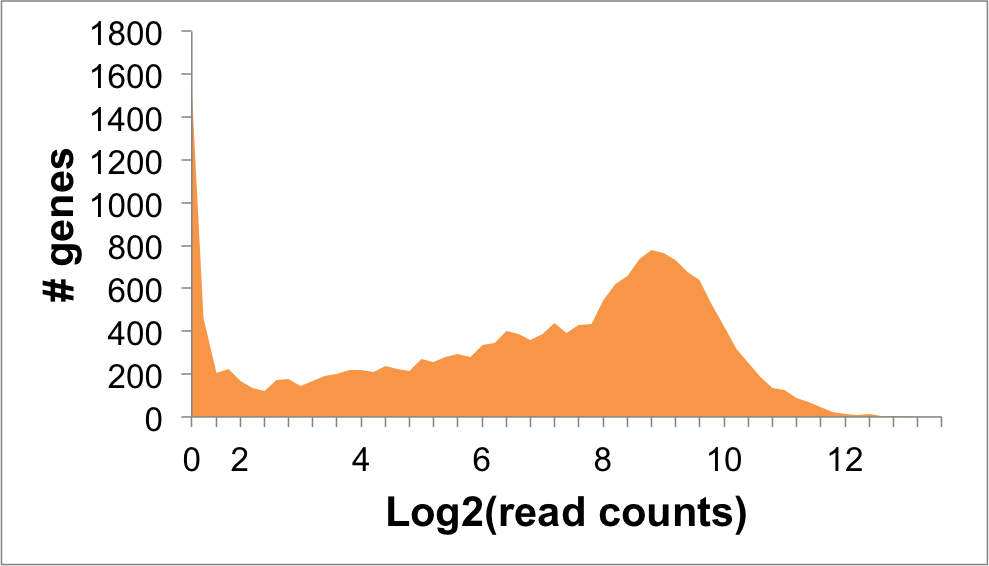
- Expression level (log2 read counts): -0.91
Expression Distribution
FCER1G Expression in NALM6 Cells: -0.91