TGFB2
Gene Information
- Official Symbol: TGFB2
- Official Name: transforming growth factor beta 2
- Aliases and Previous Symbols: N/A
- Entrez ID: 7042
- UniProt: P61812
- Interactions: BioGRID
- PubMed articles: Open PubMed
- OMIM: Open OMIM
Function Summary
- Entrez Summary: This gene encodes a secreted ligand of the TGF-beta (transforming growth factor-beta) superfamily of proteins. Ligands of this family bind various TGF-beta receptors leading to recruitment and activation of SMAD family transcription factors that regulate gene expression. The encoded preproprotein is proteolytically processed to generate a latency-associated peptide (LAP) and a mature peptide, and is found in either a latent form composed of a mature peptide homodimer, a LAP homodimer, and a latent TGF-beta binding protein, or in an active form consisting solely of the mature peptide homodimer. The mature peptide may also form heterodimers with other TGF-beta family members. Disruption of the TGF-beta/SMAD pathway has been implicated in a variety of human cancers. A chromosomal translocation that includes this gene is associated with Peters' anomaly, a congenital defect of the anterior chamber of the eye. Mutations in this gene may be associated with Loeys-Dietz syndrome. This gene encodes multiple isoforms that may undergo similar proteolytic processing. [provided by RefSeq, Aug 2016].
- UniProt Summary: TGF-beta 2 has suppressive effects on interleukin-2 dependent T-cell growth.
Pfam Domains GO Terms
Pfam Domains
| TGFb propeptide |
| TGF beta |
GO Terms
| substantia propria of cornea development |
| uterine wall breakdown |
| negative regulation of epithelial to mesenchymal transition involved in endocardial cushion formation |
| negative regulation of cardiac epithelial to mesenchymal transition |
| regulation of apoptotic process involved in outflow tract morphogenesis |
| positive regulation of timing of catagen |
| type III transforming growth factor beta receptor binding |
| positive regulation of integrin biosynthetic process |
| negative regulation of alkaline phosphatase activity |
| regulation of integrin biosynthetic process |
| endocardial cushion fusion |
| ascending aorta morphogenesis |
| regulation of timing of catagen |
| positive regulation of epithelial to mesenchymal transition involved in endocardial cushion formation |
| cell adhesion involved in heart morphogenesis |
| negative regulation of macrophage cytokine production |
| positive regulation of hair follicle maturation |
| atrial septum primum morphogenesis |
| ascending aorta development |
| septum primum development |
| positive regulation of cardioblast differentiation |
| type II transforming growth factor beta receptor binding |
| regulation of epithelial to mesenchymal transition involved in endocardial cushion formation |
| pharyngeal arch artery morphogenesis |
| regulation of cardioblast differentiation |
| regulation of transforming growth factor beta2 production |
| positive regulation of cardiac epithelial to mesenchymal transition |
| regulation of alkaline phosphatase activity |
| regulation of hair follicle maturation |
| dopamine biosynthetic process |
| membranous septum morphogenesis |
| regulation of complement-dependent cytotoxicity |
| regulation of cardiac epithelial to mesenchymal transition |
| regulation of apoptotic process involved in morphogenesis |
| positive regulation of hair follicle development |
| regulation of apoptotic process involved in development |
| positive regulation of hair cycle |
| pathway-restricted SMAD protein phosphorylation |
| cardioblast differentiation |
| cardiac muscle cell proliferation |
| regulation of macrophage cytokine production |
| regulation of plasma membrane organization |
| striated muscle cell proliferation |
| atrial septum morphogenesis |
| ventricular trabecula myocardium morphogenesis |
| pulmonary valve morphogenesis |
| muscle cell proliferation |
| catecholamine biosynthetic process |
| catechol-containing compound biosynthetic process |
| regulation of hair follicle development |
| positive regulation of cell adhesion mediated by integrin |
| cardiac right ventricle morphogenesis |
| atrial septum development |
| positive regulation of stem cell differentiation |
| pulmonary valve development |
| uterus development |
| somatic stem cell division |
| atrioventricular valve morphogenesis |
| secondary palate development |
| hair follicle morphogenesis |
| negative regulation of cytokine production involved in immune response |
| pharyngeal system development |
| atrioventricular valve development |
| cardiac muscle tissue growth |
| negative regulation of epithelial to mesenchymal transition |
| regulation of hair cycle |
| heart growth |
| cardiac epithelial to mesenchymal transition |
| aorta morphogenesis |
| outflow tract septum morphogenesis |
| positive regulation of cardiocyte differentiation |
| epidermis morphogenesis |
| salivary gland morphogenesis |
| dopamine metabolic process |
| cardiac atrium morphogenesis |
| positive regulation of pri-miRNA transcription by RNA polymerase II |
| heart trabecula morphogenesis |
| salivary gland development |
| stem cell division |
| embryonic digestive tract development |
| negative regulation of animal organ morphogenesis |
| phenol-containing compound biosynthetic process |
| regulation of transforming growth factor beta production |
| cardiac atrium development |
| endocardial cushion morphogenesis |
| negative regulation of production of molecular mediator of immune response |
| glial cell migration |
| semi-lunar valve development |
| positive regulation of heart contraction |
| positive regulation of epidermis development |
| regulation of heart morphogenesis |
| ventricular septum morphogenesis |
| transforming growth factor beta receptor binding |
| regulation of pri-miRNA transcription by RNA polymerase II |
| exocrine system development |
| endocardial cushion development |
| ovulation cycle process |
| catechol-containing compound metabolic process |
| catecholamine metabolic process |
| response to progesterone |
| trabecula morphogenesis |
| regulation of cell adhesion mediated by integrin |
| collagen fibril organization |
| positive regulation of epithelial to mesenchymal transition |
| ventricular cardiac muscle tissue morphogenesis |
| positive regulation of pathway-restricted SMAD protein phosphorylation |
| mesenchyme morphogenesis |
| regulation of cardiocyte differentiation |
| aorta development |
| negative regulation of Ras protein signal transduction |
| heart valve morphogenesis |
| positive regulation of Notch signaling pathway |
| positive regulation of neuron apoptotic process |
| ventricular cardiac muscle tissue development |
| SMAD protein signal transduction |
| neural retina development |
| negative regulation of small GTPase mediated signal transduction |
| artery morphogenesis |
| heart valve development |
| regulation of pathway-restricted SMAD protein phosphorylation |
| cranial skeletal system development |
| platelet alpha granule lumen |
| ovulation cycle |
| cardiac muscle tissue morphogenesis |
| epithelial to mesenchymal transition |
| positive regulation of blood circulation |
| hair follicle development |
| ventricular septum development |
| cardiac ventricle morphogenesis |
| skin epidermis development |
| outflow tract morphogenesis |
| cardiac septum morphogenesis |
| hair cycle process |
| molting cycle process |
| muscle tissue morphogenesis |
| amyloid-beta binding |
| positive regulation of animal organ morphogenesis |
| neutrophil chemotaxis |
| regulation of epithelial to mesenchymal transition |
| phenol-containing compound metabolic process |
| positive regulation of ossification |
| regulation of cytokine production involved in immune response |
| regulation of epidermis development |
| artery development |
| positive regulation of phosphatidylinositol 3-kinase signaling |
| positive regulation of cell division |
| muscle organ morphogenesis |
| granulocyte chemotaxis |
| roof of mouth development |
| neural tube closure |
| tube closure |
| hair cycle |
| neutrophil migration |
| positive regulation of neuron death |
| molting cycle |
| organ growth |
| extrinsic apoptotic signaling pathway |
| primary neural tube formation |
| gland morphogenesis |
| granulocyte migration |
| regulation of cell killing |
| regulation of Notch signaling pathway |
| transforming growth factor beta receptor signaling pathway |
| negative regulation of angiogenesis |
| positive regulation of transmembrane receptor protein serine/threonine kinase signaling pathway |
| negative regulation of phosphatase activity |
| negative regulation of blood vessel morphogenesis |
| neural tube formation |
| cardiac septum development |
| negative regulation of dephosphorylation |
| negative regulation of vasculature development |
| cardiocyte differentiation |
| regulation of stem cell differentiation |
| regulation of phosphatidylinositol 3-kinase signaling |
| negative regulation of immune effector process |
| odontogenesis |
| embryonic epithelial tube formation |
| negative regulation of epithelial cell proliferation |
| embryonic limb morphogenesis |
| embryonic appendage morphogenesis |
| cardiac chamber morphogenesis |
| myeloid leukocyte migration |
| cardiac ventricle development |
| platelet degranulation |
| digestive tract development |
| epithelial tube formation |
| male gonad development |
| development of primary male sexual characteristics |
| cell-cell junction organization |
| retina development in camera-type eye |
| positive regulation of epithelial cell migration |
| regulation of production of molecular mediator of immune response |
| digestive system development |
| leukocyte chemotaxis |
| morphogenesis of embryonic epithelium |
| cell cycle arrest |
| tube formation |
| negative regulation of immune response |
| appendage morphogenesis |
| limb morphogenesis |
| cellular response to transforming growth factor beta stimulus |
| mesenchymal cell differentiation |
| male sex differentiation |
| stem cell differentiation |
| neural tube development |
| response to transforming growth factor beta |
| cardiac muscle tissue development |
| positive regulation of cell growth |
| growth factor activity |
| positive regulation of stress-activated MAPK cascade |
| positive regulation of stress-activated protein kinase signaling cascade |
| regulation of cell division |
| cardiac chamber development |
| cytokine activity |
| regulation of phosphatase activity |
| appendage development |
| limb development |
| negative regulation of cell growth |
| organic hydroxy compound biosynthetic process |
| regulation of ossification |
| response to ketone |
| inner ear development |
| ammonium ion metabolic process |
| transmembrane receptor protein serine/threonine kinase signaling pathway |
| regulation of neuron apoptotic process |
| cell chemotaxis |
| gonad development |
| regulation of dephosphorylation |
| cell junction organization |
| gliogenesis |
| development of primary sexual characteristics |
| regulation of epithelial cell migration |
| ear development |
| mesenchyme development |
| regulation of stress-activated MAPK cascade |
| regulation of transmembrane receptor protein serine/threonine kinase signaling pathway |
| regulation of stress-activated protein kinase signaling cascade |
| negative regulation of growth |
| regulation of Ras protein signal transduction |
| regulation of heart contraction |
| heart morphogenesis |
| regulation of animal organ morphogenesis |
| positive regulation of growth |
| cell-cell adhesion via plasma-membrane adhesion molecules |
| sex differentiation |
| kidney development |
| positive regulation of protein secretion |
| negative regulation of cytokine production |
| rhythmic process |
| renal system development |
| striated muscle tissue development |
| apoptotic signaling pathway |
| regulation of angiogenesis |
| regulation of blood circulation |
| positive regulation of peptide secretion |
| muscle organ development |
| axon |
| muscle tissue development |
| epithelial tube morphogenesis |
| regulation of neuron death |
| camera-type eye development |
| angiogenesis |
| urogenital system development |
| regulation of vasculature development |
| response to steroid hormone |
| activation of protein kinase activity |
| regulation of epithelial cell proliferation |
| signaling receptor binding |
| extracellular matrix organization |
| response to hypoxia |
| regulation of small GTPase mediated signal transduction |
| response to decreased oxygen levels |
| eye development |
| visual system development |
| collagen-containing extracellular matrix |
| sensory system development |
| neuronal cell body |
| positive regulation of cell cycle |
| leukocyte migration |
| response to oxygen levels |
| skin development |
| extracellular structure organization |
| developmental growth |
| growth |
| positive regulation of secretion by cell |
| positive regulation of cell adhesion |
| blood vessel morphogenesis |
| gland development |
| epidermis development |
| regulation of cell growth |
| positive regulation of protein transport |
| reproductive structure development |
| reproductive system development |
| morphogenesis of an epithelium |
| embryonic organ development |
| positive regulation of secretion |
| negative regulation of immune system process |
| negative regulation of hydrolase activity |
| organic hydroxy compound metabolic process |
| supramolecular fiber organization |
| positive regulation of establishment of protein localization |
| regulation of protein secretion |
| regulation of immune effector process |
| muscle structure development |
| wound healing |
| blood vessel development |
| protein heterodimerization activity |
| cell division |
| regulation of peptide secretion |
| skeletal system development |
| positive regulation of cell migration |
| drug metabolic process |
| cellular response to growth factor stimulus |
| cell-cell adhesion |
| negative regulation of intracellular signal transduction |
| vasculature development |
| cardiovascular system development |
| positive regulation of cell motility |
| heart development |
| response to growth factor |
| positive regulation of protein kinase activity |
| positive regulation of cellular component movement |
| positive regulation of MAPK cascade |
| sensory organ development |
| chemotaxis |
| taxis |
| positive regulation of locomotion |
| cell population proliferation |
| hemopoiesis |
| negative regulation of phosphate metabolic process |
| negative regulation of phosphorus metabolic process |
| tissue morphogenesis |
| embryonic morphogenesis |
| response to wounding |
| negative regulation of cell cycle |
| positive regulation of kinase activity |
| regulation of system process |
| hematopoietic or lymphoid organ development |
| chordate embryonic development |
| positive regulation of apoptotic process |
| positive regulation of programmed cell death |
| immune system development |
| embryo development ending in birth or egg hatching |
| tube morphogenesis |
| positive regulation of transferase activity |
| developmental process involved in reproduction |
| regulation of growth |
| negative regulation of cell population proliferation |
| regulation of cell adhesion |
| regulation of cytokine production |
| positive regulation of cell death |
| regulated exocytosis |
| regulation of protein transport |
| negative regulation of cell differentiation |
| enzyme linked receptor protein signaling pathway |
| cell morphogenesis |
| regulation of cellular response to stress |
| regulation of peptide transport |
| regulation of establishment of protein localization |
| regulation of secretion by cell |
| regulation of MAPK cascade |
| negative regulation of catalytic activity |
| exocytosis |
| regulation of protein kinase activity |
| regulation of secretion |
| neuron development |
| cellular component morphogenesis |
| multicellular organismal reproductive process |
| multicellular organism reproduction |
| tube development |
| regulation of cell migration |
| response to lipid |
| positive regulation of immune response |
| circulatory system development |
| regulation of kinase activity |
| protein homodimerization activity |
| anatomical structure formation involved in morphogenesis |
| response to hormone |
| regulation of cell motility |
| positive regulation of cell population proliferation |
| response to organic cyclic compound |
| apoptotic process |
| cell adhesion |
| biological adhesion |
| negative regulation of developmental process |
| animal organ morphogenesis |
| cell migration |
| positive regulation of cell differentiation |
| protein phosphorylation |
| regulation of transferase activity |
| embryo development |
| regulation of locomotion |
| positive regulation of transport |
| regulation of cellular component movement |
| cell cycle process |
| secretion by cell |
| neuron differentiation |
| positive regulation of protein phosphorylation |
| response to drug |
| positive regulation of intracellular signal transduction |
| regulation of protein localization |
| export from cell |
| programmed cell death |
| positive regulation of phosphorylation |
| regulation of anatomical structure morphogenesis |
| localization of cell |
| cell motility |
| cell death |
| epithelium development |
| secretion |
| positive regulation of phosphate metabolic process |
| positive regulation of phosphorus metabolic process |
| negative regulation of molecular function |
| regulation of immune response |
| positive regulation of immune system process |
| response to abiotic stimulus |
| aromatic compound biosynthetic process |
| regulation of cell cycle |
| negative regulation of multicellular organismal process |
| positive regulation of cellular component organization |
| positive regulation of transcription by RNA polymerase II |
| cellular response to endogenous stimulus |
| positive regulation of protein modification process |
| negative regulation of signal transduction |
| regulation of hydrolase activity |
| phosphorylation |
| organic cyclic compound biosynthetic process |
| locomotion |
| cell cycle |
| negative regulation of cell communication |
| negative regulation of signaling |
| positive regulation of developmental process |
| organonitrogen compound biosynthetic process |
| reproductive process |
| reproduction |
| positive regulation of catalytic activity |
| regulation of protein phosphorylation |
| response to endogenous stimulus |
| regulation of response to stress |
| generation of neurons |
| positive regulation of transcription, DNA-templated |
| regulation of apoptotic process |
| movement of cell or subcellular component |
| response to oxygen-containing compound |
| regulation of programmed cell death |
| regulation of phosphorylation |
| extracellular space |
| positive regulation of cellular protein metabolic process |
| regulation of cell population proliferation |
| negative regulation of response to stimulus |
| neurogenesis |
| positive regulation of nucleic acid-templated transcription |
| positive regulation of RNA biosynthetic process |
| cell development |
| positive regulation of signal transduction |
| regulation of immune system process |
| regulation of cell death |
| positive regulation of protein metabolic process |
| negative regulation of gene expression |
| positive regulation of RNA metabolic process |
| positive regulation of multicellular organismal process |
| tissue development |
| positive regulation of molecular function |
| regulation of phosphate metabolic process |
| regulation of phosphorus metabolic process |
| regulation of cell differentiation |
| positive regulation of cell communication |
| positive regulation of signaling |
| regulation of intracellular signal transduction |
| regulation of protein modification process |
| protein-containing complex subunit organization |
| regulation of transport |
| positive regulation of nucleobase-containing compound metabolic process |
| positive regulation of macromolecule biosynthetic process |
| extracellular region |
| vesicle-mediated transport |
| positive regulation of cellular biosynthetic process |
| positive regulation of gene expression |
| positive regulation of biosynthetic process |
CRISPR Data
Compound Hit Most Correlated Genes in Chemogenomics Tissues where Essential in the Avana Dataset (DepMap 20Q1)
Compound Hit
| Screen | Score |
|---|---|
| KU-0063794 3.8μM R02 exp71 | -1.81 |
| CB-5083 0.4μM R08 exp468 | 1.73 |
| BS-181 20μM R08 exp461 | 1.76 |
| 39°C R06 exp303 | 1.84 |
Most Correlated Genes in Chemogenomics
No correlation found to any other genes in chemogenomics.
Tissues where Essential in the Avana Dataset (DepMap 20Q1)
Global Fraction of Cell Lines Where Essential: 0/739
| Tissue | Fraction Of Cell Lines Where Essential |
|---|---|
| 1290807.0 | 0/1 |
| 909776.0 | 0/1 |
| bile duct | 0/28 |
| blood | 0/28 |
| bone | 0/26 |
| breast | 0/33 |
| central nervous system | 0/56 |
| cervix | 0/4 |
| colorectal | 0/17 |
| esophagus | 0/13 |
| fibroblast | 0/1 |
| gastric | 0/16 |
| kidney | 0/21 |
| liver | 0/20 |
| lung | 0/75 |
| lymphocyte | 0/16 |
| ovary | 0/26 |
| pancreas | 0/24 |
| peripheral nervous system | 0/16 |
| plasma cell | 0/15 |
| prostate | 0/1 |
| skin | 0/24 |
| soft tissue | 0/9 |
| thyroid | 0/2 |
| upper aerodigestive | 0/22 |
| urinary tract | 0/29 |
| uterus | 0/5 |
Essentiality in NALM6
- Essentiality Rank: 15191
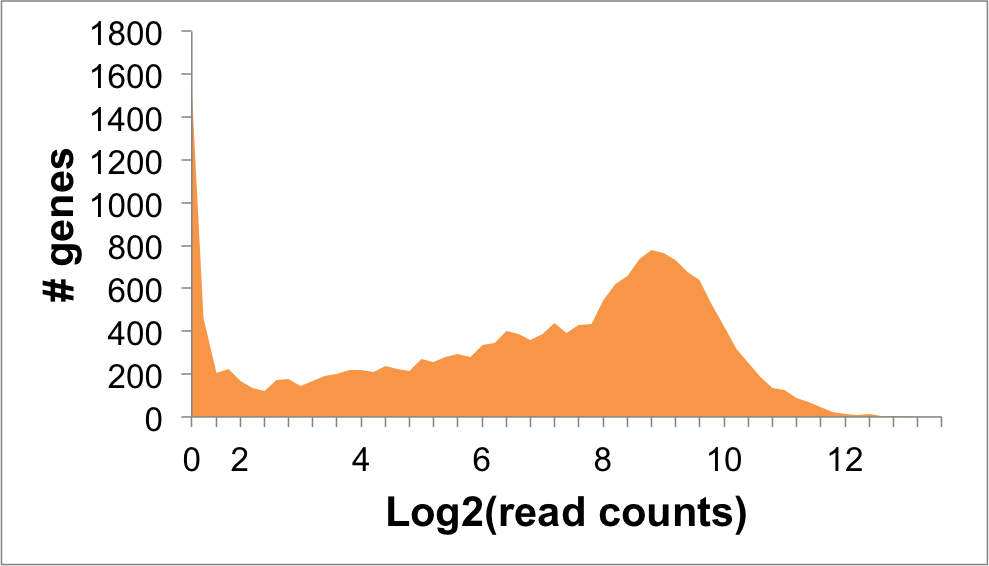
- Expression level (log2 read counts): -0.32
Expression Distribution
TGFB2 Expression in NALM6 Cells: -0.32