CD86
Gene Information
- Official Symbol: CD86
- Official Name: CD86 molecule
- Aliases and Previous Symbols: N/A
- Entrez ID: 942
- UniProt: P42081
- Interactions: BioGRID
- PubMed articles: Open PubMed
- OMIM: Open OMIM
Function Summary
- Entrez Summary: This gene encodes a type I membrane protein that is a member of the immunoglobulin superfamily. This protein is expressed by antigen-presenting cells, and it is the ligand for two proteins at the cell surface of T cells, CD28 antigen and cytotoxic T-lymphocyte-associated protein 4. Binding of this protein with CD28 antigen is a costimulatory signal for activation of the T-cell. Binding of this protein with cytotoxic T-lymphocyte-associated protein 4 negatively regulates T-cell activation and diminishes the immune response. Alternative splicing results in several transcript variants encoding different isoforms.[provided by RefSeq, May 2011].
- UniProt Summary: N/A
Pfam Domains GO Terms
Pfam Domains
| V-set |
GO Terms
| positive regulation of lymphotoxin A production |
| regulation of lymphotoxin A production |
| positive regulation of lymphotoxin A biosynthetic process |
| regulation of lymphotoxin A biosynthetic process |
| positive regulation of interleukin-4 biosynthetic process |
| regulation of interleukin-4 biosynthetic process |
| positive regulation of T-helper 2 cell differentiation |
| regulation of T-helper 2 cell differentiation |
| positive regulation of interleukin-2 biosynthetic process |
| positive regulation of type 2 immune response |
| regulation of interleukin-2 biosynthetic process |
| positive regulation of T-helper cell differentiation |
| positive regulation of interleukin-4 production |
| regulation of interleukin-4 production |
| positive regulation of CD4-positive, alpha-beta T cell differentiation |
| regulation of type 2 immune response |
| positive regulation of interleukin-2 production |
| regulation of T-helper cell differentiation |
| positive regulation of CD4-positive, alpha-beta T cell activation |
| coreceptor activity |
| regulation of CD4-positive, alpha-beta T cell differentiation |
| positive regulation of alpha-beta T cell differentiation |
| regulation of interleukin-2 production |
| T cell costimulation |
| lymphocyte costimulation |
| negative regulation of T cell proliferation |
| positive regulation of alpha-beta T cell activation |
| regulation of CD4-positive, alpha-beta T cell activation |
| regulation of alpha-beta T cell differentiation |
| positive regulation of cytokine biosynthetic process |
| negative regulation of lymphocyte proliferation |
| negative regulation of mononuclear cell proliferation |
| virus receptor activity |
| negative regulation of leukocyte proliferation |
| positive regulation of T cell differentiation |
| positive regulation of tumor necrosis factor superfamily cytokine production |
| regulation of alpha-beta T cell activation |
| positive regulation of lymphocyte differentiation |
| viral entry into host cell |
| positive regulation of T cell proliferation |
| entry into host |
| entry into host cell |
| regulation of cytokine biosynthetic process |
| negative regulation of T cell activation |
| negative regulation of leukocyte cell-cell adhesion |
| positive regulation of lymphocyte proliferation |
| positive regulation of mononuclear cell proliferation |
| positive regulation of leukocyte proliferation |
| regulation of T cell differentiation |
| negative regulation of lymphocyte activation |
| positive regulation of leukocyte differentiation |
| regulation of tumor necrosis factor superfamily cytokine production |
| regulation of T cell proliferation |
| interaction with host |
| positive regulation of protein kinase B signaling |
| regulation of lymphocyte differentiation |
| negative regulation of cell-cell adhesion |
| negative regulation of leukocyte activation |
| cellular response to lipopolysaccharide |
| positive regulation of hemopoiesis |
| cellular response to molecule of bacterial origin |
| negative regulation of cell activation |
| viral life cycle |
| positive regulation of T cell activation |
| signaling receptor activity |
| regulation of lymphocyte proliferation |
| regulation of mononuclear cell proliferation |
| cellular response to biotic stimulus |
| positive regulation of leukocyte cell-cell adhesion |
| positive regulation of immune effector process |
| regulation of protein kinase B signaling |
| regulation of leukocyte proliferation |
| positive regulation of cell-cell adhesion |
| negative regulation of cell adhesion |
| regulation of leukocyte differentiation |
| regulation of leukocyte cell-cell adhesion |
| response to lipopolysaccharide |
| regulation of T cell activation |
| response to molecule of bacterial origin |
| positive regulation of lymphocyte activation |
| external side of plasma membrane |
| regulation of cell-cell adhesion |
| positive regulation of leukocyte activation |
| positive regulation of cell adhesion |
| positive regulation of cell activation |
| negative regulation of immune system process |
| positive regulation of cytokine production |
| regulation of hemopoiesis |
| regulation of immune effector process |
| regulation of lymphocyte activation |
| cellular response to lipid |
| regulation of leukocyte activation |
| adaptive immune response |
| cell surface |
| regulation of cell activation |
| cytokine-mediated signaling pathway |
| negative regulation of cell population proliferation |
| regulation of cell adhesion |
| response to bacterium |
| regulation of cytokine production |
| viral process |
| symbiotic process |
| interspecies interaction between organisms |
| response to lipid |
| positive regulation of immune response |
| positive regulation of cell population proliferation |
| positive regulation of cell differentiation |
| cellular response to cytokine stimulus |
| positive regulation of intracellular signal transduction |
| cellular response to oxygen-containing compound |
| response to cytokine |
| positive regulation of immune system process |
| regulation of immune response |
| response to other organism |
| response to external biotic stimulus |
| response to biotic stimulus |
| positive regulation of developmental process |
| positive regulation of transcription, DNA-templated |
| response to oxygen-containing compound |
| regulation of cell population proliferation |
| positive regulation of nucleic acid-templated transcription |
| positive regulation of RNA biosynthetic process |
| regulation of immune system process |
| positive regulation of signal transduction |
| positive regulation of protein metabolic process |
| positive regulation of RNA metabolic process |
| positive regulation of multicellular organismal process |
| regulation of cell differentiation |
| positive regulation of cell communication |
| positive regulation of signaling |
| regulation of intracellular signal transduction |
| immune response |
| positive regulation of nucleobase-containing compound metabolic process |
| positive regulation of macromolecule biosynthetic process |
| positive regulation of cellular biosynthetic process |
| positive regulation of gene expression |
| positive regulation of biosynthetic process |
CRISPR Data
Compound Hit Most Correlated Genes in Chemogenomics Tissues where Essential in the Avana Dataset (DepMap 20Q1)
Compound Hit
Most Correlated Genes in Chemogenomics
No correlation found to any other genes in chemogenomics.
Tissues where Essential in the Avana Dataset (DepMap 20Q1)
Global Fraction of Cell Lines Where Essential: 0/739
| Tissue | Fraction Of Cell Lines Where Essential |
|---|---|
| 1290807.0 | 0/1 |
| 909776.0 | 0/1 |
| bile duct | 0/28 |
| blood | 0/28 |
| bone | 0/26 |
| breast | 0/33 |
| central nervous system | 0/56 |
| cervix | 0/4 |
| colorectal | 0/17 |
| esophagus | 0/13 |
| fibroblast | 0/1 |
| gastric | 0/16 |
| kidney | 0/21 |
| liver | 0/20 |
| lung | 0/75 |
| lymphocyte | 0/16 |
| ovary | 0/26 |
| pancreas | 0/24 |
| peripheral nervous system | 0/16 |
| plasma cell | 0/15 |
| prostate | 0/1 |
| skin | 0/24 |
| soft tissue | 0/9 |
| thyroid | 0/2 |
| upper aerodigestive | 0/22 |
| urinary tract | 0/29 |
| uterus | 0/5 |
Essentiality in NALM6
- Essentiality Rank: 17200
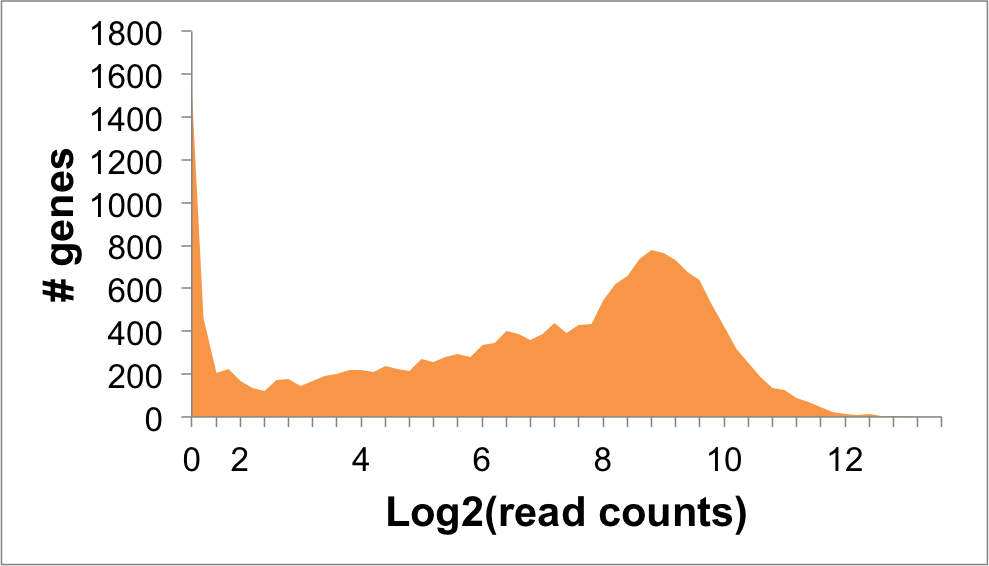
- Expression level (log2 read counts): -2.38
Expression Distribution
CD86 Expression in NALM6 Cells: -2.38