GSN
Gene Information
- Official Symbol: GSN
- Official Name: gelsolin
- Aliases and Previous Symbols: N/A
- Entrez ID: 2934
- UniProt: P06396
- Interactions: BioGRID
- PubMed articles: Open PubMed
- OMIM: Open OMIM
Function Summary
- Entrez Summary: The protein encoded by this gene binds to the 'plus' ends of actin monomers and filaments to prevent monomer exchange. The encoded calcium-regulated protein functions in both assembly and disassembly of actin filaments. Defects in this gene are a cause of familial amyloidosis Finnish type (FAF). Multiple transcript variants encoding several different isoforms have been found for this gene. [provided by RefSeq, Jul 2008].
- UniProt Summary: N/A
Pfam Domains GO Terms
Pfam Domains
| Gelsolin |
GO Terms
| renal protein absorption |
| regulation of plasma membrane raft polarization |
| regulation of protein processing in phagocytic vesicle |
| positive regulation of protein processing in phagocytic vesicle |
| positive regulation of keratinocyte apoptotic process |
| actin cap |
| regulation of establishment of T cell polarity |
| regulation of keratinocyte apoptotic process |
| striated muscle atrophy |
| actin filament reorganization |
| muscle atrophy |
| amyloid fibril formation |
| actin filament severing |
| sarcoplasm |
| sequestering of actin monomers |
| myosin II binding |
| response to folic acid |
| positive regulation of cysteine-type endopeptidase activity involved in apoptotic signaling pathway |
| hepatocyte apoptotic process |
| regulation of receptor clustering |
| renal absorption |
| regulation of plasma membrane organization |
| barbed-end actin filament capping |
| positive regulation of actin nucleation |
| regulation of podosome assembly |
| regulation of cysteine-type endopeptidase activity involved in apoptotic signaling pathway |
| negative regulation of viral entry into host cell |
| regulation of establishment of cell polarity |
| positive regulation of protein processing |
| regulation of establishment or maintenance of cell polarity |
| positive regulation of protein maturation |
| regulation of actin nucleation |
| epithelial cell apoptotic process |
| striated muscle adaptation |
| podosome |
| regulation of viral entry into host cell |
| actin filament polymerization |
| myelin sheath |
| actin nucleation |
| muscle adaptation |
| positive regulation of epithelial cell apoptotic process |
| actin filament capping |
| negative regulation of actin filament depolymerization |
| cellular response to cadmium ion |
| oligodendrocyte development |
| protein destabilization |
| actin polymerization or depolymerization |
| regulation of actin filament depolymerization |
| cortical actin cytoskeleton |
| negative regulation of actin filament polymerization |
| phagocytic vesicle |
| negative regulation of protein depolymerization |
| tissue regeneration |
| response to cadmium ion |
| actin cytoskeleton reorganization |
| extracellular matrix disassembly |
| negative regulation of protein polymerization |
| regulation of protein processing |
| regulation of protein maturation |
| oligodendrocyte differentiation |
| negative regulation of protein complex disassembly |
| phosphatidylinositol-mediated signaling |
| inositol lipid-mediated signaling |
| maintenance of protein location in cell |
| regulation of epithelial cell apoptotic process |
| negative regulation of viral life cycle |
| regulation of protein depolymerization |
| response to vitamin |
| protein polymerization |
| positive regulation of actin filament polymerization |
| ruffle |
| maintenance of location in cell |
| negative regulation of viral process |
| maintenance of protein location |
| glial cell development |
| renal system process |
| regulation of protein complex disassembly |
| secretory granule lumen |
| ficolin-1-rich granule lumen |
| response to ethanol |
| positive regulation of protein polymerization |
| phagocytosis, engulfment |
| negative regulation of protein complex assembly |
| negative regulation of supramolecular fiber organization |
| positive regulation of cysteine-type endopeptidase activity involved in apoptotic process |
| plasma membrane invagination |
| negative regulation of cytoskeleton organization |
| blood microparticle |
| regulation of viral life cycle |
| membrane invagination |
| positive regulation of cysteine-type endopeptidase activity |
| regeneration |
| cellular response to interferon-gamma |
| maintenance of location |
| regulation of actin filament polymerization |
| glial cell differentiation |
| positive regulation of endopeptidase activity |
| positive regulation of apoptotic signaling pathway |
| lamellipodium |
| response to interferon-gamma |
| regulation of actin polymerization or depolymerization |
| regulation of actin filament length |
| regulation of protein localization to membrane |
| cellular response to metal ion |
| positive regulation of peptidase activity |
| positive regulation of supramolecular fiber organization |
| actin filament binding |
| regulation of viral process |
| gliogenesis |
| response to nutrient |
| regulation of cysteine-type endopeptidase activity involved in apoptotic process |
| negative regulation of multi-organism process |
| actin cytoskeleton |
| positive regulation of cytoskeleton organization |
| regulation of organelle assembly |
| regulation of symbiosis, encompassing mutualism through parasitism |
| cellular response to inorganic substance |
| regulation of protein polymerization |
| response to alcohol |
| actin filament organization |
| regulation of cysteine-type endopeptidase activity |
| positive regulation of protein complex assembly |
| regulation of actin filament organization |
| actin binding |
| aging |
| regulation of protein stability |
| muscle system process |
| response to antibiotic |
| regulation of T cell activation |
| phagocytosis |
| extracellular matrix organization |
| regulation of actin cytoskeleton organization |
| response to acid chemical |
| cilium assembly |
| regulation of supramolecular fiber organization |
| positive regulation of proteolysis |
| cilium organization |
| response to metal ion |
| negative regulation of organelle organization |
| regulation of cellular component size |
| extracellular structure organization |
| developmental growth |
| regulation of actin filament-based process |
| growth |
| regulation of apoptotic signaling pathway |
| cellular component disassembly |
| focal adhesion |
| regulation of endopeptidase activity |
| regulation of peptidase activity |
| plasma membrane bounded cell projection assembly |
| regulation of protein complex assembly |
| supramolecular fiber organization |
| cell projection assembly |
| wound healing |
| neutrophil degranulation |
| neutrophil activation involved in immune response |
| actin cytoskeleton organization |
| response to nutrient levels |
| neutrophil mediated immunity |
| neutrophil activation |
| granulocyte activation |
| response to toxic substance |
| leukocyte degranulation |
| regulation of lymphocyte activation |
| regulation of anatomical structure size |
| myeloid leukocyte mediated immunity |
| positive regulation of cellular component biogenesis |
| myeloid cell activation involved in immune response |
| response to extracellular stimulus |
| response to inorganic substance |
| regulation of cellular protein localization |
| regulation of cytoskeleton organization |
| endocytosis |
| actin filament-based process |
| response to wounding |
| myeloid leukocyte activation |
| regulation of leukocyte activation |
| positive regulation of organelle organization |
| leukocyte activation involved in immune response |
| cell activation involved in immune response |
| regulation of cell activation |
| positive regulation of apoptotic process |
| positive regulation of programmed cell death |
| import into cell |
| regulation of cell adhesion |
| perinuclear region of cytoplasm |
| positive regulation of cell death |
| regulated exocytosis |
| negative regulation of cellular component organization |
| calcium ion binding |
| regulation of proteolysis |
| organelle assembly |
| innate immune response |
| leukocyte mediated immunity |
| positive regulation of hydrolase activity |
| regulation of multi-organism process |
| exocytosis |
| cellular protein-containing complex assembly |
| membrane organization |
| regulation of cellular localization |
| response to organic cyclic compound |
| apoptotic process |
| leukocyte activation |
| defense response to other organism |
| regulation of cellular component biogenesis |
| central nervous system development |
| response to organonitrogen compound |
| secretion by cell |
| cellular response to cytokine stimulus |
| response to drug |
| regulation of protein localization |
| export from cell |
| programmed cell death |
| cell activation |
| response to nitrogen compound |
| immune effector process |
| cell death |
| response to cytokine |
| cytoskeleton organization |
| plasma membrane bounded cell projection organization |
| secretion |
| cell projection organization |
| positive regulation of cellular component organization |
| regulation of hydrolase activity |
| regulation of organelle organization |
| response to other organism |
| response to external biotic stimulus |
| response to biotic stimulus |
| defense response |
| positive regulation of catalytic activity |
| regulation of apoptotic process |
| response to oxygen-containing compound |
| protein-containing complex assembly |
| regulation of programmed cell death |
| cellular protein localization |
| cellular macromolecule localization |
| extracellular space |
| positive regulation of cellular protein metabolic process |
| neurogenesis |
| cell development |
| positive regulation of signal transduction |
| regulation of immune system process |
| regulation of cell death |
| intracellular signal transduction |
| positive regulation of protein metabolic process |
| tissue development |
| positive regulation of molecular function |
| positive regulation of cell communication |
| positive regulation of signaling |
| protein-containing complex subunit organization |
| immune response |
| extracellular region |
| vesicle-mediated transport |
| system process |
| positive regulation of gene expression |
CRISPR Data
Compound Hit Most Correlated Genes in Chemogenomics Tissues where Essential in the Avana Dataset (DepMap 20Q1)
Compound Hit
| Screen | Score |
|---|---|
| SB743921 0.001μM R05 exp244 | -2.17 |
| Calcium Ionophore 0.4μM R07 exp342 | -2.09 |
| KU-0063794 3.8μM R02 exp71 | -1.85 |
| Losmapimod 1μM R07 exp376 | -1.8 |
Most Correlated Genes in Chemogenomics
No correlation found to any other genes in chemogenomics.
Tissues where Essential in the Avana Dataset (DepMap 20Q1)
Global Fraction of Cell Lines Where Essential: 0/739
| Tissue | Fraction Of Cell Lines Where Essential |
|---|---|
| 1290807.0 | 0/1 |
| 909776.0 | 0/1 |
| bile duct | 0/28 |
| blood | 0/28 |
| bone | 0/26 |
| breast | 0/33 |
| central nervous system | 0/56 |
| cervix | 0/4 |
| colorectal | 0/17 |
| esophagus | 0/13 |
| fibroblast | 0/1 |
| gastric | 0/16 |
| kidney | 0/21 |
| liver | 0/20 |
| lung | 0/75 |
| lymphocyte | 0/16 |
| ovary | 0/26 |
| pancreas | 0/24 |
| peripheral nervous system | 0/16 |
| plasma cell | 0/15 |
| prostate | 0/1 |
| skin | 0/24 |
| soft tissue | 0/9 |
| thyroid | 0/2 |
| upper aerodigestive | 0/22 |
| urinary tract | 0/29 |
| uterus | 0/5 |
Essentiality in NALM6
- Essentiality Rank: 8925
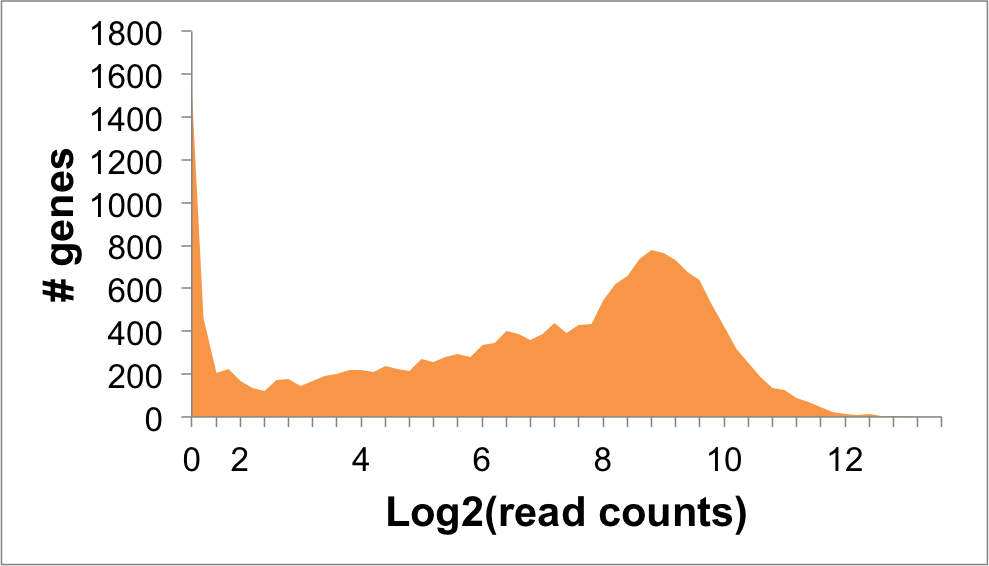
- Expression level (log2 read counts): 3.61
Expression Distribution
GSN Expression in NALM6 Cells: 3.61