ADORA2A
Gene Information
- Official Symbol: ADORA2A
- Official Name: adenosine A2a receptor
- Aliases and Previous Symbols: N/A
- Entrez ID: 135
- UniProt: P29274
- Interactions: BioGRID
- PubMed articles: Open PubMed
- OMIM: Open OMIM
Function Summary
- Entrez Summary: This gene encodes a member of the guanine nucleotide-binding protein (G protein)-coupled receptor (GPCR) superfamily, which is subdivided into classes and subtypes. The receptors are seven-pass transmembrane proteins that respond to extracellular cues and activate intracellular signal transduction pathways. This protein, an adenosine receptor of A2A subtype, uses adenosine as the preferred endogenous agonist and preferentially interacts with the G(s) and G(olf) family of G proteins to increase intracellular cAMP levels. It plays an important role in many biological functions, such as cardiac rhythm and circulation, cerebral and renal blood flow, immune function, pain regulation, and sleep. It has been implicated in pathophysiological conditions such as inflammatory diseases and neurodegenerative disorders. Alternative splicing results in multiple transcript variants. A read-through transcript composed of the upstream SPECC1L (sperm antigen with calponin homology and coiled-coil domains 1-like) and ADORA2A (adenosine A2a receptor) gene sequence has been identified, but it is thought to be non-coding. [provided by RefSeq, Jun 2013].
- UniProt Summary: Receptor for adenosine. The activity of this receptor is mediated by G proteins which activate adenylyl cyclase.
Pfam Domains GO Terms
Pfam Domains
| 7tm 1 |
| 7TM GPCR Srsx |
GO Terms
| positive regulation of acetylcholine secretion, neurotransmission |
| regulation of acetylcholine secretion, neurotransmission |
| positive regulation of synaptic transmission, cholinergic |
| G protein-coupled adenosine receptor activity |
| type 5 metabotropic glutamate receptor binding |
| positive regulation of circadian sleep/wake cycle, sleep |
| regulation of synaptic transmission, cholinergic |
| adenosine receptor signaling pathway |
| positive regulation of glutamate secretion |
| inhibitory postsynaptic potential |
| positive regulation of synaptic transmission, GABAergic |
| negative regulation of vascular permeability |
| axolemma |
| positive regulation of urine volume |
| positive regulation of renal sodium excretion |
| prepulse inhibition |
| regulation of norepinephrine secretion |
| regulation of glutamate secretion |
| regulation of circadian sleep/wake cycle, sleep |
| positive regulation of circadian rhythm |
| response to diuretic |
| response to caffeine |
| alpha-actinin binding |
| positive regulation of amino acid transport |
| astrocyte activation |
| synaptic transmission, dopaminergic |
| G protein-coupled purinergic receptor signaling pathway |
| regulation of renal sodium excretion |
| regulation of circadian sleep/wake cycle |
| positive regulation of long-term synaptic potentiation |
| positive regulation of neurotransmitter secretion |
| regulation of urine volume |
| regulation of excretion |
| synaptic transmission, cholinergic |
| startle response |
| positive regulation of behavior |
| purinergic receptor signaling pathway |
| protein kinase C-activating G protein-coupled receptor signaling pathway |
| eating behavior |
| synaptic transmission, glutamatergic |
| vasodilation |
| regulation of amino acid transport |
| positive regulation of response to drug |
| regulation of synaptic transmission, GABAergic |
| positive regulation of synaptic transmission, glutamatergic |
| response to amphetamine |
| positive regulation of organic acid transport |
| presynaptic active zone |
| regulation of renal system process |
| positive regulation of amine transport |
| astrocyte development |
| regulation of vascular permeability |
| negative regulation of alpha-beta T cell activation |
| glial cell activation |
| positive regulation of neurotransmitter transport |
| neuroinflammatory response |
| regulation of long-term synaptic potentiation |
| integral component of postsynaptic membrane |
| response to amine |
| positive regulation of anion transport |
| membrane depolarization |
| response to bronchodilator |
| astrocyte differentiation |
| cellular defense response |
| positive regulation of blood vessel diameter |
| regulation of organic acid transport |
| integral component of presynaptic membrane |
| regulation of catecholamine secretion |
| excitatory postsynaptic potential |
| chemical synaptic transmission, postsynaptic |
| regulation of synaptic transmission, glutamatergic |
| regulation of mitochondrial membrane potential |
| regulation of behavior |
| regulation of synaptic vesicle exocytosis |
| negative regulation of cysteine-type endopeptidase activity involved in apoptotic process |
| feeding behavior |
| negative regulation of cysteine-type endopeptidase activity |
| regulation of alpha-beta T cell activation |
| regulation of amine transport |
| regulation of anion transport |
| regulation of response to drug |
| regulation of postsynaptic membrane potential |
| regulation of neurotransmitter secretion |
| glial cell development |
| neuromuscular process |
| negative regulation of T cell activation |
| renal system process |
| regulation of synaptic vesicle cycle |
| response to alkaloid |
| regulation of circadian rhythm |
| intermediate filament |
| negative regulation of leukocyte cell-cell adhesion |
| adenylate cyclase-activating G protein-coupled receptor signaling pathway |
| negative regulation of inflammatory response |
| regulation of blood vessel diameter |
| regulation of tube diameter |
| regulation of tube size |
| regulation of neurotransmitter transport |
| negative regulation of neuron apoptotic process |
| negative regulation of lymphocyte activation |
| cAMP-mediated signaling |
| positive regulation of synaptic transmission |
| response to purine-containing compound |
| regulation of regulated secretory pathway |
| vascular process in circulatory system |
| glial cell differentiation |
| cyclic-nucleotide-mediated signaling |
| positive regulation of apoptotic signaling pathway |
| negative regulation of cell-cell adhesion |
| negative regulation of leukocyte activation |
| regulation of synaptic plasticity |
| locomotory behavior |
| negative regulation of cell activation |
| regulation of neuron apoptotic process |
| negative regulation of neuron death |
| negative regulation of defense response |
| adenylate cyclase-modulating G protein-coupled receptor signaling pathway |
| gliogenesis |
| regulation of cysteine-type endopeptidase activity involved in apoptotic process |
| regulation of exocytosis |
| negative regulation of protein kinase activity |
| regulation of cysteine-type endopeptidase activity |
| negative regulation of endopeptidase activity |
| G protein-coupled receptor signaling pathway, coupled to cyclic nucleotide second messenger |
| negative regulation of kinase activity |
| regulation of calcium ion transport |
| postsynaptic density |
| negative regulation of peptidase activity |
| positive regulation of protein secretion |
| negative regulation of cell adhesion |
| positive regulation of ion transport |
| negative regulation of transferase activity |
| positive regulation of peptide secretion |
| blood coagulation |
| coagulation |
| regulation of leukocyte cell-cell adhesion |
| hemostasis |
| response to xenobiotic stimulus |
| regulation of neuron death |
| regulation of T cell activation |
| negative regulation of locomotion |
| phagocytosis |
| second-messenger-mediated signaling |
| regulation of inflammatory response |
| enzyme binding |
| glutamatergic synapse |
| negative regulation of proteolysis |
| regulation of neurotransmitter levels |
| negative regulation of response to external stimulus |
| neuronal cell body |
| regulation of metal ion transport |
| blood circulation |
| circulatory system process |
| regulation of apoptotic signaling pathway |
| regulation of cell-cell adhesion |
| positive regulation of secretion by cell |
| negative regulation of protein phosphorylation |
| regulation of endopeptidase activity |
| anterograde trans-synaptic signaling |
| dendrite |
| chemical synaptic transmission |
| positive regulation of protein transport |
| cell surface receptor signaling pathway involved in cell-cell signaling |
| regulation of membrane potential |
| positive regulation of secretion |
| trans-synaptic signaling |
| negative regulation of immune system process |
| modulation of chemical synaptic transmission |
| regulation of trans-synaptic signaling |
| negative regulation of phosphorylation |
| regulation of peptidase activity |
| negative regulation of hydrolase activity |
| positive regulation of establishment of protein localization |
| synaptic signaling |
| regulation of protein secretion |
| wound healing |
| neuron projection morphogenesis |
| plasma membrane bounded cell projection morphogenesis |
| protein heterodimerization activity |
| cell projection morphogenesis |
| regulation of peptide secretion |
| regulation of body fluid levels |
| inflammatory response |
| response to toxic substance |
| cell part morphogenesis |
| regulation of anatomical structure size |
| regulation of lymphocyte activation |
| regulation of vesicle-mediated transport |
| negative regulation of phosphate metabolic process |
| negative regulation of phosphorus metabolic process |
| response to wounding |
| behavior |
| regulation of system process |
| negative regulation of protein modification process |
| regulation of leukocyte activation |
| Golgi membrane |
| regulation of cell activation |
| positive regulation of apoptotic process |
| positive regulation of programmed cell death |
| neuron projection development |
| negative regulation of cell population proliferation |
| regulation of cell adhesion |
| positive regulation of cell death |
| regulation of ion transport |
| regulation of protein transport |
| cell morphogenesis |
| regulation of proteolysis |
| regulation of peptide transport |
| regulation of establishment of protein localization |
| regulation of secretion by cell |
| regulation of defense response |
| negative regulation of catalytic activity |
| regulation of protein kinase activity |
| regulation of secretion |
| neuron development |
| cellular component morphogenesis |
| regulation of kinase activity |
| negative regulation of apoptotic process |
| negative regulation of programmed cell death |
| regulation of cellular localization |
| response to organic cyclic compound |
| apoptotic process |
| sensory perception |
| regulation of transferase activity |
| central nervous system development |
| regulation of locomotion |
| positive regulation of transport |
| negative regulation of cell death |
| response to organonitrogen compound |
| neuron differentiation |
| response to drug |
| regulation of protein localization |
| negative regulation of cellular protein metabolic process |
| programmed cell death |
| identical protein binding |
| cell activation |
| response to nitrogen compound |
| cell death |
| regulation of response to external stimulus |
| negative regulation of protein metabolic process |
| cell-cell signaling |
| plasma membrane bounded cell projection organization |
| negative regulation of molecular function |
| cell projection organization |
| regulation of hydrolase activity |
| G protein-coupled receptor signaling pathway |
| defense response |
| nervous system process |
| integral component of plasma membrane |
| regulation of protein phosphorylation |
| regulation of response to stress |
| generation of neurons |
| regulation of apoptotic process |
| regulation of programmed cell death |
| regulation of phosphorylation |
| regulation of cell population proliferation |
| negative regulation of response to stimulus |
| neurogenesis |
| cell development |
| regulation of immune system process |
| positive regulation of signal transduction |
| regulation of cell death |
| intracellular signal transduction |
| positive regulation of multicellular organismal process |
| regulation of phosphate metabolic process |
| regulation of phosphorus metabolic process |
| positive regulation of cell communication |
| positive regulation of signaling |
| regulation of protein modification process |
| regulation of transport |
| vesicle-mediated transport |
| system process |
| membrane |
CRISPR Data
Compound Hit Most Correlated Genes in Chemogenomics Tissues where Essential in the Avana Dataset (DepMap 20Q1)
Compound Hit
| Screen | Score |
|---|---|
| UM0130462 0.025 to 0.035μM day4 R05 exp247 | 1.73 |
| Docetaxel 0.002μM R01 exp45 | 1.86 |
| Benzoate 10000μM R08 exp455 | 1.92 |
Most Correlated Genes in Chemogenomics
No correlation found to any other genes in chemogenomics.
Tissues where Essential in the Avana Dataset (DepMap 20Q1)
Global Fraction of Cell Lines Where Essential: 0/739
| Tissue | Fraction Of Cell Lines Where Essential |
|---|---|
| 1290807.0 | 0/1 |
| 909776.0 | 0/1 |
| bile duct | 0/28 |
| blood | 0/28 |
| bone | 0/26 |
| breast | 0/33 |
| central nervous system | 0/56 |
| cervix | 0/4 |
| colorectal | 0/17 |
| esophagus | 0/13 |
| fibroblast | 0/1 |
| gastric | 0/16 |
| kidney | 0/21 |
| liver | 0/20 |
| lung | 0/75 |
| lymphocyte | 0/16 |
| ovary | 0/26 |
| pancreas | 0/24 |
| peripheral nervous system | 0/16 |
| plasma cell | 0/15 |
| prostate | 0/1 |
| skin | 0/24 |
| soft tissue | 0/9 |
| thyroid | 0/2 |
| upper aerodigestive | 0/22 |
| urinary tract | 0/29 |
| uterus | 0/5 |
Essentiality in NALM6
- Essentiality Rank: 9621
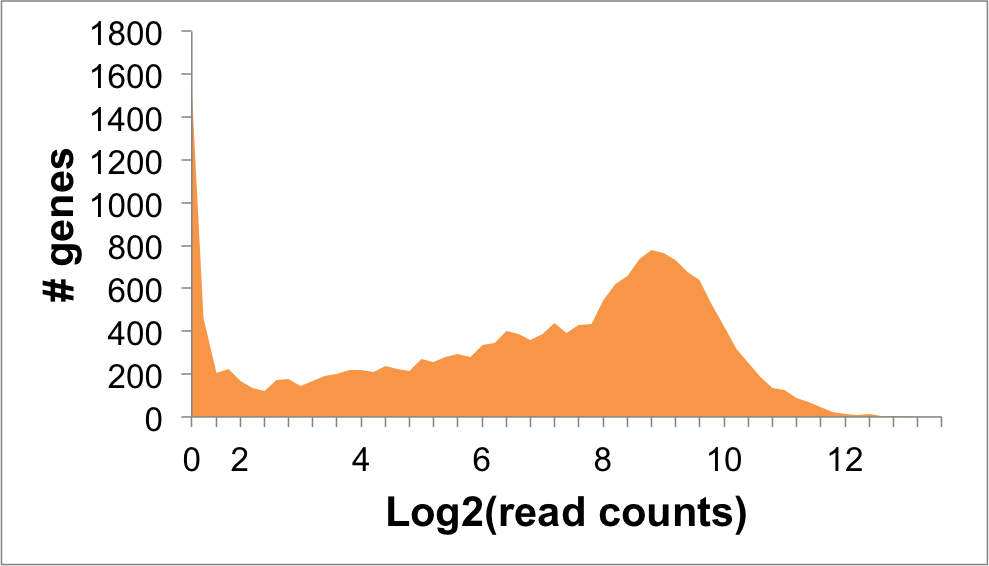
- Expression level (log2 read counts): 3.15
Expression Distribution
ADORA2A Expression in NALM6 Cells: 3.15