ATF4
Gene Information
- Official Symbol: ATF4
- Official Name: activating transcription factor 4
- Aliases and Previous Symbols: N/A
- Entrez ID: 468
- UniProt: P18848
- Interactions: BioGRID
- PubMed articles: Open PubMed
- OMIM: Open OMIM
Function Summary
- Entrez Summary: N/A
- UniProt Summary: Transcriptional activator. Binds the cAMP response element (CRE) (consensus: 5'-GTGACGT[AC][AG]-3'), a sequence present in many viral and cellular promoters. Cooperates with FOXO1 in osteoblasts to regulate glucose homeostasis through suppression of beta-cell production and decrease in insulin production (By similarity). It binds to a Tax-responsive enhancer element in the long terminal repeat of HTLV-I. Regulates the induction of DDIT3/CHOP and asparagine synthetase (ASNS) in response to endoplasmic reticulum (ER) stress. In concert with DDIT3/CHOP, activates the transcription of TRIB3 and promotes ER stress-induced neuronal apoptosis by regulating the transcriptional induction of BBC3/PUMA. Activates transcription of SIRT4. Regulates the circadian expression of the core clock component PER2 and the serotonin transporter SLC6A4. Binds in a circadian time-dependent manner to the cAMP response elements (CRE) in the SLC6A4 and PER2 promoters and periodically activates the transcription of these genes. During ER stress response, activates the transcription of NLRP1, possibly in concert with other factors (PubMed:26086088). {ECO:0000250, ECO:0000269|PubMed:15775988, ECO:0000269|PubMed:16682973, ECO:0000269|PubMed:18940792, ECO:0000269|PubMed:26086088}.
Pfam Domains GO Terms
Pfam Domains
| bZIP 1 |
| bZIP 2 |
GO Terms
| positive regulation of transcription from RNA polymerase II promoter in response to arsenic-containing substance |
| ATF4-CREB1 transcription factor complex |
| CHOP-ATF4 complex |
| ATF1-ATF4 transcription factor complex |
| regulation of transcription from RNA polymerase II promoter in response to arsenic-containing substance |
| Lewy body core |
| response to manganese-induced endoplasmic reticulum stress |
| positive regulation of sodium-dependent phosphate transport |
| negative regulation of translational initiation in response to stress |
| positive regulation of transcription from RNA polymerase II promoter in response to oxidative stress |
| regulation of sodium-dependent phosphate transport |
| negative regulation of translation in response to stress |
| positive regulation of vascular associated smooth muscle cell apoptotic process |
| response to oxygen-glucose deprivation |
| cellular response to oxygen-glucose deprivation |
| regulation of phosphate transport |
| regulation of vascular associated smooth muscle cell apoptotic process |
| regulation of translational initiation in response to stress |
| leucine zipper domain binding |
| positive regulation of transcription from RNA polymerase II promoter in response to endoplasmic reticulum stress |
| regulation of transcription from RNA polymerase II promoter in response to oxidative stress |
| PERK-mediated unfolded protein response |
| cellular response to manganese ion |
| nuclear periphery |
| positive regulation of smooth muscle cell apoptotic process |
| regulation of translation in response to stress |
| cellular response to arsenic-containing substance |
| negative regulation of translational initiation |
| response to manganese ion |
| mRNA transcription by RNA polymerase II |
| negative regulation of oxidative stress-induced neuron death |
| positive regulation of transcription from RNA polymerase II promoter involved in cellular response to chemical stimulus |
| positive regulation of transcription by RNA polymerase I |
| regulation of smooth muscle cell apoptotic process |
| gamma-aminobutyric acid signaling pathway |
| mRNA transcription |
| regulation of oxidative stress-induced neuron death |
| positive regulation of vascular endothelial growth factor production |
| positive regulation of muscle cell apoptotic process |
| dendrite membrane |
| positive regulation of transcription from RNA polymerase II promoter in response to stress |
| negative regulation of potassium ion transport |
| regulation of transcription by RNA polymerase I |
| response to arsenic-containing substance |
| regulation of vascular endothelial growth factor production |
| intrinsic apoptotic signaling pathway in response to endoplasmic reticulum stress |
| ER-nucleus signaling pathway |
| cellular response to glucose starvation |
| cellular response to amino acid starvation |
| gluconeogenesis |
| negative regulation of cellular response to oxidative stress |
| negative regulation of oxidative stress-induced cell death |
| response to amino acid starvation |
| negative regulation of response to oxidative stress |
| positive regulation of biomineral tissue development |
| positive regulation of biomineralization |
| hexose biosynthetic process |
| negative regulation of cold-induced thermogenesis |
| positive regulation of anion transport |
| monosaccharide biosynthetic process |
| positive regulation of neuron apoptotic process |
| circadian regulation of gene expression |
| RNA polymerase II transcription factor binding |
| regulation of oxidative stress-induced cell death |
| regulation of muscle cell apoptotic process |
| regulation of cellular response to oxidative stress |
| regulation of translational initiation |
| cellular response to UV |
| regulation of response to oxidative stress |
| cellular response to dopamine |
| response to dopamine |
| positive regulation of neuron death |
| regulation of biomineral tissue development |
| regulation of biomineralization |
| regulation of potassium ion transport |
| regulation of anion transport |
| RNA polymerase II distal enhancer sequence-specific DNA binding |
| cellular response to catecholamine stimulus |
| cellular response to monoamine stimulus |
| endoplasmic reticulum unfolded protein response |
| response to catecholamine |
| response to monoamine |
| glucose metabolic process |
| cellular response to light stimulus |
| regulation of transcription from RNA polymerase II promoter in response to stress |
| regulation of DNA-templated transcription in response to stress |
| carbohydrate biosynthetic process |
| cellular response to unfolded protein |
| cellular response to ammonium ion |
| negative regulation of translation |
| circadian rhythm |
| response to UV |
| regulation of cold-induced thermogenesis |
| negative regulation of ion transport |
| negative regulation of cellular amide metabolic process |
| intrinsic apoptotic signaling pathway |
| cellular response to topologically incorrect protein |
| cellular response to starvation |
| hexose metabolic process |
| response to unfolded protein |
| cellular response to radiation |
| response to ammonium ion |
| response to topologically incorrect protein |
| protein C-terminus binding |
| cellular response to metal ion |
| response to starvation |
| cellular response to decreased oxygen levels |
| monosaccharide metabolic process |
| regulation of neuron apoptotic process |
| negative regulation of neuron death |
| cellular response to oxygen levels |
| transcription regulatory region DNA binding |
| cellular response to inorganic substance |
| cellular response to nutrient levels |
| cellular response to oxidative stress |
| response to endoplasmic reticulum stress |
| cellular response to extracellular stimulus |
| positive regulation of ion transport |
| rhythmic process |
| apoptotic signaling pathway |
| response to light stimulus |
| cellular amino acid metabolic process |
| regulation of neuron death |
| RNA polymerase II regulatory region sequence-specific DNA binding |
| cellular response to abiotic stimulus |
| cellular response to environmental stimulus |
| neuron projection |
| cellular response to external stimulus |
| regulation of translation |
| response to decreased oxygen levels |
| response to metal ion |
| response to oxygen levels |
| regulation of metal ion transport |
| response to oxidative stress |
| regulation of cellular amide metabolic process |
| cellular response to drug |
| sequence-specific DNA binding |
| cellular calcium ion homeostasis |
| response to radiation |
| DNA-binding transcription activator activity, RNA polymerase II-specific |
| positive regulation of cytokine production |
| calcium ion homeostasis |
| protein kinase binding |
| cellular divalent inorganic cation homeostasis |
| carbohydrate metabolic process |
| transcription by RNA polymerase II |
| negative regulation of transport |
| protein heterodimerization activity |
| divalent inorganic cation homeostasis |
| centrosome |
| response to nutrient levels |
| RNA polymerase II proximal promoter sequence-specific DNA binding |
| response to toxic substance |
| posttranscriptional regulation of gene expression |
| response to extracellular stimulus |
| response to inorganic substance |
| cellular response to organic cyclic compound |
| cellular metal ion homeostasis |
| small molecule biosynthetic process |
| protein-containing complex |
| cellular response to organonitrogen compound |
| metal ion homeostasis |
| cellular cation homeostasis |
| transcription, DNA-templated |
| nucleic acid-templated transcription |
| positive regulation of apoptotic process |
| cellular ion homeostasis |
| positive regulation of programmed cell death |
| RNA biosynthetic process |
| cellular response to nitrogen compound |
| DNA-binding transcription factor activity |
| mRNA metabolic process |
| regulation of cytokine production |
| positive regulation of cell death |
| regulation of ion transport |
| cation homeostasis |
| inorganic ion homeostasis |
| regulation of cellular response to stress |
| cellular chemical homeostasis |
| ion homeostasis |
| cellular homeostasis |
| carboxylic acid metabolic process |
| response to organic cyclic compound |
| apoptotic process |
| positive regulation of transport |
| negative regulation of cell death |
| response to organonitrogen compound |
| oxoacid metabolic process |
| neuron differentiation |
| response to drug |
| organic acid metabolic process |
| negative regulation of cellular protein metabolic process |
| programmed cell death |
| cellular response to oxygen-containing compound |
| response to nitrogen compound |
| cell death |
| nucleobase-containing compound biosynthetic process |
| negative regulation of protein metabolic process |
| chemical homeostasis |
| response to abiotic stimulus |
| heterocycle biosynthetic process |
| aromatic compound biosynthetic process |
| negative regulation of multicellular organismal process |
| positive regulation of transcription by RNA polymerase II |
| cellular response to endogenous stimulus |
| organic cyclic compound biosynthetic process |
| G protein-coupled receptor signaling pathway |
| positive regulation of developmental process |
| negative regulation of cellular macromolecule biosynthetic process |
| DNA binding |
| negative regulation of macromolecule biosynthetic process |
| response to endogenous stimulus |
| regulation of response to stress |
| negative regulation of cellular biosynthetic process |
| generation of neurons |
| regulation of apoptotic process |
| positive regulation of transcription, DNA-templated |
| negative regulation of biosynthetic process |
| response to oxygen-containing compound |
| DNA-binding transcription factor activity, RNA polymerase II-specific |
| regulation of programmed cell death |
| negative regulation of response to stimulus |
| neurogenesis |
| cellular nitrogen compound biosynthetic process |
| positive regulation of nucleic acid-templated transcription |
| positive regulation of RNA biosynthetic process |
| homeostatic process |
| RNA metabolic process |
| regulation of cell death |
| intracellular signal transduction |
| cellular response to stress |
| cellular macromolecule biosynthetic process |
| negative regulation of gene expression |
| positive regulation of RNA metabolic process |
| positive regulation of multicellular organismal process |
| small molecule metabolic process |
| macromolecule biosynthetic process |
| regulation of transport |
| positive regulation of nucleobase-containing compound metabolic process |
| positive regulation of macromolecule biosynthetic process |
| positive regulation of cellular biosynthetic process |
| positive regulation of gene expression |
| gene expression |
| positive regulation of biosynthetic process |
CRISPR Data
Compound Hit Most Correlated Genes in Chemogenomics Tissues where Essential in the Avana Dataset (DepMap 20Q1)
Compound Hit
Most Correlated Genes in Chemogenomics
No correlation found to any other genes in chemogenomics.
Tissues where Essential in the Avana Dataset (DepMap 20Q1)
Global Fraction of Cell Lines Where Essential: 172/739
| Tissue | Fraction Of Cell Lines Where Essential |
|---|---|
| 1290807.0 | 0/1 |
| 909776.0 | 0/1 |
| bile duct | 6/28 |
| blood | 8/28 |
| bone | 6/26 |
| breast | 9/33 |
| central nervous system | 12/56 |
| cervix | 2/4 |
| colorectal | 6/17 |
| esophagus | 0/13 |
| fibroblast | 0/1 |
| gastric | 3/16 |
| kidney | 6/21 |
| liver | 10/20 |
| lung | 15/75 |
| lymphocyte | 2/16 |
| ovary | 4/26 |
| pancreas | 4/24 |
| peripheral nervous system | 4/16 |
| plasma cell | 5/15 |
| prostate | 1/1 |
| skin | 6/24 |
| soft tissue | 2/9 |
| thyroid | 0/2 |
| upper aerodigestive | 4/22 |
| urinary tract | 8/29 |
| uterus | 3/5 |
Essentiality in NALM6
- Essentiality Rank: 2358
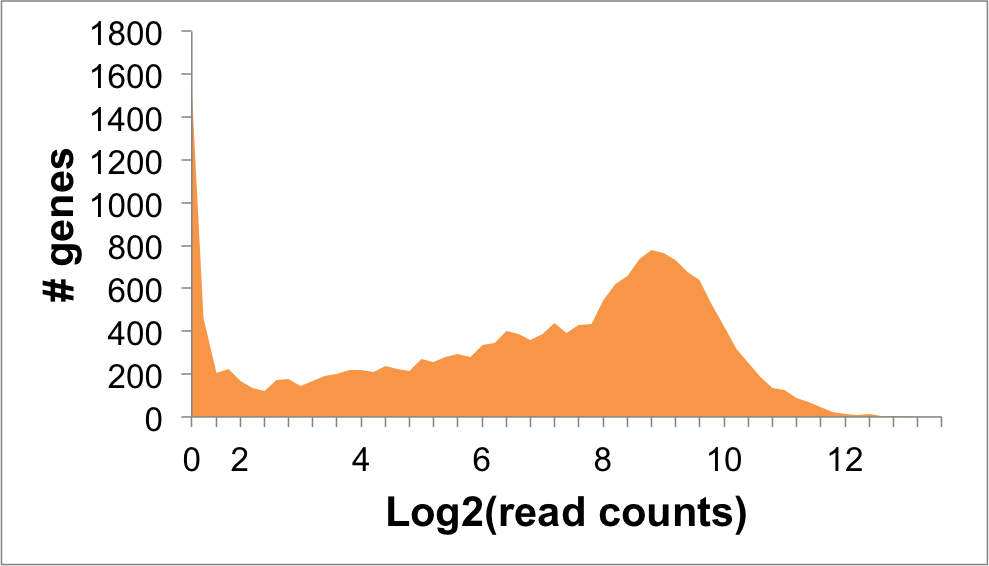
- Expression level (log2 read counts): 8.61
Expression Distribution
ATF4 Expression in NALM6 Cells: 8.61