DDIT3
Gene Information
- Official Symbol: DDIT3
- Official Name: DNA damage inducible transcript 3
- Aliases and Previous Symbols: N/A
- Entrez ID: 1649
- UniProt: P35638"|"P0DPQ6|P35638"
- Interactions: BioGRID
- PubMed articles: Open PubMed
- OMIM: Open OMIM
Function Summary
- Entrez Summary: This gene encodes a member of the CCAAT/enhancer-binding protein (C/EBP) family of transcription factors. The protein functions as a dominant-negative inhibitor by forming heterodimers with other C/EBP members, such as C/EBP and LAP (liver activator protein), and preventing their DNA binding activity. The protein is implicated in adipogenesis and erythropoiesis, is activated by endoplasmic reticulum stress, and promotes apoptosis. Fusion of this gene and FUS on chromosome 16 or EWSR1 on chromosome 22 induced by translocation generates chimeric proteins in myxoid liposarcomas or Ewing sarcoma. Multiple alternatively spliced transcript variants encoding two isoforms with different length have been identified. [provided by RefSeq, Aug 2010].
- UniProt Summary: N/A
Pfam Domains GO Terms
Pfam Domains
No Pfam Domain information is available for this gene.
GO Terms
| intrinsic apoptotic signaling pathway in response to nitrosative stress |
| negative regulation of determination of dorsal identity |
| CHOP-ATF3 complex |
| CHOP-ATF4 complex |
| CHOP-C/EBP complex |
| regulation of transcription involved in anterior/posterior axis specification |
| regulation of determination of dorsal identity |
| cellular response to nitrosative stress |
| negative regulation of CREB transcription factor activity |
| negative regulation of RNA polymerase II regulatory region sequence-specific DNA binding |
| response to nitrosative stress |
| cAMP response element binding protein binding |
| blood vessel maturation |
| ATF6-mediated unfolded protein response |
| positive regulation of endoplasmic reticulum stress-induced intrinsic apoptotic signaling pathway |
| positive regulation of transcription from RNA polymerase II promoter in response to endoplasmic reticulum stress |
| leucine zipper domain binding |
| PERK-mediated unfolded protein response |
| ER overload response |
| regulation of RNA polymerase II regulatory region sequence-specific DNA binding |
| mRNA transcription by RNA polymerase II |
| negative regulation of transcription regulatory region DNA binding |
| negative regulation of myoblast differentiation |
| mRNA transcription |
| positive regulation of transcription from RNA polymerase II promoter in response to stress |
| regulation of endoplasmic reticulum stress-induced intrinsic apoptotic signaling pathway |
| intrinsic apoptotic signaling pathway in response to endoplasmic reticulum stress |
| ER-nucleus signaling pathway |
| positive regulation of response to endoplasmic reticulum stress |
| protein-DNA complex |
| negative regulation of protein kinase B signaling |
| negative regulation of fat cell differentiation |
| negative regulation of cold-induced thermogenesis |
| positive regulation of interleukin-8 production |
| anterior/posterior axis specification |
| regulation of transcription regulatory region DNA binding |
| regulation of myoblast differentiation |
| positive regulation of neuron apoptotic process |
| negative regulation of DNA binding |
| release of sequestered calcium ion into cytosol |
| negative regulation of sequestering of calcium ion |
| positive regulation of intrinsic apoptotic signaling pathway |
| calcium ion transmembrane import into cytosol |
| regulation of interleukin-8 production |
| establishment of protein localization to mitochondrion |
| calcium ion transport into cytosol |
| transcription regulatory region sequence-specific DNA binding |
| cell redox homeostasis |
| protein localization to mitochondrion |
| regulation of response to endoplasmic reticulum stress |
| axis specification |
| cytosolic calcium ion transport |
| positive regulation of neuron death |
| endoplasmic reticulum unfolded protein response |
| regulation of transcription from RNA polymerase II promoter in response to stress |
| regulation of fat cell differentiation |
| regulation of sequestering of calcium ion |
| regulation of DNA binding |
| regulation of DNA-templated transcription in response to stress |
| cellular response to unfolded protein |
| late endosome |
| anatomical structure maturation |
| regulation of cold-induced thermogenesis |
| cell cycle arrest |
| cellular response to topologically incorrect protein |
| intrinsic apoptotic signaling pathway |
| regulation of intrinsic apoptotic signaling pathway |
| negative regulation of DNA-binding transcription factor activity |
| response to unfolded protein |
| negative regulation of binding |
| negative regulation of canonical Wnt signaling pathway |
| positive regulation of apoptotic signaling pathway |
| response to topologically incorrect protein |
| response to starvation |
| calcium ion transmembrane transport |
| regulation of neuron apoptotic process |
| negative regulation of Wnt signaling pathway |
| cellular response to biotic stimulus |
| anterior/posterior pattern specification |
| transcription regulatory region DNA binding |
| regulation of protein kinase B signaling |
| developmental maturation |
| transcription corepressor activity |
| calcium ion transport |
| response to endoplasmic reticulum stress |
| positive regulation of DNA-binding transcription factor activity |
| regulation of canonical Wnt signaling pathway |
| positive regulation of cytosolic calcium ion concentration |
| apoptotic signaling pathway |
| divalent metal ion transport |
| divalent inorganic cation transport |
| regulation of neuron death |
| proteasome-mediated ubiquitin-dependent protein catabolic process |
| regulation of cytosolic calcium ion concentration |
| regulation of autophagy |
| transcription factor binding |
| regionalization |
| proteasomal protein catabolic process |
| cell-cell signaling by wnt |
| Wnt signaling pathway |
| regulation of Wnt signaling pathway |
| regulation of binding |
| regulation of apoptotic signaling pathway |
| regulation of DNA-binding transcription factor activity |
| cell surface receptor signaling pathway involved in cell-cell signaling |
| establishment of protein localization to organelle |
| pattern specification process |
| cellular calcium ion homeostasis |
| DNA-binding transcription activator activity, RNA polymerase II-specific |
| calcium ion homeostasis |
| positive regulation of cytokine production |
| cellular divalent inorganic cation homeostasis |
| transcription by RNA polymerase II |
| blood vessel development |
| protein heterodimerization activity |
| divalent inorganic cation homeostasis |
| response to nutrient levels |
| RNA polymerase II proximal promoter sequence-specific DNA binding |
| negative regulation of intracellular signal transduction |
| vasculature development |
| cardiovascular system development |
| protein complex oligomerization |
| ubiquitin-dependent protein catabolic process |
| response to extracellular stimulus |
| modification-dependent protein catabolic process |
| modification-dependent macromolecule catabolic process |
| cellular metal ion homeostasis |
| inorganic cation transmembrane transport |
| negative regulation of cell cycle |
| proteolysis involved in cellular protein catabolic process |
| cation transmembrane transport |
| cellular protein catabolic process |
| metal ion homeostasis |
| cellular cation homeostasis |
| metal ion transport |
| transcription, DNA-templated |
| nucleic acid-templated transcription |
| positive regulation of apoptotic process |
| cellular ion homeostasis |
| inorganic ion transmembrane transport |
| positive regulation of programmed cell death |
| RNA biosynthetic process |
| DNA-binding transcription factor activity |
| protein catabolic process |
| regulation of cytokine production |
| mRNA metabolic process |
| positive regulation of cell death |
| cation homeostasis |
| negative regulation of cell differentiation |
| inorganic ion homeostasis |
| protein localization to organelle |
| regulation of cellular response to stress |
| cellular chemical homeostasis |
| cellular response to DNA damage stimulus |
| ion homeostasis |
| cation transport |
| regulation of cellular catabolic process |
| negative regulation of transcription by RNA polymerase II |
| circulatory system development |
| protein homodimerization activity |
| cellular homeostasis |
| cellular macromolecule catabolic process |
| apoptotic process |
| negative regulation of developmental process |
| ion transmembrane transport |
| regulation of catabolic process |
| cell cycle process |
| positive regulation of intracellular signal transduction |
| macromolecule catabolic process |
| programmed cell death |
| organonitrogen compound catabolic process |
| cell death |
| nucleobase-containing compound biosynthetic process |
| chemical homeostasis |
| cell-cell signaling |
| negative regulation of molecular function |
| heterocycle biosynthetic process |
| aromatic compound biosynthetic process |
| regulation of cell cycle |
| negative regulation of transcription, DNA-templated |
| negative regulation of multicellular organismal process |
| positive regulation of transcription by RNA polymerase II |
| negative regulation of nucleic acid-templated transcription |
| negative regulation of RNA biosynthetic process |
| negative regulation of signal transduction |
| proteolysis |
| transmembrane transport |
| organic cyclic compound biosynthetic process |
| response to biotic stimulus |
| negative regulation of RNA metabolic process |
| cell cycle |
| negative regulation of cell communication |
| negative regulation of signaling |
| ion transport |
| negative regulation of cellular macromolecule biosynthetic process |
| negative regulation of nucleobase-containing compound metabolic process |
| DNA binding |
| negative regulation of macromolecule biosynthetic process |
| regulation of response to stress |
| negative regulation of cellular biosynthetic process |
| positive regulation of transcription, DNA-templated |
| regulation of apoptotic process |
| negative regulation of biosynthetic process |
| protein-containing complex assembly |
| DNA-binding transcription factor activity, RNA polymerase II-specific |
| regulation of programmed cell death |
| cellular protein localization |
| cellular macromolecule localization |
| establishment of protein localization |
| negative regulation of response to stimulus |
| cellular nitrogen compound biosynthetic process |
| positive regulation of nucleic acid-templated transcription |
| positive regulation of RNA biosynthetic process |
| homeostatic process |
| positive regulation of signal transduction |
| RNA metabolic process |
| regulation of cell death |
| intracellular signal transduction |
| cellular response to stress |
| cellular macromolecule biosynthetic process |
| negative regulation of gene expression |
| positive regulation of RNA metabolic process |
| positive regulation of multicellular organismal process |
| macromolecule biosynthetic process |
| organic substance catabolic process |
| positive regulation of molecular function |
| cellular catabolic process |
| regulation of cell differentiation |
| positive regulation of cell communication |
| positive regulation of signaling |
| regulation of intracellular signal transduction |
| establishment of localization in cell |
| protein-containing complex subunit organization |
| positive regulation of nucleobase-containing compound metabolic process |
| positive regulation of macromolecule biosynthetic process |
| positive regulation of cellular biosynthetic process |
| positive regulation of gene expression |
| gene expression |
| positive regulation of biosynthetic process |
CRISPR Data
Compound Hit Most Correlated Genes in Chemogenomics Tissues where Essential in the Avana Dataset (DepMap 20Q1)
Compound Hit
| Screen | Score |
|---|---|
| LB-100 2μM R05 exp210 | 1.74 |
| Caffeine 2600μM R08 exp463 | 1.85 |
| Wiskostatin 3μM R07 exp422 | 1.99 |
| ABT-702 5μM plus CoCl2 18μM R07 exp320 | 2.07 |
Most Correlated Genes in Chemogenomics
No correlation found to any other genes in chemogenomics.
Tissues where Essential in the Avana Dataset (DepMap 20Q1)
Global Fraction of Cell Lines Where Essential: 0/739
| Tissue | Fraction Of Cell Lines Where Essential |
|---|---|
| 1290807.0 | 0/1 |
| 909776.0 | 0/1 |
| bile duct | 0/28 |
| blood | 0/28 |
| bone | 0/26 |
| breast | 0/33 |
| central nervous system | 0/56 |
| cervix | 0/4 |
| colorectal | 0/17 |
| esophagus | 0/13 |
| fibroblast | 0/1 |
| gastric | 0/16 |
| kidney | 0/21 |
| liver | 0/20 |
| lung | 0/75 |
| lymphocyte | 0/16 |
| ovary | 0/26 |
| pancreas | 0/24 |
| peripheral nervous system | 0/16 |
| plasma cell | 0/15 |
| prostate | 0/1 |
| skin | 0/24 |
| soft tissue | 0/9 |
| thyroid | 0/2 |
| upper aerodigestive | 0/22 |
| urinary tract | 0/29 |
| uterus | 0/5 |
Essentiality in NALM6
- Essentiality Rank: 1598
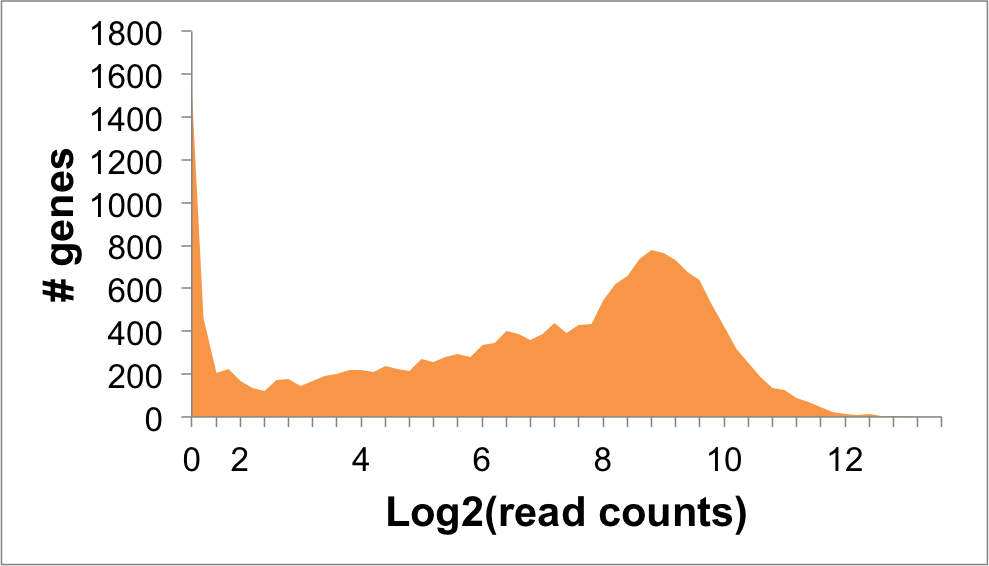
- Expression level (log2 read counts): 4.52
Expression Distribution
DDIT3 Expression in NALM6 Cells: 4.52