GJA1
Gene Information
- Official Symbol: GJA1
- Official Name: gap junction protein alpha 1
- Aliases and Previous Symbols: N/A
- Entrez ID: 2697
- UniProt: P17302
- Interactions: BioGRID
- PubMed articles: Open PubMed
- OMIM: Open OMIM
Function Summary
- Entrez Summary: This gene is a member of the connexin gene family. The encoded protein is a component of gap junctions, which are composed of arrays of intercellular channels that provide a route for the diffusion of low molecular weight materials from cell to cell. The encoded protein is the major protein of gap junctions in the heart that are thought to have a crucial role in the synchronized contraction of the heart and in embryonic development. A related intronless pseudogene has been mapped to chromosome 5. Mutations in this gene have been associated with oculodentodigital dysplasia, autosomal recessive craniometaphyseal dysplasia and heart malformations. [provided by RefSeq, May 2014].
- UniProt Summary: Gap junction protein that acts as a regulator of bladder capacity. A gap junction consists of a cluster of closely packed pairs of transmembrane channels, the connexons, through which materials of low MW diffuse from one cell to a neighboring cell. May play a critical role in the physiology of hearing by participating in the recycling of potassium to the cochlear endolymph. Negative regulator of bladder functional capacity: acts by enhancing intercellular electrical and chemical transmission, thus sensitizing bladder muscles to cholinergic neural stimuli and causing them to contract (By similarity). May play a role in cell growth inhibition through the regulation of NOV expression and localization. Plays an essential role in gap junction communication in the ventricles (By similarity). {ECO:0000250|UniProtKB:P08050, ECO:0000250|UniProtKB:P23242}.
Pfam Domains GO Terms
Pfam Domains
| Connexin43 |
| Connexin |
| Connexin CCC |
GO Terms
| vascular transport |
| milk ejection reflex |
| regulation of cell communication by chemical coupling |
| gap junction channel activity involved in cell communication by electrical coupling |
| atrial ventricular junction remodeling |
| positive regulation of cell communication by chemical coupling |
| cell communication by chemical coupling |
| gap junction channel activity involved in cardiac conduction electrical coupling |
| positive regulation of glomerular filtration |
| contractile fiber |
| epididymis development |
| connexin binding |
| gap junction hemi-channel activity |
| positive regulation of fear response |
| gap junction assembly |
| regulation of ventricular cardiac muscle cell membrane depolarization |
| positive regulation of behavioral fear response |
| regulation of atrial cardiac muscle cell membrane depolarization |
| gap junction channel activity |
| regulation of fear response |
| cellular response to parathyroid hormone stimulus |
| regulation of behavioral fear response |
| ion transmembrane transporter activity |
| fascia adherens |
| regulation of glomerular filtration |
| chronic inflammatory response |
| response to parathyroid hormone |
| ATP transport |
| negative regulation of cardiac muscle cell proliferation |
| atrial cardiac muscle cell to AV node cell signaling |
| atrial cardiac muscle cell action potential |
| atrial cardiac muscle cell to AV node cell communication |
| adult heart development |
| epithelial cell maturation |
| renal system process involved in regulation of blood volume |
| cell communication by electrical coupling involved in cardiac conduction |
| adenine nucleotide transport |
| gap junction |
| purine ribonucleotide transport |
| purine nucleotide transport |
| reflex |
| Golgi-associated vesicle membrane |
| cell communication by electrical coupling |
| secretion by tissue |
| connexin complex |
| regulation of bicellular tight junction assembly |
| cellular response to pH |
| negative regulation of cardiac muscle tissue growth |
| negative regulation of heart growth |
| regulation of ventricular cardiac muscle cell membrane repolarization |
| decidualization |
| nucleotide transport |
| renal system process involved in regulation of systemic arterial blood pressure |
| protein tyrosine kinase binding |
| regulation of cardiac muscle cell membrane repolarization |
| cell-cell signaling involved in cardiac conduction |
| positive regulation of behavior |
| positive regulation of vasoconstriction |
| negative regulation of organ growth |
| multivesicular body |
| negative regulation of cardiac muscle tissue development |
| disordered domain specific binding |
| regulation of membrane repolarization |
| response to fluid shear stress |
| regulation of renal system process |
| maternal placenta development |
| skeletal muscle tissue regeneration |
| negative regulation of endothelial cell proliferation |
| T cell proliferation |
| beta-tubulin binding |
| negative regulation of DNA biosynthetic process |
| cardiac muscle cell action potential involved in contraction |
| response to pH |
| regulation of cardiac muscle cell proliferation |
| cardiac muscle cell contraction |
| regulation of membrane depolarization |
| cell communication involved in cardiac conduction |
| intercalated disc |
| lactation |
| bone remodeling |
| regulation of bone remodeling |
| negative regulation of striated muscle tissue development |
| negative regulation of muscle organ development |
| cardiac muscle cell action potential |
| response to ischemia |
| negative regulation of muscle tissue development |
| tubulin binding |
| lateral plasma membrane |
| regulation of vasoconstriction |
| positive regulation of blood vessel diameter |
| regulation of cardiac muscle tissue growth |
| scaffold protein binding |
| heart looping |
| embryonic digit morphogenesis |
| tissue regeneration |
| maternal process involved in female pregnancy |
| regulation of heart growth |
| embryonic heart tube morphogenesis |
| determination of heart left/right asymmetry |
| positive regulation of muscle organ development |
| positive regulation of striated muscle tissue development |
| positive regulation of blood circulation |
| positive regulation of muscle tissue development |
| carbohydrate derivative transport |
| negative regulation of wound healing |
| regulation of behavior |
| positive regulation of insulin secretion |
| regulation of tissue remodeling |
| body fluid secretion |
| regulation of bone mineralization |
| embryonic heart tube development |
| lens development in camera-type eye |
| cardiac muscle contraction |
| cellular response to mechanical stimulus |
| regulation of cardiac muscle tissue development |
| lymphocyte proliferation |
| mononuclear cell proliferation |
| negative regulation of response to wounding |
| heart contraction |
| PDZ domain binding |
| actin-mediated cell contraction |
| regulation of cell junction assembly |
| cardiac conduction |
| regulation of biomineralization |
| regulation of biomineral tissue development |
| regulation of systemic arterial blood pressure |
| regulation of organ growth |
| action potential |
| endothelium development |
| positive regulation of peptide hormone secretion |
| leukocyte proliferation |
| positive regulation of cold-induced thermogenesis |
| heart process |
| tissue remodeling |
| negative regulation of developmental growth |
| cell-cell junction assembly |
| response to retinoic acid |
| striated muscle contraction |
| actin filament-based movement |
| renal system process |
| regulation of DNA biosynthetic process |
| determination of left/right symmetry |
| intermediate filament |
| neuron migration |
| negative regulation of DNA metabolic process |
| organophosphate ester transport |
| determination of bilateral symmetry |
| negative regulation of epithelial cell proliferation |
| specification of symmetry |
| embryonic limb morphogenesis |
| embryonic appendage morphogenesis |
| osteoblast differentiation |
| positive regulation of hormone secretion |
| mammary gland development |
| regulation of endothelial cell proliferation |
| SH3 domain binding |
| regulation of striated muscle tissue development |
| male gonad development |
| development of primary male sexual characteristics |
| anatomical structure maturation |
| regulation of muscle tissue development |
| multicellular organismal signaling |
| regulation of muscle organ development |
| response to estradiol |
| cell-cell junction organization |
| response to glucose |
| regulation of wound healing |
| regulation of blood vessel diameter |
| regulation of tube diameter |
| regulation of tube size |
| response to hexose |
| regulation of cold-induced thermogenesis |
| response to monosaccharide |
| drug transport |
| appendage morphogenesis |
| limb morphogenesis |
| placenta development |
| male sex differentiation |
| regeneration |
| cell maturation |
| mitochondrial outer membrane |
| regulation of response to wounding |
| cell junction assembly |
| vascular process in circulatory system |
| response to carbohydrate |
| regulation of insulin secretion |
| appendage development |
| limb development |
| female pregnancy |
| regulation of blood pressure |
| negative regulation of cell growth |
| positive regulation of I-kappaB kinase/NF-kappaB signaling |
| regulation of ossification |
| epithelial cell development |
| bone development |
| gonad development |
| regulation of peptide hormone secretion |
| multi-multicellular organism process |
| response to mechanical stimulus |
| cell junction organization |
| development of primary sexual characteristics |
| positive regulation of protein catabolic process |
| membrane raft |
| T cell activation |
| regulation of I-kappaB kinase/NF-kappaB signaling |
| developmental maturation |
| nucleobase-containing compound transport |
| regulation of heart contraction |
| negative regulation of growth |
| regulation of calcium ion transport |
| muscle contraction |
| heart morphogenesis |
| lysosome |
| early endosome |
| ossification |
| regulation of transmembrane transporter activity |
| sex differentiation |
| regulation of hormone secretion |
| positive regulation of protein secretion |
| regulation of transporter activity |
| positive regulation of cytosolic calcium ion concentration |
| regulation of blood circulation |
| embryonic organ morphogenesis |
| positive regulation of peptide secretion |
| muscle system process |
| epithelial tube morphogenesis |
| camera-type eye development |
| cellular response to environmental stimulus |
| cellular response to abiotic stimulus |
| response to lipopolysaccharide |
| apical plasma membrane |
| response to molecule of bacterial origin |
| regulation of cytosolic calcium ion concentration |
| regulation of developmental growth |
| regulation of epithelial cell proliferation |
| cellular response to external stimulus |
| signaling receptor binding |
| response to acid chemical |
| regulation of DNA metabolic process |
| eye development |
| visual system development |
| negative regulation of response to external stimulus |
| sensory system development |
| in utero embryonic development |
| lymphocyte activation |
| regulation of protein catabolic process |
| regulation of metal ion transport |
| developmental growth |
| blood circulation |
| response to peptide hormone |
| growth |
| circulatory system process |
| positive regulation of secretion by cell |
| blood vessel morphogenesis |
| gland development |
| focal adhesion |
| regulation of cell growth |
| reproductive structure development |
| positive regulation of protein transport |
| reproductive system development |
| regulation of membrane potential |
| morphogenesis of an epithelium |
| positive regulation of catabolic process |
| embryonic organ development |
| positive regulation of secretion |
| pattern specification process |
| cellular calcium ion homeostasis |
| calcium ion homeostasis |
| organic anion transport |
| positive regulation of establishment of protein localization |
| regulation of protein secretion |
| cellular divalent inorganic cation homeostasis |
| response to peptide |
| positive regulation of defense response |
| regulation of ion transmembrane transport |
| wound healing |
| neuron projection morphogenesis |
| plasma membrane bounded cell projection morphogenesis |
| blood vessel development |
| divalent inorganic cation homeostasis |
| cell projection morphogenesis |
| skeletal system development |
| regulation of peptide secretion |
| regulation of body fluid levels |
| inflammatory response |
| vasculature development |
| regulation of anatomical structure size |
| cell part morphogenesis |
| cardiovascular system development |
| protein complex oligomerization |
| heart development |
| regulation of hormone levels |
| spermatogenesis |
| sensory organ development |
| cell junction |
| cell population proliferation |
| cellular metal ion homeostasis |
| regulation of transmembrane transport |
| male gamete generation |
| tissue morphogenesis |
| embryonic morphogenesis |
| actin filament-based process |
| response to wounding |
| anion transport |
| regulation of system process |
| cellular response to hormone stimulus |
| Golgi membrane |
| metal ion homeostasis |
| cellular cation homeostasis |
| chordate embryonic development |
| cellular ion homeostasis |
| embryo development ending in birth or egg hatching |
| tube morphogenesis |
| neuron projection development |
| developmental process involved in reproduction |
| regulation of growth |
| negative regulation of cell population proliferation |
| epithelial cell differentiation |
| intracellular membrane-bounded organelle |
| response to bacterium |
| gamete generation |
| regulation of ion transport |
| regulation of protein transport |
| cation homeostasis |
| inorganic ion homeostasis |
| cell morphogenesis |
| regulation of peptide transport |
| cellular chemical homeostasis |
| regulation of establishment of protein localization |
| regulation of secretion by cell |
| regulation of defense response |
| ion homeostasis |
| regulation of secretion |
| neuron development |
| cellular component morphogenesis |
| multicellular organismal reproductive process |
| sexual reproduction |
| multicellular organism reproduction |
| tube development |
| response to lipid |
| circulatory system development |
| cellular homeostasis |
| response to hormone |
| response to organic cyclic compound |
| apoptotic process |
| leukocyte activation |
| endoplasmic reticulum membrane |
| negative regulation of developmental process |
| ion transmembrane transport |
| animal organ morphogenesis |
| regulation of cellular component biogenesis |
| cell migration |
| embryo development |
| Golgi apparatus |
| positive regulation of transport |
| multi-organism reproductive process |
| regulation of catabolic process |
| response to organonitrogen compound |
| neuron differentiation |
| response to drug |
| positive regulation of intracellular signal transduction |
| regulation of protein localization |
| programmed cell death |
| cell activation |
| cell motility |
| localization of cell |
| response to nitrogen compound |
| cell death |
| regulation of response to external stimulus |
| chemical homeostasis |
| epithelium development |
| cell-cell signaling |
| plasma membrane bounded cell projection organization |
| secretion |
| cell projection organization |
| response to abiotic stimulus |
| negative regulation of multicellular organismal process |
| cellular response to endogenous stimulus |
| mitochondrion |
| transmembrane transport |
| response to other organism |
| response to external biotic stimulus |
| locomotion |
| response to biotic stimulus |
| defense response |
| positive regulation of developmental process |
| ion transport |
| negative regulation of cellular macromolecule biosynthetic process |
| integral component of plasma membrane |
| reproductive process |
| reproduction |
| negative regulation of nucleobase-containing compound metabolic process |
| negative regulation of macromolecule biosynthetic process |
| response to endogenous stimulus |
| regulation of response to stress |
| negative regulation of cellular biosynthetic process |
| generation of neurons |
| regulation of apoptotic process |
| negative regulation of biosynthetic process |
| movement of cell or subcellular component |
| response to oxygen-containing compound |
| protein-containing complex assembly |
| regulation of programmed cell death |
| regulation of cell population proliferation |
| negative regulation of response to stimulus |
| neurogenesis |
| homeostatic process |
| cell development |
| positive regulation of signal transduction |
| regulation of cell death |
| positive regulation of protein metabolic process |
| negative regulation of gene expression |
| positive regulation of multicellular organismal process |
| tissue development |
| positive regulation of cell communication |
| positive regulation of signaling |
| regulation of intracellular signal transduction |
| nitrogen compound transport |
| protein-containing complex subunit organization |
| regulation of transport |
| system process |
| positive regulation of gene expression |
CRISPR Data
Compound Hit Most Correlated Genes in Chemogenomics Tissues where Essential in the Avana Dataset (DepMap 20Q1)
Compound Hit
Most Correlated Genes in Chemogenomics
No correlation found to any other genes in chemogenomics.
Tissues where Essential in the Avana Dataset (DepMap 20Q1)
Global Fraction of Cell Lines Where Essential: 0/739
| Tissue | Fraction Of Cell Lines Where Essential |
|---|---|
| 1290807.0 | 0/1 |
| 909776.0 | 0/1 |
| bile duct | 0/28 |
| blood | 0/28 |
| bone | 0/26 |
| breast | 0/33 |
| central nervous system | 0/56 |
| cervix | 0/4 |
| colorectal | 0/17 |
| esophagus | 0/13 |
| fibroblast | 0/1 |
| gastric | 0/16 |
| kidney | 0/21 |
| liver | 0/20 |
| lung | 0/75 |
| lymphocyte | 0/16 |
| ovary | 0/26 |
| pancreas | 0/24 |
| peripheral nervous system | 0/16 |
| plasma cell | 0/15 |
| prostate | 0/1 |
| skin | 0/24 |
| soft tissue | 0/9 |
| thyroid | 0/2 |
| upper aerodigestive | 0/22 |
| urinary tract | 0/29 |
| uterus | 0/5 |
Essentiality in NALM6
- Essentiality Rank: 16201
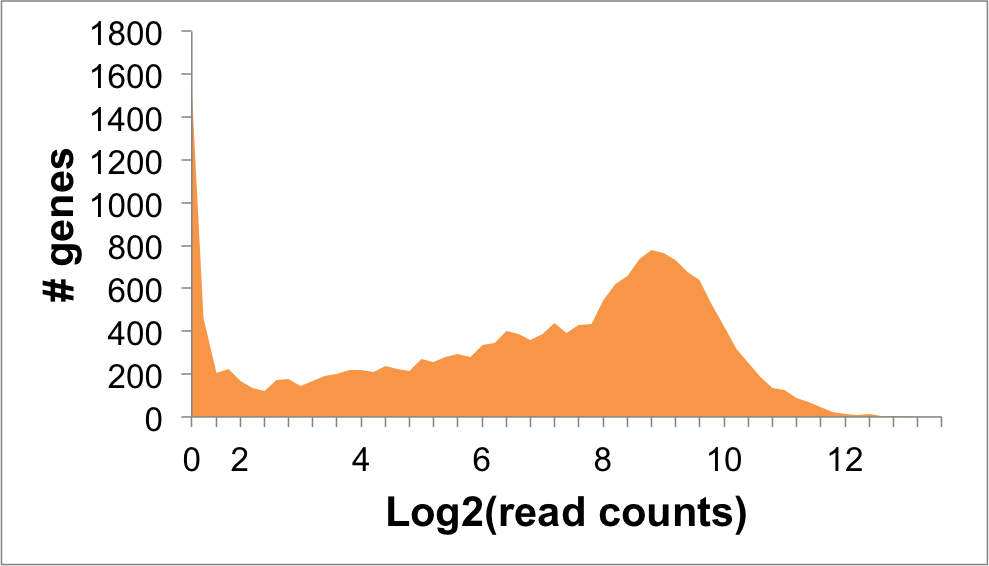
- Expression level (log2 read counts): -3.13
Expression Distribution
GJA1 Expression in NALM6 Cells: -3.13