HDAC5
Gene Information
- Official Symbol: HDAC5
- Official Name: histone deacetylase 5
- Aliases and Previous Symbols: N/A
- Entrez ID: 10014
- UniProt: Q9UQL6
- Interactions: BioGRID
- PubMed articles: Open PubMed
- OMIM: Open OMIM
Function Summary
- Entrez Summary: N/A
- UniProt Summary: Responsible for the deacetylation of lysine residues on the N-terminal part of the core histones (H2A, H2B, H3 and H4). Histone deacetylation gives a tag for epigenetic repression and plays an important role in transcriptional regulation, cell cycle progression and developmental events. Histone deacetylases act via the formation of large multiprotein complexes. Involved in muscle maturation by repressing transcription of myocyte enhancer MEF2C. During muscle differentiation, it shuttles into the cytoplasm, allowing the expression of myocyte enhancer factors. Involved in the MTA1-mediated epigenetic regulation of ESR1 expression in breast cancer. {ECO:0000269|PubMed:24413532}.
Pfam Domains GO Terms
Pfam Domains
| Hist deacetyl |
| HDAC4 Gln |
GO Terms
| NAD-dependent histone deacetylase activity (H3-K14 specific) |
| protein deacetylase activity |
| regulation of histone H3-K9 acetylation |
| negative regulation of cell migration involved in sprouting angiogenesis |
| negative regulation of myotube differentiation |
| histone H3 deacetylation |
| negative regulation of sprouting angiogenesis |
| histone deacetylase activity |
| negative regulation of blood vessel endothelial cell migration |
| histone deacetylase complex |
| negative regulation of striated muscle cell differentiation |
| regulation of cell migration involved in sprouting angiogenesis |
| repressing transcription factor binding |
| histone deacetylation |
| negative regulation of endothelial cell migration |
| protein deacetylation |
| protein kinase C binding |
| negative regulation of muscle cell differentiation |
| response to cocaine |
| regulation of histone acetylation |
| regulation of myotube differentiation |
| chromatin organization involved in negative regulation of transcription |
| chromatin silencing |
| protein deacylation |
| regulation of peptidyl-lysine acetylation |
| macromolecule deacylation |
| RNA polymerase II transcription factor binding |
| response to activity |
| negative regulation of epithelial cell migration |
| regulation of sprouting angiogenesis |
| chromatin organization involved in regulation of transcription |
| regulation of protein acetylation |
| response to anesthetic |
| negative regulation of gene expression, epigenetic |
| regulation of blood vessel endothelial cell migration |
| regulation of striated muscle cell differentiation |
| negative regulation of angiogenesis |
| negative regulation of blood vessel morphogenesis |
| B cell differentiation |
| histone deacetylase binding |
| response to alkaloid |
| negative regulation of vasculature development |
| regulation of histone modification |
| gene silencing |
| regulation of muscle cell differentiation |
| B cell activation |
| regulation of endothelial cell migration |
| chromatin remodeling |
| cellular response to insulin stimulus |
| cellular response to lipopolysaccharide |
| response to ammonium ion |
| regulation of chromatin organization |
| cellular response to molecule of bacterial origin |
| cellular response to biotic stimulus |
| transcription regulatory region DNA binding |
| regulation of protein binding |
| regulation of epithelial cell migration |
| response to insulin |
| regulation of gene expression, epigenetic |
| lymphocyte differentiation |
| negative regulation of cell migration |
| positive regulation of DNA-binding transcription factor activity |
| cellular response to peptide hormone stimulus |
| negative regulation of cell motility |
| regulation of angiogenesis |
| response to xenobiotic stimulus |
| negative regulation of cellular component movement |
| response to lipopolysaccharide |
| regulation of vasculature development |
| negative regulation of locomotion |
| response to molecule of bacterial origin |
| cellular response to peptide |
| leukocyte differentiation |
| transcription factor binding |
| regulation of chromosome organization |
| histone modification |
| covalent chromatin modification |
| regulation of binding |
| lymphocyte activation |
| response to peptide hormone |
| chromatin binding |
| nuclear speck |
| regulation of DNA-binding transcription factor activity |
| response to peptide |
| inflammatory response |
| RNA polymerase II proximal promoter sequence-specific DNA binding |
| cellular response to lipid |
| hemopoiesis |
| cellular response to organonitrogen compound |
| cellular response to hormone stimulus |
| hematopoietic or lymphoid organ development |
| immune system development |
| cellular response to nitrogen compound |
| response to bacterium |
| chromatin organization |
| negative regulation of cell differentiation |
| regulation of cell migration |
| response to lipid |
| negative regulation of transcription by RNA polymerase II |
| response to hormone |
| regulation of cell motility |
| response to organic cyclic compound |
| leukocyte activation |
| negative regulation of developmental process |
| regulation of locomotion |
| Golgi apparatus |
| regulation of cellular component movement |
| response to organonitrogen compound |
| neuron differentiation |
| response to drug |
| cellular response to oxygen-containing compound |
| regulation of anatomical structure morphogenesis |
| chromosome organization |
| cell activation |
| response to nitrogen compound |
| negative regulation of transcription, DNA-templated |
| negative regulation of multicellular organismal process |
| positive regulation of transcription by RNA polymerase II |
| cellular response to endogenous stimulus |
| negative regulation of nucleic acid-templated transcription |
| negative regulation of RNA biosynthetic process |
| regulation of organelle organization |
| response to other organism |
| response to external biotic stimulus |
| response to biotic stimulus |
| negative regulation of RNA metabolic process |
| defense response |
| negative regulation of cellular macromolecule biosynthetic process |
| negative regulation of nucleobase-containing compound metabolic process |
| negative regulation of macromolecule biosynthetic process |
| response to endogenous stimulus |
| negative regulation of cellular biosynthetic process |
| generation of neurons |
| positive regulation of transcription, DNA-templated |
| negative regulation of biosynthetic process |
| response to oxygen-containing compound |
| neurogenesis |
| positive regulation of nucleic acid-templated transcription |
| positive regulation of RNA biosynthetic process |
| negative regulation of gene expression |
| positive regulation of RNA metabolic process |
| positive regulation of molecular function |
| regulation of cell differentiation |
| regulation of protein modification process |
| positive regulation of nucleobase-containing compound metabolic process |
| positive regulation of macromolecule biosynthetic process |
| positive regulation of cellular biosynthetic process |
| positive regulation of gene expression |
| positive regulation of biosynthetic process |
CRISPR Data
Compound Hit Most Correlated Genes in Chemogenomics Tissues where Essential in the Avana Dataset (DepMap 20Q1)
Compound Hit
| Screen | Score |
|---|---|
| AICAR 240μM R03 exp116 | 1.98 |
| Radicicol 0.16μM R05 exp242 | 2.04 |
| Nifuroxazide 5μM R03 exp102 | 2.21 |
| Ethanol 0.01 R05 exp234 | 2.27 |
| MS023 2μM R03 exp134 | 2.5 |
| Milciclib 2μM R08 exp502 | 2.57 |
| Staurosporine 0.02μM R08 exp524 | 2.87 |
Most Correlated Genes in Chemogenomics
No correlation found to any other genes in chemogenomics.
Tissues where Essential in the Avana Dataset (DepMap 20Q1)
Global Fraction of Cell Lines Where Essential: 0/726
| Tissue | Fraction Of Cell Lines Where Essential |
|---|---|
| 1290807.0 | 0/1 |
| 909776.0 | 0/1 |
| bile duct | 0/28 |
| blood | 0/28 |
| bone | 0/25 |
| breast | 0/33 |
| central nervous system | 0/56 |
| cervix | 0/4 |
| colorectal | 0/17 |
| esophagus | 0/13 |
| fibroblast | 0/1 |
| gastric | 0/15 |
| kidney | 0/21 |
| liver | 0/20 |
| lung | 0/75 |
| lymphocyte | 0/14 |
| ovary | 0/26 |
| pancreas | 0/24 |
| peripheral nervous system | 0/16 |
| plasma cell | 0/15 |
| prostate | 0/1 |
| skin | 0/24 |
| soft tissue | 0/7 |
| thyroid | 0/2 |
| upper aerodigestive | 0/22 |
| urinary tract | 0/29 |
| uterus | 0/5 |
Essentiality in NALM6
- Essentiality Rank: 5193
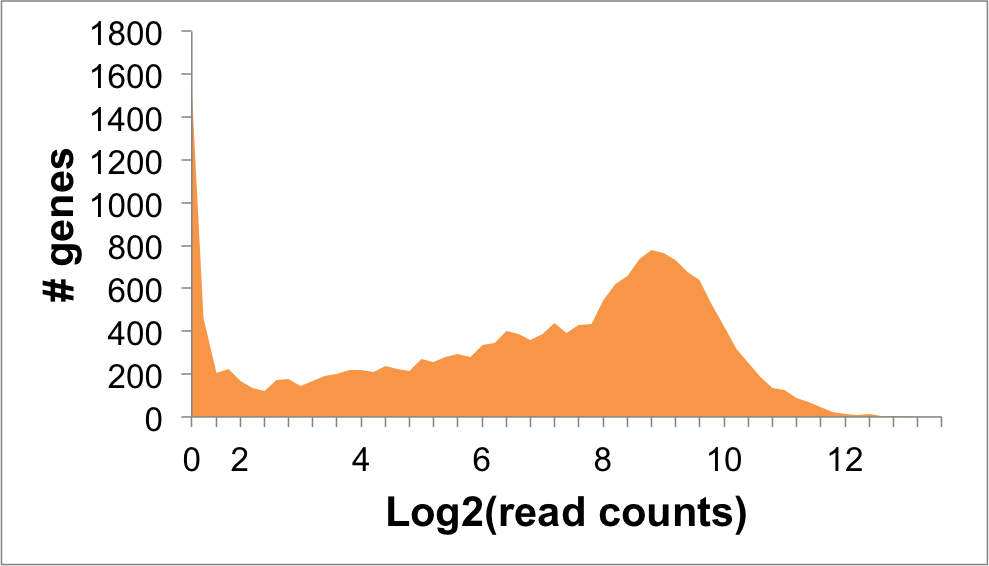
- Expression level (log2 read counts): 6.49
Expression Distribution
HDAC5 Expression in NALM6 Cells: 6.49