NFE2L2
Gene Information
- Official Symbol: NFE2L2
- Official Name: nuclear factor, erythroid 2 like 2
- Aliases and Previous Symbols: N/A
- Entrez ID: 4780
- UniProt: Q16236
- Interactions: BioGRID
- PubMed articles: Open PubMed
- OMIM: Open OMIM
Function Summary
- Entrez Summary: N/A
- UniProt Summary: Transcription activator that binds to antioxidant response (ARE) elements in the promoter regions of target genes. Important for the coordinated up-regulation of genes in response to oxidative stress. May be involved in the transcriptional activation of genes of the beta-globin cluster by mediating enhancer activity of hypersensitive site 2 of the beta-globin locus control region. {ECO:0000269|PubMed:11035812}.
Pfam Domains GO Terms
Pfam Domains
| bZIP 1 |
| bZIP 2 |
GO Terms
| positive regulation of glutathione biosynthetic process |
| organic heteropentacyclic compound catabolic process |
| regulation of glutathione biosynthetic process |
| aflatoxin catabolic process |
| regulation of transcription from RNA polymerase II promoter in response to copper ion |
| mycotoxin catabolic process |
| organic heteropentacyclic compound metabolic process |
| negative regulation of hematopoietic stem cell differentiation |
| aflatoxin metabolic process |
| mycotoxin metabolic process |
| positive regulation of sulfur metabolic process |
| toxin catabolic process |
| positive regulation of transcription from RNA polymerase II promoter in response to oxidative stress |
| negative regulation of vascular associated smooth muscle cell migration |
| positive regulation of transcription from RNA polymerase II promoter in response to hypoxia |
| transcription cofactor binding |
| cellular response to laminar fluid shear stress |
| positive regulation of ER-associated ubiquitin-dependent protein catabolic process |
| positive regulation of cofactor metabolic process |
| negative regulation of hematopoietic progenitor cell differentiation |
| regulation of ER-associated ubiquitin-dependent protein catabolic process |
| regulation of removal of superoxide radicals |
| regulation of transcription from RNA polymerase II promoter in response to oxidative stress |
| PERK-mediated unfolded protein response |
| regulation of sulfur metabolic process |
| response to laminar fluid shear stress |
| positive regulation of ERAD pathway |
| negative regulation of hydrogen peroxide-induced cell death |
| negative regulation of response to reactive oxygen species |
| cellular response to fluid shear stress |
| negative regulation of oxidative stress-induced intrinsic apoptotic signaling pathway |
| negative regulation of cellular response to drug |
| negative regulation of stem cell differentiation |
| cellular response to angiotensin |
| negative regulation of smooth muscle cell migration |
| regulation of vascular associated smooth muscle cell migration |
| negative regulation of cardiac muscle cell apoptotic process |
| regulation of hydrogen peroxide-induced cell death |
| positive regulation of transcription from RNA polymerase II promoter involved in cellular response to chemical stimulus |
| toxin metabolic process |
| proteasomal ubiquitin-independent protein catabolic process |
| negative regulation of striated muscle cell apoptotic process |
| response to angiotensin |
| positive regulation of hemostasis |
| positive regulation of blood coagulation |
| positive regulation of coagulation |
| regulation of oxidative stress-induced intrinsic apoptotic signaling pathway |
| negative regulation of response to drug |
| regulation of ERAD pathway |
| negative regulation of endothelial cell apoptotic process |
| cellular response to copper ion |
| positive regulation of transcription from RNA polymerase II promoter in response to stress |
| regulation of superoxide metabolic process |
| regulation of response to reactive oxygen species |
| response to fluid shear stress |
| regulation of cellular response to drug |
| ER-nucleus signaling pathway |
| regulation of cofactor metabolic process |
| positive regulation of glucose import |
| regulation of cardiac muscle cell apoptotic process |
| negative regulation of muscle cell apoptotic process |
| positive regulation of response to endoplasmic reticulum stress |
| regulation of striated muscle cell apoptotic process |
| cellular response to glucose starvation |
| negative regulation of epithelial cell apoptotic process |
| positive regulation of glucose transmembrane transport |
| protein-DNA complex |
| negative regulation of oxidative stress-induced cell death |
| response to copper ion |
| negative regulation of cellular response to oxidative stress |
| negative regulation of response to oxidative stress |
| regulation of endothelial cell apoptotic process |
| RNA polymerase II activating transcription factor binding |
| positive regulation of wound healing |
| positive regulation of blood vessel endothelial cell migration |
| secondary metabolic process |
| regulation of glucose import |
| regulation of smooth muscle cell migration |
| regulation of oxidative stress-induced cell death |
| positive regulation of response to wounding |
| regulation of muscle cell apoptotic process |
| cellular response to hydrogen peroxide |
| regulation of hematopoietic stem cell differentiation |
| regulation of glucose transmembrane transport |
| regulation of cellular response to oxidative stress |
| transcription regulatory region sequence-specific DNA binding |
| cell redox homeostasis |
| regulation of transcription from RNA polymerase II promoter in response to hypoxia |
| regulation of blood coagulation |
| regulation of epithelial cell apoptotic process |
| regulation of hemostasis |
| positive regulation of proteasomal ubiquitin-dependent protein catabolic process |
| regulation of coagulation |
| regulation of response to endoplasmic reticulum stress |
| regulation of response to oxidative stress |
| regulation of hematopoietic progenitor cell differentiation |
| regulation of blood vessel endothelial cell migration |
| positive regulation of reactive oxygen species metabolic process |
| negative regulation of intrinsic apoptotic signaling pathway |
| positive regulation of ubiquitin-dependent protein catabolic process |
| regulation of response to drug |
| RNA polymerase II distal enhancer sequence-specific DNA binding |
| positive regulation of endothelial cell migration |
| positive regulation of proteasomal protein catabolic process |
| endoplasmic reticulum unfolded protein response |
| chromatin |
| regulation of stem cell differentiation |
| cellular response to antibiotic |
| response to hydrogen peroxide |
| regulation of transcription from RNA polymerase II promoter in response to stress |
| positive regulation of proteolysis involved in cellular protein catabolic process |
| regulation of proteasomal ubiquitin-dependent protein catabolic process |
| regulation of DNA-templated transcription in response to stress |
| cellular response to unfolded protein |
| detoxification |
| regulation of embryonic development |
| cellular response to reactive oxygen species |
| negative regulation of hemopoiesis |
| regulation of wound healing |
| positive regulation of cellular protein catabolic process |
| positive regulation of epithelial cell migration |
| cellular response to topologically incorrect protein |
| positive regulation of cellular amide metabolic process |
| cellular response to starvation |
| regulation of ubiquitin-dependent protein catabolic process |
| regulation of endothelial cell migration |
| regulation of intrinsic apoptotic signaling pathway |
| response to unfolded protein |
| positive regulation of angiogenesis |
| regulation of response to wounding |
| regulation of reactive oxygen species metabolic process |
| positive regulation of vasculature development |
| regulation of proteasomal protein catabolic process |
| response to topologically incorrect protein |
| cellular response to hypoxia |
| cellular response to metal ion |
| response to starvation |
| response to reactive oxygen species |
| cellular response to decreased oxygen levels |
| positive regulation of transmembrane transport |
| cellular response to toxic substance |
| cellular response to oxygen levels |
| positive regulation of protein catabolic process |
| regulation of proteolysis involved in cellular protein catabolic process |
| transcription regulatory region DNA binding |
| regulation of epithelial cell migration |
| cellular response to inorganic substance |
| negative regulation of apoptotic signaling pathway |
| cellular response to nutrient levels |
| cellular response to oxidative stress |
| cellular response to tumor necrosis factor |
| protein domain specific binding |
| regulation of cellular protein catabolic process |
| response to endoplasmic reticulum stress |
| negative regulation of cell migration |
| response to tumor necrosis factor |
| cellular response to extracellular stimulus |
| cellular response to peptide hormone stimulus |
| negative regulation of cell motility |
| aging |
| positive regulation of neuron projection development |
| regulation of angiogenesis |
| response to antibiotic |
| negative regulation of cellular component movement |
| regulation of vasculature development |
| negative regulation of locomotion |
| proteasome-mediated ubiquitin-dependent protein catabolic process |
| cellular response to peptide |
| cellular response to external stimulus |
| response to hypoxia |
| proteasomal protein catabolic process |
| response to decreased oxygen levels |
| positive regulation of proteolysis |
| positive regulation of cellular catabolic process |
| positive regulation of neuron differentiation |
| response to metal ion |
| response to oxygen levels |
| positive regulation of cell projection organization |
| regulation of protein catabolic process |
| response to oxidative stress |
| response to peptide hormone |
| regulation of apoptotic signaling pathway |
| cellular response to drug |
| regulation of cellular amide metabolic process |
| positive regulation of catabolic process |
| heterocycle catabolic process |
| negative regulation of immune system process |
| DNA-binding transcription activator activity, RNA polymerase II-specific |
| regulation of hemopoiesis |
| positive regulation of neurogenesis |
| response to peptide |
| organic cyclic compound catabolic process |
| transcription by RNA polymerase II |
| centrosome |
| regulation of body fluid levels |
| regulation of neuron projection development |
| inflammatory response |
| response to nutrient levels |
| positive regulation of cell migration |
| response to toxic substance |
| negative regulation of intracellular signal transduction |
| positive regulation of cell motility |
| ubiquitin-dependent protein catabolic process |
| response to extracellular stimulus |
| modification-dependent protein catabolic process |
| response to inorganic substance |
| positive regulation of nervous system development |
| positive regulation of cellular component movement |
| positive regulation of cell development |
| modification-dependent macromolecule catabolic process |
| positive regulation of locomotion |
| regulation of transmembrane transport |
| proteolysis involved in cellular protein catabolic process |
| cellular response to organonitrogen compound |
| cellular response to hormone stimulus |
| cellular protein catabolic process |
| transcription, DNA-templated |
| nucleic acid-templated transcription |
| RNA biosynthetic process |
| regulation of neuron differentiation |
| cellular response to nitrogen compound |
| DNA-binding transcription factor activity |
| protein catabolic process |
| protein ubiquitination |
| regulation of plasma membrane bounded cell projection organization |
| viral process |
| regulation of cell projection organization |
| negative regulation of cell differentiation |
| regulation of proteolysis |
| regulation of cellular response to stress |
| protein modification by small protein conjugation |
| symbiotic process |
| regulation of neurogenesis |
| interspecies interaction between organisms |
| regulation of cellular catabolic process |
| regulation of cell migration |
| negative regulation of apoptotic process |
| cellular homeostasis |
| cellular macromolecule catabolic process |
| negative regulation of programmed cell death |
| response to hormone |
| regulation of cell motility |
| regulation of nervous system development |
| regulation of cell development |
| negative regulation of developmental process |
| positive regulation of cell differentiation |
| regulation of locomotion |
| Golgi apparatus |
| protein modification by small protein conjugation or removal |
| positive regulation of transport |
| regulation of cellular component movement |
| negative regulation of cell death |
| regulation of catabolic process |
| response to organonitrogen compound |
| cellular response to cytokine stimulus |
| response to drug |
| macromolecule catabolic process |
| cellular response to oxygen-containing compound |
| organonitrogen compound catabolic process |
| regulation of anatomical structure morphogenesis |
| response to nitrogen compound |
| regulation of response to external stimulus |
| nucleobase-containing compound biosynthetic process |
| response to cytokine |
| response to abiotic stimulus |
| heterocycle biosynthetic process |
| aromatic compound biosynthetic process |
| negative regulation of multicellular organismal process |
| positive regulation of cellular component organization |
| positive regulation of transcription by RNA polymerase II |
| cellular response to endogenous stimulus |
| negative regulation of signal transduction |
| proteolysis |
| organic cyclic compound biosynthetic process |
| defense response |
| negative regulation of cell communication |
| negative regulation of signaling |
| positive regulation of developmental process |
| DNA binding |
| response to endogenous stimulus |
| regulation of response to stress |
| generation of neurons |
| positive regulation of transcription, DNA-templated |
| regulation of apoptotic process |
| response to oxygen-containing compound |
| DNA-binding transcription factor activity, RNA polymerase II-specific |
| regulation of programmed cell death |
| positive regulation of cellular protein metabolic process |
| negative regulation of response to stimulus |
| neurogenesis |
| cellular nitrogen compound biosynthetic process |
| positive regulation of nucleic acid-templated transcription |
| positive regulation of RNA biosynthetic process |
| homeostatic process |
| regulation of immune system process |
| RNA metabolic process |
| regulation of cell death |
| cellular response to stress |
| positive regulation of protein metabolic process |
| cellular macromolecule biosynthetic process |
| positive regulation of RNA metabolic process |
| positive regulation of multicellular organismal process |
| macromolecule biosynthetic process |
| organic substance catabolic process |
| cellular catabolic process |
| regulation of cell differentiation |
| regulation of intracellular signal transduction |
| regulation of transport |
| positive regulation of nucleobase-containing compound metabolic process |
| positive regulation of macromolecule biosynthetic process |
| positive regulation of cellular biosynthetic process |
| positive regulation of gene expression |
| gene expression |
| positive regulation of biosynthetic process |
CRISPR Data
Compound Hit Most Correlated Genes in Chemogenomics Tissues where Essential in the Avana Dataset (DepMap 20Q1)
Compound Hit
| Screen | Score |
|---|---|
| Taxol 0.004μM R03 exp103 | 1.8 |
| Rapamycin 10μM R00 exp30 | 1.81 |
| Chloramphenicol 20μM R00 exp13 | 1.95 |
| UNC1999 2μM R03 exp155 | 2.06 |
| Cycloheximide 0.02μM R00 exp14 | 2.33 |
| Wortmannin 0.5μM R00 exp37 | 2.56 |
| AICAR 240μM R03 exp116 | 3.09 |
Most Correlated Genes in Chemogenomics
No correlation found to any other genes in chemogenomics.
Tissues where Essential in the Avana Dataset (DepMap 20Q1)
Global Fraction of Cell Lines Where Essential: 17/739
| Tissue | Fraction Of Cell Lines Where Essential |
|---|---|
| 1290807.0 | 0/1 |
| 909776.0 | 0/1 |
| bile duct | 3/28 |
| blood | 0/28 |
| bone | 0/26 |
| breast | 0/33 |
| central nervous system | 0/56 |
| cervix | 0/4 |
| colorectal | 0/17 |
| esophagus | 0/13 |
| fibroblast | 0/1 |
| gastric | 0/16 |
| kidney | 2/21 |
| liver | 1/20 |
| lung | 8/75 |
| lymphocyte | 0/16 |
| ovary | 0/26 |
| pancreas | 0/24 |
| peripheral nervous system | 1/16 |
| plasma cell | 0/15 |
| prostate | 0/1 |
| skin | 0/24 |
| soft tissue | 0/9 |
| thyroid | 0/2 |
| upper aerodigestive | 0/22 |
| urinary tract | 1/29 |
| uterus | 0/5 |
Essentiality in NALM6
- Essentiality Rank: 8794
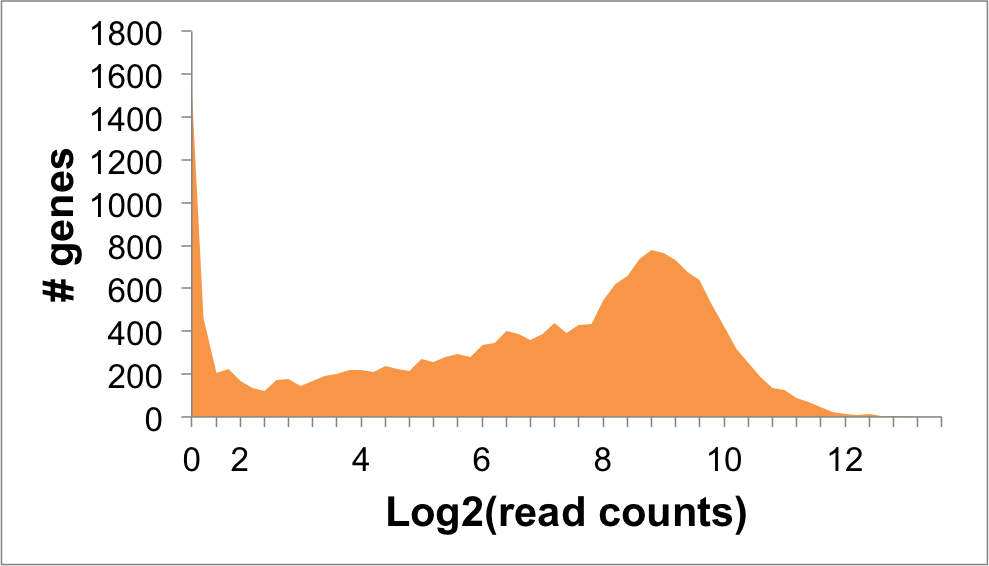
- Expression level (log2 read counts): 5.37
Expression Distribution
NFE2L2 Expression in NALM6 Cells: 5.37