PIK3R1
Gene Information
- Official Symbol: PIK3R1
- Official Name: phosphoinositide-3-kinase regulatory subunit 1
- Aliases and Previous Symbols: N/A
- Entrez ID: 5295
- UniProt: P27986
- Interactions: BioGRID
- PubMed articles: Open PubMed
- OMIM: Open OMIM
Function Summary
- Entrez Summary: Phosphatidylinositol 3-kinase phosphorylates the inositol ring of phosphatidylinositol at the 3-prime position. The enzyme comprises a 110 kD catalytic subunit and a regulatory subunit of either 85, 55, or 50 kD. This gene encodes the 85 kD regulatory subunit. Phosphatidylinositol 3-kinase plays an important role in the metabolic actions of insulin, and a mutation in this gene has been associated with insulin resistance. Alternative splicing of this gene results in four transcript variants encoding different isoforms. [provided by RefSeq, Jun 2011].
- UniProt Summary: N/A
Pfam Domains GO Terms
Pfam Domains
| RhoGAP |
| SH2 |
GO Terms
| phosphatidylinositol 3-kinase complex, class IA |
| ErbB-3 class receptor binding |
| phosphatidylinositol 3-kinase regulator activity |
| perinuclear endoplasmic reticulum membrane |
| insulin binding |
| neurotrophin TRKA receptor binding |
| phosphatidylinositol 3-kinase regulatory subunit binding |
| insulin receptor substrate binding |
| positive regulation of endoplasmic reticulum unfolded protein response |
| transmembrane receptor protein tyrosine kinase adaptor activity |
| insulin-like growth factor receptor signaling pathway |
| 1-phosphatidylinositol-3-kinase regulator activity |
| insulin-like growth factor receptor binding |
| growth hormone receptor signaling pathway |
| phosphatidylinositol 3-kinase complex |
| cellular response to growth hormone stimulus |
| phosphatidylinositol 3-kinase binding |
| insulin receptor binding |
| regulation of endoplasmic reticulum unfolded protein response |
| negative regulation of osteoclast differentiation |
| ERBB2 signaling pathway |
| phosphatidylinositol 3-kinase signaling |
| extrinsic apoptotic signaling pathway via death domain receptors |
| positive regulation of RNA splicing |
| response to growth hormone |
| positive regulation of response to endoplasmic reticulum stress |
| positive regulation of protein import into nucleus |
| positive regulation of glucose import |
| negative regulation of cell-matrix adhesion |
| positive regulation of protein import |
| phosphotyrosine residue binding |
| positive regulation of glucose transmembrane transport |
| negative regulation of myeloid leukocyte differentiation |
| epidermal growth factor receptor signaling pathway |
| phosphatidylinositol phosphorylation |
| regulation of phosphatidylinositol 3-kinase activity |
| T cell costimulation |
| regulation of glucose import |
| positive regulation of protein localization to plasma membrane |
| lymphocyte costimulation |
| regulation of protein import into nucleus |
| regulation of protein import |
| positive regulation of protein localization to cell periphery |
| regulation of lipid kinase activity |
| negative regulation of cell-substrate adhesion |
| positive regulation of nucleocytoplasmic transport |
| regulation of insulin receptor signaling pathway |
| cis-Golgi network |
| regulation of osteoclast differentiation |
| lipid phosphorylation |
| vascular endothelial growth factor receptor signaling pathway |
| intrinsic apoptotic signaling pathway in response to DNA damage |
| ERBB signaling pathway |
| phosphatidylinositol-mediated signaling |
| regulation of cellular response to insulin stimulus |
| regulation of glucose transmembrane transport |
| positive regulation of protein localization to nucleus |
| inositol lipid-mediated signaling |
| negative regulation of myeloid cell differentiation |
| regulation of stress fiber assembly |
| cellular response to UV |
| regulation of response to endoplasmic reticulum stress |
| regulation of phospholipid metabolic process |
| positive regulation of phosphatidylinositol 3-kinase signaling |
| positive regulation of tumor necrosis factor production |
| protein phosphatase binding |
| insulin receptor signaling pathway |
| cellular glucose homeostasis |
| positive regulation of tumor necrosis factor superfamily cytokine production |
| regulation of actomyosin structure organization |
| regulation of actin filament bundle assembly |
| regulation of protein localization to plasma membrane |
| protein import into nucleus |
| extrinsic apoptotic signaling pathway |
| negative regulation of leukocyte differentiation |
| regulation of nucleocytoplasmic transport |
| B cell differentiation |
| phosphatidylinositol biosynthetic process |
| cellular response to light stimulus |
| regulation of cell-matrix adhesion |
| regulation of protein localization to cell periphery |
| import into nucleus |
| regulation of myeloid leukocyte differentiation |
| regulation of protein localization to nucleus |
| regulation of phosphatidylinositol 3-kinase signaling |
| positive regulation of protein localization to membrane |
| Fc-gamma receptor signaling pathway involved in phagocytosis |
| regulation of RNA splicing |
| immune response-regulating cell surface receptor signaling pathway involved in phagocytosis |
| negative regulation of hemopoiesis |
| platelet activation |
| Fc receptor mediated stimulatory signaling pathway |
| Fc-gamma receptor signaling pathway |
| protein import |
| response to UV |
| regulation of tumor necrosis factor production |
| intrinsic apoptotic signaling pathway |
| regulation of tumor necrosis factor superfamily cytokine production |
| B cell activation |
| positive regulation of intracellular protein transport |
| protein localization to nucleus |
| cellular response to insulin stimulus |
| positive regulation of protein kinase B signaling |
| phosphatidylinositol metabolic process |
| cell-cell junction |
| Fc-epsilon receptor signaling pathway |
| cellular response to radiation |
| T cell receptor signaling pathway |
| protein stabilization |
| glucose homeostasis |
| carbohydrate homeostasis |
| regulation of protein localization to membrane |
| positive regulation of T cell activation |
| lipid modification |
| positive regulation of transmembrane transport |
| glycerophospholipid biosynthetic process |
| positive regulation of intracellular transport |
| regulation of cell-substrate adhesion |
| positive regulation of leukocyte cell-cell adhesion |
| regulation of protein kinase B signaling |
| glycerolipid biosynthetic process |
| regulation of myeloid cell differentiation |
| response to insulin |
| regulation of intracellular protein transport |
| lymphocyte differentiation |
| Fc receptor signaling pathway |
| phospholipid biosynthetic process |
| positive regulation of cell-cell adhesion |
| response to endoplasmic reticulum stress |
| axon guidance |
| regulation of actin filament organization |
| neuron projection guidance |
| nucleocytoplasmic transport |
| nuclear transport |
| cellular response to peptide hormone stimulus |
| negative regulation of cell adhesion |
| regulation of leukocyte differentiation |
| apoptotic signaling pathway |
| regulation of protein stability |
| blood coagulation |
| coagulation |
| antigen receptor-mediated signaling pathway |
| regulation of leukocyte cell-cell adhesion |
| hemostasis |
| response to light stimulus |
| glycerophospholipid metabolic process |
| cellular response to environmental stimulus |
| cellular response to abiotic stimulus |
| regulation of T cell activation |
| positive regulation of cellular protein localization |
| cellular response to peptide |
| phagocytosis |
| leukocyte differentiation |
| transcription factor binding |
| regulation of actin cytoskeleton organization |
| regulation of intracellular transport |
| regulation of supramolecular fiber organization |
| positive regulation of lymphocyte activation |
| axonogenesis |
| phospholipid metabolic process |
| glycerolipid metabolic process |
| leukocyte migration |
| lymphocyte activation |
| regulation of actin filament-based process |
| response to peptide hormone |
| regulation of lipid metabolic process |
| regulation of cell-cell adhesion |
| positive regulation of cell adhesion |
| positive regulation of leukocyte activation |
| axon development |
| positive regulation of cell activation |
| positive regulation of protein transport |
| establishment of protein localization to organelle |
| cell morphogenesis involved in neuron differentiation |
| response to radiation |
| negative regulation of immune system process |
| immune response-activating cell surface receptor signaling pathway |
| positive regulation of cytokine production |
| regulation of hemopoiesis |
| positive regulation of establishment of protein localization |
| response to peptide |
| wound healing |
| neuron projection morphogenesis |
| immune response-regulating cell surface receptor signaling pathway |
| plasma membrane bounded cell projection morphogenesis |
| protein heterodimerization activity |
| cell projection morphogenesis |
| regulation of body fluid levels |
| positive regulation of cell migration |
| transmembrane receptor protein tyrosine kinase signaling pathway |
| cell part morphogenesis |
| regulation of lymphocyte activation |
| positive regulation of cell motility |
| organophosphate biosynthetic process |
| positive regulation of cellular component movement |
| regulation of cellular protein localization |
| regulation of cytoskeleton organization |
| chemotaxis |
| positive regulation of locomotion |
| taxis |
| cell morphogenesis involved in differentiation |
| hemopoiesis |
| immune response-activating signal transduction |
| regulation of transmembrane transport |
| response to wounding |
| lipid biosynthetic process |
| immune response-regulating signaling pathway |
| cellular response to organonitrogen compound |
| regulation of leukocyte activation |
| cellular response to hormone stimulus |
| hematopoietic or lymphoid organ development |
| activation of immune response |
| regulation of cell activation |
| immune system development |
| cellular response to nitrogen compound |
| neuron projection development |
| cytokine-mediated signaling pathway |
| regulation of cell adhesion |
| regulation of cytokine production |
| viral process |
| regulation of protein transport |
| negative regulation of cell differentiation |
| enzyme linked receptor protein signaling pathway |
| cell morphogenesis |
| regulation of cellular response to stress |
| protein localization to organelle |
| regulation of peptide transport |
| cellular chemical homeostasis |
| regulation of establishment of protein localization |
| cellular response to DNA damage stimulus |
| symbiotic process |
| neuron development |
| interspecies interaction between organisms |
| cellular component morphogenesis |
| regulation of cell migration |
| positive regulation of immune response |
| regulation of kinase activity |
| organophosphate metabolic process |
| negative regulation of apoptotic process |
| cellular homeostasis |
| negative regulation of programmed cell death |
| response to hormone |
| regulation of cell motility |
| regulation of cellular localization |
| apoptotic process |
| leukocyte activation |
| negative regulation of developmental process |
| cellular lipid metabolic process |
| regulation of cellular component biogenesis |
| cell migration |
| protein phosphorylation |
| regulation of transferase activity |
| regulation of locomotion |
| positive regulation of transport |
| negative regulation of cell death |
| intracellular protein transport |
| regulation of cellular component movement |
| response to organonitrogen compound |
| cellular response to cytokine stimulus |
| neuron differentiation |
| positive regulation of intracellular signal transduction |
| regulation of protein localization |
| programmed cell death |
| cellular response to oxygen-containing compound |
| cell activation |
| localization of cell |
| cell motility |
| response to nitrogen compound |
| immune effector process |
| cell death |
| response to cytokine |
| chemical homeostasis |
| plasma membrane bounded cell projection organization |
| positive regulation of immune system process |
| regulation of immune response |
| cell projection organization |
| response to abiotic stimulus |
| negative regulation of multicellular organismal process |
| lipid metabolic process |
| positive regulation of transcription by RNA polymerase II |
| cellular response to endogenous stimulus |
| phosphorylation |
| regulation of organelle organization |
| locomotion |
| G protein-coupled receptor signaling pathway |
| response to endogenous stimulus |
| regulation of response to stress |
| protein transport |
| intracellular transport |
| generation of neurons |
| peptide transport |
| regulation of apoptotic process |
| positive regulation of transcription, DNA-templated |
| movement of cell or subcellular component |
| response to oxygen-containing compound |
| regulation of programmed cell death |
| amide transport |
| cellular protein localization |
| regulation of phosphorylation |
| cellular macromolecule localization |
| establishment of protein localization |
| neurogenesis |
| positive regulation of nucleic acid-templated transcription |
| positive regulation of RNA biosynthetic process |
| homeostatic process |
| cell development |
| regulation of immune system process |
| positive regulation of signal transduction |
| regulation of cell death |
| intracellular signal transduction |
| cellular response to stress |
| positive regulation of RNA metabolic process |
| positive regulation of multicellular organismal process |
| regulation of phosphate metabolic process |
| regulation of phosphorus metabolic process |
| regulation of cell differentiation |
| positive regulation of cell communication |
| positive regulation of signaling |
| regulation of intracellular signal transduction |
| establishment of localization in cell |
| nitrogen compound transport |
| regulation of transport |
| positive regulation of nucleobase-containing compound metabolic process |
| positive regulation of macromolecule biosynthetic process |
| vesicle-mediated transport |
| positive regulation of cellular biosynthetic process |
| positive regulation of gene expression |
| membrane |
| positive regulation of biosynthetic process |
CRISPR Data
Compound Hit Most Correlated Genes in Chemogenomics Tissues where Essential in the Avana Dataset (DepMap 20Q1)
Compound Hit
Tissues where Essential in the Avana Dataset (DepMap 20Q1)
Global Fraction of Cell Lines Where Essential: 2/739
| Tissue | Fraction Of Cell Lines Where Essential |
|---|---|
| 1290807.0 | 0/1 |
| 909776.0 | 0/1 |
| bile duct | 0/28 |
| blood | 0/28 |
| bone | 0/26 |
| breast | 0/33 |
| central nervous system | 2/56 |
| cervix | 0/4 |
| colorectal | 0/17 |
| esophagus | 0/13 |
| fibroblast | 0/1 |
| gastric | 0/16 |
| kidney | 0/21 |
| liver | 0/20 |
| lung | 0/75 |
| lymphocyte | 0/16 |
| ovary | 0/26 |
| pancreas | 0/24 |
| peripheral nervous system | 0/16 |
| plasma cell | 0/15 |
| prostate | 0/1 |
| skin | 0/24 |
| soft tissue | 0/9 |
| thyroid | 0/2 |
| upper aerodigestive | 0/22 |
| urinary tract | 0/29 |
| uterus | 0/5 |
Essentiality in NALM6
- Essentiality Rank: 12219
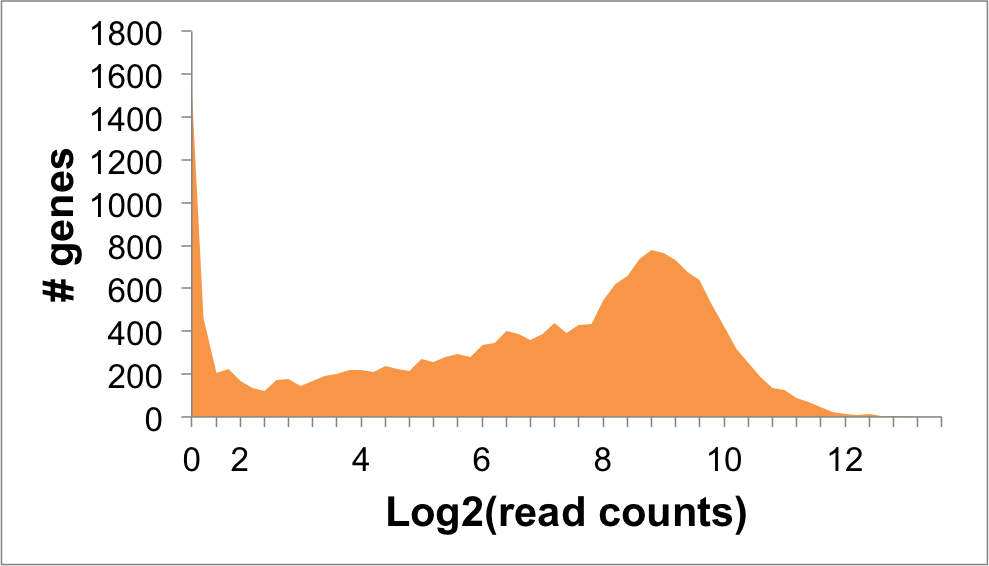
- Expression level (log2 read counts): 8.24
Expression Distribution
PIK3R1 Expression in NALM6 Cells: 8.24