TAF9
Gene Information
- Official Symbol: TAF9
- Official Name: TATA-box binding protein associated factor 9
- Aliases and Previous Symbols: N/A
- Entrez ID: 6880
- UniProt: Q16594
- Interactions: BioGRID
- PubMed articles: Open PubMed
- OMIM: Open OMIM
Function Summary
- Entrez Summary: N/A
- UniProt Summary: Essential for cell viability. TAF9 and TAF9B are involved in transcriptional activation as well as repression of distinct but overlapping sets of genes. May have a role in gene regulation associated with apoptosis. TAFs are components of the transcription factor IID (TFIID) complex, the TBP-free TAFII complex (TFTC), the PCAF histone acetylase complex and the STAGA transcription coactivator-HAT complex. TFIID or TFTC are essential for the regulation of RNA polymerase II-mediated transcription. {ECO:0000269|PubMed:15899866}.
Pfam Domains GO Terms
Pfam Domains
| TFIID-31kDa |
GO Terms
| PCAF complex |
| pre-snoRNP complex |
| box C/D snoRNP assembly |
| small nucleolar ribonucleoprotein complex assembly |
| STAGA complex |
| transcription factor TFTC complex |
| C2H2 zinc finger domain binding |
| negative regulation of intrinsic apoptotic signaling pathway in response to DNA damage by p53 class mediator |
| SAGA complex |
| regulation of intrinsic apoptotic signaling pathway in response to DNA damage by p53 class mediator |
| negative regulation of intrinsic apoptotic signaling pathway by p53 class mediator |
| regulation of intrinsic apoptotic signaling pathway by p53 class mediator |
| MLL1 complex |
| negative regulation of intrinsic apoptotic signaling pathway in response to DNA damage |
| negative regulation of signal transduction by p53 class mediator |
| activating transcription factor binding |
| negative regulation of proteasomal ubiquitin-dependent protein catabolic process |
| transcription factor TFIID complex |
| regulation of intrinsic apoptotic signaling pathway in response to DNA damage |
| histone H3 acetylation |
| negative regulation of ubiquitin-dependent protein catabolic process |
| histone acetyltransferase activity |
| positive regulation of response to cytokine stimulus |
| negative regulation of proteasomal protein catabolic process |
| p53 binding |
| snRNA transcription by RNA polymerase II |
| snRNA transcription |
| negative regulation of proteolysis involved in cellular protein catabolic process |
| ATPase binding |
| negative regulation of response to DNA damage stimulus |
| negative regulation of cellular protein catabolic process |
| ncRNA transcription |
| negative regulation of intrinsic apoptotic signaling pathway |
| histone acetylation |
| internal peptidyl-lysine acetylation |
| peptidyl-lysine acetylation |
| internal protein amino acid acetylation |
| regulation of proteasomal ubiquitin-dependent protein catabolic process |
| negative regulation of protein catabolic process |
| protein acetylation |
| regulation of ubiquitin-dependent protein catabolic process |
| regulation of intrinsic apoptotic signaling pathway |
| positive regulation of cell growth |
| regulation of response to cytokine stimulus |
| transcription initiation from RNA polymerase II promoter |
| protein stabilization |
| regulation of signal transduction by p53 class mediator |
| regulation of proteasomal protein catabolic process |
| protein acylation |
| response to interleukin-1 |
| regulation of proteolysis involved in cellular protein catabolic process |
| DNA-templated transcription, initiation |
| transcription regulatory region DNA binding |
| regulation of response to DNA damage stimulus |
| negative regulation of apoptotic signaling pathway |
| ribonucleoprotein complex assembly |
| ribonucleoprotein complex subunit organization |
| regulation of cellular protein catabolic process |
| negative regulation of cellular catabolic process |
| positive regulation of growth |
| transcription coactivator activity |
| regulation of protein stability |
| negative regulation of catabolic process |
| peptidyl-lysine modification |
| transcription factor binding |
| negative regulation of proteolysis |
| histone modification |
| covalent chromatin modification |
| regulation of protein catabolic process |
| regulation of apoptotic signaling pathway |
| regulation of cell growth |
| ribonucleoprotein complex biogenesis |
| transcription by RNA polymerase II |
| protein heterodimerization activity |
| negative regulation of intracellular signal transduction |
| transcription, DNA-templated |
| nucleic acid-templated transcription |
| RNA biosynthetic process |
| regulation of growth |
| chromatin organization |
| regulation of proteolysis |
| regulation of cellular response to stress |
| cellular response to DNA damage stimulus |
| regulation of cellular catabolic process |
| cellular protein-containing complex assembly |
| peptidyl-amino acid modification |
| negative regulation of apoptotic process |
| negative regulation of programmed cell death |
| negative regulation of cell death |
| regulation of catabolic process |
| negative regulation of cellular protein metabolic process |
| chromosome organization |
| nucleobase-containing compound biosynthetic process |
| response to cytokine |
| negative regulation of protein metabolic process |
| heterocycle biosynthetic process |
| aromatic compound biosynthetic process |
| positive regulation of transcription by RNA polymerase II |
| negative regulation of signal transduction |
| organic cyclic compound biosynthetic process |
| negative regulation of cell communication |
| negative regulation of signaling |
| DNA binding |
| regulation of response to stress |
| positive regulation of transcription, DNA-templated |
| regulation of apoptotic process |
| protein-containing complex assembly |
| regulation of programmed cell death |
| negative regulation of response to stimulus |
| cellular nitrogen compound biosynthetic process |
| positive regulation of nucleic acid-templated transcription |
| positive regulation of RNA biosynthetic process |
| RNA metabolic process |
| regulation of cell death |
| cellular response to stress |
| cellular macromolecule biosynthetic process |
| positive regulation of RNA metabolic process |
| macromolecule biosynthetic process |
| regulation of intracellular signal transduction |
| protein-containing complex subunit organization |
| positive regulation of nucleobase-containing compound metabolic process |
| positive regulation of macromolecule biosynthetic process |
| positive regulation of cellular biosynthetic process |
| positive regulation of gene expression |
| gene expression |
| positive regulation of biosynthetic process |
CRISPR Data
Compound Hit Most Correlated Genes in Chemogenomics Tissues where Essential in the Avana Dataset (DepMap 20Q1)
Compound Hit
| Screen | Score |
|---|---|
| THZ1 0.06μM R08 exp531 | -2.24 |
| Latrunculin-B 10μM R07 exp374 | -1.81 |
| UNC2400 2μM R03 exp156 | 1.75 |
Most Correlated Genes in Chemogenomics
No correlation found to any other genes in chemogenomics.
Tissues where Essential in the Avana Dataset (DepMap 20Q1)
Global Fraction of Cell Lines Where Essential: 0/726
| Tissue | Fraction Of Cell Lines Where Essential |
|---|---|
| 1290807.0 | 0/1 |
| 909776.0 | 0/1 |
| bile duct | 0/28 |
| blood | 0/28 |
| bone | 0/25 |
| breast | 0/33 |
| central nervous system | 0/56 |
| cervix | 0/4 |
| colorectal | 0/17 |
| esophagus | 0/13 |
| fibroblast | 0/1 |
| gastric | 0/15 |
| kidney | 0/21 |
| liver | 0/20 |
| lung | 0/75 |
| lymphocyte | 0/14 |
| ovary | 0/26 |
| pancreas | 0/24 |
| peripheral nervous system | 0/16 |
| plasma cell | 0/15 |
| prostate | 0/1 |
| skin | 0/24 |
| soft tissue | 0/7 |
| thyroid | 0/2 |
| upper aerodigestive | 0/22 |
| urinary tract | 0/29 |
| uterus | 0/5 |
Essentiality in NALM6
- Essentiality Rank: 5874
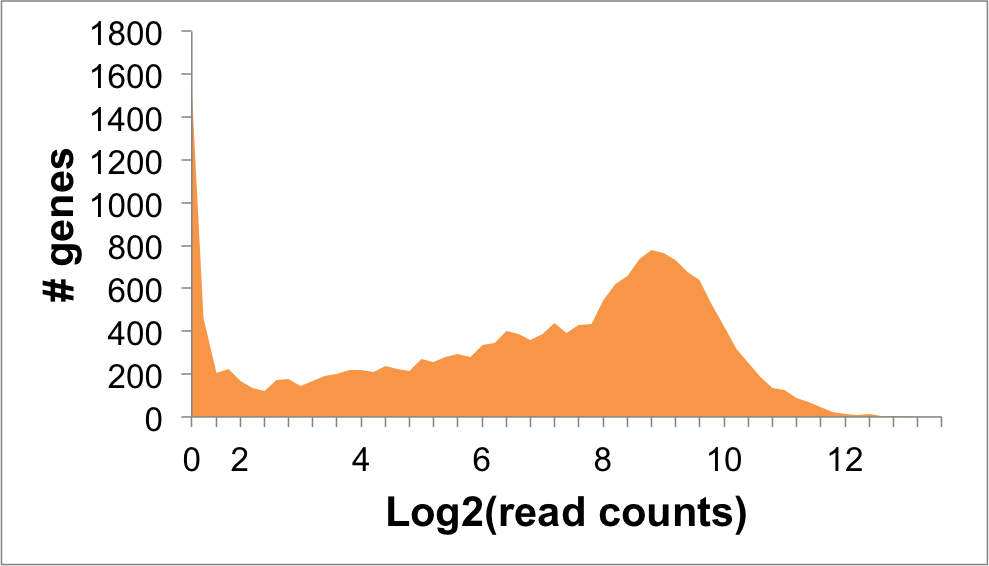
- Expression level (log2 read counts): 5.48
Expression Distribution
TAF9 Expression in NALM6 Cells: 5.48