MT3
Gene Information
- Official Symbol: MT3
- Official Name: metallothionein 3
- Aliases and Previous Symbols: N/A
- Entrez ID: 4504
- UniProt: P25713
- Interactions: BioGRID
- PubMed articles: Open PubMed
- OMIM: Open OMIM
Function Summary
- Entrez Summary: N/A
- UniProt Summary: Binds heavy metals. Contains three zinc and three copper atoms per polypeptide chain and only a negligible amount of cadmium. Inhibits survival and neurite formation of cortical neurons in vitro.
Pfam Domains GO Terms
Pfam Domains
| Metallothio |
GO Terms
| positive regulation of lysosomal membrane permeability |
| regulation of lysosomal membrane permeability |
| negative regulation of hydrogen peroxide catabolic process |
| positive regulation of oxygen metabolic process |
| astrocyte end-foot |
| cadmium ion homeostasis |
| lysosomal membrane organization |
| regulation of oxygen metabolic process |
| regulation of hydrogen peroxide catabolic process |
| cadmium ion binding |
| positive regulation of transcription from RNA polymerase II promoter in response to oxidative stress |
| negative regulation of cofactor metabolic process |
| positive regulation of necrotic cell death |
| negative regulation of hydrogen peroxide metabolic process |
| leptin-mediated signaling pathway |
| regulation of transcription from RNA polymerase II promoter in response to oxidative stress |
| removal of superoxide radicals |
| sterol catabolic process |
| cholesterol catabolic process |
| regulation of protein glycosylation |
| positive regulation of vascular endothelial growth factor receptor signaling pathway |
| cellular response to superoxide |
| cellular response to oxygen radical |
| cellular response to nitric oxide |
| detoxification of copper ion |
| negative regulation of necrotic cell death |
| stress response to copper ion |
| response to superoxide |
| detoxification of inorganic compound |
| cellular response to leptin stimulus |
| stress response to metal ion |
| antioxidant activity |
| response to oxygen radical |
| inclusion body |
| cellular response to reactive nitrogen species |
| regulation of response to food |
| response to nitric oxide |
| regulation of hydrogen peroxide metabolic process |
| positive regulation of transcription from RNA polymerase II promoter involved in cellular response to chemical stimulus |
| response to leptin |
| positive regulation of membrane permeability |
| cellular response to zinc ion |
| negative regulation of oxidoreductase activity |
| regulation of response to extracellular stimulus |
| regulation of response to nutrient levels |
| cysteine-type endopeptidase inhibitor activity involved in apoptotic process |
| protein kinase activator activity |
| zinc ion transport |
| steroid catabolic process |
| ERK1 and ERK2 cascade |
| regulation of necrotic cell death |
| cellular response to copper ion |
| positive regulation of transcription from RNA polymerase II promoter in response to stress |
| regulation of vascular endothelial growth factor receptor signaling pathway |
| activation of protein kinase B activity |
| cellular zinc ion homeostasis |
| astrocyte development |
| regulation of cofactor metabolic process |
| zinc ion homeostasis |
| cellular response to cadmium ion |
| protein kinase B signaling |
| superoxide metabolic process |
| regulation of glycoprotein biosynthetic process |
| negative regulation of axon extension |
| ribosome |
| regulation of glycoprotein metabolic process |
| response to copper ion |
| response to bronchodilator |
| astrocyte differentiation |
| response to zinc ion |
| negative regulation of reactive oxygen species metabolic process |
| alcohol catabolic process |
| copper ion binding |
| drug binding |
| lytic vacuole organization |
| lysosome organization |
| rough endoplasmic reticulum |
| energy reserve metabolic process |
| response to cadmium ion |
| negative regulation of axonogenesis |
| organic hydroxy compound catabolic process |
| regulation of membrane permeability |
| negative regulation of cysteine-type endopeptidase activity involved in apoptotic process |
| negative regulation of autophagy |
| cellular oxidant detoxification |
| negative regulation of cysteine-type endopeptidase activity |
| regulation of oxidoreductase activity |
| regulation of axon extension |
| negative regulation of cell morphogenesis involved in differentiation |
| cellular detoxification |
| negative regulation of developmental growth |
| glial cell development |
| cellular transition metal ion homeostasis |
| regulation of extent of cell growth |
| reactive oxygen species metabolic process |
| cholesterol metabolic process |
| synaptic vesicle |
| regulation of transcription from RNA polymerase II promoter in response to stress |
| transition metal ion transport |
| regulation of DNA-templated transcription in response to stress |
| detoxification |
| secondary alcohol metabolic process |
| vacuole organization |
| cellular response to reactive oxygen species |
| transition metal ion homeostasis |
| sterol metabolic process |
| negative regulation of neuron apoptotic process |
| dendritic spine |
| negative regulation of neuron projection development |
| mitochondrial outer membrane |
| glial cell differentiation |
| protein stabilization |
| regulation of reactive oxygen species metabolic process |
| negative regulation of cell projection organization |
| regulation of cell size |
| negative regulation of cell growth |
| regulation of axonogenesis |
| cellular response to hypoxia |
| cellular response to metal ion |
| response to reactive oxygen species |
| cellular lipid catabolic process |
| cellular response to decreased oxygen levels |
| regulation of neuron apoptotic process |
| negative regulation of neuron death |
| positive regulation of ERK1 and ERK2 cascade |
| cellular response to toxic substance |
| gliogenesis |
| cellular response to oxygen levels |
| regulation of cysteine-type endopeptidase activity involved in apoptotic process |
| cellular response to inorganic substance |
| negative regulation of neuron differentiation |
| energy derivation by oxidation of organic compounds |
| cellular response to oxidative stress |
| regulation of cysteine-type endopeptidase activity |
| negative regulation of growth |
| negative regulation of endopeptidase activity |
| postsynaptic density |
| negative regulation of cellular catabolic process |
| negative regulation of peptidase activity |
| steroid metabolic process |
| regulation of cellular response to growth factor stimulus |
| regulation of protein stability |
| negative regulation of neurogenesis |
| regulation of ERK1 and ERK2 cascade |
| axon |
| divalent metal ion transport |
| lipid catabolic process |
| divalent inorganic cation transport |
| regulation of cell morphogenesis involved in differentiation |
| negative regulation of catabolic process |
| regulation of neuron death |
| negative regulation of nervous system development |
| microtubule |
| alcohol metabolic process |
| activation of protein kinase activity |
| regulation of developmental growth |
| regulation of autophagy |
| negative regulation of cell development |
| response to hypoxia |
| negative regulation of proteolysis |
| response to decreased oxygen levels |
| histone modification |
| response to metal ion |
| MAPK cascade |
| covalent chromatin modification |
| regulation of cellular component size |
| response to oxygen levels |
| response to oxidative stress |
| signal transduction by protein phosphorylation |
| cellular response to drug |
| regulation of endopeptidase activity |
| regulation of cell growth |
| generation of precursor metabolites and energy |
| small molecule catabolic process |
| regulation of peptidase activity |
| negative regulation of hydrolase activity |
| organic hydroxy compound metabolic process |
| cellular divalent inorganic cation homeostasis |
| organic cyclic compound catabolic process |
| divalent inorganic cation homeostasis |
| regulation of cell morphogenesis |
| regulation of neuron projection development |
| response to toxic substance |
| regulation of anatomical structure size |
| positive regulation of protein kinase activity |
| response to inorganic substance |
| positive regulation of MAPK cascade |
| cellular metal ion homeostasis |
| positive regulation of kinase activity |
| cellular response to hormone stimulus |
| metal ion homeostasis |
| cellular cation homeostasis |
| metal ion transport |
| cellular ion homeostasis |
| positive regulation of transferase activity |
| regulation of neuron differentiation |
| cellular response to nitrogen compound |
| regulation of growth |
| cytokine-mediated signaling pathway |
| regulation of plasma membrane bounded cell projection organization |
| perinuclear region of cytoplasm |
| positive regulation of cell death |
| chromatin organization |
| negative regulation of cellular component organization |
| cation homeostasis |
| regulation of cell projection organization |
| negative regulation of cell differentiation |
| inorganic ion homeostasis |
| regulation of proteolysis |
| brain development |
| cellular chemical homeostasis |
| regulation of MAPK cascade |
| head development |
| ion homeostasis |
| negative regulation of catalytic activity |
| regulation of protein kinase activity |
| regulation of neurogenesis |
| cation transport |
| regulation of cellular catabolic process |
| zinc ion binding |
| membrane organization |
| regulation of kinase activity |
| negative regulation of apoptotic process |
| cellular homeostasis |
| negative regulation of programmed cell death |
| response to hormone |
| apoptotic process |
| regulation of nervous system development |
| regulation of cell development |
| negative regulation of developmental process |
| cellular lipid metabolic process |
| oxidation-reduction process |
| protein phosphorylation |
| regulation of transferase activity |
| central nervous system development |
| regulation of catabolic process |
| negative regulation of cell death |
| cellular response to cytokine stimulus |
| positive regulation of protein phosphorylation |
| positive regulation of intracellular signal transduction |
| response to drug |
| negative regulation of cellular protein metabolic process |
| programmed cell death |
| cellular response to oxygen-containing compound |
| positive regulation of phosphorylation |
| regulation of anatomical structure morphogenesis |
| chromosome organization |
| response to nitrogen compound |
| cell death |
| regulation of response to external stimulus |
| response to cytokine |
| negative regulation of protein metabolic process |
| chemical homeostasis |
| positive regulation of phosphorus metabolic process |
| positive regulation of phosphate metabolic process |
| negative regulation of molecular function |
| response to abiotic stimulus |
| negative regulation of transcription, DNA-templated |
| negative regulation of multicellular organismal process |
| lipid metabolic process |
| positive regulation of transcription by RNA polymerase II |
| cellular response to endogenous stimulus |
| positive regulation of protein modification process |
| negative regulation of nucleic acid-templated transcription |
| negative regulation of RNA biosynthetic process |
| regulation of hydrolase activity |
| phosphorylation |
| negative regulation of RNA metabolic process |
| ion transport |
| negative regulation of cellular macromolecule biosynthetic process |
| positive regulation of catalytic activity |
| negative regulation of nucleobase-containing compound metabolic process |
| regulation of protein phosphorylation |
| negative regulation of macromolecule biosynthetic process |
| response to endogenous stimulus |
| negative regulation of cellular biosynthetic process |
| generation of neurons |
| positive regulation of transcription, DNA-templated |
| regulation of apoptotic process |
| negative regulation of biosynthetic process |
| response to oxygen-containing compound |
| regulation of programmed cell death |
| regulation of phosphorylation |
| extracellular space |
| positive regulation of cellular protein metabolic process |
| neurogenesis |
| positive regulation of nucleic acid-templated transcription |
| positive regulation of RNA biosynthetic process |
| homeostatic process |
| cell development |
| positive regulation of signal transduction |
| regulation of cell death |
| intracellular signal transduction |
| cellular response to stress |
| positive regulation of protein metabolic process |
| negative regulation of gene expression |
| positive regulation of RNA metabolic process |
| small molecule metabolic process |
| organic substance catabolic process |
| positive regulation of molecular function |
| regulation of phosphate metabolic process |
| regulation of phosphorus metabolic process |
| cellular catabolic process |
| regulation of cell differentiation |
| positive regulation of cell communication |
| positive regulation of signaling |
| regulation of intracellular signal transduction |
| regulation of protein modification process |
| positive regulation of nucleobase-containing compound metabolic process |
| positive regulation of macromolecule biosynthetic process |
| positive regulation of cellular biosynthetic process |
| positive regulation of gene expression |
| positive regulation of biosynthetic process |
CRISPR Data
Compound Hit Most Correlated Genes in Chemogenomics Tissues where Essential in the Avana Dataset (DepMap 20Q1)
Compound Hit
| Screen | Score |
|---|---|
| Vinorelbine 0.001μM R05 exp249 | -2.94 |
| Geldanamycin 0.01μM R05 exp235 | -2.2 |
| Cycloheximide 0.02μM R00 exp14 | -2.15 |
| Nicotinamide Riboside 100μM R03 exp139 | -1.98 |
| AICAR 240μM R03 exp116 | -1.95 |
| MS094 2μM R03 exp136 | -1.87 |
Most Correlated Genes in Chemogenomics
| Gene | Correlation |
|---|---|
| RUVBL2 | 0.412 |
Tissues where Essential in the Avana Dataset (DepMap 20Q1)
Global Fraction of Cell Lines Where Essential: 0/726
| Tissue | Fraction Of Cell Lines Where Essential |
|---|---|
| 1290807.0 | 0/1 |
| 909776.0 | 0/1 |
| bile duct | 0/28 |
| blood | 0/28 |
| bone | 0/25 |
| breast | 0/33 |
| central nervous system | 0/56 |
| cervix | 0/4 |
| colorectal | 0/17 |
| esophagus | 0/13 |
| fibroblast | 0/1 |
| gastric | 0/15 |
| kidney | 0/21 |
| liver | 0/20 |
| lung | 0/75 |
| lymphocyte | 0/14 |
| ovary | 0/26 |
| pancreas | 0/24 |
| peripheral nervous system | 0/16 |
| plasma cell | 0/15 |
| prostate | 0/1 |
| skin | 0/24 |
| soft tissue | 0/7 |
| thyroid | 0/2 |
| upper aerodigestive | 0/22 |
| urinary tract | 0/29 |
| uterus | 0/5 |
Essentiality in NALM6
- Essentiality Rank: 15216
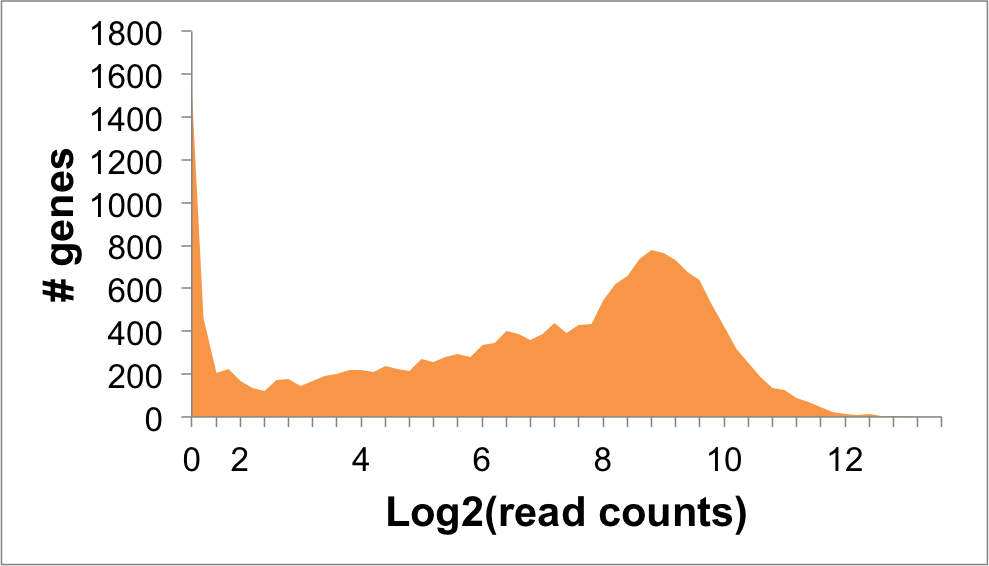
- Expression level (log2 read counts): -4.01
Expression Distribution
MT3 Expression in NALM6 Cells: -4.01