SEMA4C
Gene Information
- Official Symbol: SEMA4C
- Official Name: semaphorin 4C
- Aliases and Previous Symbols: N/A
- Entrez ID: 54910
- UniProt: Q9C0C4
- Interactions: BioGRID
- PubMed articles: Open PubMed
- OMIM: Open OMIM
Function Summary
- Entrez Summary: N/A
- UniProt Summary: Cell surface receptor for PLXNB2 that plays an important role in cell-cell signaling. PLXNB2 binding promotes downstream activation of RHOA and phosphorylation of ERBB2 at 'Tyr-1248'. Required for normal brain development, axon guidance and cell migration (By similarity). Probable signaling receptor which may play a role in myogenic differentiation through activation of the stress-activated MAPK cascade. {ECO:0000250, ECO:0000269|PubMed:17498836}.
Pfam Domains GO Terms
Pfam Domains
| Sema |
| PSI |
GO Terms
| cell migration in hindbrain |
| neuropilin binding |
| semaphorin receptor binding |
| negative regulation of axon extension involved in axon guidance |
| chemorepellent activity |
| negative regulation of axon guidance |
| regulation of axon extension involved in axon guidance |
| semaphorin-plexin signaling pathway |
| negative regulation of axon extension |
| regulation of axon guidance |
| negative chemotaxis |
| neural crest cell migration |
| negative regulation of chemotaxis |
| synaptic vesicle membrane |
| negative regulation of axonogenesis |
| neural crest cell development |
| mesenchymal cell development |
| stem cell development |
| neural crest cell differentiation |
| neural tube closure |
| tube closure |
| regulation of axon extension |
| negative regulation of cell morphogenesis involved in differentiation |
| primary neural tube formation |
| cerebellum development |
| negative regulation of developmental growth |
| neural tube formation |
| regulation of extent of cell growth |
| metencephalon development |
| embryonic epithelial tube formation |
| epithelial tube formation |
| morphogenesis of embryonic epithelium |
| tube formation |
| hindbrain development |
| negative regulation of neuron projection development |
| mesenchymal cell differentiation |
| stem cell differentiation |
| neural tube development |
| positive regulation of stress-activated MAPK cascade |
| positive regulation of stress-activated protein kinase signaling cascade |
| ameboidal-type cell migration |
| regulation of cell size |
| negative regulation of cell projection organization |
| negative regulation of cell growth |
| regulation of axonogenesis |
| postsynaptic membrane |
| regulation of chemotaxis |
| mesenchyme development |
| negative regulation of neuron differentiation |
| regulation of stress-activated MAPK cascade |
| regulation of stress-activated protein kinase signaling cascade |
| negative regulation of growth |
| muscle cell differentiation |
| postsynaptic density |
| negative regulation of neurogenesis |
| regulation of cell morphogenesis involved in differentiation |
| epithelial tube morphogenesis |
| negative regulation of cellular component movement |
| negative regulation of nervous system development |
| negative regulation of locomotion |
| regulation of developmental growth |
| negative regulation of cell development |
| negative regulation of response to external stimulus |
| regulation of cellular component size |
| regulation of cell growth |
| morphogenesis of an epithelium |
| muscle structure development |
| regulation of cell morphogenesis |
| regulation of neuron projection development |
| positive regulation of cell migration |
| regulation of anatomical structure size |
| positive regulation of cell motility |
| positive regulation of cellular component movement |
| positive regulation of MAPK cascade |
| cell junction |
| chemotaxis |
| positive regulation of locomotion |
| taxis |
| tissue morphogenesis |
| embryonic morphogenesis |
| chordate embryonic development |
| embryo development ending in birth or egg hatching |
| tube morphogenesis |
| regulation of neuron differentiation |
| regulation of growth |
| regulation of plasma membrane bounded cell projection organization |
| negative regulation of cellular component organization |
| regulation of cell projection organization |
| negative regulation of cell differentiation |
| regulation of cellular response to stress |
| brain development |
| regulation of MAPK cascade |
| head development |
| regulation of neurogenesis |
| tube development |
| regulation of cell migration |
| anatomical structure formation involved in morphogenesis |
| regulation of cell motility |
| regulation of nervous system development |
| regulation of cell development |
| negative regulation of developmental process |
| cell migration |
| embryo development |
| central nervous system development |
| regulation of locomotion |
| regulation of cellular component movement |
| positive regulation of protein phosphorylation |
| positive regulation of intracellular signal transduction |
| positive regulation of phosphorylation |
| regulation of anatomical structure morphogenesis |
| cell motility |
| localization of cell |
| regulation of response to external stimulus |
| epithelium development |
| positive regulation of phosphate metabolic process |
| positive regulation of phosphorus metabolic process |
| negative regulation of multicellular organismal process |
| positive regulation of protein modification process |
| locomotion |
| integral component of plasma membrane |
| regulation of protein phosphorylation |
| regulation of response to stress |
| generation of neurons |
| movement of cell or subcellular component |
| regulation of phosphorylation |
| extracellular space |
| positive regulation of cellular protein metabolic process |
| negative regulation of response to stimulus |
| neurogenesis |
| cell development |
| positive regulation of signal transduction |
| positive regulation of protein metabolic process |
| tissue development |
| regulation of phosphate metabolic process |
| regulation of phosphorus metabolic process |
| regulation of cell differentiation |
| positive regulation of cell communication |
| positive regulation of signaling |
| regulation of intracellular signal transduction |
| regulation of protein modification process |
CRISPR Data
Compound Hit Most Correlated Genes in Chemogenomics Tissues where Essential in the Avana Dataset (DepMap 20Q1)
Compound Hit
| Screen | Score |
|---|---|
| Curcumin 6.5μM R06 exp277 | 1.71 |
| A-769662 20μM R07 exp331 | 1.91 |
| IL-3 9ng/ml R08 exp493 | 1.93 |
Most Correlated Genes in Chemogenomics
No correlation found to any other genes in chemogenomics.
Tissues where Essential in the Avana Dataset (DepMap 20Q1)
Global Fraction of Cell Lines Where Essential: 0/739
| Tissue | Fraction Of Cell Lines Where Essential |
|---|---|
| 1290807.0 | 0/1 |
| 909776.0 | 0/1 |
| bile duct | 0/28 |
| blood | 0/28 |
| bone | 0/26 |
| breast | 0/33 |
| central nervous system | 0/56 |
| cervix | 0/4 |
| colorectal | 0/17 |
| esophagus | 0/13 |
| fibroblast | 0/1 |
| gastric | 0/16 |
| kidney | 0/21 |
| liver | 0/20 |
| lung | 0/75 |
| lymphocyte | 0/16 |
| ovary | 0/26 |
| pancreas | 0/24 |
| peripheral nervous system | 0/16 |
| plasma cell | 0/15 |
| prostate | 0/1 |
| skin | 0/24 |
| soft tissue | 0/9 |
| thyroid | 0/2 |
| upper aerodigestive | 0/22 |
| urinary tract | 0/29 |
| uterus | 0/5 |
Essentiality in NALM6
- Essentiality Rank: 4499
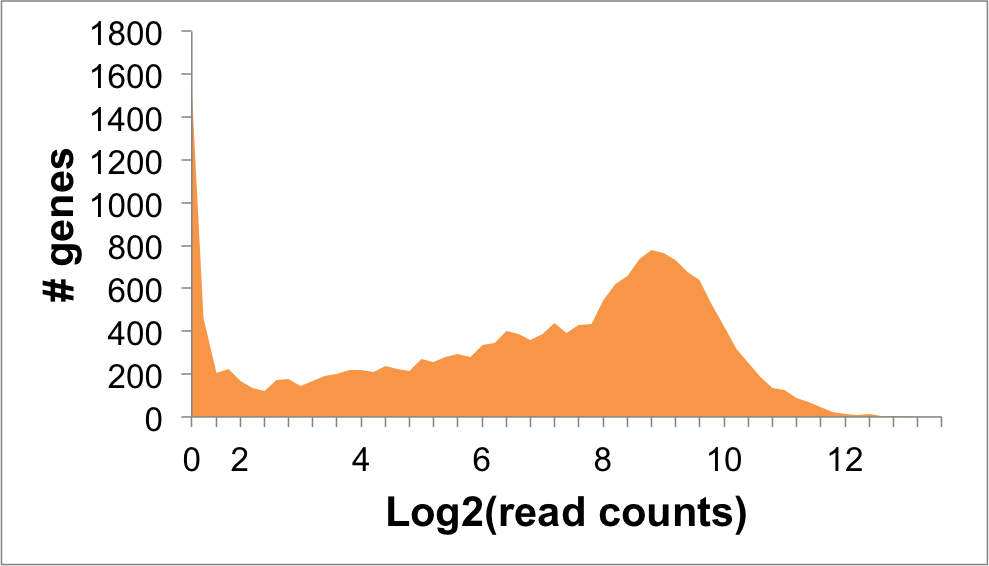
- Expression level (log2 read counts): 2.97
Expression Distribution
SEMA4C Expression in NALM6 Cells: 2.97