CAV3
Gene Information
- Official Symbol: CAV3
- Official Name: caveolin 3
- Aliases and Previous Symbols: N/A
- Entrez ID: 859
- UniProt: P56539
- Interactions: BioGRID
- PubMed articles: Open PubMed
- OMIM: Open OMIM
Function Summary
- Entrez Summary: This gene encodes a caveolin family member, which functions as a component of the caveolae plasma membranes found in most cell types. Caveolin proteins are proposed to be scaffolding proteins for organizing and concentrating certain caveolin-interacting molecules. Mutations identified in this gene lead to interference with protein oligomerization or intra-cellular routing, disrupting caveolae formation and resulting in Limb-Girdle muscular dystrophy type-1C (LGMD-1C), hyperCKemia or rippling muscle disease (RMD). Alternative splicing has been identified for this locus, with inclusion or exclusion of a differentially spliced intron. In addition, transcripts utilize multiple polyA sites and contain two potential translation initiation sites. [provided by RefSeq, Jul 2008].
- UniProt Summary: May act as a scaffolding protein within caveolar membranes. Interacts directly with G-protein alpha subunits and can functionally regulate their activity. May also regulate voltage-gated potassium channels. Plays a role in the sarcolemma repair mechanism of both skeletal muscle and cardiomyocytes that permits rapid resealing of membranes disrupted by mechanical stress (By similarity). Mediates the recruitment of CAVIN2 and CAVIN3 proteins to the caveolae (PubMed:19262564). {ECO:0000250|UniProtKB:P51637, ECO:0000269|PubMed:19262564}.
Pfam Domains GO Terms
Pfam Domains
| Caveolin |
GO Terms
| regulation of nerve growth factor receptor activity |
| negative regulation of membrane depolarization during cardiac muscle cell action potential |
| regulation of signal transduction by receptor internalization |
| negative regulation of sarcomere organization |
| positive regulation of caveolin-mediated endocytosis |
| detection of muscle stretch |
| caveola assembly |
| regulation of branching involved in mammary gland duct morphogenesis |
| regulation of membrane depolarization during cardiac muscle cell action potential |
| connexin binding |
| plasma membrane raft assembly |
| regulation of membrane depolarization during action potential |
| regulation of caveolin-mediated endocytosis |
| regulation of ventricular cardiac muscle cell membrane depolarization |
| regulation of sarcomere organization |
| negative regulation of membrane depolarization |
| negative regulation of nitric-oxide synthase activity |
| regulation of cardiac muscle cell action potential involved in regulation of contraction |
| potassium channel inhibitor activity |
| negative regulation of action potential |
| T-tubule organization |
| plasma membrane raft organization |
| negative regulation of cell growth involved in cardiac muscle cell development |
| negative regulation of cell size |
| negative regulation of monooxygenase activity |
| membrane raft assembly |
| plasma membrane repair |
| heart trabecula formation |
| regulation of skeletal muscle contraction |
| negative regulation of protein localization to cell surface |
| nitric-oxide synthase binding |
| negative regulation of cardiac muscle cell differentiation |
| dystrophin-associated glycoprotein complex |
| response to muscle stretch |
| regulation of cell growth involved in cardiac muscle cell development |
| negative regulation of potassium ion transmembrane transporter activity |
| membrane raft organization |
| negative regulation of cardiocyte differentiation |
| muscle cell cellular homeostasis |
| trabecula formation |
| myoblast fusion |
| ventricular cardiac muscle cell action potential |
| negative regulation of heart growth |
| regulation of ventricular cardiac muscle cell membrane repolarization |
| negative regulation of cardiac muscle tissue growth |
| negative regulation of potassium ion transmembrane transport |
| negative regulation of oxidoreductase activity |
| negative regulation of cardiac muscle hypertrophy |
| nucleus localization |
| regulation of cardiac muscle cell membrane repolarization |
| negative regulation of muscle hypertrophy |
| regulation of cardiac muscle cell action potential |
| positive regulation of microtubule polymerization |
| negative regulation of organ growth |
| positive regulation of myotube differentiation |
| negative regulation of potassium ion transport |
| negative regulation of cardiac muscle tissue development |
| heart trabecula morphogenesis |
| positive regulation of microtubule polymerization or depolymerization |
| membrane assembly |
| sodium channel regulator activity |
| regulation of membrane repolarization |
| cell-cell fusion |
| syncytium formation by plasma membrane fusion |
| regulation of cardiac muscle cell differentiation |
| calcium channel regulator activity |
| negative regulation of organelle assembly |
| regulation of cardiac muscle cell contraction |
| regulation of protein localization to cell surface |
| syncytium formation |
| negative regulation of striated muscle cell differentiation |
| alpha-tubulin binding |
| cardiac muscle cell action potential involved in contraction |
| membrane biogenesis |
| regulation of calcium ion import |
| regulation of p38MAPK cascade |
| cardiac muscle cell contraction |
| regulation of actin filament-based movement |
| T-tubule |
| detection of mechanical stimulus |
| regulation of nitric-oxide synthase activity |
| regulation of membrane depolarization |
| trabecula morphogenesis |
| intercalated disc |
| negative regulation of striated muscle tissue development |
| molecular adaptor activity |
| cardiac muscle cell action potential |
| regulation of action potential |
| negative regulation of muscle organ development |
| regulation of cardiocyte differentiation |
| negative regulation of muscle tissue development |
| regulation of microtubule polymerization |
| cytoplasmic microtubule organization |
| regulation of sodium ion transmembrane transporter activity |
| regulation of monooxygenase activity |
| negative regulation of muscle cell differentiation |
| regulation of potassium ion transmembrane transporter activity |
| regulation of morphogenesis of a branching structure |
| regulation of cardiac muscle hypertrophy |
| myotube differentiation |
| regulation of myotube differentiation |
| positive regulation of striated muscle cell differentiation |
| regulation of cardiac muscle tissue growth |
| regulation of muscle hypertrophy |
| negative regulation of calcium ion transport |
| cardiac muscle cell development |
| receptor internalization |
| regulation of sodium ion transmembrane transport |
| regulation of heart growth |
| cardiac cell development |
| negative regulation of ion transmembrane transporter activity |
| triglyceride metabolic process |
| negative regulation of MAP kinase activity |
| caveola |
| regulation of cardiac muscle contraction |
| neuromuscular junction |
| cardiac muscle contraction |
| regulation of cardiac muscle tissue development |
| cholesterol homeostasis |
| negative regulation of transporter activity |
| sterol homeostasis |
| regulation of microtubule polymerization or depolymerization |
| regulation of potassium ion transmembrane transport |
| negative regulation of cation transmembrane transport |
| regulation of muscle adaptation |
| regulation of sodium ion transport |
| heart contraction |
| positive regulation of muscle cell differentiation |
| regulation of calcium ion transmembrane transporter activity |
| cardiac muscle cell differentiation |
| actin-mediated cell contraction |
| regulation of actomyosin structure organization |
| regulation of striated muscle contraction |
| plasma membrane organization |
| regulation of organ growth |
| action potential |
| regulation of oxidoreductase activity |
| negative regulation of ion transmembrane transport |
| regulation of potassium ion transport |
| regulation of heart rate |
| positive regulation of ubiquitin-dependent protein catabolic process |
| sarcolemma |
| acylglycerol metabolic process |
| neutral lipid metabolic process |
| positive regulation of endocytosis |
| heart process |
| regulation of striated muscle cell differentiation |
| receptor metabolic process |
| negative regulation of developmental growth |
| striated muscle contraction |
| actin filament-based movement |
| negative regulation of cellular protein localization |
| regulation of transforming growth factor beta receptor signaling pathway |
| regulation of cellular response to transforming growth factor beta stimulus |
| cardiocyte differentiation |
| negative regulation of transmembrane transport |
| detection of external stimulus |
| positive regulation of proteolysis involved in cellular protein catabolic process |
| detection of abiotic stimulus |
| ion channel binding |
| cardiac chamber morphogenesis |
| positive regulation of protein polymerization |
| negative regulation of supramolecular fiber organization |
| regulation of striated muscle tissue development |
| Z disc |
| negative regulation of protein serine/threonine kinase activity |
| lipid homeostasis |
| regulation of muscle tissue development |
| striated muscle cell development |
| regulation of muscle organ development |
| negative regulation of cytoskeleton organization |
| positive regulation of cellular protein catabolic process |
| vesicle |
| regulation of calcium ion transmembrane transport |
| negative regulation of ion transport |
| muscle cell development |
| regulation of muscle cell differentiation |
| regulation of ubiquitin-dependent protein catabolic process |
| regulation of muscle contraction |
| cardiac muscle tissue development |
| negative regulation of MAPK cascade |
| cardiac chamber development |
| regulation of signaling receptor activity |
| regulation of morphogenesis of an epithelium |
| regulation of cell size |
| protein localization to plasma membrane |
| negative regulation of cell growth |
| glucose homeostasis |
| carbohydrate homeostasis |
| protein C-terminus binding |
| regulation of microtubule cytoskeleton organization |
| structural molecule activity |
| positive regulation of supramolecular fiber organization |
| striated muscle cell differentiation |
| regulation of endocytosis |
| response to mechanical stimulus |
| positive regulation of protein catabolic process |
| regulation of proteolysis involved in cellular protein catabolic process |
| regulation of organelle assembly |
| regulation of protein kinase B signaling |
| positive regulation of cytoskeleton organization |
| regulation of microtubule-based process |
| regulation of protein polymerization |
| membrane raft |
| negative regulation of protein kinase activity |
| protein localization to cell periphery |
| regulation of stress-activated MAPK cascade |
| regulation of transmembrane receptor protein serine/threonine kinase signaling pathway |
| regulation of muscle system process |
| regulation of stress-activated protein kinase signaling cascade |
| receptor-mediated endocytosis |
| actin filament organization |
| negative regulation of growth |
| regulation of heart contraction |
| muscle cell differentiation |
| negative regulation of kinase activity |
| regulation of cellular protein catabolic process |
| positive regulation of protein complex assembly |
| regulation of calcium ion transport |
| muscle contraction |
| heart morphogenesis |
| regulation of animal organ morphogenesis |
| regulation of ion transmembrane transporter activity |
| regulation of transmembrane transporter activity |
| protein-containing complex binding |
| regulation of cellular response to growth factor stimulus |
| negative regulation of transferase activity |
| regulation of transporter activity |
| positive regulation of cytosolic calcium ion concentration |
| striated muscle tissue development |
| regulation of blood circulation |
| muscle organ development |
| muscle tissue development |
| muscle system process |
| regulation of cytosolic calcium ion concentration |
| regulation of developmental growth |
| negative regulation of cell development |
| regulation of cation transmembrane transport |
| anatomical structure homeostasis |
| regulation of MAP kinase activity |
| regulation of actin cytoskeleton organization |
| regulation of supramolecular fiber organization |
| positive regulation of proteolysis |
| positive regulation of cellular catabolic process |
| negative regulation of organelle organization |
| regulation of cellular component size |
| glycerolipid metabolic process |
| regulation of protein catabolic process |
| regulation of metal ion transport |
| regulation of actin filament-based process |
| blood circulation |
| circulatory system process |
| negative regulation of protein phosphorylation |
| focal adhesion |
| regulation of cell growth |
| endomembrane system organization |
| regulation of membrane potential |
| positive regulation of catabolic process |
| cellular calcium ion homeostasis |
| negative regulation of phosphorylation |
| calcium ion homeostasis |
| regulation of protein complex assembly |
| supramolecular fiber organization |
| cellular divalent inorganic cation homeostasis |
| muscle structure development |
| microtubule cytoskeleton organization |
| regulation of ion transmembrane transport |
| wound healing |
| protein localization to membrane |
| negative regulation of transport |
| divalent inorganic cation homeostasis |
| actin cytoskeleton organization |
| negative regulation of intracellular signal transduction |
| regulation of anatomical structure size |
| regulation of protein serine/threonine kinase activity |
| positive regulation of cellular component biogenesis |
| heart development |
| regulation of cellular protein localization |
| regulation of cytoskeleton organization |
| regulation of vesicle-mediated transport |
| endocytosis |
| cellular metal ion homeostasis |
| negative regulation of phosphate metabolic process |
| negative regulation of phosphorus metabolic process |
| regulation of transmembrane transport |
| actin filament-based process |
| response to wounding |
| organelle localization |
| regulation of system process |
| negative regulation of protein modification process |
| protein-containing complex |
| cellular response to organonitrogen compound |
| cell surface |
| Golgi membrane |
| positive regulation of organelle organization |
| metal ion homeostasis |
| cellular cation homeostasis |
| cellular ion homeostasis |
| cellular response to nitrogen compound |
| regulation of growth |
| microtubule-based process |
| import into cell |
| intracellular membrane-bounded organelle |
| detection of stimulus |
| regulation of ion transport |
| negative regulation of cellular component organization |
| cation homeostasis |
| negative regulation of cell differentiation |
| inorganic ion homeostasis |
| regulation of proteolysis |
| regulation of cellular response to stress |
| cellular chemical homeostasis |
| regulation of MAPK cascade |
| ion homeostasis |
| negative regulation of catalytic activity |
| regulation of protein kinase activity |
| regulation of cellular catabolic process |
| membrane organization |
| circulatory system development |
| regulation of kinase activity |
| anatomical structure formation involved in morphogenesis |
| cellular homeostasis |
| regulation of cellular localization |
| positive regulation of cell population proliferation |
| regulation of cell development |
| negative regulation of developmental process |
| animal organ morphogenesis |
| cellular lipid metabolic process |
| regulation of cellular component biogenesis |
| positive regulation of cell differentiation |
| regulation of transferase activity |
| positive regulation of transport |
| regulation of cellular component movement |
| regulation of catabolic process |
| response to organonitrogen compound |
| endoplasmic reticulum |
| regulation of protein localization |
| negative regulation of cellular protein metabolic process |
| regulation of anatomical structure morphogenesis |
| response to nitrogen compound |
| negative regulation of protein metabolic process |
| cytoskeleton organization |
| chemical homeostasis |
| negative regulation of molecular function |
| response to abiotic stimulus |
| negative regulation of multicellular organismal process |
| positive regulation of cellular component organization |
| lipid metabolic process |
| cellular response to endogenous stimulus |
| negative regulation of signal transduction |
| regulation of organelle organization |
| negative regulation of cell communication |
| negative regulation of signaling |
| positive regulation of developmental process |
| integral component of plasma membrane |
| regulation of protein phosphorylation |
| response to endogenous stimulus |
| regulation of response to stress |
| movement of cell or subcellular component |
| cellular protein localization |
| regulation of phosphorylation |
| cellular macromolecule localization |
| positive regulation of cellular protein metabolic process |
| regulation of cell population proliferation |
| negative regulation of response to stimulus |
| homeostatic process |
| cell development |
| positive regulation of protein metabolic process |
| tissue development |
| regulation of phosphate metabolic process |
| regulation of phosphorus metabolic process |
| regulation of cell differentiation |
| regulation of intracellular signal transduction |
| regulation of protein modification process |
| regulation of transport |
| vesicle-mediated transport |
| system process |
CRISPR Data
Compound Hit Most Correlated Genes in Chemogenomics Tissues where Essential in the Avana Dataset (DepMap 20Q1)
Compound Hit
Most Correlated Genes in Chemogenomics
No correlation found to any other genes in chemogenomics.
Tissues where Essential in the Avana Dataset (DepMap 20Q1)
Global Fraction of Cell Lines Where Essential: 0/739
| Tissue | Fraction Of Cell Lines Where Essential |
|---|---|
| 1290807.0 | 0/1 |
| 909776.0 | 0/1 |
| bile duct | 0/28 |
| blood | 0/28 |
| bone | 0/26 |
| breast | 0/33 |
| central nervous system | 0/56 |
| cervix | 0/4 |
| colorectal | 0/17 |
| esophagus | 0/13 |
| fibroblast | 0/1 |
| gastric | 0/16 |
| kidney | 0/21 |
| liver | 0/20 |
| lung | 0/75 |
| lymphocyte | 0/16 |
| ovary | 0/26 |
| pancreas | 0/24 |
| peripheral nervous system | 0/16 |
| plasma cell | 0/15 |
| prostate | 0/1 |
| skin | 0/24 |
| soft tissue | 0/9 |
| thyroid | 0/2 |
| upper aerodigestive | 0/22 |
| urinary tract | 0/29 |
| uterus | 0/5 |
Essentiality in NALM6
- Essentiality Rank: 15340
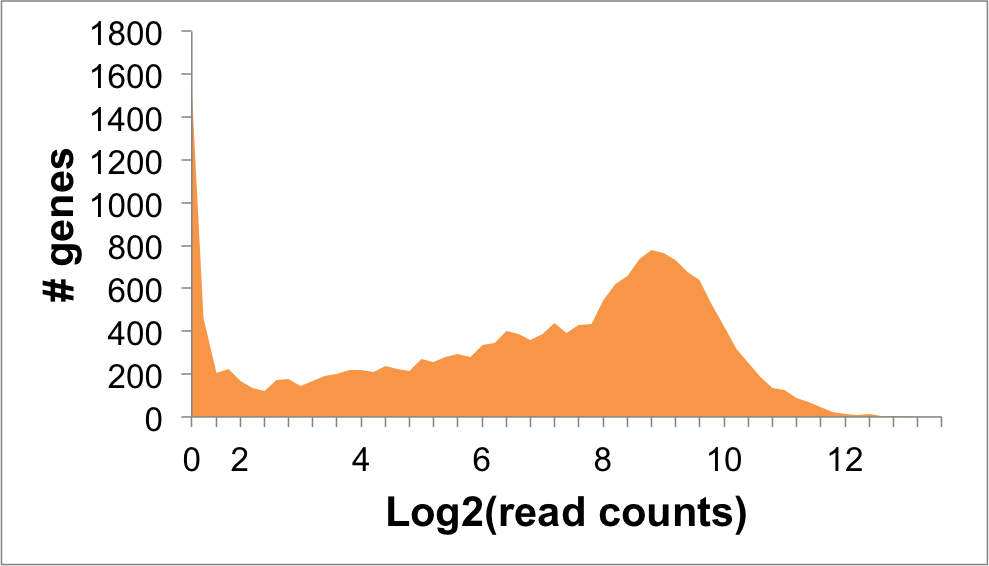
- Expression level (log2 read counts): -3.8
Expression Distribution
CAV3 Expression in NALM6 Cells: -3.8