NCOA1
Gene Information
- Official Symbol: NCOA1
- Official Name: nuclear receptor coactivator 1
- Aliases and Previous Symbols: N/A
- Entrez ID: 8648
- UniProt: Q15788
- Interactions: BioGRID
- PubMed articles: Open PubMed
- OMIM: Open OMIM
Function Summary
- Entrez Summary: The protein encoded by this gene acts as a transcriptional coactivator for steroid and nuclear hormone receptors. It is a member of the p160/steroid receptor coactivator (SRC) family and like other family members has histone acetyltransferase activity and contains a nuclear localization signal, as well as bHLH and PAS domains. The product of this gene binds nuclear receptors directly and stimulates the transcriptional activities in a hormone-dependent fashion. Alternatively spliced transcript variants encoding different isoforms have been identified. [provided by RefSeq, Jul 2008].
- UniProt Summary: N/A
Pfam Domains GO Terms
Pfam Domains
| SRC-1 |
| DUF1518 |
| Nuc rec co-act |
| PAS |
GO Terms
| regulation of transcription by galactose |
| positive regulation of transcription by galactose |
| positive regulation of transcription from RNA polymerase II promoter by galactose |
| regulation of transcription from RNA polymerase II promoter by galactose |
| cellular response to Thyroglobulin triiodothyronine |
| progesterone receptor binding |
| positive regulation of female receptivity |
| carbon catabolite regulation of transcription from RNA polymerase II promoter |
| response to Thyroglobulin triiodothyronine |
| carbon catabolite activation of transcription from RNA polymerase II promoter |
| regulation of thyroid hormone mediated signaling pathway |
| carbon catabolite activation of transcription |
| carbon catabolite regulation of transcription |
| male mating behavior |
| regulation of female receptivity |
| aryl hydrocarbon receptor binding |
| female mating behavior |
| RNA polymerase II regulatory region DNA binding |
| estrous cycle |
| retinoid X receptor binding |
| nuclear receptor binding |
| mating behavior |
| labyrinthine layer morphogenesis |
| hypothalamus development |
| nuclear hormone receptor binding |
| embryonic placenta morphogenesis |
| bile acid and bile salt transport |
| reproductive behavior |
| mating |
| regulation of cellular response to drug |
| androgen receptor signaling pathway |
| estrogen receptor binding |
| androgen receptor binding |
| lactation |
| response to progesterone |
| labyrinthine layer development |
| histone acetyltransferase activity |
| histone H4 acetylation |
| nuclear receptor transcription coactivator activity |
| ovulation cycle |
| cellular response to nutrient |
| intracellular steroid hormone receptor signaling pathway |
| body fluid secretion |
| diencephalon development |
| hippocampus development |
| embryonic placenta development |
| regulation of response to drug |
| cerebellum development |
| protein N-terminus binding |
| response to retinoic acid |
| limbic system development |
| metencephalon development |
| histone acetylation |
| cerebral cortex development |
| internal peptidyl-lysine acetylation |
| steroid hormone mediated signaling pathway |
| peptidyl-lysine acetylation |
| internal protein amino acid acetylation |
| mammary gland development |
| male gonad development |
| development of primary male sexual characteristics |
| response to estradiol |
| monocarboxylic acid transport |
| organic hydroxy compound transport |
| protein acetylation |
| hindbrain development |
| placenta development |
| male sex differentiation |
| protein dimerization activity |
| intracellular receptor signaling pathway |
| hormone-mediated signaling pathway |
| pallium development |
| cellular response to steroid hormone stimulus |
| protein acylation |
| response to ketone |
| gonad development |
| response to nutrient |
| development of primary sexual characteristics |
| cellular response to nutrient levels |
| nuclear chromatin |
| telencephalon development |
| cellular response to extracellular stimulus |
| sex differentiation |
| protein-containing complex binding |
| rhythmic process |
| transcription coactivator activity |
| carboxylic acid transport |
| organic acid transport |
| lipid transport |
| peptidyl-lysine modification |
| lipid localization |
| neuron projection |
| response to steroid hormone |
| cellular response to external stimulus |
| response to acid chemical |
| enzyme binding |
| histone modification |
| positive regulation of neuron differentiation |
| covalent chromatin modification |
| in utero embryonic development |
| forebrain development |
| chromatin binding |
| regulation of lipid metabolic process |
| gland development |
| reproductive structure development |
| reproductive system development |
| embryonic organ development |
| organic anion transport |
| positive regulation of neurogenesis |
| regulation of body fluid levels |
| response to nutrient levels |
| cellular response to lipid |
| response to extracellular stimulus |
| positive regulation of nervous system development |
| cellular response to organic cyclic compound |
| positive regulation of cell development |
| embryonic morphogenesis |
| behavior |
| anion transport |
| protein-containing complex |
| cellular response to hormone stimulus |
| chordate embryonic development |
| transcription, DNA-templated |
| nucleic acid-templated transcription |
| positive regulation of apoptotic process |
| positive regulation of programmed cell death |
| embryo development ending in birth or egg hatching |
| RNA biosynthetic process |
| regulation of neuron differentiation |
| developmental process involved in reproduction |
| positive regulation of cell death |
| chromatin organization |
| brain development |
| head development |
| regulation of neurogenesis |
| multicellular organismal reproductive process |
| sexual reproduction |
| multicellular organism reproduction |
| response to lipid |
| peptidyl-amino acid modification |
| response to hormone |
| response to organic cyclic compound |
| regulation of nervous system development |
| regulation of cell development |
| positive regulation of cell differentiation |
| embryo development |
| central nervous system development |
| multi-organism reproductive process |
| response to drug |
| chromosome organization |
| nucleobase-containing compound biosynthetic process |
| secretion |
| heterocycle biosynthetic process |
| aromatic compound biosynthetic process |
| positive regulation of transcription by RNA polymerase II |
| cellular response to endogenous stimulus |
| organic cyclic compound biosynthetic process |
| positive regulation of developmental process |
| ion transport |
| reproductive process |
| reproduction |
| response to endogenous stimulus |
| generation of neurons |
| positive regulation of transcription, DNA-templated |
| regulation of apoptotic process |
| response to oxygen-containing compound |
| DNA-binding transcription factor activity, RNA polymerase II-specific |
| regulation of programmed cell death |
| neurogenesis |
| cellular nitrogen compound biosynthetic process |
| positive regulation of nucleic acid-templated transcription |
| positive regulation of RNA biosynthetic process |
| RNA metabolic process |
| regulation of cell death |
| cellular macromolecule biosynthetic process |
| positive regulation of RNA metabolic process |
| positive regulation of multicellular organismal process |
| macromolecule biosynthetic process |
| regulation of cell differentiation |
| positive regulation of nucleobase-containing compound metabolic process |
| positive regulation of macromolecule biosynthetic process |
| positive regulation of cellular biosynthetic process |
| positive regulation of gene expression |
| gene expression |
| positive regulation of biosynthetic process |
CRISPR Data
Compound Hit Most Correlated Genes in Chemogenomics Tissues where Essential in the Avana Dataset (DepMap 20Q1)
Compound Hit
Most Correlated Genes in Chemogenomics
No correlation found to any other genes in chemogenomics.
Tissues where Essential in the Avana Dataset (DepMap 20Q1)
Global Fraction of Cell Lines Where Essential: 0/726
| Tissue | Fraction Of Cell Lines Where Essential |
|---|---|
| 1290807.0 | 0/1 |
| 909776.0 | 0/1 |
| bile duct | 0/28 |
| blood | 0/28 |
| bone | 0/25 |
| breast | 0/33 |
| central nervous system | 0/56 |
| cervix | 0/4 |
| colorectal | 0/17 |
| esophagus | 0/13 |
| fibroblast | 0/1 |
| gastric | 0/15 |
| kidney | 0/21 |
| liver | 0/20 |
| lung | 0/75 |
| lymphocyte | 0/14 |
| ovary | 0/26 |
| pancreas | 0/24 |
| peripheral nervous system | 0/16 |
| plasma cell | 0/15 |
| prostate | 0/1 |
| skin | 0/24 |
| soft tissue | 0/7 |
| thyroid | 0/2 |
| upper aerodigestive | 0/22 |
| urinary tract | 0/29 |
| uterus | 0/5 |
Essentiality in NALM6
- Essentiality Rank: 18382
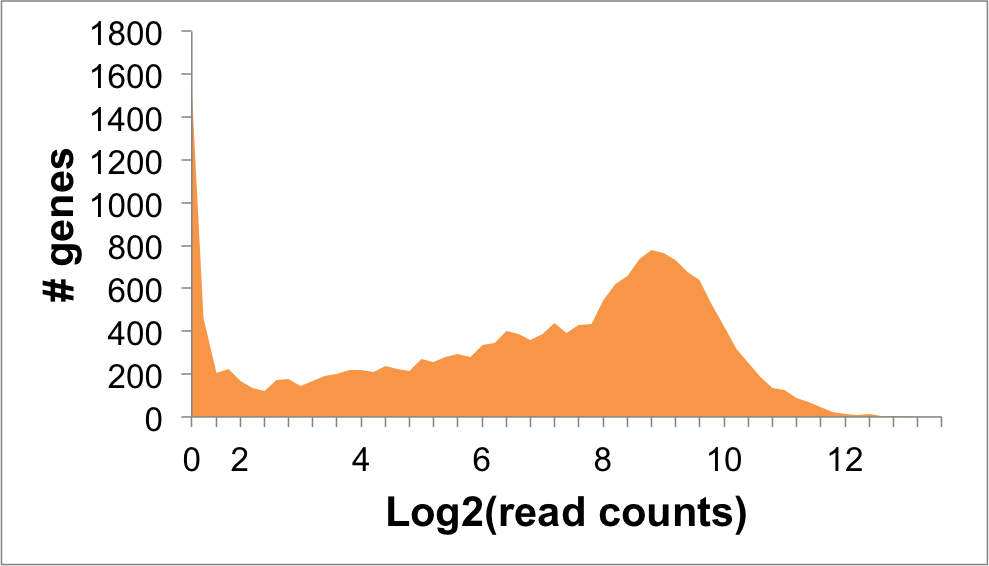
- Expression level (log2 read counts): 4.48
Expression Distribution
NCOA1 Expression in NALM6 Cells: 4.48