DRD3
Gene Information
- Official Symbol: DRD3
- Official Name: dopamine receptor D3
- Aliases and Previous Symbols: N/A
- Entrez ID: 1814
- UniProt: P35462
- Interactions: BioGRID
- PubMed articles: Open PubMed
- OMIM: Open OMIM
Function Summary
- Entrez Summary: This gene encodes the D3 subtype of the five (D1-D5) dopamine receptors. The activity of the D3 subtype receptor is mediated by G proteins which inhibit adenylyl cyclase. This receptor is localized to the limbic areas of the brain, which are associated with cognitive, emotional, and endocrine functions. Genetic variation in this gene may be associated with susceptibility to hereditary essential tremor 1. Alternative splicing of this gene results in transcript variants encoding different isoforms, although some variants may be subject to nonsense-mediated decay (NMD). [provided by RefSeq, Jul 2008].
- UniProt Summary: Dopamine receptor whose activity is mediated by G proteins which inhibit adenylyl cyclase. Promotes cell proliferation. {ECO:0000269|PubMed:19520868}.
Pfam Domains GO Terms
Pfam Domains
| 7tm 1 |
| 7TM GPCR Srsx |
GO Terms
| negative regulation of sodium:proton antiporter activity |
| musculoskeletal movement, spinal reflex action |
| gastric motility |
| gastric emptying |
| negative regulation of dopamine receptor signaling pathway |
| positive regulation of dopamine receptor signaling pathway |
| regulation of locomotion involved in locomotory behavior |
| regulation of sodium:proton antiporter activity |
| dopamine neurotransmitter receptor activity, coupled via Gi/Go |
| regulation of catecholamine uptake involved in synaptic transmission |
| regulation of dopamine uptake involved in synaptic transmission |
| regulation of blood volume by renin-angiotensin |
| D1 dopamine receptor binding |
| adenylate cyclase-activating dopamine receptor signaling pathway |
| adenylate cyclase-inhibiting dopamine receptor signaling pathway |
| regulation of postsynaptic neurotransmitter receptor internalization |
| regulation of dopamine receptor signaling pathway |
| positive regulation of cellular response to drug |
| response to histamine |
| negative regulation of sodium ion transmembrane transporter activity |
| dopaminergic synapse |
| dopamine binding |
| negative regulation of sodium ion transmembrane transport |
| G protein-coupled receptor internalization |
| negative regulation of oligodendrocyte differentiation |
| positive regulation of renal sodium excretion |
| prepulse inhibition |
| regulation of synaptic transmission, dopaminergic |
| adrenergic receptor activity |
| regulation of circadian sleep/wake cycle, sleep |
| negative regulation of sodium ion transport |
| desensitization of G protein-coupled receptor signaling pathway |
| synaptic transmission, dopaminergic |
| negative adaptation of signaling pathway |
| reflex |
| behavioral response to cocaine |
| negative regulation of cellular response to drug |
| adaptation of signaling pathway |
| regulation of neurotransmitter uptake |
| regulation of circadian sleep/wake cycle |
| regulation of renal sodium excretion |
| regulation of proton transport |
| adenylate cyclase-activating adrenergic receptor signaling pathway |
| adrenergic receptor signaling pathway |
| regulation of systemic arterial blood pressure by renin-angiotensin |
| regulation of excretion |
| arachidonate transport |
| arachidonic acid secretion |
| negative regulation of glial cell differentiation |
| startle response |
| icosanoid secretion |
| negative regulation of response to drug |
| dopamine metabolic process |
| positive regulation of response to drug |
| fatty acid derivative transport |
| icosanoid transport |
| response to amphetamine |
| response to morphine |
| response to isoquinoline alkaloid |
| regulation of cellular response to drug |
| regulation of renal system process |
| dopamine receptor signaling pathway |
| regulation of systemic arterial blood pressure by hormone |
| positive regulation of cytokinesis |
| regulation of oligodendrocyte differentiation |
| regulation of dopamine secretion |
| negative regulation of gliogenesis |
| multicellular organismal movement |
| musculoskeletal movement |
| catechol-containing compound metabolic process |
| catecholamine metabolic process |
| negative regulation of blood pressure |
| negative regulation of protein kinase B signaling |
| response to amine |
| regulation of systemic arterial blood pressure mediated by a chemical signal |
| negative regulation of G protein-coupled receptor signaling pathway |
| endocrine process |
| visual learning |
| integral component of postsynaptic density membrane |
| response to bronchodilator |
| intraspecies interaction between organisms |
| social behavior |
| visual behavior |
| positive regulation of mitotic nuclear division |
| regulation of sodium ion transmembrane transporter activity |
| regulation of receptor internalization |
| response to cocaine |
| drug binding |
| long-chain fatty acid transport |
| endocytic vesicle |
| circadian regulation of gene expression |
| regulation of catecholamine secretion |
| receptor internalization |
| regulation of sodium ion transmembrane transport |
| positive regulation of nuclear division |
| regulation of multicellular organism growth |
| GABA-ergic synapse |
| multi-organism behavior |
| regulation of glial cell differentiation |
| apical part of cell |
| negative regulation of ion transmembrane transporter activity |
| regulation of behavior |
| digestive system process |
| fatty acid transport |
| associative learning |
| response to anesthetic |
| negative regulation of transporter activity |
| acid secretion |
| negative regulation of cation transmembrane transport |
| phenol-containing compound metabolic process |
| adenylate cyclase-inhibiting G protein-coupled receptor signaling pathway |
| cellular response to dopamine |
| regulation of sodium ion transport |
| response to dopamine |
| positive regulation of cell division |
| regulation of cytokinesis |
| signal transduction involved in cellular response to ammonium ion |
| regulation of amine transport |
| regulation of systemic arterial blood pressure |
| negative regulation of ion transmembrane transport |
| cell projection |
| regulation of response to drug |
| regulation of receptor-mediated endocytosis |
| cellular response to monoamine stimulus |
| cellular response to catecholamine stimulus |
| receptor metabolic process |
| response to monoamine |
| response to catecholamine |
| neuromuscular process |
| response to alkaloid |
| digestion |
| regulation of circadian rhythm |
| regulation of gliogenesis |
| negative regulation of transmembrane transport |
| response to ethanol |
| adenylate cyclase-activating G protein-coupled receptor signaling pathway |
| cellular response to ammonium ion |
| negative regulation of protein secretion |
| monocarboxylic acid transport |
| negative regulation of peptide secretion |
| circadian rhythm |
| regulation of G protein-coupled receptor signaling pathway |
| regulation of neurotransmitter transport |
| adult behavior |
| learning |
| cAMP-mediated signaling |
| negative regulation of ion transport |
| positive regulation of mitotic cell cycle |
| regulation of mitotic nuclear division |
| regulation of cell division |
| cyclic-nucleotide-mediated signaling |
| regulation of blood pressure |
| negative regulation of protein transport |
| response to ammonium ion |
| negative regulation of establishment of protein localization |
| regulation of nuclear division |
| ammonium ion metabolic process |
| locomotory behavior |
| negative regulation of secretion by cell |
| regulation of endocytosis |
| adenylate cyclase-modulating G protein-coupled receptor signaling pathway |
| regulation of protein kinase B signaling |
| negative regulation of secretion |
| response to alcohol |
| receptor-mediated endocytosis |
| protein domain specific binding |
| G protein-coupled receptor signaling pathway, coupled to cyclic nucleotide second messenger |
| regulation of ion transmembrane transporter activity |
| learning or memory |
| process utilizing autophagic mechanism |
| autophagy |
| regulation of transmembrane transporter activity |
| rhythmic process |
| regulation of transporter activity |
| positive regulation of cell cycle process |
| carboxylic acid transport |
| organic acid transport |
| negative regulation of neurogenesis |
| lipid transport |
| cognition |
| response to xenobiotic stimulus |
| response to antibiotic |
| response to light stimulus |
| negative regulation of nervous system development |
| lipid localization |
| regulation of developmental growth |
| negative regulation of cell development |
| regulation of cation transmembrane transport |
| second-messenger-mediated signaling |
| glutamatergic synapse |
| regulation of neurotransmitter levels |
| negative regulation of response to external stimulus |
| positive regulation of cell cycle |
| regulation of metal ion transport |
| blood circulation |
| regulation of lipid metabolic process |
| circulatory system process |
| cellular response to drug |
| chemical synaptic transmission |
| anterograde trans-synaptic signaling |
| positive regulation of secretion |
| cellular calcium ion homeostasis |
| trans-synaptic signaling |
| response to radiation |
| modulation of chemical synaptic transmission |
| regulation of trans-synaptic signaling |
| calcium ion homeostasis |
| organic hydroxy compound metabolic process |
| organic anion transport |
| synaptic signaling |
| regulation of protein secretion |
| cellular divalent inorganic cation homeostasis |
| regulation of ion transmembrane transport |
| negative regulation of transport |
| divalent inorganic cation homeostasis |
| regulation of peptide secretion |
| drug metabolic process |
| response to toxic substance |
| negative regulation of intracellular signal transduction |
| regulation of cellular protein localization |
| cellular response to organic cyclic compound |
| regulation of vesicle-mediated transport |
| endocytosis |
| cellular metal ion homeostasis |
| regulation of transmembrane transport |
| behavior |
| anion transport |
| regulation of system process |
| cellular response to organonitrogen compound |
| positive regulation of organelle organization |
| metal ion homeostasis |
| regulation of mitotic cell cycle |
| cellular cation homeostasis |
| cellular ion homeostasis |
| cellular response to nitrogen compound |
| regulation of growth |
| import into cell |
| regulation of ion transport |
| cation homeostasis |
| regulation of protein transport |
| negative regulation of cell differentiation |
| inorganic ion homeostasis |
| regulation of peptide transport |
| cellular chemical homeostasis |
| regulation of establishment of protein localization |
| regulation of secretion by cell |
| regulation of cell cycle process |
| ion homeostasis |
| regulation of secretion |
| regulation of neurogenesis |
| negative regulation of transcription by RNA polymerase II |
| negative regulation of apoptotic process |
| cellular homeostasis |
| negative regulation of programmed cell death |
| regulation of cellular localization |
| positive regulation of cell population proliferation |
| response to organic cyclic compound |
| regulation of nervous system development |
| regulation of cell development |
| negative regulation of developmental process |
| regulation of locomotion |
| positive regulation of transport |
| negative regulation of cell death |
| response to organonitrogen compound |
| response to drug |
| regulation of protein localization |
| cellular response to oxygen-containing compound |
| response to nitrogen compound |
| regulation of response to external stimulus |
| chemical homeostasis |
| cell-cell signaling |
| secretion |
| negative regulation of molecular function |
| response to abiotic stimulus |
| regulation of cell cycle |
| negative regulation of transcription, DNA-templated |
| negative regulation of multicellular organismal process |
| positive regulation of cellular component organization |
| positive regulation of transcription by RNA polymerase II |
| cellular response to endogenous stimulus |
| negative regulation of nucleic acid-templated transcription |
| negative regulation of RNA biosynthetic process |
| negative regulation of signal transduction |
| regulation of organelle organization |
| G protein-coupled receptor signaling pathway |
| negative regulation of RNA metabolic process |
| negative regulation of cell communication |
| negative regulation of signaling |
| ion transport |
| nervous system process |
| negative regulation of cellular macromolecule biosynthetic process |
| integral component of plasma membrane |
| negative regulation of nucleobase-containing compound metabolic process |
| negative regulation of macromolecule biosynthetic process |
| response to endogenous stimulus |
| negative regulation of cellular biosynthetic process |
| generation of neurons |
| positive regulation of transcription, DNA-templated |
| regulation of apoptotic process |
| negative regulation of biosynthetic process |
| response to oxygen-containing compound |
| regulation of programmed cell death |
| regulation of cell population proliferation |
| negative regulation of response to stimulus |
| neurogenesis |
| positive regulation of nucleic acid-templated transcription |
| positive regulation of RNA biosynthetic process |
| homeostatic process |
| positive regulation of signal transduction |
| regulation of cell death |
| intracellular signal transduction |
| negative regulation of gene expression |
| positive regulation of RNA metabolic process |
| positive regulation of multicellular organismal process |
| cellular catabolic process |
| regulation of cell differentiation |
| positive regulation of cell communication |
| positive regulation of signaling |
| regulation of intracellular signal transduction |
| regulation of transport |
| positive regulation of nucleobase-containing compound metabolic process |
| positive regulation of macromolecule biosynthetic process |
| vesicle-mediated transport |
| system process |
| positive regulation of cellular biosynthetic process |
| positive regulation of gene expression |
| positive regulation of biosynthetic process |
CRISPR Data
Compound Hit Most Correlated Genes in Chemogenomics Tissues where Essential in the Avana Dataset (DepMap 20Q1)
Compound Hit
| Screen | Score |
|---|---|
| HMS-I1 1μM R01 exp46 | -2.49 |
| Staurosporine 0.02μM R08 exp524 | -2.15 |
| MS094 2μM R03 exp136 | -1.84 |
| Centrinone 0.5μM R07 exp343 | 1.83 |
| Resminostat 0.5μM R07 exp393 | 1.87 |
| A-769662 20μM R07 exp331 | 2.02 |
| PF-06409577 20μM R07 exp389 | 2.16 |
| Wiskostatin 3μM R07 exp422 | 2.19 |
Most Correlated Genes in Chemogenomics
No correlation found to any other genes in chemogenomics.
Tissues where Essential in the Avana Dataset (DepMap 20Q1)
Global Fraction of Cell Lines Where Essential: 0/739
| Tissue | Fraction Of Cell Lines Where Essential |
|---|---|
| 1290807.0 | 0/1 |
| 909776.0 | 0/1 |
| bile duct | 0/28 |
| blood | 0/28 |
| bone | 0/26 |
| breast | 0/33 |
| central nervous system | 0/56 |
| cervix | 0/4 |
| colorectal | 0/17 |
| esophagus | 0/13 |
| fibroblast | 0/1 |
| gastric | 0/16 |
| kidney | 0/21 |
| liver | 0/20 |
| lung | 0/75 |
| lymphocyte | 0/16 |
| ovary | 0/26 |
| pancreas | 0/24 |
| peripheral nervous system | 0/16 |
| plasma cell | 0/15 |
| prostate | 0/1 |
| skin | 0/24 |
| soft tissue | 0/9 |
| thyroid | 0/2 |
| upper aerodigestive | 0/22 |
| urinary tract | 0/29 |
| uterus | 0/5 |
Essentiality in NALM6
- Essentiality Rank: 10719
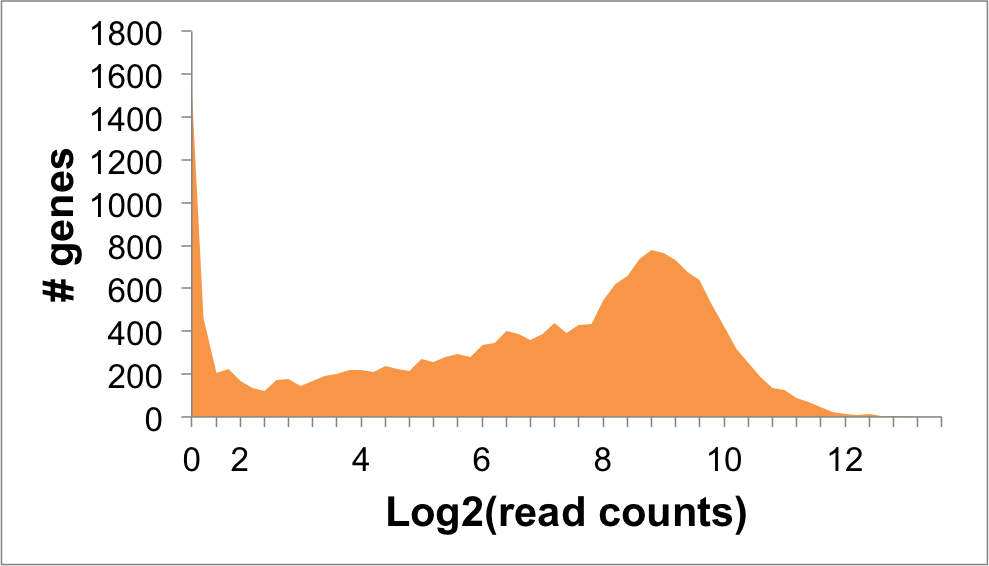
- Expression level (log2 read counts): -3.02
Expression Distribution
DRD3 Expression in NALM6 Cells: -3.02