PRMT1
Gene Information
- Official Symbol: PRMT1
- Official Name: protein arginine methyltransferase 1
- Aliases and Previous Symbols: N/A
- Entrez ID: 3276
- UniProt: Q99873
- Interactions: BioGRID
- PubMed articles: Open PubMed
- OMIM: Open OMIM
Function Summary
- Entrez Summary: This gene encodes a member of the protein arginine N-methyltransferase (PRMT) family. Post-translational modification of target proteins by PRMTs plays an important regulatory role in many biological processes, whereby PRMTs methylate arginine residues by transferring methyl groups from S-adenosyl-L-methionine to terminal guanidino nitrogen atoms. The encoded protein is a type I PRMT and is responsible for the majority of cellular arginine methylation activity. Increased expression of this gene may play a role in many types of cancer. Alternatively spliced transcript variants encoding multiple isoforms have been observed for this gene, and a pseudogene of this gene is located on the long arm of chromosome 5. [provided by RefSeq, Dec 2011].
- UniProt Summary: N/A
Pfam Domains GO Terms
Pfam Domains
| Methyltransf 11 |
| Methyltransf 18 |
| PrmA |
| PRMT5 |
GO Terms
| N-methyltransferase activity |
| positive regulation of hemoglobin biosynthetic process |
| histone methyltransferase activity (H4-R3 specific) |
| regulation of hemoglobin biosynthetic process |
| protein-arginine omega-N monomethyltransferase activity |
| negative regulation of megakaryocyte differentiation |
| mitogen-activated protein kinase p38 binding |
| histone H4-R3 methylation |
| protein-arginine N-methyltransferase activity |
| peptidyl-arginine methylation, to asymmetrical-dimethyl arginine |
| protein-arginine omega-N asymmetric methyltransferase activity |
| histone-arginine N-methyltransferase activity |
| protein methyltransferase activity |
| S-adenosyl-L-methionine binding |
| peptidyl-arginine omega-N-methylation |
| peptidyl-arginine N-methylation |
| histone methyltransferase activity |
| methylosome |
| histone arginine methylation |
| peptidyl-arginine methylation |
| methyl-CpG binding |
| peptidyl-arginine modification |
| positive regulation of p38MAPK cascade |
| positive regulation of erythrocyte differentiation |
| regulation of p38MAPK cascade |
| regulation of erythrocyte differentiation |
| methyltransferase activity |
| regulation of megakaryocyte differentiation |
| DNA damage response, signal transduction by p53 class mediator resulting in cell cycle arrest |
| intracellular signal transduction involved in G1 DNA damage checkpoint |
| signal transduction involved in mitotic DNA integrity checkpoint |
| signal transduction involved in mitotic DNA damage checkpoint |
| signal transduction involved in mitotic G1 DNA damage checkpoint |
| signal transduction involved in mitotic cell cycle checkpoint |
| mitotic G1 DNA damage checkpoint |
| mitotic G1/S transition checkpoint |
| G1 DNA damage checkpoint |
| signal transduction involved in DNA damage checkpoint |
| signal transduction involved in DNA integrity checkpoint |
| signal transduction involved in cell cycle checkpoint |
| negative regulation of myeloid cell differentiation |
| DNA damage response, signal transduction by p53 class mediator |
| positive regulation of cell cycle arrest |
| positive regulation of myeloid cell differentiation |
| histone methylation |
| mitotic DNA damage checkpoint |
| negative regulation of G1/S transition of mitotic cell cycle |
| signal transduction in response to DNA damage |
| mitotic DNA integrity checkpoint |
| negative regulation of cell cycle G1/S phase transition |
| regulation of cell cycle arrest |
| signal transduction by p53 class mediator |
| DNA damage checkpoint |
| protein alkylation |
| protein methylation |
| negative regulation of hemopoiesis |
| DNA integrity checkpoint |
| regulation of G1/S transition of mitotic cell cycle |
| mitotic cell cycle checkpoint |
| regulation of cell cycle G1/S phase transition |
| positive regulation of stress-activated MAPK cascade |
| positive regulation of stress-activated protein kinase signaling cascade |
| positive regulation of hemopoiesis |
| cell cycle checkpoint |
| negative regulation of mitotic cell cycle phase transition |
| regulation of myeloid cell differentiation |
| negative regulation of cell cycle phase transition |
| regulation of stress-activated MAPK cascade |
| regulation of stress-activated protein kinase signaling cascade |
| macromolecule methylation |
| positive regulation of cell cycle process |
| negative regulation of mitotic cell cycle |
| methylation |
| negative regulation of cell cycle process |
| protein homooligomerization |
| enzyme binding |
| histone modification |
| covalent chromatin modification |
| positive regulation of cell cycle |
| in utero embryonic development |
| regulation of mitotic cell cycle phase transition |
| negative regulation of immune system process |
| regulation of cell cycle phase transition |
| regulation of hemopoiesis |
| protein complex oligomerization |
| positive regulation of MAPK cascade |
| negative regulation of cell cycle |
| mitotic cell cycle process |
| regulation of mitotic cell cycle |
| chordate embryonic development |
| embryo development ending in birth or egg hatching |
| neuron projection development |
| mitotic cell cycle |
| chromatin organization |
| negative regulation of cell differentiation |
| regulation of cellular response to stress |
| regulation of cell cycle process |
| regulation of MAPK cascade |
| cellular response to DNA damage stimulus |
| neuron development |
| peptidyl-amino acid modification |
| positive regulation of cell population proliferation |
| negative regulation of developmental process |
| positive regulation of cell differentiation |
| embryo development |
| cell cycle process |
| neuron differentiation |
| positive regulation of protein phosphorylation |
| positive regulation of intracellular signal transduction |
| positive regulation of phosphorylation |
| chromosome organization |
| identical protein binding |
| plasma membrane bounded cell projection organization |
| positive regulation of phosphorus metabolic process |
| positive regulation of phosphate metabolic process |
| positive regulation of immune system process |
| cell projection organization |
| regulation of cell cycle |
| negative regulation of multicellular organismal process |
| positive regulation of protein modification process |
| cell cycle |
| positive regulation of developmental process |
| RNA binding |
| regulation of protein phosphorylation |
| regulation of response to stress |
| generation of neurons |
| protein-containing complex assembly |
| regulation of phosphorylation |
| positive regulation of cellular protein metabolic process |
| regulation of cell population proliferation |
| neurogenesis |
| cell development |
| regulation of immune system process |
| positive regulation of signal transduction |
| intracellular signal transduction |
| cellular response to stress |
| positive regulation of protein metabolic process |
| positive regulation of multicellular organismal process |
| regulation of phosphate metabolic process |
| regulation of phosphorus metabolic process |
| regulation of cell differentiation |
| positive regulation of cell communication |
| positive regulation of signaling |
| regulation of intracellular signal transduction |
| regulation of protein modification process |
| protein-containing complex subunit organization |
| positive regulation of macromolecule biosynthetic process |
| positive regulation of cellular biosynthetic process |
| positive regulation of biosynthetic process |
CRISPR Data
Compound Hit Most Correlated Genes in Chemogenomics Tissues where Essential in the Avana Dataset (DepMap 20Q1)
Compound Hit
| Screen | Score |
|---|---|
| MS023 2μM R03 exp134 | -2.65 |
| Bleomycin 5μM R08 exp459 | -2.34 |
| ML-792 0.2μM R08 exp505 | -1.98 |
| UM0125461 0.74μM R02 exp84 | -1.92 |
| Cannabidiol 20μM R08 exp466 | -1.91 |
| QNZ 0.01μM R05 exp241 | -1.83 |
| BI-2536 0.001μM R01 exp41 | -1.78 |
| Lapatinib 5μM R01 exp47 | -1.78 |
| All-trans-Retinoic-Acid 40μM R07 exp334 | -1.71 |
Most Correlated Genes in Chemogenomics
No correlation found to any other genes in chemogenomics.
Tissues where Essential in the Avana Dataset (DepMap 20Q1)
Global Fraction of Cell Lines Where Essential: 688/726
| Tissue | Fraction Of Cell Lines Where Essential |
|---|---|
| 1290807.0 | 0/1 |
| 909776.0 | 1/1 |
| bile duct | 27/28 |
| blood | 28/28 |
| bone | 25/25 |
| breast | 32/33 |
| central nervous system | 55/56 |
| cervix | 4/4 |
| colorectal | 17/17 |
| esophagus | 12/13 |
| fibroblast | 1/1 |
| gastric | 12/15 |
| kidney | 20/21 |
| liver | 20/20 |
| lung | 67/75 |
| lymphocyte | 14/14 |
| ovary | 22/26 |
| pancreas | 23/24 |
| peripheral nervous system | 16/16 |
| plasma cell | 13/15 |
| prostate | 1/1 |
| skin | 23/24 |
| soft tissue | 7/7 |
| thyroid | 2/2 |
| upper aerodigestive | 20/22 |
| urinary tract | 28/29 |
| uterus | 5/5 |
Essentiality in NALM6
- Essentiality Rank: 418
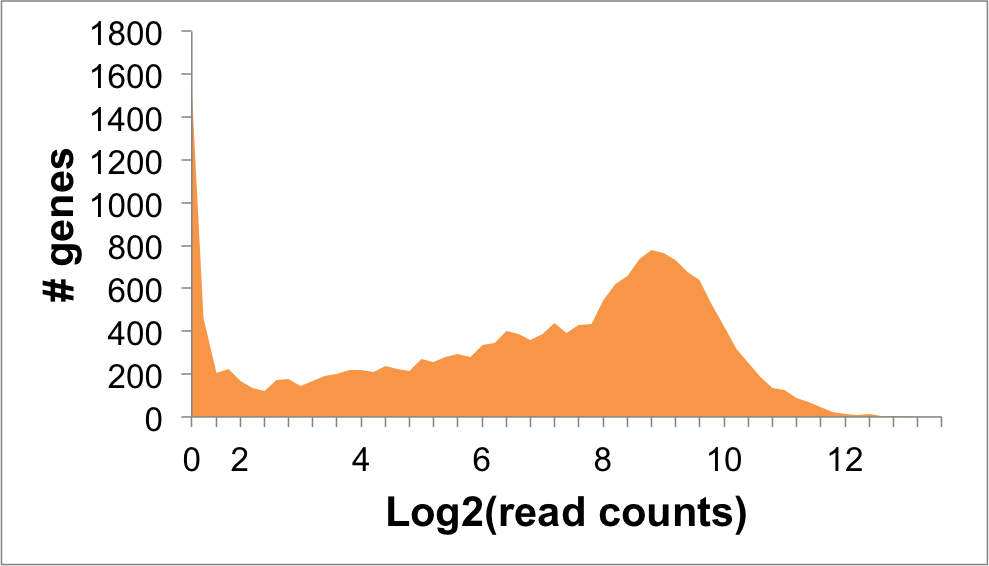
- Expression level (log2 read counts): 7.46
Expression Distribution
PRMT1 Expression in NALM6 Cells: 7.46