TARDBP
Gene Information
- Official Symbol: TARDBP
- Official Name: TAR DNA binding protein
- Aliases and Previous Symbols: N/A
- Entrez ID: 23435
- UniProt: Q13148
- Interactions: BioGRID
- PubMed articles: Open PubMed
- OMIM: Open OMIM
Function Summary
- Entrez Summary: HIV-1, the causative agent of acquired immunodeficiency syndrome (AIDS), contains an RNA genome that produces a chromosomally integrated DNA during the replicative cycle. Activation of HIV-1 gene expression by the transactivator Tat is dependent on an RNA regulatory element (TAR) located downstream of the transcription initiation site. The protein encoded by this gene is a transcriptional repressor that binds to chromosomally integrated TAR DNA and represses HIV-1 transcription. In addition, this protein regulates alternate splicing of the CFTR gene. A similar pseudogene is present on chromosome 20. [provided by RefSeq, Jul 2008].
- UniProt Summary: N/A
Pfam Domains GO Terms
Pfam Domains
| RRM 1 |
GO Terms
| nuclear inner membrane organization |
| perichromatin fibrils |
| interchromatin granule |
| nuclear membrane organization |
| sequence-specific double-stranded DNA binding |
| negative regulation by host of viral transcription |
| 3-UTR-mediated mRNA stabilization |
| negative regulation of viral transcription |
| positive regulation of protein import into nucleus |
| positive regulation of protein import |
| mRNA stabilization |
| single-stranded RNA binding |
| RNA stabilization |
| negative regulation of mRNA catabolic process |
| nuclear envelope organization |
| regulation of protein import into nucleus |
| regulation of protein import |
| negative regulation of RNA catabolic process |
| positive regulation of nucleocytoplasmic transport |
| regulation of viral transcription |
| cytoplasmic stress granule |
| modification by host of symbiont morphology or physiology |
| positive regulation of insulin secretion |
| positive regulation of protein localization to nucleus |
| mRNA 3-UTR binding |
| interaction with symbiont |
| negative regulation of mRNA metabolic process |
| positive regulation of peptide hormone secretion |
| negative regulation of viral process |
| double-stranded DNA binding |
| regulation of nucleocytoplasmic transport |
| modification of morphology or physiology of other organism involved in symbiotic interaction |
| regulation of circadian rhythm |
| regulation of protein localization to nucleus |
| positive regulation of hormone secretion |
| nucleus organization |
| positive regulation of intracellular protein transport |
| ribonucleoprotein complex |
| modification of morphology or physiology of other organism |
| regulation of insulin secretion |
| regulation of mRNA stability |
| regulation of RNA stability |
| regulation of mRNA catabolic process |
| regulation of viral process |
| positive regulation of intracellular transport |
| regulation of peptide hormone secretion |
| negative regulation of multi-organism process |
| regulation of symbiosis, encompassing mutualism through parasitism |
| regulation of intracellular protein transport |
| negative regulation of cellular catabolic process |
| response to endoplasmic reticulum stress |
| regulation of hormone secretion |
| positive regulation of protein secretion |
| rhythmic process |
| regulation of protein stability |
| positive regulation of peptide secretion |
| negative regulation of catabolic process |
| positive regulation of cellular protein localization |
| regulation of mRNA metabolic process |
| regulation of intracellular transport |
| RNA splicing |
| nuclear speck |
| positive regulation of secretion by cell |
| negative regulation of protein phosphorylation |
| endomembrane system organization |
| positive regulation of protein transport |
| positive regulation of secretion |
| negative regulation of phosphorylation |
| DNA-binding transcription activator activity, RNA polymerase II-specific |
| positive regulation of establishment of protein localization |
| regulation of protein secretion |
| mRNA processing |
| transcription by RNA polymerase II |
| regulation of peptide secretion |
| posttranscriptional regulation of gene expression |
| regulation of hormone levels |
| regulation of cellular protein localization |
| negative regulation of phosphate metabolic process |
| negative regulation of phosphorus metabolic process |
| negative regulation of protein modification process |
| transcription, DNA-templated |
| nucleic acid-templated transcription |
| RNA biosynthetic process |
| DNA-binding transcription factor activity |
| mRNA metabolic process |
| regulation of protein transport |
| regulation of peptide transport |
| regulation of establishment of protein localization |
| regulation of secretion by cell |
| regulation of multi-organism process |
| symbiotic process |
| regulation of secretion |
| interspecies interaction between organisms |
| regulation of cellular catabolic process |
| membrane organization |
| RNA processing |
| regulation of cellular localization |
| positive regulation of transport |
| regulation of catabolic process |
| regulation of protein localization |
| negative regulation of cellular protein metabolic process |
| identical protein binding |
| nucleobase-containing compound biosynthetic process |
| negative regulation of protein metabolic process |
| heterocycle biosynthetic process |
| aromatic compound biosynthetic process |
| regulation of cell cycle |
| positive regulation of transcription by RNA polymerase II |
| organic cyclic compound biosynthetic process |
| negative regulation of RNA metabolic process |
| RNA binding |
| negative regulation of nucleobase-containing compound metabolic process |
| regulation of protein phosphorylation |
| positive regulation of transcription, DNA-templated |
| regulation of apoptotic process |
| regulation of programmed cell death |
| regulation of phosphorylation |
| cellular nitrogen compound biosynthetic process |
| positive regulation of nucleic acid-templated transcription |
| positive regulation of RNA biosynthetic process |
| RNA metabolic process |
| regulation of cell death |
| cellular response to stress |
| cellular macromolecule biosynthetic process |
| negative regulation of gene expression |
| positive regulation of RNA metabolic process |
| macromolecule biosynthetic process |
| regulation of phosphate metabolic process |
| regulation of phosphorus metabolic process |
| positive regulation of cell communication |
| positive regulation of signaling |
| regulation of protein modification process |
| regulation of transport |
| positive regulation of nucleobase-containing compound metabolic process |
| positive regulation of macromolecule biosynthetic process |
| positive regulation of cellular biosynthetic process |
| positive regulation of gene expression |
| gene expression |
| positive regulation of biosynthetic process |
CRISPR Data
Compound Hit Most Correlated Genes in Chemogenomics Tissues where Essential in the Avana Dataset (DepMap 20Q1)
Compound Hit
Tissues where Essential in the Avana Dataset (DepMap 20Q1)
Global Fraction of Cell Lines Where Essential: 565/739
| Tissue | Fraction Of Cell Lines Where Essential |
|---|---|
| 1290807.0 | 1/1 |
| 909776.0 | 1/1 |
| bile duct | 24/28 |
| blood | 25/28 |
| bone | 17/26 |
| breast | 26/33 |
| central nervous system | 48/56 |
| cervix | 3/4 |
| colorectal | 13/17 |
| esophagus | 7/13 |
| fibroblast | 1/1 |
| gastric | 9/16 |
| kidney | 14/21 |
| liver | 15/20 |
| lung | 54/75 |
| lymphocyte | 10/16 |
| ovary | 18/26 |
| pancreas | 21/24 |
| peripheral nervous system | 13/16 |
| plasma cell | 11/15 |
| prostate | 1/1 |
| skin | 18/24 |
| soft tissue | 6/9 |
| thyroid | 2/2 |
| upper aerodigestive | 16/22 |
| urinary tract | 19/29 |
| uterus | 4/5 |
Essentiality in NALM6
- Essentiality Rank: 1323
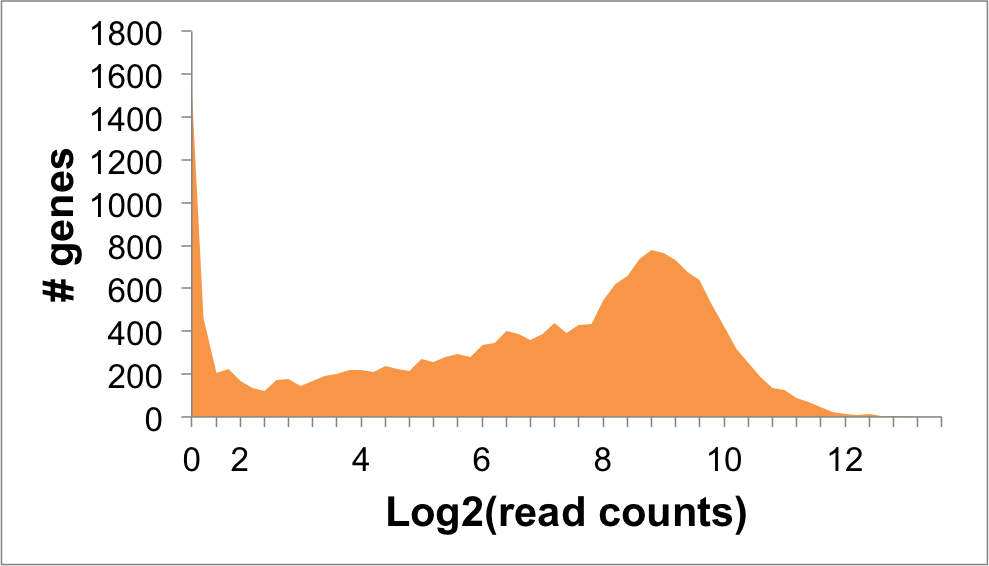
- Expression level (log2 read counts): 8.14
Expression Distribution
TARDBP Expression in NALM6 Cells: 8.14