ZBTB1
Gene Information
- Official Symbol: ZBTB1
- Official Name: zinc finger and BTB domain containing 1
- Aliases and Previous Symbols: N/A
- Entrez ID: 22890
- UniProt: Q9Y2K1
- Interactions: BioGRID
- PubMed articles: Open PubMed
- OMIM: Open OMIM
Function Summary
- Entrez Summary: N/A
- UniProt Summary: Acts as a transcriptional repressor (PubMed:20797634). Represses cAMP-responsive element (CRE)-mediated transcriptional activation (PubMed:21706167). In addition, has a role in translesion DNA synthesis. Requires for UV-inducible RAD18 loading, PCNA monoubiquitination, POLH recruitment to replication factories and efficient translesion DNA synthesis (PubMed:24657165). Plays a key role in the transcriptional regulation of T lymphocyte development (By similarity). {ECO:0000250|UniProtKB:Q91VL9, ECO:0000269|PubMed:20797634, ECO:0000269|PubMed:21706167, ECO:0000269|PubMed:24657165}.
Pfam Domains GO Terms
Pfam Domains
| BTB |
GO Terms
| positive regulation of pro-T cell differentiation |
| regulation of pro-T cell differentiation |
| positive regulation of lymphoid progenitor cell differentiation |
| positive regulation of hematopoietic progenitor cell differentiation |
| positive regulation of natural killer cell differentiation |
| regulation of lymphoid progenitor cell differentiation |
| regulation of natural killer cell differentiation |
| mRNA transcription by RNA polymerase II |
| positive regulation of natural killer cell activation |
| K63-linked polyubiquitin modification-dependent protein binding |
| mRNA transcription |
| regulation of natural killer cell activation |
| translesion synthesis |
| thymus development |
| T cell differentiation in thymus |
| positive regulation of T cell mediated immunity |
| DNA synthesis involved in DNA repair |
| postreplication repair |
| regulation of T cell mediated immunity |
| positive regulation of T cell differentiation |
| cellular response to UV |
| regulation of hematopoietic progenitor cell differentiation |
| positive regulation of lymphocyte differentiation |
| positive regulation of adaptive immune response based on somatic recombination of immune receptors built from immunoglobulin superfamily domains |
| positive regulation of adaptive immune response |
| positive regulation of lymphocyte mediated immunity |
| B cell differentiation |
| DNA biosynthetic process |
| cellular response to light stimulus |
| positive regulation of leukocyte mediated immunity |
| T cell differentiation |
| regulation of T cell differentiation |
| response to UV |
| regulation of adaptive immune response based on somatic recombination of immune receptors built from immunoglobulin superfamily domains |
| positive regulation of leukocyte differentiation |
| regulation of lymphocyte mediated immunity |
| B cell activation |
| regulation of adaptive immune response |
| chromatin remodeling |
| regulation of lymphocyte differentiation |
| cellular response to radiation |
| positive regulation of hemopoiesis |
| positive regulation of T cell activation |
| regulation of leukocyte mediated immunity |
| positive regulation of leukocyte cell-cell adhesion |
| positive regulation of immune effector process |
| T cell activation |
| lymphocyte differentiation |
| nuclear membrane |
| positive regulation of cell-cell adhesion |
| regulation of leukocyte differentiation |
| nuclear body |
| regulation of leukocyte cell-cell adhesion |
| response to light stimulus |
| cellular response to environmental stimulus |
| cellular response to abiotic stimulus |
| regulation of T cell activation |
| leukocyte differentiation |
| protein homooligomerization |
| positive regulation of lymphocyte activation |
| lymphocyte activation |
| regulation of cell-cell adhesion |
| positive regulation of leukocyte activation |
| positive regulation of cell adhesion |
| gland development |
| positive regulation of cell activation |
| response to radiation |
| regulation of hemopoiesis |
| regulation of immune effector process |
| transcription by RNA polymerase II |
| protein heterodimerization activity |
| DNA repair |
| regulation of lymphocyte activation |
| protein complex oligomerization |
| hemopoiesis |
| regulation of leukocyte activation |
| hematopoietic or lymphoid organ development |
| transcription, DNA-templated |
| regulation of cell activation |
| nucleic acid-templated transcription |
| immune system development |
| RNA biosynthetic process |
| regulation of cell adhesion |
| mRNA metabolic process |
| chromatin organization |
| DNA metabolic process |
| innate immune response |
| cellular response to DNA damage stimulus |
| negative regulation of transcription by RNA polymerase II |
| positive regulation of immune response |
| protein homodimerization activity |
| leukocyte activation |
| defense response to other organism |
| positive regulation of cell differentiation |
| chromosome organization |
| cell activation |
| nucleobase-containing compound biosynthetic process |
| positive regulation of immune system process |
| regulation of immune response |
| response to abiotic stimulus |
| heterocycle biosynthetic process |
| aromatic compound biosynthetic process |
| negative regulation of transcription, DNA-templated |
| negative regulation of nucleic acid-templated transcription |
| negative regulation of RNA biosynthetic process |
| response to other organism |
| organic cyclic compound biosynthetic process |
| response to external biotic stimulus |
| response to biotic stimulus |
| negative regulation of RNA metabolic process |
| defense response |
| positive regulation of developmental process |
| negative regulation of cellular macromolecule biosynthetic process |
| negative regulation of nucleobase-containing compound metabolic process |
| DNA binding |
| negative regulation of macromolecule biosynthetic process |
| negative regulation of cellular biosynthetic process |
| negative regulation of biosynthetic process |
| protein-containing complex assembly |
| DNA-binding transcription factor activity, RNA polymerase II-specific |
| cellular nitrogen compound biosynthetic process |
| regulation of immune system process |
| RNA metabolic process |
| cellular response to stress |
| cellular macromolecule biosynthetic process |
| negative regulation of gene expression |
| positive regulation of multicellular organismal process |
| macromolecule biosynthetic process |
| regulation of cell differentiation |
| protein-containing complex subunit organization |
| immune response |
| gene expression |
CRISPR Data
Compound Hit Most Correlated Genes in Chemogenomics Tissues where Essential in the Avana Dataset (DepMap 20Q1)
Compound Hit
Most Correlated Genes in Chemogenomics
No correlation found to any other genes in chemogenomics.
Tissues where Essential in the Avana Dataset (DepMap 20Q1)
Global Fraction of Cell Lines Where Essential: 0/739
| Tissue | Fraction Of Cell Lines Where Essential |
|---|---|
| 1290807.0 | 0/1 |
| 909776.0 | 0/1 |
| bile duct | 0/28 |
| blood | 0/28 |
| bone | 0/26 |
| breast | 0/33 |
| central nervous system | 0/56 |
| cervix | 0/4 |
| colorectal | 0/17 |
| esophagus | 0/13 |
| fibroblast | 0/1 |
| gastric | 0/16 |
| kidney | 0/21 |
| liver | 0/20 |
| lung | 0/75 |
| lymphocyte | 0/16 |
| ovary | 0/26 |
| pancreas | 0/24 |
| peripheral nervous system | 0/16 |
| plasma cell | 0/15 |
| prostate | 0/1 |
| skin | 0/24 |
| soft tissue | 0/9 |
| thyroid | 0/2 |
| upper aerodigestive | 0/22 |
| urinary tract | 0/29 |
| uterus | 0/5 |
Essentiality in NALM6
- Essentiality Rank: 15866
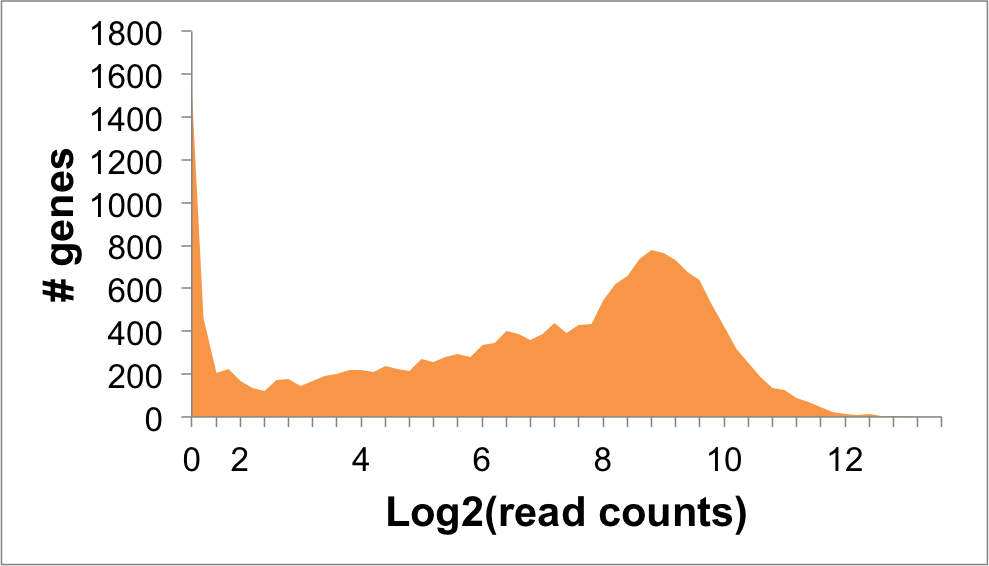
- Expression level (log2 read counts): 6.4
Expression Distribution
ZBTB1 Expression in NALM6 Cells: 6.4