ACTR2
Gene Information
- Official Symbol: ACTR2
- Official Name: actin related protein 2
- Aliases and Previous Symbols: N/A
- Entrez ID: 10097
- UniProt: P61160
- Interactions: BioGRID
- PubMed articles: Open PubMed
- OMIM: Open OMIM
Function Summary
- Entrez Summary: N/A
- UniProt Summary: Functions as ATP-binding component of the Arp2/3 complex which is involved in regulation of actin polymerization and together with an activating nucleation-promoting factor (NPF) mediates the formation of branched actin networks. Seems to contact the pointed end of the daughter actin filament. {ECO:0000269|PubMed:9000076}.
Pfam Domains GO Terms
Pfam Domains
| Actin |
GO Terms
| podosome core |
| meiotic chromosome movement towards spindle pole |
| cellular response to trichostatin A |
| response to trichostatin A |
| actin cap |
| meiotic cytokinesis |
| chromosome movement towards spindle pole |
| positive regulation of double-strand break repair via homologous recombination |
| invadopodium |
| Arp2/3 protein complex |
| asymmetric cell division |
| actin cortical patch |
| positive regulation of dendritic spine morphogenesis |
| Arp2/3 complex-mediated actin nucleation |
| regulation of double-strand break repair via nonhomologous end joining |
| response to immobilization stress |
| positive regulation of double-strand break repair |
| actin nucleation |
| positive regulation of dendrite morphogenesis |
| positive regulation of DNA recombination |
| positive regulation of dendritic spine development |
| regulation of dendritic spine morphogenesis |
| regulation of double-strand break repair via homologous recombination |
| spindle localization |
| site of double-strand break |
| positive regulation of DNA repair |
| establishment of chromosome localization |
| positive regulation of dendrite development |
| regulation of dendritic spine development |
| chromosome localization |
| regulation of double-strand break repair |
| associative learning |
| ephrin receptor signaling pathway |
| meiotic chromosome segregation |
| azurophil granule lumen |
| regulation of dendrite morphogenesis |
| positive regulation of actin filament polymerization |
| cytoskeleton-dependent cytokinesis |
| regulation of postsynapse organization |
| positive regulation of response to DNA damage stimulus |
| cytokinesis |
| structural constituent of cytoskeleton |
| regulation of DNA recombination |
| cellular response to antibiotic |
| regulation of DNA repair |
| ficolin-1-rich granule lumen |
| response to ethanol |
| positive regulation of protein polymerization |
| Fc-gamma receptor signaling pathway involved in phagocytosis |
| immune response-regulating cell surface receptor signaling pathway involved in phagocytosis |
| Fc receptor mediated stimulatory signaling pathway |
| Fc-gamma receptor signaling pathway |
| cytosolic transport |
| learning |
| regulation of dendrite development |
| meiotic nuclear division |
| positive regulation of cell morphogenesis involved in differentiation |
| cellular response to interferon-gamma |
| regulation of actin filament polymerization |
| meiotic cell cycle process |
| lamellipodium |
| response to interferon-gamma |
| regulation of actin polymerization or depolymerization |
| regulation of actin filament length |
| positive regulation of DNA metabolic process |
| establishment or maintenance of cell polarity |
| positive regulation of supramolecular fiber organization |
| actin filament binding |
| actin cytoskeleton |
| regulation of synapse organization |
| regulation of response to DNA damage stimulus |
| nuclear chromosome segregation |
| positive regulation of cytoskeleton organization |
| regulation of protein polymerization |
| meiotic cell cycle |
| regulation of synapse structure or activity |
| response to alcohol |
| actin filament organization |
| Fc receptor signaling pathway |
| positive regulation of protein complex assembly |
| postsynaptic density |
| learning or memory |
| regulation of actin filament organization |
| microtubule-based movement |
| chromosome segregation |
| positive regulation of neuron projection development |
| nuclear division |
| cognition |
| response to antibiotic |
| regulation of cell morphogenesis involved in differentiation |
| organelle fission |
| phagocytosis |
| regulation of actin cytoskeleton organization |
| cilium assembly |
| regulation of supramolecular fiber organization |
| regulation of DNA metabolic process |
| establishment of organelle localization |
| cilium organization |
| positive regulation of neuron differentiation |
| regulation of cellular component size |
| positive regulation of cell projection organization |
| regulation of actin filament-based process |
| focal adhesion |
| plasma membrane bounded cell projection assembly |
| immune response-activating cell surface receptor signaling pathway |
| regulation of protein complex assembly |
| supramolecular fiber organization |
| cell projection assembly |
| positive regulation of neurogenesis |
| immune response-regulating cell surface receptor signaling pathway |
| neutrophil degranulation |
| regulation of cell morphogenesis |
| neutrophil activation involved in immune response |
| cell division |
| actin cytoskeleton organization |
| regulation of neuron projection development |
| neutrophil mediated immunity |
| neutrophil activation |
| granulocyte activation |
| response to toxic substance |
| leukocyte degranulation |
| transmembrane receptor protein tyrosine kinase signaling pathway |
| regulation of anatomical structure size |
| myeloid leukocyte mediated immunity |
| positive regulation of cellular component biogenesis |
| myeloid cell activation involved in immune response |
| positive regulation of nervous system development |
| regulation of cytoskeleton organization |
| cellular response to organic cyclic compound |
| positive regulation of cell development |
| immune response-activating signal transduction |
| actin filament-based process |
| behavior |
| organelle localization |
| myeloid leukocyte activation |
| immune response-regulating signaling pathway |
| cellular response to organonitrogen compound |
| positive regulation of organelle organization |
| leukocyte activation involved in immune response |
| cell activation involved in immune response |
| activation of immune response |
| regulation of neuron differentiation |
| cellular response to nitrogen compound |
| microtubule-based process |
| regulation of plasma membrane bounded cell projection organization |
| regulated exocytosis |
| regulation of cell projection organization |
| enzyme linked receptor protein signaling pathway |
| regulation of cellular response to stress |
| organelle assembly |
| innate immune response |
| leukocyte mediated immunity |
| exocytosis |
| regulation of neurogenesis |
| membrane organization |
| positive regulation of immune response |
| response to organic cyclic compound |
| regulation of nervous system development |
| leukocyte activation |
| regulation of cell development |
| defense response to other organism |
| regulation of cellular component biogenesis |
| positive regulation of cell differentiation |
| cell cycle process |
| response to organonitrogen compound |
| secretion by cell |
| cellular response to cytokine stimulus |
| response to drug |
| export from cell |
| cellular response to oxygen-containing compound |
| regulation of anatomical structure morphogenesis |
| cell activation |
| response to nitrogen compound |
| immune effector process |
| response to cytokine |
| cytoskeleton organization |
| plasma membrane bounded cell projection organization |
| secretion |
| regulation of immune response |
| positive regulation of immune system process |
| cell projection organization |
| positive regulation of cellular component organization |
| positive regulation of transcription by RNA polymerase II |
| cellular response to endogenous stimulus |
| regulation of organelle organization |
| response to other organism |
| response to external biotic stimulus |
| response to biotic stimulus |
| cell cycle |
| defense response |
| positive regulation of developmental process |
| nervous system process |
| reproductive process |
| reproduction |
| response to endogenous stimulus |
| regulation of response to stress |
| ATP binding |
| intracellular transport |
| generation of neurons |
| positive regulation of transcription, DNA-templated |
| movement of cell or subcellular component |
| response to oxygen-containing compound |
| neurogenesis |
| positive regulation of nucleic acid-templated transcription |
| positive regulation of RNA biosynthetic process |
| regulation of immune system process |
| positive regulation of RNA metabolic process |
| positive regulation of multicellular organismal process |
| regulation of cell differentiation |
| establishment of localization in cell |
| immune response |
| positive regulation of nucleobase-containing compound metabolic process |
| positive regulation of macromolecule biosynthetic process |
| extracellular region |
| vesicle-mediated transport |
| system process |
| positive regulation of cellular biosynthetic process |
| positive regulation of gene expression |
| membrane |
| positive regulation of biosynthetic process |
CRISPR Data
Compound Hit Most Correlated Genes in Chemogenomics Tissues where Essential in the Avana Dataset (DepMap 20Q1)
Compound Hit
Tissues where Essential in the Avana Dataset (DepMap 20Q1)
Global Fraction of Cell Lines Where Essential: 611/739
| Tissue | Fraction Of Cell Lines Where Essential |
|---|---|
| 1290807.0 | 1/1 |
| 909776.0 | 1/1 |
| bile duct | 25/28 |
| blood | 22/28 |
| bone | 17/26 |
| breast | 24/33 |
| central nervous system | 43/56 |
| cervix | 2/4 |
| colorectal | 14/17 |
| esophagus | 10/13 |
| fibroblast | 1/1 |
| gastric | 13/16 |
| kidney | 17/21 |
| liver | 19/20 |
| lung | 59/75 |
| lymphocyte | 15/16 |
| ovary | 24/26 |
| pancreas | 21/24 |
| peripheral nervous system | 12/16 |
| plasma cell | 12/15 |
| prostate | 1/1 |
| skin | 19/24 |
| soft tissue | 6/9 |
| thyroid | 2/2 |
| upper aerodigestive | 19/22 |
| urinary tract | 26/29 |
| uterus | 4/5 |
Essentiality in NALM6
- Essentiality Rank: 2206
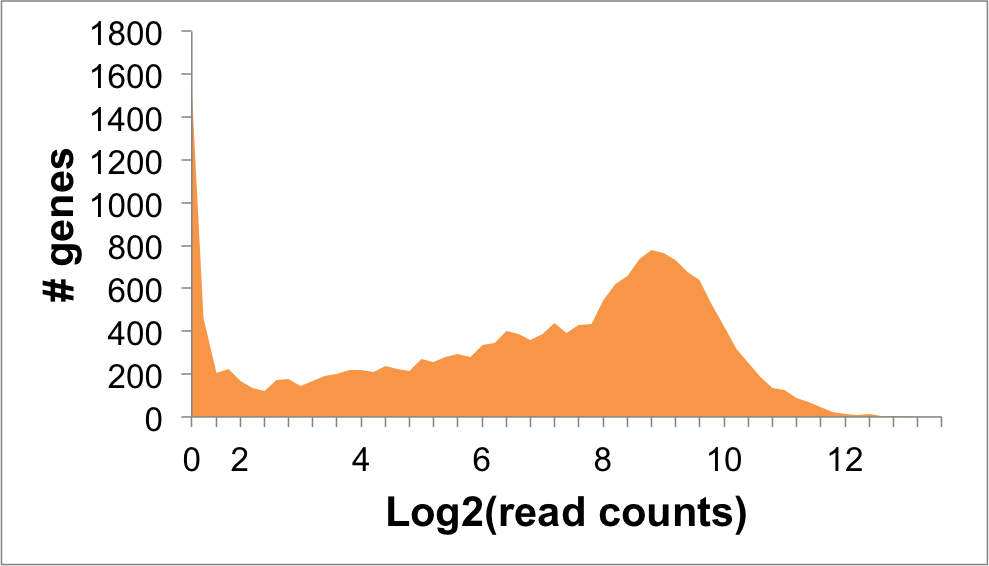
- Expression level (log2 read counts): 8.51
Expression Distribution
ACTR2 Expression in NALM6 Cells: 8.51