CCNB1
Gene Information
- Official Symbol: CCNB1
- Official Name: cyclin B1
- Aliases and Previous Symbols: N/A
- Entrez ID: 891
- UniProt: P14635
- Interactions: BioGRID
- PubMed articles: Open PubMed
- OMIM: Open OMIM
Function Summary
- Entrez Summary: N/A
- UniProt Summary: Essential for the control of the cell cycle at the G2/M (mitosis) transition. {ECO:0000269|PubMed:17495531, ECO:0000269|PubMed:17495533}.
Pfam Domains GO Terms
Pfam Domains
| Cyclin C |
| Cyclin N |
GO Terms
| response to DDT |
| histone H3-S10 phosphorylation involved in chromosome condensation |
| cellular response to iron(III) ion |
| cyclin B1-CDK1 complex |
| condensed nuclear chromosome outer kinetochore |
| regulation of chromosome condensation |
| histone kinase activity |
| histone H3-S10 phosphorylation |
| positive regulation of attachment of spindle microtubules to kinetochore |
| positive regulation of mitochondrial ATP synthesis coupled electron transport |
| response to iron(III) ion |
| regulation of mitochondrial ATP synthesis coupled electron transport |
| patched binding |
| positive regulation of histone phosphorylation |
| cyclin-dependent protein serine/threonine kinase activator activity |
| positive regulation of cellular respiration |
| positive regulation of oxidative phosphorylation |
| cellular response to iron ion |
| histone-serine phosphorylation |
| ventricular cardiac muscle cell development |
| positive regulation of mRNA 3-end processing |
| mitotic nuclear envelope disassembly |
| regulation of attachment of spindle microtubules to kinetochore |
| regulation of histone phosphorylation |
| regulation of mitotic cell cycle spindle assembly checkpoint |
| regulation of spindle checkpoint |
| regulation of mitotic spindle checkpoint |
| ventricular cardiac muscle cell differentiation |
| nuclear envelope disassembly |
| membrane disassembly |
| response to insecticide |
| oocyte maturation |
| ubiquitin-like protein ligase binding |
| positive regulation of cardiac muscle cell proliferation |
| positive regulation of G2/M transition of mitotic cell cycle |
| positive regulation of chromosome segregation |
| regulation of mRNA 3-end processing |
| histone phosphorylation |
| positive regulation of cell cycle G2/M phase transition |
| cyclin-dependent protein kinase holoenzyme complex |
| regulation of cellular respiration |
| regulation of oxidative phosphorylation |
| positive regulation of mRNA processing |
| regulation of cell cycle checkpoint |
| positive regulation of cyclin-dependent protein serine/threonine kinase activity |
| positive regulation of cardiac muscle tissue growth |
| response to iron ion |
| cyclin-dependent protein serine/threonine kinase regulator activity |
| positive regulation of cyclin-dependent protein kinase activity |
| positive regulation of heart growth |
| oocyte development |
| regulation of cardiac muscle cell proliferation |
| chromosome condensation |
| oocyte differentiation |
| positive regulation of cardiac muscle tissue development |
| positive regulation of ATP metabolic process |
| mitotic metaphase plate congression |
| positive regulation of organ growth |
| positive regulation of fibroblast proliferation |
| regulation of mitotic metaphase/anaphase transition |
| nuclear envelope organization |
| regulation of metaphase/anaphase transition of cell cycle |
| metaphase plate congression |
| cellular response to fatty acid |
| DNA damage response, signal transduction by p53 class mediator resulting in cell cycle arrest |
| signal transduction involved in mitotic G1 DNA damage checkpoint |
| signal transduction involved in mitotic DNA integrity checkpoint |
| intracellular signal transduction involved in G1 DNA damage checkpoint |
| signal transduction involved in mitotic cell cycle checkpoint |
| signal transduction involved in mitotic DNA damage checkpoint |
| regulation of mitotic sister chromatid separation |
| regulation of cardiac muscle tissue growth |
| cardiac muscle cell development |
| regulation of chromosome separation |
| tissue regeneration |
| mitotic G1/S transition checkpoint |
| mitotic G1 DNA damage checkpoint |
| regulation of heart growth |
| G1 DNA damage checkpoint |
| cardiac cell development |
| regulation of mitotic sister chromatid segregation |
| positive regulation of muscle organ development |
| positive regulation of striated muscle tissue development |
| positive regulation of muscle tissue development |
| signal transduction involved in DNA integrity checkpoint |
| signal transduction involved in DNA damage checkpoint |
| signal transduction involved in cell cycle checkpoint |
| establishment of chromosome localization |
| chromosome localization |
| mitotic spindle organization |
| positive regulation of mitotic cell cycle phase transition |
| positive regulation of mRNA metabolic process |
| oogenesis |
| regulation of cardiac muscle tissue development |
| DNA damage response, signal transduction by p53 class mediator |
| regulation of sister chromatid segregation |
| positive regulation of cell cycle arrest |
| regulation of fibroblast proliferation |
| anaphase-promoting complex-dependent catabolic process |
| response to fatty acid |
| cardiac muscle cell differentiation |
| positive regulation of histone modification |
| positive regulation of cell cycle phase transition |
| regulation of organ growth |
| mitotic DNA damage checkpoint |
| regulation of cyclin-dependent protein serine/threonine kinase activity |
| regulation of chromosome segregation |
| regulation of cyclin-dependent protein kinase activity |
| negative regulation of G1/S transition of mitotic cell cycle |
| mitotic DNA integrity checkpoint |
| signal transduction in response to DNA damage |
| microtubule cytoskeleton organization involved in mitosis |
| positive regulation of chromatin organization |
| negative regulation of cell cycle G1/S phase transition |
| regulation of cell cycle arrest |
| mitotic sister chromatid segregation |
| cardiocyte differentiation |
| signal transduction by p53 class mediator |
| regulation of ATP metabolic process |
| spindle pole |
| female gamete generation |
| digestive tract development |
| G2/M transition of mitotic cell cycle |
| regulation of striated muscle tissue development |
| DNA damage checkpoint |
| cell cycle G2/M phase transition |
| nucleus organization |
| anatomical structure maturation |
| regulation of muscle tissue development |
| striated muscle cell development |
| regulation of muscle organ development |
| regulation of mRNA processing |
| sister chromatid segregation |
| digestive system development |
| DNA integrity checkpoint |
| mitotic nuclear division |
| regulation of histone modification |
| muscle cell development |
| regulation of G1/S transition of mitotic cell cycle |
| positive regulation of mitotic cell cycle |
| mitotic cell cycle checkpoint |
| spindle organization |
| regeneration |
| cell maturation |
| regulation of generation of precursor metabolites and energy |
| cardiac muscle tissue development |
| regulation of cell cycle G1/S phase transition |
| regulation of mitotic nuclear division |
| positive regulation of developmental growth |
| positive regulation of chromosome organization |
| peptidyl-serine phosphorylation |
| transcription initiation from RNA polymerase II promoter |
| DNA packaging |
| cellular response to hypoxia |
| regulation of chromatin organization |
| cellular response to metal ion |
| regulation of nuclear division |
| cell cycle checkpoint |
| regulation of G2/M transition of mitotic cell cycle |
| cellular response to decreased oxygen levels |
| peptidyl-serine modification |
| striated muscle cell differentiation |
| cellular response to acid chemical |
| regulation of cell cycle G2/M phase transition |
| negative regulation of mitotic cell cycle phase transition |
| response to mechanical stimulus |
| cellular response to oxygen levels |
| DNA-templated transcription, initiation |
| nuclear chromosome segregation |
| cellular response to inorganic substance |
| negative regulation of cell cycle phase transition |
| protein kinase activity |
| developmental maturation |
| muscle cell differentiation |
| germ cell development |
| positive regulation of growth |
| mitotic cell cycle phase transition |
| chromosome segregation |
| cell cycle phase transition |
| striated muscle tissue development |
| nuclear division |
| positive regulation of cell cycle process |
| muscle tissue development |
| DNA conformation change |
| negative regulation of mitotic cell cycle |
| organelle fission |
| proteasome-mediated ubiquitin-dependent protein catabolic process |
| negative regulation of cell cycle process |
| regulation of mRNA metabolic process |
| regulation of developmental growth |
| positive regulation of protein serine/threonine kinase activity |
| response to hypoxia |
| response to acid chemical |
| regulation of chromosome organization |
| proteasomal protein catabolic process |
| cellular process involved in reproduction in multicellular organism |
| response to decreased oxygen levels |
| establishment of organelle localization |
| histone modification |
| mitochondrial matrix |
| response to metal ion |
| covalent chromatin modification |
| in utero embryonic development |
| positive regulation of cell cycle |
| response to oxygen levels |
| developmental growth |
| growth |
| cellular component disassembly |
| negative regulation of protein phosphorylation |
| regulation of mitotic cell cycle phase transition |
| endomembrane system organization |
| negative regulation of phosphorylation |
| regulation of cell cycle phase transition |
| protein kinase binding |
| microtubule cytoskeleton organization |
| muscle structure development |
| wound healing |
| transcription by RNA polymerase II |
| centrosome |
| cell division |
| response to toxic substance |
| regulation of protein serine/threonine kinase activity |
| cellular response to lipid |
| heart development |
| ubiquitin-dependent protein catabolic process |
| modification-dependent protein catabolic process |
| positive regulation of protein kinase activity |
| response to inorganic substance |
| cellular response to organic cyclic compound |
| spermatogenesis |
| modification-dependent macromolecule catabolic process |
| negative regulation of phosphate metabolic process |
| negative regulation of phosphorus metabolic process |
| male gamete generation |
| response to wounding |
| negative regulation of cell cycle |
| positive regulation of kinase activity |
| organelle localization |
| proteolysis involved in cellular protein catabolic process |
| negative regulation of protein modification process |
| mitotic cell cycle process |
| cellular protein catabolic process |
| positive regulation of organelle organization |
| regulation of mitotic cell cycle |
| chordate embryonic development |
| transcription, DNA-templated |
| nucleic acid-templated transcription |
| embryo development ending in birth or egg hatching |
| RNA biosynthetic process |
| positive regulation of transferase activity |
| developmental process involved in reproduction |
| microtubule-based process |
| regulation of growth |
| mitotic cell cycle |
| protein catabolic process |
| gamete generation |
| chromatin organization |
| regulation of cell cycle process |
| cellular response to DNA damage stimulus |
| regulation of protein kinase activity |
| multicellular organismal reproductive process |
| sexual reproduction |
| multicellular organism reproduction |
| tube development |
| response to lipid |
| membrane organization |
| circulatory system development |
| regulation of kinase activity |
| peptidyl-amino acid modification |
| cellular macromolecule catabolic process |
| positive regulation of cell population proliferation |
| response to organic cyclic compound |
| protein phosphorylation |
| embryo development |
| regulation of transferase activity |
| multi-organism reproductive process |
| cell cycle process |
| positive regulation of protein phosphorylation |
| response to drug |
| negative regulation of cellular protein metabolic process |
| macromolecule catabolic process |
| cellular response to oxygen-containing compound |
| positive regulation of phosphorylation |
| organonitrogen compound catabolic process |
| chromosome organization |
| nucleobase-containing compound biosynthetic process |
| negative regulation of protein metabolic process |
| cytoskeleton organization |
| positive regulation of phosphorus metabolic process |
| positive regulation of phosphate metabolic process |
| response to abiotic stimulus |
| heterocycle biosynthetic process |
| aromatic compound biosynthetic process |
| regulation of cell cycle |
| positive regulation of cellular component organization |
| positive regulation of protein modification process |
| proteolysis |
| phosphorylation |
| regulation of organelle organization |
| organic cyclic compound biosynthetic process |
| cell cycle |
| positive regulation of developmental process |
| reproductive process |
| reproduction |
| positive regulation of catalytic activity |
| regulation of protein phosphorylation |
| response to oxygen-containing compound |
| protein-containing complex assembly |
| regulation of phosphorylation |
| positive regulation of cellular protein metabolic process |
| regulation of cell population proliferation |
| cellular nitrogen compound biosynthetic process |
| cell development |
| RNA metabolic process |
| intracellular signal transduction |
| cellular response to stress |
| positive regulation of protein metabolic process |
| cellular macromolecule biosynthetic process |
| negative regulation of gene expression |
| positive regulation of RNA metabolic process |
| positive regulation of multicellular organismal process |
| tissue development |
| macromolecule biosynthetic process |
| organic substance catabolic process |
| positive regulation of molecular function |
| regulation of phosphate metabolic process |
| regulation of phosphorus metabolic process |
| cellular catabolic process |
| establishment of localization in cell |
| regulation of protein modification process |
| protein-containing complex subunit organization |
| positive regulation of nucleobase-containing compound metabolic process |
| positive regulation of gene expression |
| membrane |
| gene expression |
CRISPR Data
Compound Hit Most Correlated Genes in Chemogenomics Tissues where Essential in the Avana Dataset (DepMap 20Q1)
Compound Hit
Tissues where Essential in the Avana Dataset (DepMap 20Q1)
Global Fraction of Cell Lines Where Essential: 154/739
| Tissue | Fraction Of Cell Lines Where Essential |
|---|---|
| 1290807.0 | 1/1 |
| 909776.0 | 0/1 |
| bile duct | 6/28 |
| blood | 4/28 |
| bone | 8/26 |
| breast | 6/33 |
| central nervous system | 8/56 |
| cervix | 0/4 |
| colorectal | 7/17 |
| esophagus | 3/13 |
| fibroblast | 0/1 |
| gastric | 5/16 |
| kidney | 2/21 |
| liver | 6/20 |
| lung | 19/75 |
| lymphocyte | 2/16 |
| ovary | 9/26 |
| pancreas | 6/24 |
| peripheral nervous system | 1/16 |
| plasma cell | 1/15 |
| prostate | 0/1 |
| skin | 6/24 |
| soft tissue | 2/9 |
| thyroid | 0/2 |
| upper aerodigestive | 6/22 |
| urinary tract | 4/29 |
| uterus | 1/5 |
Essentiality in NALM6
- Essentiality Rank: 3083
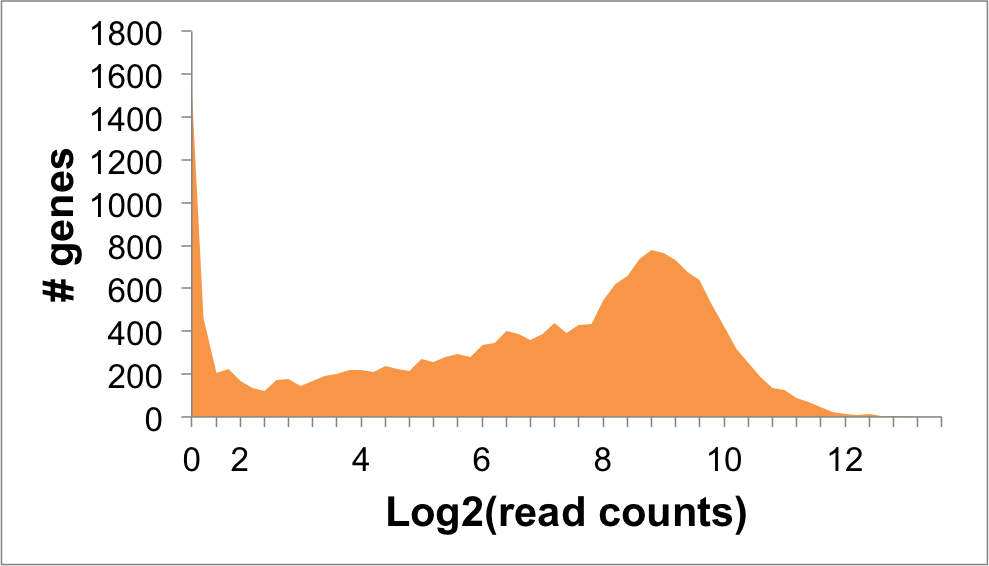
- Expression level (log2 read counts): 7.4
Expression Distribution
CCNB1 Expression in NALM6 Cells: 7.4