MCL1
Gene Information
- Official Symbol: MCL1
- Official Name: MCL1 apoptosis regulator, BCL2 family member
- Aliases and Previous Symbols: N/A
- Entrez ID: 4170
- UniProt: Q07820
- Interactions: BioGRID
- PubMed articles: Open PubMed
- OMIM: Open OMIM
Function Summary
- Entrez Summary: This gene encodes an anti-apoptotic protein, which is a member of the Bcl-2 family. Alternative splicing results in multiple transcript variants. The longest gene product (isoform 1) enhances cell survival by inhibiting apoptosis while the alternatively spliced shorter gene products (isoform 2 and isoform 3) promote apoptosis and are death-inducing. [provided by RefSeq, Oct 2010].
- UniProt Summary: N/A
Pfam Domains GO Terms
Pfam Domains
| Bcl-2 |
GO Terms
| positive regulation of oxidative stress-induced neuron intrinsic apoptotic signaling pathway |
| positive regulation of oxidative stress-induced neuron death |
| BH3 domain binding |
| Bcl-2 family protein complex |
| positive regulation of oxidative stress-induced intrinsic apoptotic signaling pathway |
| regulation of oxidative stress-induced neuron intrinsic apoptotic signaling pathway |
| positive regulation of oxidative stress-induced cell death |
| positive regulation of cellular response to oxidative stress |
| negative regulation of anoikis |
| positive regulation of response to oxidative stress |
| protein transmembrane transporter activity |
| regulation of anoikis |
| regulation of oxidative stress-induced neuron death |
| regulation of oxidative stress-induced intrinsic apoptotic signaling pathway |
| signal transduction in absence of ligand |
| extrinsic apoptotic signaling pathway in absence of ligand |
| negative regulation of signal transduction in absence of ligand |
| negative regulation of extrinsic apoptotic signaling pathway in absence of ligand |
| cell fate determination |
| regulation of extrinsic apoptotic signaling pathway in absence of ligand |
| positive regulation of neuron apoptotic process |
| positive regulation of intrinsic apoptotic signaling pathway |
| protein transmembrane transport |
| regulation of oxidative stress-induced cell death |
| intrinsic apoptotic signaling pathway in response to DNA damage |
| regulation of cellular response to oxidative stress |
| negative regulation of autophagy |
| regulation of response to oxidative stress |
| positive regulation of neuron death |
| negative regulation of intrinsic apoptotic signaling pathway |
| extrinsic apoptotic signaling pathway |
| negative regulation of extrinsic apoptotic signaling pathway |
| intrinsic apoptotic signaling pathway |
| regulation of extrinsic apoptotic signaling pathway |
| regulation of intrinsic apoptotic signaling pathway |
| mitochondrial outer membrane |
| positive regulation of apoptotic signaling pathway |
| regulation of neuron apoptotic process |
| regulation of response to DNA damage stimulus |
| negative regulation of apoptotic signaling pathway |
| cell fate commitment |
| negative regulation of cellular catabolic process |
| apoptotic signaling pathway |
| negative regulation of catabolic process |
| regulation of neuron death |
| regulation of autophagy |
| regulation of apoptotic signaling pathway |
| protein heterodimerization activity |
| negative regulation of intracellular signal transduction |
| positive regulation of apoptotic process |
| positive regulation of programmed cell death |
| cytokine-mediated signaling pathway |
| positive regulation of cell death |
| regulation of cellular response to stress |
| cellular response to DNA damage stimulus |
| regulation of cellular catabolic process |
| protein homodimerization activity |
| negative regulation of apoptotic process |
| cellular homeostasis |
| negative regulation of programmed cell death |
| apoptotic process |
| regulation of catabolic process |
| negative regulation of cell death |
| cellular response to cytokine stimulus |
| positive regulation of intracellular signal transduction |
| programmed cell death |
| cell death |
| response to cytokine |
| mitochondrion |
| negative regulation of signal transduction |
| transmembrane transport |
| negative regulation of cell communication |
| negative regulation of signaling |
| regulation of response to stress |
| protein transport |
| peptide transport |
| regulation of apoptotic process |
| regulation of programmed cell death |
| amide transport |
| establishment of protein localization |
| negative regulation of response to stimulus |
| homeostatic process |
| positive regulation of signal transduction |
| regulation of cell death |
| intracellular signal transduction |
| cellular response to stress |
| positive regulation of cell communication |
| positive regulation of signaling |
| regulation of intracellular signal transduction |
| nitrogen compound transport |
| membrane |
CRISPR Data
Compound Hit Most Correlated Genes in Chemogenomics Tissues where Essential in the Avana Dataset (DepMap 20Q1)
Compound Hit
Tissues where Essential in the Avana Dataset (DepMap 20Q1)
Global Fraction of Cell Lines Where Essential: 141/739
| Tissue | Fraction Of Cell Lines Where Essential |
|---|---|
| 1290807.0 | 0/1 |
| 909776.0 | 0/1 |
| bile duct | 1/28 |
| blood | 12/28 |
| bone | 7/26 |
| breast | 11/33 |
| central nervous system | 11/56 |
| cervix | 0/4 |
| colorectal | 3/17 |
| esophagus | 1/13 |
| fibroblast | 0/1 |
| gastric | 2/16 |
| kidney | 0/21 |
| liver | 6/20 |
| lung | 8/75 |
| lymphocyte | 8/16 |
| ovary | 2/26 |
| pancreas | 0/24 |
| peripheral nervous system | 3/16 |
| plasma cell | 9/15 |
| prostate | 1/1 |
| skin | 3/24 |
| soft tissue | 1/9 |
| thyroid | 0/2 |
| upper aerodigestive | 5/22 |
| urinary tract | 3/29 |
| uterus | 0/5 |
Essentiality in NALM6
- Essentiality Rank: 620
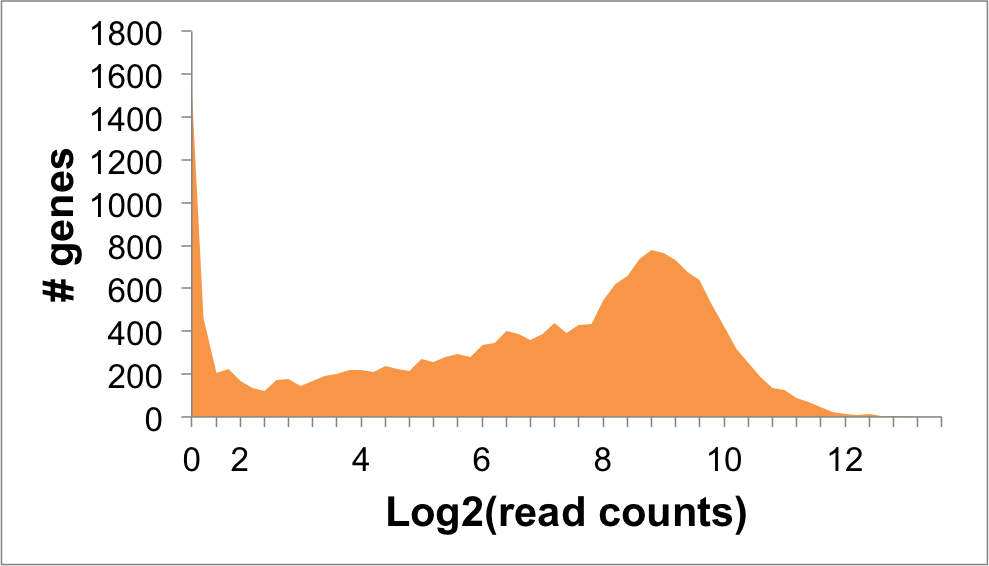
- Expression level (log2 read counts): 7.98
Expression Distribution
MCL1 Expression in NALM6 Cells: 7.98