BCL2
Gene Information
- Official Symbol: BCL2
- Official Name: BCL2 apoptosis regulator
- Aliases and Previous Symbols: N/A
- Entrez ID: 596
- UniProt: P10415
- Interactions: BioGRID
- PubMed articles: Open PubMed
- OMIM: Open OMIM
Function Summary
- Entrez Summary: This gene encodes an integral outer mitochondrial membrane protein that blocks the apoptotic death of some cells such as lymphocytes. Constitutive expression of BCL2, such as in the case of translocation of BCL2 to Ig heavy chain locus, is thought to be the cause of follicular lymphoma. Alternative splicing results in multiple transcript variants. [provided by RefSeq, Feb 2016].
- UniProt Summary: Suppresses apoptosis in a variety of cell systems including factor-dependent lymphohematopoietic and neural cells. Regulates cell death by controlling the mitochondrial membrane permeability. Appears to function in a feedback loop system with caspases. Inhibits caspase activity either by preventing the release of cytochrome c from the mitochondria and/or by binding to the apoptosis-activating factor (APAF-1). May attenuate inflammation by impairing NLRP1-inflammasome activation, hence CASP1 activation and IL1B release (PubMed:17418785). {ECO:0000269|PubMed:17418785, ECO:0000269|PubMed:18570871}.
Pfam Domains GO Terms
Pfam Domains
| Bcl-2 |
| BH4 |
GO Terms
| CD8-positive, alpha-beta T cell lineage commitment |
| negative regulation of retinal cell programmed cell death |
| channel inhibitor activity |
| negative regulation of cellular pH reduction |
| regulation of retinal cell programmed cell death |
| cochlear nucleus development |
| regulation of nitrogen utilization |
| BH3 domain binding |
| regulation of cellular pH reduction |
| positive regulation of neuron maturation |
| positive regulation of melanocyte differentiation |
| negative regulation of mitochondrial depolarization |
| intracellular pH elevation |
| regulation of melanocyte differentiation |
| B cell lineage commitment |
| positive regulation of pigment cell differentiation |
| pH elevation |
| negative regulation of membrane depolarization |
| regulation of pigment cell differentiation |
| regulation of protein heterodimerization activity |
| CD8-positive, alpha-beta T cell differentiation |
| positive regulation of skeletal muscle fiber development |
| negative regulation of osteoblast proliferation |
| positive regulation of developmental pigmentation |
| positive regulation of cell maturation |
| pons development |
| CD8-positive, alpha-beta T cell activation |
| regulation of neuron maturation |
| regulation of skeletal muscle fiber development |
| lymphoid progenitor cell differentiation |
| alpha-beta T cell lineage commitment |
| pore complex |
| CD4-positive or CD8-positive, alpha-beta T cell lineage commitment |
| melanin metabolic process |
| channel activity |
| regulation of developmental pigmentation |
| intrinsic apoptotic signaling pathway in response to oxidative stress |
| negative regulation of myeloid cell apoptotic process |
| negative regulation of intrinsic apoptotic signaling pathway in response to DNA damage by p53 class mediator |
| negative regulation of anoikis |
| response to UV-B |
| regulation of intrinsic apoptotic signaling pathway in response to DNA damage by p53 class mediator |
| negative regulation of calcium ion transport into cytosol |
| cell death in response to oxidative stress |
| T cell lineage commitment |
| melanocyte differentiation |
| regulation of mitochondrial depolarization |
| release of cytochrome c from mitochondria |
| regulation of osteoblast proliferation |
| negative regulation of intrinsic apoptotic signaling pathway by p53 class mediator |
| regulation of protein homodimerization activity |
| endoplasmic reticulum calcium ion homeostasis |
| regulation of cell maturation |
| axon regeneration |
| regulation of anoikis |
| B cell homeostasis |
| hair follicle morphogenesis |
| positive regulation of skeletal muscle tissue development |
| pigment granule organization |
| positive regulation of protein insertion into mitochondrial membrane involved in apoptotic signaling pathway |
| positive T cell selection |
| regulation of protein insertion into mitochondrial membrane involved in apoptotic signaling pathway |
| focal adhesion assembly |
| cell-substrate adherens junction assembly |
| regulation of myeloid cell apoptotic process |
| epidermis morphogenesis |
| neuron projection regeneration |
| regulation of intrinsic apoptotic signaling pathway by p53 class mediator |
| behavioral fear response |
| homeostasis of number of cells within a tissue |
| behavioral defense response |
| positive regulation of multicellular organism growth |
| negative regulation of intrinsic apoptotic signaling pathway in response to DNA damage |
| extrinsic apoptotic signaling pathway in absence of ligand |
| signal transduction in absence of ligand |
| myelin sheath |
| pigment cell differentiation |
| protein phosphatase 2A binding |
| negative regulation of signal transduction by p53 class mediator |
| positive regulation of myotube differentiation |
| intrinsic apoptotic signaling pathway in response to endoplasmic reticulum stress |
| T cell homeostasis |
| response to iron ion |
| fear response |
| spleen development |
| extrinsic apoptotic signaling pathway via death domain receptors |
| negative regulation of animal organ morphogenesis |
| negative regulation of signal transduction in absence of ligand |
| negative regulation of extrinsic apoptotic signaling pathway in absence of ligand |
| positive regulation of mitochondrial outer membrane permeabilization involved in apoptotic signaling pathway |
| adherens junction assembly |
| positive regulation of smooth muscle cell migration |
| oocyte development |
| T cell selection |
| regulation of intrinsic apoptotic signaling pathway in response to DNA damage |
| regulation of glycoprotein biosynthetic process |
| developmental pigmentation |
| positive regulation of B cell proliferation |
| B cell proliferation |
| cellular response to glucose starvation |
| oocyte differentiation |
| cell-substrate junction assembly |
| neuron apoptotic process |
| regulation of mitochondrial outer membrane permeabilization involved in apoptotic signaling pathway |
| regulation of membrane depolarization |
| branching involved in ureteric bud morphogenesis |
| regulation of glycoprotein metabolic process |
| thymus development |
| regulation of extrinsic apoptotic signaling pathway in absence of ligand |
| T cell differentiation in thymus |
| digestive tract morphogenesis |
| cellular pigmentation |
| response to nicotine |
| response to axon injury |
| response to ischemia |
| regulation of skeletal muscle tissue development |
| alpha-beta T cell differentiation |
| ovarian follicle development |
| glomerulus development |
| neuron death |
| lymphocyte homeostasis |
| ureteric bud morphogenesis |
| negative regulation of reactive oxygen species metabolic process |
| mesonephric tubule morphogenesis |
| secondary metabolic process |
| response to gamma radiation |
| regulation of myotube differentiation |
| positive regulation of intrinsic apoptotic signaling pathway |
| positive regulation of striated muscle cell differentiation |
| positive regulation of establishment of protein localization to mitochondrion |
| apoptotic mitochondrial changes |
| regulation of smooth muscle cell migration |
| negative regulation of calcium ion transport |
| alpha-beta T cell activation |
| regulation of B cell proliferation |
| neural nucleus development |
| pigment metabolic process |
| cell aging |
| nephron tubule morphogenesis |
| nephron epithelium morphogenesis |
| regulation of multicellular organism growth |
| nephron morphogenesis |
| multicellular organismal response to stress |
| renal tubule morphogenesis |
| positive regulation of muscle organ development |
| positive regulation of striated muscle tissue development |
| leukocyte homeostasis |
| regulation of mitochondrial membrane potential |
| intrinsic apoptotic signaling pathway in response to DNA damage |
| positive regulation of muscle tissue development |
| hair follicle development |
| regulation of mitochondrial membrane permeability |
| regulation of establishment of protein localization to mitochondrion |
| skin epidermis development |
| negative regulation of ossification |
| molting cycle process |
| hair cycle process |
| nephron tubule development |
| oogenesis |
| renal tubule development |
| negative regulation of response to DNA damage stimulus |
| regulation of membrane permeability |
| peptidyl-threonine phosphorylation |
| adherens junction organization |
| negative regulation of autophagy |
| mesenchymal cell development |
| phenol-containing compound metabolic process |
| lymphocyte proliferation |
| metanephros development |
| kidney morphogenesis |
| regulation of intracellular pH |
| mononuclear cell proliferation |
| ureteric bud development |
| mesonephric epithelium development |
| positive regulation of muscle cell differentiation |
| mesonephric tubule development |
| hematopoietic progenitor cell differentiation |
| female gonad development |
| post-embryonic development |
| mesonephros development |
| peptidyl-threonine modification |
| regulation of cellular pH |
| molting cycle |
| pigmentation |
| hair cycle |
| development of primary female sexual characteristics |
| regulation of viral genome replication |
| negative regulation of intrinsic apoptotic signaling pathway |
| extrinsic apoptotic signaling pathway |
| organ growth |
| nephron epithelium development |
| leukocyte proliferation |
| regulation of calcium ion transport into cytosol |
| regulation of pH |
| gland morphogenesis |
| negative regulation of extrinsic apoptotic signaling pathway |
| regulation of striated muscle cell differentiation |
| negative regulation of G1/S transition of mitotic cell cycle |
| protease binding |
| positive regulation of peptidyl-serine phosphorylation |
| negative regulation of cell cycle G1/S phase transition |
| female sex differentiation |
| B cell differentiation |
| cellular monovalent inorganic cation homeostasis |
| renal system process |
| metencephalon development |
| reactive oxygen species metabolic process |
| regulation of cell-matrix adhesion |
| positive regulation of mitochondrion organization |
| response to hydrogen peroxide |
| positive regulation of protein localization to membrane |
| nephron development |
| cell-matrix adhesion |
| mitochondrial membrane organization |
| B cell receptor signaling pathway |
| kidney epithelium development |
| positive regulation of lymphocyte proliferation |
| female gamete generation |
| digestive tract development |
| branching morphogenesis of an epithelial tube |
| positive regulation of mononuclear cell proliferation |
| regulation of striated muscle tissue development |
| male gonad development |
| T cell differentiation |
| development of primary male sexual characteristics |
| regulation of muscle tissue development |
| regulation of muscle organ development |
| regulation of peptidyl-serine phosphorylation |
| positive regulation of leukocyte proliferation |
| monovalent inorganic cation homeostasis |
| digestive system development |
| response to UV |
| negative regulation of neuron apoptotic process |
| response to glucocorticoid |
| regulation of viral life cycle |
| negative regulation of ion transport |
| intrinsic apoptotic signaling pathway |
| response to ionizing radiation |
| regulation of G1/S transition of mitotic cell cycle |
| cellular response to starvation |
| hindbrain development |
| regulation of muscle cell differentiation |
| B cell activation |
| regulation of extrinsic apoptotic signaling pathway |
| mesenchymal cell differentiation |
| male sex differentiation |
| regeneration |
| morphogenesis of a branching epithelium |
| regulation of intrinsic apoptotic signaling pathway |
| response to corticosteroid |
| mitochondrial outer membrane |
| positive regulation of cell growth |
| regulation of cell cycle G1/S phase transition |
| positive regulation of B cell activation |
| morphogenesis of a branching structure |
| cell junction assembly |
| positive regulation of developmental growth |
| peptidyl-serine phosphorylation |
| positive regulation of apoptotic signaling pathway |
| regulation of reactive oxygen species metabolic process |
| regulation of mitochondrion organization |
| female pregnancy |
| regulation of signal transduction by p53 class mediator |
| negative regulation of cell growth |
| cell-substrate adhesion |
| cellular response to hypoxia |
| regulation of protein localization to membrane |
| regulation of ossification |
| tissue homeostasis |
| defense response to virus |
| response to starvation |
| response to reactive oxygen species |
| cellular response to decreased oxygen levels |
| peptidyl-serine modification |
| homeostasis of number of cells |
| regulation of viral process |
| regulation of neuron apoptotic process |
| negative regulation of neuron death |
| regulation of B cell activation |
| regulation of lymphocyte proliferation |
| regulation of mononuclear cell proliferation |
| gonad development |
| multi-multicellular organism process |
| regulation of cell-substrate adhesion |
| negative regulation of mitotic cell cycle phase transition |
| cell junction organization |
| protein dephosphorylation |
| cellular response to oxygen levels |
| mitochondrial transport |
| development of primary sexual characteristics |
| regulation of response to DNA damage stimulus |
| regulation of protein binding |
| regulation of symbiosis, encompassing mutualism through parasitism |
| mesenchyme development |
| ear development |
| regulation of leukocyte proliferation |
| negative regulation of apoptotic signaling pathway |
| negative regulation of cell cycle phase transition |
| cellular response to nutrient levels |
| T cell activation |
| lymphocyte differentiation |
| nuclear membrane |
| actin filament organization |
| cellular response to oxidative stress |
| negative regulation of growth |
| cell fate commitment |
| regulation of calcium ion transport |
| negative regulation of cellular catabolic process |
| germ cell development |
| regulation of animal organ morphogenesis |
| response to endoplasmic reticulum stress |
| positive regulation of growth |
| negative regulation of cell migration |
| ossification |
| cellular response to extracellular stimulus |
| regulation of transmembrane transporter activity |
| sex differentiation |
| kidney development |
| negative regulation of cell motility |
| regulation of transporter activity |
| aging |
| response to virus |
| apoptotic signaling pathway |
| renal system development |
| regulation of protein stability |
| ubiquitin protein ligase binding |
| antigen receptor-mediated signaling pathway |
| protein polyubiquitination |
| vesicle organization |
| response to antibiotic |
| epithelial tube morphogenesis |
| negative regulation of mitotic cell cycle |
| response to light stimulus |
| dephosphorylation |
| negative regulation of cellular component movement |
| negative regulation of catabolic process |
| regulation of neuron death |
| urogenital system development |
| negative regulation of locomotion |
| multicellular organismal homeostasis |
| positive regulation of cellular protein localization |
| negative regulation of cell cycle process |
| response to steroid hormone |
| regulation of developmental growth |
| leukocyte differentiation |
| regulation of autophagy |
| transcription factor binding |
| negative regulation of cell development |
| cellular response to external stimulus |
| anatomical structure homeostasis |
| response to hypoxia |
| humoral immune response |
| cellular process involved in reproduction in multicellular organism |
| response to decreased oxygen levels |
| positive regulation of lymphocyte activation |
| positive regulation of neuron differentiation |
| response to metal ion |
| axonogenesis |
| regulation of binding |
| response to oxygen levels |
| skin development |
| lymphocyte activation |
| regulation of metal ion transport |
| response to oxidative stress |
| developmental growth |
| growth |
| regulation of apoptotic signaling pathway |
| positive regulation of leukocyte activation |
| axon development |
| gland development |
| regulation of mitotic cell cycle phase transition |
| epidermis development |
| regulation of cell growth |
| positive regulation of cell activation |
| sequence-specific DNA binding |
| reproductive structure development |
| reproductive system development |
| regulation of membrane potential |
| cell morphogenesis involved in neuron differentiation |
| morphogenesis of an epithelium |
| cellular calcium ion homeostasis |
| response to radiation |
| mitochondrion organization |
| regulation of cell cycle phase transition |
| calcium ion homeostasis |
| immune response-activating cell surface receptor signaling pathway |
| organic hydroxy compound metabolic process |
| supramolecular fiber organization |
| positive regulation of establishment of protein localization |
| cellular divalent inorganic cation homeostasis |
| positive regulation of neurogenesis |
| neuron projection morphogenesis |
| immune response-regulating cell surface receptor signaling pathway |
| plasma membrane bounded cell projection morphogenesis |
| negative regulation of transport |
| protein heterodimerization activity |
| cell projection morphogenesis |
| divalent inorganic cation homeostasis |
| actin cytoskeleton organization |
| response to nutrient levels |
| positive regulation of cell migration |
| cell-cell adhesion |
| negative regulation of intracellular signal transduction |
| response to toxic substance |
| cell part morphogenesis |
| regulation of lymphocyte activation |
| positive regulation of cell motility |
| response to extracellular stimulus |
| response to inorganic substance |
| positive regulation of nervous system development |
| positive regulation of cellular component movement |
| regulation of cellular protein localization |
| positive regulation of cell development |
| sensory organ development |
| positive regulation of locomotion |
| cell population proliferation |
| cell morphogenesis involved in differentiation |
| cellular metal ion homeostasis |
| hemopoiesis |
| immune response-activating signal transduction |
| regulation of transmembrane transport |
| tissue morphogenesis |
| actin filament-based process |
| behavior |
| response to wounding |
| negative regulation of cell cycle |
| protein-containing complex |
| immune response-regulating signaling pathway |
| regulation of leukocyte activation |
| hematopoietic or lymphoid organ development |
| positive regulation of organelle organization |
| metal ion homeostasis |
| activation of immune response |
| regulation of mitotic cell cycle |
| cellular cation homeostasis |
| regulation of cell activation |
| positive regulation of apoptotic process |
| cellular ion homeostasis |
| immune system development |
| positive regulation of programmed cell death |
| tube morphogenesis |
| regulation of neuron differentiation |
| neuron projection development |
| developmental process involved in reproduction |
| regulation of growth |
| cytokine-mediated signaling pathway |
| negative regulation of cell population proliferation |
| regulation of cell adhesion |
| protein ubiquitination |
| gamete generation |
| positive regulation of cell death |
| regulation of ion transport |
| cation homeostasis |
| negative regulation of cell differentiation |
| inorganic ion homeostasis |
| cell morphogenesis |
| regulation of cellular response to stress |
| brain development |
| cellular chemical homeostasis |
| regulation of establishment of protein localization |
| regulation of cell cycle process |
| protein modification by small protein conjugation |
| cellular response to DNA damage stimulus |
| regulation of multi-organism process |
| head development |
| ion homeostasis |
| neuron development |
| regulation of neurogenesis |
| cellular component morphogenesis |
| multicellular organismal reproductive process |
| sexual reproduction |
| regulation of cellular catabolic process |
| multicellular organism reproduction |
| tube development |
| regulation of cell migration |
| response to lipid |
| membrane organization |
| positive regulation of immune response |
| protein homodimerization activity |
| peptidyl-amino acid modification |
| negative regulation of apoptotic process |
| cellular homeostasis |
| negative regulation of programmed cell death |
| response to hormone |
| regulation of cell motility |
| positive regulation of cell population proliferation |
| regulation of cellular localization |
| response to organic cyclic compound |
| apoptotic process |
| regulation of nervous system development |
| leukocyte activation |
| cell adhesion |
| regulation of cell development |
| biological adhesion |
| endoplasmic reticulum membrane |
| negative regulation of developmental process |
| defense response to other organism |
| animal organ morphogenesis |
| positive regulation of cell differentiation |
| protein phosphorylation |
| central nervous system development |
| regulation of locomotion |
| protein modification by small protein conjugation or removal |
| positive regulation of transport |
| multi-organism reproductive process |
| negative regulation of cell death |
| regulation of catabolic process |
| regulation of cellular component movement |
| cellular response to cytokine stimulus |
| neuron differentiation |
| endoplasmic reticulum |
| positive regulation of protein phosphorylation |
| positive regulation of intracellular signal transduction |
| response to drug |
| regulation of protein localization |
| programmed cell death |
| positive regulation of phosphorylation |
| regulation of anatomical structure morphogenesis |
| identical protein binding |
| cell activation |
| cell death |
| immune effector process |
| response to cytokine |
| cytoskeleton organization |
| chemical homeostasis |
| epithelium development |
| plasma membrane bounded cell projection organization |
| positive regulation of phosphorus metabolic process |
| positive regulation of phosphate metabolic process |
| regulation of immune response |
| positive regulation of immune system process |
| cell projection organization |
| response to abiotic stimulus |
| regulation of cell cycle |
| negative regulation of multicellular organismal process |
| positive regulation of cellular component organization |
| positive regulation of protein modification process |
| mitochondrion |
| negative regulation of signal transduction |
| transmembrane transport |
| phosphorylation |
| regulation of organelle organization |
| response to other organism |
| response to external biotic stimulus |
| response to biotic stimulus |
| defense response |
| negative regulation of cell communication |
| negative regulation of signaling |
| positive regulation of developmental process |
| reproductive process |
| reproduction |
| positive regulation of catalytic activity |
| regulation of protein phosphorylation |
| response to endogenous stimulus |
| regulation of response to stress |
| generation of neurons |
| regulation of apoptotic process |
| response to oxygen-containing compound |
| regulation of programmed cell death |
| regulation of phosphorylation |
| positive regulation of cellular protein metabolic process |
| regulation of cell population proliferation |
| negative regulation of response to stimulus |
| neurogenesis |
| homeostatic process |
| cell development |
| regulation of immune system process |
| positive regulation of signal transduction |
| regulation of cell death |
| intracellular signal transduction |
| cellular response to stress |
| positive regulation of protein metabolic process |
| positive regulation of multicellular organismal process |
| tissue development |
| positive regulation of molecular function |
| regulation of phosphate metabolic process |
| regulation of phosphorus metabolic process |
| regulation of cell differentiation |
| positive regulation of cell communication |
| positive regulation of signaling |
| regulation of intracellular signal transduction |
| regulation of protein modification process |
| regulation of transport |
| immune response |
| system process |
| membrane |
CRISPR Data
Compound Hit Most Correlated Genes in Chemogenomics Tissues where Essential in the Avana Dataset (DepMap 20Q1)
Compound Hit
Tissues where Essential in the Avana Dataset (DepMap 20Q1)
Global Fraction of Cell Lines Where Essential: 4/739
| Tissue | Fraction Of Cell Lines Where Essential |
|---|---|
| 1290807.0 | 0/1 |
| 909776.0 | 0/1 |
| bile duct | 0/28 |
| blood | 1/28 |
| bone | 0/26 |
| breast | 0/33 |
| central nervous system | 0/56 |
| cervix | 0/4 |
| colorectal | 0/17 |
| esophagus | 0/13 |
| fibroblast | 0/1 |
| gastric | 0/16 |
| kidney | 0/21 |
| liver | 0/20 |
| lung | 0/75 |
| lymphocyte | 1/16 |
| ovary | 0/26 |
| pancreas | 0/24 |
| peripheral nervous system | 1/16 |
| plasma cell | 1/15 |
| prostate | 0/1 |
| skin | 0/24 |
| soft tissue | 0/9 |
| thyroid | 0/2 |
| upper aerodigestive | 0/22 |
| urinary tract | 0/29 |
| uterus | 0/5 |
Essentiality in NALM6
- Essentiality Rank: 10293
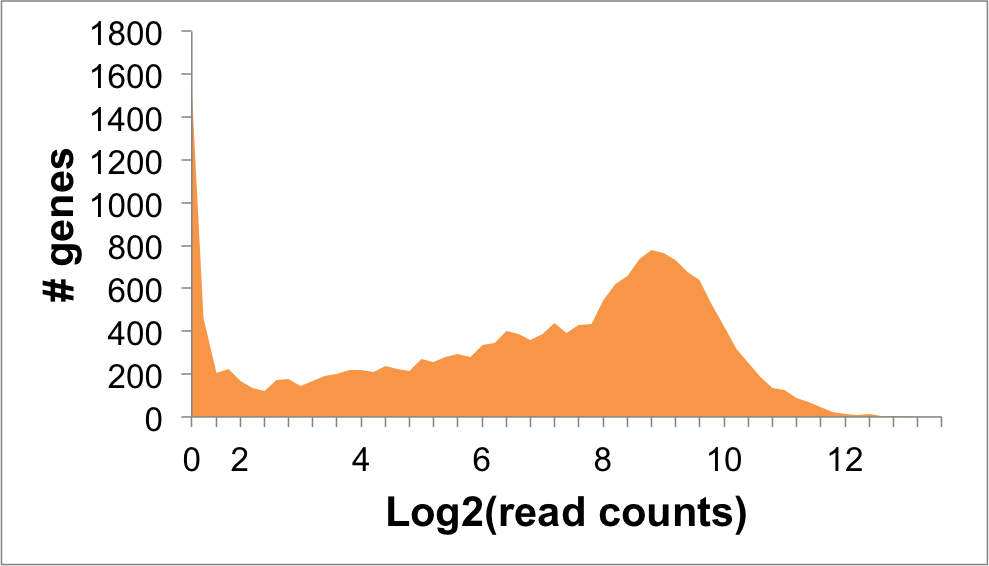
- Expression level (log2 read counts): 5.95
Expression Distribution
BCL2 Expression in NALM6 Cells: 5.95