DNM2
Gene Information
- Official Symbol: DNM2
- Official Name: dynamin 2
- Aliases and Previous Symbols: N/A
- Entrez ID: 1785
- UniProt: P50570
- Interactions: BioGRID
- PubMed articles: Open PubMed
- OMIM: Open OMIM
Function Summary
- Entrez Summary: Dynamins represent one of the subfamilies of GTP-binding proteins. These proteins share considerable sequence similarity over the N-terminal portion of the molecule, which contains the GTPase domain. Dynamins are associated with microtubules. They have been implicated in cell processes such as endocytosis and cell motility, and in alterations of the membrane that accompany certain activities such as bone resorption by osteoclasts. Dynamins bind many proteins that bind actin and other cytoskeletal proteins. Dynamins can also self-assemble, a process that stimulates GTPase activity. Five alternatively spliced transcripts encoding different proteins have been described. Additional alternatively spliced transcripts may exist, but their full-length nature has not been determined. [provided by RefSeq, Jun 2010].
- UniProt Summary: Microtubule-associated force-producing protein involved in producing microtubule bundles and able to bind and hydrolyze GTP. Plays a role in the regulation of neuron morphology, axon growth and formation of neuronal growth cones (By similarity). Plays an important role in vesicular trafficking processes, in particular endocytosis. Involved in cytokinesis (PubMed:12498685). Regulates maturation of apoptotic cell corpse-containing phagosomes by recruiting PIK3C3 to the phagosome membrane (By similarity). {ECO:0000250|UniProtKB:P39052, ECO:0000250|UniProtKB:P39054, ECO:0000269|PubMed:12498685}.
Pfam Domains GO Terms
Pfam Domains
| PH |
| Dynamin N |
| Dynamin M |
| GED |
GO Terms
| positive regulation of sodium:potassium-exchanging ATPase activity |
| cellular response to carbon monoxide |
| regulation of sodium:potassium-exchanging ATPase activity |
| negative regulation of membrane tubulation |
| negative regulation of non-motile cilium assembly |
| postsynaptic endocytic zone membrane |
| positive regulation of clathrin-dependent endocytosis |
| response to carbon monoxide |
| D2 dopamine receptor binding |
| synaptic vesicle budding from presynaptic endocytic zone membrane |
| regulation of membrane tubulation |
| postsynaptic neurotransmitter receptor internalization |
| postsynaptic endocytosis |
| synaptic vesicle budding |
| macropinocytosis |
| dendritic spine head |
| phosphatidylinositol 3-kinase regulatory subunit binding |
| cellular response to X-ray |
| negative regulation of cilium assembly |
| pinocytosis |
| neurotransmitter receptor internalization |
| regulation of non-motile cilium assembly |
| G protein-coupled receptor internalization |
| nitric-oxide synthase binding |
| regulation of Rac protein signal transduction |
| regulation of plasma membrane organization |
| positive regulation of sodium ion transmembrane transporter activity |
| regulation of Golgi organization |
| cellular response to nitric oxide |
| regulation of clathrin-dependent endocytosis |
| postsynaptic density, intracellular component |
| desensitization of G protein-coupled receptor signaling pathway |
| response to nitric oxide |
| cellular response to reactive nitrogen species |
| negative adaptation of signaling pathway |
| positive regulation of lamellipodium assembly |
| adaptation of signaling pathway |
| positive regulation of sodium ion transmembrane transport |
| positive regulation of potassium ion transmembrane transporter activity |
| negative regulation of plasma membrane bounded cell projection assembly |
| clathrin-coated endocytic vesicle |
| phagocytic cup |
| positive regulation of lamellipodium organization |
| response to X-ray |
| regulation of lamellipodium assembly |
| WW domain binding |
| positive regulation of sodium ion transport |
| neurotransmitter receptor transport |
| synaptic vesicle transport |
| transferrin transport |
| positive regulation of substrate adhesion-dependent cell spreading |
| negative regulation of organelle assembly |
| positive regulation of potassium ion transmembrane transport |
| positive regulation of nitric oxide biosynthetic process |
| synaptic vesicle localization |
| positive regulation of nitric oxide metabolic process |
| regulation of lamellipodium organization |
| synaptic vesicle endocytosis |
| regulation of nitric-oxide synthase activity |
| presynaptic endocytosis |
| positive regulation of potassium ion transport |
| coronary vasculature development |
| negative regulation of G protein-coupled receptor signaling pathway |
| regulation of postsynaptic membrane neurotransmitter receptor levels |
| photoreceptor inner segment |
| positive regulation of reactive oxygen species biosynthetic process |
| response to bronchodilator |
| aorta development |
| regulation of substrate adhesion-dependent cell spreading |
| positive regulation of receptor-mediated endocytosis |
| synaptic vesicle recycling |
| regulation of sodium ion transmembrane transporter activity |
| clathrin-coated pit |
| regulation of monooxygenase activity |
| response to cocaine |
| regulation of potassium ion transmembrane transporter activity |
| regulation of nitric oxide biosynthetic process |
| Golgi to plasma membrane transport |
| receptor internalization |
| regulation of sodium ion transmembrane transport |
| positive regulation of phagocytosis |
| endocytic vesicle membrane |
| cellular response to ionizing radiation |
| iron ion transport |
| ventricular septum development |
| negative regulation of transforming growth factor beta receptor signaling pathway |
| phagocytic vesicle membrane |
| negative regulation of cellular response to transforming growth factor beta stimulus |
| response to anesthetic |
| regulation of potassium ion transmembrane transport |
| regulation of cilium assembly |
| regulation of reactive oxygen species biosynthetic process |
| artery development |
| cellular response to dopamine |
| response to dopamine |
| regulation of sodium ion transport |
| vesicle-mediated transport to the plasma membrane |
| presynapse |
| ruffle membrane |
| regulation of potassium ion transport |
| positive regulation of reactive oxygen species metabolic process |
| regulation of oxidoreductase activity |
| regulation of phagocytosis |
| vesicle budding from membrane |
| regulation of axon extension |
| antigen processing and presentation of exogenous peptide antigen via MHC class II |
| antigen processing and presentation of peptide antigen via MHC class II |
| antigen processing and presentation of peptide or polysaccharide antigen via MHC class II |
| regulation of receptor-mediated endocytosis |
| positive regulation of endocytosis |
| positive regulation of plasma membrane bounded cell projection assembly |
| cellular response to monoamine stimulus |
| cellular response to catecholamine stimulus |
| post-Golgi vesicle-mediated transport |
| positive regulation of ion transmembrane transporter activity |
| receptor metabolic process |
| response to monoamine |
| response to catecholamine |
| cardiac septum development |
| regulation of extent of cell growth |
| positive regulation of transporter activity |
| response to alkaloid |
| regulation of transforming growth factor beta receptor signaling pathway |
| negative regulation of transmembrane receptor protein serine/threonine kinase signaling pathway |
| regulation of cellular response to transforming growth factor beta stimulus |
| synaptic vesicle cycle |
| transition metal ion transport |
| positive regulation of cell-substrate adhesion |
| cardiac ventricle development |
| growth cone |
| vesicle-mediated transport in synapse |
| cellular response to ammonium ion |
| G2/M transition of mitotic cell cycle |
| cellular response to reactive oxygen species |
| SH3 domain binding |
| cell cycle G2/M phase transition |
| positive regulation of cation transmembrane transport |
| regulation of G protein-coupled receptor signaling pathway |
| negative regulation of cellular response to growth factor stimulus |
| dendritic spine |
| response to ionizing radiation |
| positive regulation of cell morphogenesis involved in differentiation |
| positive regulation of ion transmembrane transport |
| midbody |
| trans-Golgi network |
| cardiac chamber development |
| cellular response to radiation |
| establishment of vesicle localization |
| antigen processing and presentation of exogenous peptide antigen |
| lamellipodium |
| regulation of reactive oxygen species metabolic process |
| regulation of cell size |
| negative regulation of cell projection organization |
| antigen processing and presentation of exogenous antigen |
| regulation of axonogenesis |
| response to ammonium ion |
| vesicle localization |
| antigen processing and presentation of peptide antigen |
| response to reactive oxygen species |
| postsynaptic membrane |
| regulation of plasma membrane bounded cell projection assembly |
| positive regulation of transmembrane transport |
| regulation of cell projection assembly |
| regulation of endocytosis |
| regulation of cell-substrate adhesion |
| cellular response to toxic substance |
| antigen processing and presentation |
| regulation of organelle assembly |
| cellular response to inorganic substance |
| regulation of synapse structure or activity |
| regulation of transmembrane receptor protein serine/threonine kinase signaling pathway |
| receptor-mediated endocytosis |
| microtubule binding |
| cellular response to oxidative stress |
| regulation of Ras protein signal transduction |
| postsynaptic density |
| cytoplasmic vesicle |
| protein-containing complex localization |
| regulation of ion transmembrane transporter activity |
| regulation of transmembrane transporter activity |
| protein-containing complex binding |
| synapse |
| endosome |
| mitotic cell cycle phase transition |
| regulation of cellular response to growth factor stimulus |
| positive regulation of ion transport |
| regulation of transporter activity |
| cell cycle phase transition |
| axon |
| vesicle organization |
| response to xenobiotic stimulus |
| regulation of cell morphogenesis involved in differentiation |
| response to light stimulus |
| cellular response to environmental stimulus |
| cellular response to abiotic stimulus |
| microtubule |
| regulation of developmental growth |
| phagocytosis |
| GTPase activity |
| regulation of cation transmembrane transport |
| regulation of small GTPase mediated signal transduction |
| enzyme binding |
| glutamatergic synapse |
| regulation of neurotransmitter levels |
| establishment of organelle localization |
| Golgi vesicle transport |
| negative regulation of organelle organization |
| regulation of cellular component size |
| positive regulation of cell projection organization |
| regulation of metal ion transport |
| response to oxidative stress |
| GTP binding |
| cellular response to drug |
| positive regulation of cell adhesion |
| focal adhesion |
| regulation of cell growth |
| establishment of protein localization to organelle |
| response to radiation |
| protein kinase binding |
| regulation of ion transmembrane transport |
| neuron projection morphogenesis |
| plasma membrane bounded cell projection morphogenesis |
| blood vessel development |
| regulation of cell morphogenesis |
| cell projection morphogenesis |
| centrosome |
| regulation of neuron projection development |
| response to toxic substance |
| vasculature development |
| cell part morphogenesis |
| regulation of anatomical structure size |
| cardiovascular system development |
| positive regulation of cellular component biogenesis |
| heart development |
| response to inorganic substance |
| positive regulation of cell development |
| cellular response to organic cyclic compound |
| spermatogenesis |
| regulation of vesicle-mediated transport |
| endocytosis |
| regulation of transmembrane transport |
| male gamete generation |
| organelle localization |
| protein-containing complex |
| mitotic cell cycle process |
| cellular response to organonitrogen compound |
| Golgi membrane |
| metal ion transport |
| positive regulation of apoptotic process |
| positive regulation of programmed cell death |
| regulation of neuron differentiation |
| cellular response to nitrogen compound |
| neuron projection development |
| regulation of growth |
| import into cell |
| regulation of cell adhesion |
| mitotic cell cycle |
| gamete generation |
| regulation of plasma membrane bounded cell projection organization |
| positive regulation of cell death |
| perinuclear region of cytoplasm |
| regulation of ion transport |
| negative regulation of cellular component organization |
| regulation of cell projection organization |
| cell morphogenesis |
| protein localization to organelle |
| neuron development |
| regulation of neurogenesis |
| cellular component morphogenesis |
| multicellular organismal reproductive process |
| cation transport |
| sexual reproduction |
| multicellular organism reproduction |
| membrane organization |
| circulatory system development |
| response to organic cyclic compound |
| regulation of nervous system development |
| regulation of cell development |
| regulation of cellular component biogenesis |
| positive regulation of cell differentiation |
| Golgi apparatus |
| positive regulation of transport |
| multi-organism reproductive process |
| cell cycle process |
| response to organonitrogen compound |
| neuron differentiation |
| response to drug |
| cellular response to oxygen-containing compound |
| regulation of anatomical structure morphogenesis |
| response to nitrogen compound |
| plasma membrane bounded cell projection organization |
| response to abiotic stimulus |
| cell projection organization |
| positive regulation of cellular component organization |
| cellular response to endogenous stimulus |
| negative regulation of signal transduction |
| regulation of organelle organization |
| cell cycle |
| negative regulation of cell communication |
| negative regulation of signaling |
| positive regulation of developmental process |
| ion transport |
| reproductive process |
| reproduction |
| response to endogenous stimulus |
| protein transport |
| generation of neurons |
| peptide transport |
| regulation of apoptotic process |
| positive regulation of transcription, DNA-templated |
| response to oxygen-containing compound |
| regulation of programmed cell death |
| amide transport |
| cellular protein localization |
| cellular macromolecule localization |
| establishment of protein localization |
| negative regulation of response to stimulus |
| neurogenesis |
| positive regulation of nucleic acid-templated transcription |
| positive regulation of RNA biosynthetic process |
| cell development |
| regulation of cell death |
| cellular response to stress |
| positive regulation of RNA metabolic process |
| positive regulation of molecular function |
| regulation of cell differentiation |
| regulation of intracellular signal transduction |
| establishment of localization in cell |
| nitrogen compound transport |
| regulation of transport |
| positive regulation of nucleobase-containing compound metabolic process |
| positive regulation of macromolecule biosynthetic process |
| vesicle-mediated transport |
| positive regulation of cellular biosynthetic process |
| positive regulation of gene expression |
| membrane |
| positive regulation of biosynthetic process |
CRISPR Data
Compound Hit Most Correlated Genes in Chemogenomics Tissues where Essential in the Avana Dataset (DepMap 20Q1)
Compound Hit
Most Correlated Genes in Chemogenomics
| Gene | Correlation |
|---|---|
| PSMD1 | 0.512 |
| NARFL | 0.483 |
| PRPF19 | 0.477 |
| PAN3 | 0.476 |
| ISCU | 0.476 |
| TCEB3CL2 | 0.473 |
| ZFAND5 | 0.471 |
| CWC22 | 0.47 |
| TBC1D3E | 0.469 |
| TBC1D3C | 0.469 |
| TCEB3C | 0.469 |
| TBC1D3K | 0.469 |
| TBC1D3L | 0.469 |
| TBC1D3I | 0.469 |
| TBC1D3G | 0.467 |
| TBC1D3H | 0.467 |
| PSMD3 | 0.461 |
| PSMA6 | 0.458 |
| KCTD17 | 0.453 |
| DDTL | 0.452 |
| INTS6 | 0.449 |
| VASN | 0.448 |
| COPA | 0.448 |
| TGFBRAP1 | 0.448 |
| PSMD11 | 0.446 |
| BCL2L2 | 0.445 |
| ADAMTS16 | 0.443 |
| PSMD7 | 0.442 |
| SMG1 | 0.441 |
| FAM160A1 | 0.441 |
| MTCH2 | 0.438 |
| TBC1D3F | 0.438 |
| SUPT6H | 0.436 |
| KIF3C | 0.436 |
| TCEB3CL | 0.432 |
| ANKLE2 | 0.43 |
| CGB2 | 0.427 |
| CHAF1A | 0.425 |
| NUP160 | 0.425 |
| PSMC1 | 0.424 |
| TFRC | 0.424 |
| TICRR | 0.423 |
| RAD51 | 0.422 |
| ZNF106 | 0.422 |
| C14orf93 | 0.421 |
| RPS9 | 0.42 |
| TBC1D3 | 0.419 |
| PSMC3 | 0.419 |
| UPF1 | 0.419 |
| INTS5 | 0.417 |
| EXOSC3 | 0.416 |
| PSMA7 | 0.415 |
| RPL35 | 0.413 |
| CHD4 | 0.413 |
| CEBPZ | 0.412 |
| RBM39 | 0.412 |
| RPS28 | 0.411 |
| GPRIN2 | 0.411 |
| MT1E | 0.41 |
| SETD1A | 0.409 |
| POLE | 0.409 |
| SCAF1 | 0.409 |
| COPE | 0.409 |
| SF3B2 | 0.409 |
| RPSA | 0.408 |
| RAD21 | 0.408 |
| PLK1 | 0.408 |
| NOL12 | 0.407 |
| ACO2 | 0.406 |
| AKIRIN2 | 0.405 |
| SPRR2B | 0.404 |
| VPS54 | 0.402 |
| SRSF1 | 0.401 |
| OR10G3 | 0.401 |
| NBPF10 | 0.4 |
| SPRR2A | 0.4 |
Tissues where Essential in the Avana Dataset (DepMap 20Q1)
Global Fraction of Cell Lines Where Essential: 572/739
| Tissue | Fraction Of Cell Lines Where Essential |
|---|---|
| 1290807.0 | 0/1 |
| 909776.0 | 0/1 |
| bile duct | 22/28 |
| blood | 28/28 |
| bone | 18/26 |
| breast | 29/33 |
| central nervous system | 34/56 |
| cervix | 3/4 |
| colorectal | 11/17 |
| esophagus | 9/13 |
| fibroblast | 1/1 |
| gastric | 13/16 |
| kidney | 12/21 |
| liver | 17/20 |
| lung | 51/75 |
| lymphocyte | 15/16 |
| ovary | 21/26 |
| pancreas | 18/24 |
| peripheral nervous system | 3/16 |
| plasma cell | 15/15 |
| prostate | 1/1 |
| skin | 23/24 |
| soft tissue | 6/9 |
| thyroid | 0/2 |
| upper aerodigestive | 19/22 |
| urinary tract | 24/29 |
| uterus | 3/5 |
Essentiality in NALM6
- Essentiality Rank: 15
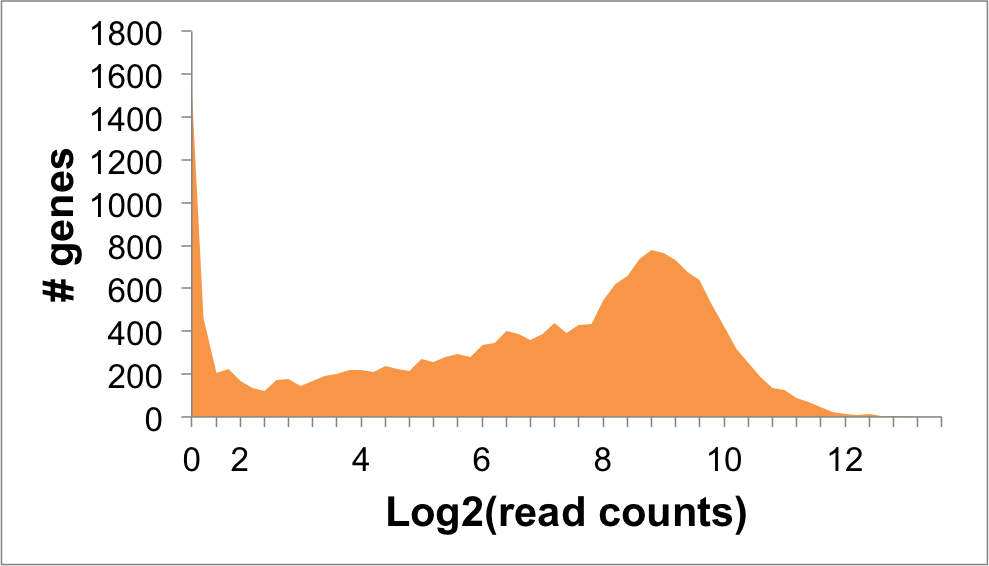
- Expression level (log2 read counts): 7.51
Expression Distribution
DNM2 Expression in NALM6 Cells: 7.51