TP53
Gene Information
- Official Symbol: TP53
- Official Name: tumor protein p53
- Aliases and Previous Symbols: N/A
- Entrez ID: 7157
- UniProt: P04637
- Interactions: BioGRID
- PubMed articles: Open PubMed
- OMIM: Open OMIM
Function Summary
- Entrez Summary: This gene encodes a tumor suppressor protein containing transcriptional activation, DNA binding, and oligomerization domains. The encoded protein responds to diverse cellular stresses to regulate expression of target genes, thereby inducing cell cycle arrest, apoptosis, senescence, DNA repair, or changes in metabolism. Mutations in this gene are associated with a variety of human cancers, including hereditary cancers such as Li-Fraumeni syndrome. Alternative splicing of this gene and the use of alternate promoters result in multiple transcript variants and isoforms. Additional isoforms have also been shown to result from the use of alternate translation initiation codons from identical transcript variants (PMIDs: 12032546, 20937277). [provided by RefSeq, Dec 2016]. COMPLETENESS: complete on the 3' end.
- UniProt Summary: N/A
Pfam Domains GO Terms
Pfam Domains
| P53 tetramer |
| P53 |
| P53 TAD |
GO Terms
| intrinsic apoptotic signaling pathway in response to hypoxia |
| oligodendrocyte apoptotic process |
| histone deacetylase regulator activity |
| regulation of glycolytic process by positive regulation of transcription from RNA polymerase II promoter |
| cellular response to actinomycin D |
| negative regulation of NAD metabolic process |
| positive regulation of programmed necrotic cell death |
| regulation of glycolytic process by regulation of transcription from RNA polymerase II promoter |
| negative regulation of glucose catabolic process to lactate via pyruvate |
| regulation of carbohydrate catabolic process by regulation of transcription from RNA polymerase II promoter |
| regulation of glucose catabolic process to lactate via pyruvate |
| core promoter sequence-specific DNA binding |
| oxidative stress-induced premature senescence |
| response to actinomycin D |
| negative regulation of fermentation |
| regulation of NAD metabolic process |
| positive regulation of thymocyte apoptotic process |
| T cell proliferation involved in immune response |
| negative regulation of helicase activity |
| glial cell apoptotic process |
| regulation of fermentation |
| mitochondrial DNA repair |
| B cell lineage commitment |
| positive regulation of transcription from RNA polymerase II promoter in response to hypoxia |
| negative regulation of mitophagy |
| negative regulation of neuroblast proliferation |
| cellular response to UV-C |
| MDM2/MDM4 family protein binding |
| DNA strand renaturation |
| stress-induced premature senescence |
| bone marrow development |
| positive regulation of necrotic cell death |
| mitochondrial DNA metabolic process |
| negative regulation of autophagy of mitochondrion |
| positive regulation of RNA polymerase II transcriptional preinitiation complex assembly |
| positive regulation of production of miRNAs involved in gene silencing by miRNA |
| negative regulation of production of miRNAs involved in gene silencing by miRNA |
| positive regulation of transcription from RNA polymerase II promoter in response to endoplasmic reticulum stress |
| TFIID-class transcription factor complex binding |
| regulation of carbohydrate metabolic process by regulation of transcription from RNA polymerase II promoter |
| replicative senescence |
| regulation of thymocyte apoptotic process |
| ER overload response |
| regulation of helicase activity |
| negative regulation of telomerase activity |
| RNA polymerase II preinitiation complex assembly |
| positive regulation of cardiac muscle cell apoptotic process |
| hematopoietic stem cell differentiation |
| positive regulation of striated muscle cell apoptotic process |
| negative regulation of stem cell proliferation |
| positive regulation of T cell apoptotic process |
| DNA damage response, signal transduction by p53 class mediator resulting in transcription of p21 class mediator |
| negative regulation of gene silencing by miRNA |
| regulation of RNA polymerase II transcriptional preinitiation complex assembly |
| positive regulation of cell aging |
| DNA damage response, signal transduction resulting in transcription |
| positive regulation of execution phase of apoptosis |
| response to UV-C |
| negative regulation of gene silencing by RNA |
| negative regulation of posttranscriptional gene silencing |
| regulation of mitophagy |
| regulation of fibroblast apoptotic process |
| determination of adult lifespan |
| mitotic cell cycle arrest |
| positive regulation of histone deacetylation |
| positive regulation of lymphocyte apoptotic process |
| mitochondrial genome maintenance |
| regulation of production of miRNAs involved in gene silencing by miRNA |
| positive regulation of transcription initiation from RNA polymerase II promoter |
| negative regulation of ATPase activity |
| T cell lineage commitment |
| regulation of programmed necrotic cell death |
| regulation of production of small RNA involved in gene silencing by RNA |
| positive regulation of mitochondrial membrane permeability |
| positive regulation of protein export from nucleus |
| rRNA transcription |
| entrainment of circadian clock by photoperiod |
| positive regulation of transcription from RNA polymerase II promoter involved in cellular response to chemical stimulus |
| positive regulation of protein deacetylation |
| release of cytochrome c from mitochondria |
| circadian behavior |
| negative regulation of neural precursor cell proliferation |
| positive regulation of gene silencing by miRNA |
| response to salt stress |
| regulation of mitochondrial membrane permeability involved in apoptotic process |
| positive regulation of membrane permeability |
| necroptotic process |
| rhythmic behavior |
| positive regulation of posttranscriptional gene silencing |
| negative regulation of ATP metabolic process |
| replication fork |
| mRNA transcription |
| photoperiodism |
| positive regulation of protein oligomerization |
| positive regulation of DNA-templated transcription, initiation |
| positive regulation of protein insertion into mitochondrial membrane involved in apoptotic signaling pathway |
| regulation of protein insertion into mitochondrial membrane involved in apoptotic signaling pathway |
| regulation of transcription initiation from RNA polymerase II promoter |
| entrainment of circadian clock |
| programmed necrotic cell death |
| positive regulation of leukocyte apoptotic process |
| regulation of histone deacetylation |
| positive regulation of muscle cell apoptotic process |
| regulation of necrotic cell death |
| intrinsic apoptotic signaling pathway in response to DNA damage by p53 class mediator |
| response to X-ray |
| negative regulation of fibroblast proliferation |
| histone acetyltransferase binding |
| transcription preinitiation complex assembly |
| necrotic cell death |
| positive regulation of release of cytochrome c from mitochondria |
| cellular response to gamma radiation |
| regulation of intrinsic apoptotic signaling pathway by p53 class mediator |
| positive regulation of transcription from RNA polymerase II promoter in response to stress |
| positive regulation of pri-miRNA transcription by RNA polymerase II |
| protein phosphatase 2A binding |
| cellular senescence |
| regulation of neuroblast proliferation |
| negative regulation of macroautophagy |
| regulation of T cell apoptotic process |
| intrinsic apoptotic signaling pathway in response to endoplasmic reticulum stress |
| disordered domain specific binding |
| regulation of DNA damage response, signal transduction by p53 class mediator |
| positive regulation of mitochondrial outer membrane permeabilization involved in apoptotic signaling pathway |
| multicellular organism aging |
| ER-nucleus signaling pathway |
| negative regulation of gene silencing |
| regulation of DNA-templated transcription, initiation |
| regulation of cardiac muscle cell apoptotic process |
| T cell proliferation |
| transcription factor TFIID complex |
| regulation of protein export from nucleus |
| regulation of striated muscle cell apoptotic process |
| negative regulation of DNA biosynthetic process |
| base-excision repair |
| negative regulation of DNA replication |
| regulation of execution phase of apoptosis |
| regulation of cellular senescence |
| cellular response to glucose starvation |
| regulation of pri-miRNA transcription by RNA polymerase II |
| regulation of autophagy of mitochondrion |
| regulation of protein oligomerization |
| regulation of protein deacetylation |
| neuron apoptotic process |
| regulation of mitochondrial outer membrane permeabilization involved in apoptotic signaling pathway |
| T cell differentiation in thymus |
| regulation of release of cytochrome c from mitochondria |
| negative regulation of carbohydrate metabolic process |
| regulation of cell aging |
| response to ischemia |
| promoter-specific chromatin binding |
| intrinsic apoptotic signaling pathway by p53 class mediator |
| regulation of telomerase activity |
| regulation of lymphocyte apoptotic process |
| neuron death |
| negative regulation of mitochondrion organization |
| negative regulation of reactive oxygen species metabolic process |
| positive regulation of neuron apoptotic process |
| DNA damage response, signal transduction by p53 class mediator resulting in cell cycle arrest |
| copper ion binding |
| protein self-association |
| response to gamma radiation |
| signal transduction involved in mitotic DNA integrity checkpoint |
| signal transduction involved in mitotic G1 DNA damage checkpoint |
| intracellular signal transduction involved in G1 DNA damage checkpoint |
| receptor tyrosine kinase binding |
| signal transduction involved in mitotic DNA damage checkpoint |
| signal transduction involved in mitotic cell cycle checkpoint |
| positive regulation of establishment of protein localization to mitochondrion |
| site of double-strand break |
| positive regulation of intrinsic apoptotic signaling pathway |
| apoptotic mitochondrial changes |
| RNA polymerase II transcription factor binding |
| mitotic G1/S transition checkpoint |
| positive regulation of nucleocytoplasmic transport |
| mitotic G1 DNA damage checkpoint |
| G1 DNA damage checkpoint |
| T cell activation involved in immune response |
| cell aging |
| somitogenesis |
| regulation of stem cell proliferation |
| p53 binding |
| regulation of muscle cell apoptotic process |
| cellular response to ionizing radiation |
| intrinsic apoptotic signaling pathway in response to DNA damage |
| regulation of mitochondrial membrane permeability |
| signal transduction involved in DNA damage checkpoint |
| signal transduction involved in DNA integrity checkpoint |
| signal transduction involved in cell cycle checkpoint |
| regulation of establishment of protein localization to mitochondrion |
| interferon-gamma-mediated signaling pathway |
| regulation of tissue remodeling |
| negative regulation of transforming growth factor beta receptor signaling pathway |
| cardiac septum morphogenesis |
| negative regulation of cellular response to transforming growth factor beta stimulus |
| mRNA 3-UTR binding |
| response to osmotic stress |
| regulation of transcription from RNA polymerase II promoter in response to hypoxia |
| DNA damage response, signal transduction by p53 class mediator |
| regulation of glycolytic process |
| positive regulation of cell cycle arrest |
| regulation of ATPase activity |
| regulation of membrane permeability |
| regulation of fibroblast proliferation |
| regulation of leukocyte apoptotic process |
| multicellular organism growth |
| somite development |
| lymphocyte proliferation |
| cellular response to UV |
| negative regulation of autophagy |
| protein phosphatase binding |
| mononuclear cell proliferation |
| hematopoietic progenitor cell differentiation |
| regulation of gene silencing by miRNA |
| regulation of carbohydrate catabolic process |
| regulation of neural precursor cell proliferation |
| regulation of posttranscriptional gene silencing |
| regulation of gene silencing by RNA |
| positive regulation of histone modification |
| negative regulation of small molecule metabolic process |
| positive regulation of neuron death |
| protein homotetramerization |
| ncRNA transcription |
| mitotic DNA damage checkpoint |
| protein import into nucleus |
| segmentation |
| positive regulation of reactive oxygen species metabolic process |
| leukocyte proliferation |
| RNA polymerase II distal enhancer sequence-specific DNA binding |
| PML body |
| transforming growth factor beta receptor signaling pathway |
| cerebellum development |
| protease binding |
| negative regulation of G1/S transition of mitotic cell cycle |
| chaperone binding |
| signal transduction in response to DNA damage |
| mitotic DNA integrity checkpoint |
| positive regulation of chromatin organization |
| negative regulation of cell cycle G1/S phase transition |
| regulation of nucleocytoplasmic transport |
| protein N-terminus binding |
| regulation of cell cycle arrest |
| B cell differentiation |
| regulation of DNA replication |
| nuclear matrix |
| cardiac septum development |
| nucleotide-excision repair |
| lymphocyte activation involved in immune response |
| metencephalon development |
| histone deacetylase binding |
| regulation of DNA biosynthetic process |
| regulation of transforming growth factor beta receptor signaling pathway |
| regulation of glucose metabolic process |
| cellular response to light stimulus |
| import into nucleus |
| regulation of circadian rhythm |
| positive regulation of mitochondrion organization |
| regulation of cellular response to transforming growth factor beta stimulus |
| negative regulation of transmembrane receptor protein serine/threonine kinase signaling pathway |
| regulation of purine nucleotide metabolic process |
| cellular response to antibiotic |
| regulation of nucleotide metabolic process |
| regulation of transcription from RNA polymerase II promoter in response to stress |
| DNA geometric change |
| signal transduction by p53 class mediator |
| regulation of ATP metabolic process |
| negative regulation of DNA metabolic process |
| positive regulation of protein localization to membrane |
| regulation of DNA-templated transcription in response to stress |
| cardiac chamber morphogenesis |
| mitochondrial membrane organization |
| regulation of gene silencing |
| DNA damage checkpoint |
| chromatin assembly |
| T cell differentiation |
| regulation of cellular carbohydrate metabolic process |
| protein import |
| circadian rhythm |
| response to UV |
| DNA integrity checkpoint |
| cell cycle arrest |
| regulation of histone modification |
| negative regulation of cellular response to growth factor stimulus |
| response to ionizing radiation |
| intrinsic apoptotic signaling pathway |
| regulation of G1/S transition of mitotic cell cycle |
| protein tetramerization |
| hindbrain development |
| cellular response to starvation |
| mitotic cell cycle checkpoint |
| B cell activation |
| positive regulation of intracellular protein transport |
| cellular response to transforming growth factor beta stimulus |
| chromatin assembly or disassembly |
| stem cell differentiation |
| regulation of generation of precursor metabolites and energy |
| gastrulation |
| regulation of intrinsic apoptotic signaling pathway |
| protein localization to nucleus |
| response to transforming growth factor beta |
| cellular response to interferon-gamma |
| regulation of cell cycle G1/S phase transition |
| cardiac chamber development |
| regulation of macroautophagy |
| positive regulation of apoptotic signaling pathway |
| positive regulation of chromosome organization |
| cellular response to radiation |
| transcription initiation from RNA polymerase II promoter |
| protein stabilization |
| DNA packaging |
| regulation of reactive oxygen species metabolic process |
| regulation of signal transduction by p53 class mediator |
| double-strand break repair |
| regulation of mitochondrion organization |
| response to interferon-gamma |
| negative regulation of cell growth |
| cellular response to hypoxia |
| regulation of chromatin organization |
| regulation of protein localization to membrane |
| positive regulation of peptidyl-tyrosine phosphorylation |
| response to starvation |
| cell cycle checkpoint |
| cellular response to decreased oxygen levels |
| transmembrane receptor protein serine/threonine kinase signaling pathway |
| bone development |
| protein-DNA complex assembly |
| regulation of carbohydrate metabolic process |
| transcription factor complex |
| regulation of neuron apoptotic process |
| positive regulation of intracellular transport |
| regulation of cell cycle G2/M phase transition |
| negative regulation of mitotic cell cycle phase transition |
| cellular response to oxygen levels |
| mitochondrial transport |
| cellular response to biotic stimulus |
| anterior/posterior pattern specification |
| DNA-templated transcription, initiation |
| regulation of response to DNA damage stimulus |
| transcription regulatory region DNA binding |
| negative regulation of cell cycle phase transition |
| regulation of intracellular protein transport |
| cellular response to nutrient levels |
| regulation of transmembrane receptor protein serine/threonine kinase signaling pathway |
| T cell activation |
| nuclear chromatin |
| lymphocyte differentiation |
| cellular response to oxidative stress |
| protein-DNA complex subunit organization |
| negative regulation of growth |
| cell fate commitment |
| Ras protein signal transduction |
| positive regulation of protein complex assembly |
| heart morphogenesis |
| regulation of peptidyl-tyrosine phosphorylation |
| negative regulation of cellular catabolic process |
| response to endoplasmic reticulum stress |
| autophagy |
| process utilizing autophagic mechanism |
| nucleocytoplasmic transport |
| cellular response to extracellular stimulus |
| nuclear transport |
| regulation of cellular response to growth factor stimulus |
| rhythmic process |
| negative regulation of transferase activity |
| aging |
| protein deubiquitination |
| nuclear body |
| apoptotic signaling pathway |
| positive regulation of cell cycle process |
| regulation of protein stability |
| negative regulation of neurogenesis |
| ubiquitin protein ligase binding |
| DNA conformation change |
| protein modification by small protein removal |
| response to antibiotic |
| negative regulation of mitotic cell cycle |
| response to light stimulus |
| negative regulation of catabolic process |
| regulation of neuron death |
| negative regulation of nervous system development |
| cellular response to abiotic stimulus |
| cellular response to environmental stimulus |
| small GTPase mediated signal transduction |
| positive regulation of cellular protein localization |
| negative regulation of cell cycle process |
| cellular response to peptide |
| leukocyte differentiation |
| regulation of autophagy |
| regionalization |
| transcription factor binding |
| negative regulation of cell development |
| cellular response to external stimulus |
| protein homooligomerization |
| response to hypoxia |
| enzyme binding |
| regulation of chromosome organization |
| regulation of intracellular transport |
| negative regulation of proteolysis |
| regulation of DNA metabolic process |
| response to decreased oxygen levels |
| mitochondrial matrix |
| negative regulation of organelle organization |
| positive regulation of cell cycle |
| in utero embryonic development |
| response to oxygen levels |
| lymphocyte activation |
| response to oxidative stress |
| developmental growth |
| growth |
| chromatin binding |
| regulation of apoptotic signaling pathway |
| cellular response to drug |
| regulation of mitotic cell cycle phase transition |
| regulation of cell growth |
| positive regulation of protein transport |
| regulation of small molecule metabolic process |
| establishment of protein localization to organelle |
| embryonic organ development |
| pattern specification process |
| response to radiation |
| mitochondrion organization |
| regulation of cell cycle phase transition |
| DNA-binding transcription activator activity, RNA polymerase II-specific |
| regulation of protein complex assembly |
| negative regulation of hydrolase activity |
| positive regulation of establishment of protein localization |
| protein kinase binding |
| response to peptide |
| transcription by RNA polymerase II |
| protein heterodimerization activity |
| skeletal system development |
| response to nutrient levels |
| cellular response to growth factor stimulus |
| RNA polymerase II proximal promoter sequence-specific DNA binding |
| DNA repair |
| protein complex oligomerization |
| positive regulation of cellular component biogenesis |
| heart development |
| response to extracellular stimulus |
| response to growth factor |
| regulation of cellular protein localization |
| cell population proliferation |
| hemopoiesis |
| embryonic morphogenesis |
| behavior |
| negative regulation of cell cycle |
| protein-containing complex |
| mitotic cell cycle process |
| cellular response to organonitrogen compound |
| hematopoietic or lymphoid organ development |
| positive regulation of organelle organization |
| leukocyte activation involved in immune response |
| cell activation involved in immune response |
| regulation of mitotic cell cycle |
| chordate embryonic development |
| transcription, DNA-templated |
| nucleic acid-templated transcription |
| positive regulation of apoptotic process |
| positive regulation of programmed cell death |
| immune system development |
| embryo development ending in birth or egg hatching |
| RNA biosynthetic process |
| cellular response to nitrogen compound |
| regulation of growth |
| cytokine-mediated signaling pathway |
| DNA-binding transcription factor activity |
| negative regulation of cell population proliferation |
| mitotic cell cycle |
| mRNA metabolic process |
| positive regulation of cell death |
| chromatin organization |
| viral process |
| negative regulation of cellular component organization |
| regulation of protein transport |
| negative regulation of cell differentiation |
| enzyme linked receptor protein signaling pathway |
| regulation of proteolysis |
| regulation of cellular response to stress |
| protein localization to organelle |
| regulation of peptide transport |
| brain development |
| DNA metabolic process |
| regulation of establishment of protein localization |
| regulation of cell cycle process |
| innate immune response |
| cellular response to DNA damage stimulus |
| head development |
| symbiotic process |
| negative regulation of catalytic activity |
| regulation of neurogenesis |
| interspecies interaction between organisms |
| regulation of cellular catabolic process |
| zinc ion binding |
| cellular protein-containing complex assembly |
| membrane organization |
| nucleolus |
| negative regulation of transcription by RNA polymerase II |
| circulatory system development |
| protein homodimerization activity |
| negative regulation of apoptotic process |
| anatomical structure formation involved in morphogenesis |
| negative regulation of programmed cell death |
| regulation of cellular localization |
| apoptotic process |
| regulation of nervous system development |
| leukocyte activation |
| regulation of cell development |
| negative regulation of developmental process |
| defense response to other organism |
| animal organ morphogenesis |
| regulation of cellular component biogenesis |
| embryo development |
| regulation of transferase activity |
| central nervous system development |
| protein modification by small protein conjugation or removal |
| positive regulation of transport |
| regulation of catabolic process |
| negative regulation of cell death |
| intracellular protein transport |
| cell cycle process |
| response to organonitrogen compound |
| cellular response to cytokine stimulus |
| endoplasmic reticulum |
| positive regulation of protein phosphorylation |
| response to drug |
| positive regulation of intracellular signal transduction |
| regulation of protein localization |
| negative regulation of cellular protein metabolic process |
| programmed cell death |
| cellular response to oxygen-containing compound |
| positive regulation of phosphorylation |
| chromosome organization |
| identical protein binding |
| cell activation |
| response to nitrogen compound |
| immune effector process |
| cell death |
| nucleobase-containing compound biosynthetic process |
| response to cytokine |
| negative regulation of protein metabolic process |
| epithelium development |
| positive regulation of phosphorus metabolic process |
| positive regulation of phosphate metabolic process |
| negative regulation of molecular function |
| response to abiotic stimulus |
| heterocycle biosynthetic process |
| aromatic compound biosynthetic process |
| regulation of cell cycle |
| negative regulation of transcription, DNA-templated |
| negative regulation of multicellular organismal process |
| positive regulation of cellular component organization |
| positive regulation of transcription by RNA polymerase II |
| cellular response to endogenous stimulus |
| positive regulation of protein modification process |
| negative regulation of nucleic acid-templated transcription |
| negative regulation of RNA biosynthetic process |
| mitochondrion |
| negative regulation of signal transduction |
| proteolysis |
| regulation of hydrolase activity |
| regulation of organelle organization |
| response to other organism |
| organic cyclic compound biosynthetic process |
| response to external biotic stimulus |
| response to biotic stimulus |
| negative regulation of RNA metabolic process |
| defense response |
| cell cycle |
| negative regulation of cell communication |
| negative regulation of signaling |
| positive regulation of developmental process |
| negative regulation of cellular macromolecule biosynthetic process |
| negative regulation of nucleobase-containing compound metabolic process |
| regulation of protein phosphorylation |
| DNA binding |
| negative regulation of macromolecule biosynthetic process |
| response to endogenous stimulus |
| regulation of response to stress |
| ATP binding |
| protein transport |
| negative regulation of cellular biosynthetic process |
| intracellular transport |
| generation of neurons |
| peptide transport |
| positive regulation of transcription, DNA-templated |
| regulation of apoptotic process |
| negative regulation of biosynthetic process |
| response to oxygen-containing compound |
| protein-containing complex assembly |
| DNA-binding transcription factor activity, RNA polymerase II-specific |
| regulation of programmed cell death |
| amide transport |
| cellular protein localization |
| regulation of phosphorylation |
| cellular macromolecule localization |
| positive regulation of cellular protein metabolic process |
| establishment of protein localization |
| regulation of cell population proliferation |
| negative regulation of response to stimulus |
| neurogenesis |
| cellular nitrogen compound biosynthetic process |
| positive regulation of nucleic acid-templated transcription |
| positive regulation of RNA biosynthetic process |
| positive regulation of signal transduction |
| RNA metabolic process |
| regulation of cell death |
| intracellular signal transduction |
| cellular response to stress |
| positive regulation of protein metabolic process |
| cellular macromolecule biosynthetic process |
| negative regulation of gene expression |
| positive regulation of RNA metabolic process |
| tissue development |
| macromolecule biosynthetic process |
| regulation of phosphate metabolic process |
| regulation of phosphorus metabolic process |
| cellular catabolic process |
| regulation of cell differentiation |
| positive regulation of cell communication |
| positive regulation of signaling |
| regulation of intracellular signal transduction |
| establishment of localization in cell |
| nitrogen compound transport |
| regulation of protein modification process |
| protein-containing complex subunit organization |
| regulation of transport |
| immune response |
| positive regulation of nucleobase-containing compound metabolic process |
| positive regulation of macromolecule biosynthetic process |
| positive regulation of cellular biosynthetic process |
| positive regulation of gene expression |
| gene expression |
| positive regulation of biosynthetic process |
CRISPR Data
Compound Hit Most Correlated Genes in Chemogenomics Tissues where Essential in the Avana Dataset (DepMap 20Q1)
Compound Hit
Tissues where Essential in the Avana Dataset (DepMap 20Q1)
Global Fraction of Cell Lines Where Essential: 3/739
| Tissue | Fraction Of Cell Lines Where Essential |
|---|---|
| 1290807.0 | 0/1 |
| 909776.0 | 0/1 |
| bile duct | 0/28 |
| blood | 1/28 |
| bone | 0/26 |
| breast | 0/33 |
| central nervous system | 0/56 |
| cervix | 0/4 |
| colorectal | 0/17 |
| esophagus | 0/13 |
| fibroblast | 0/1 |
| gastric | 0/16 |
| kidney | 0/21 |
| liver | 0/20 |
| lung | 0/75 |
| lymphocyte | 1/16 |
| ovary | 0/26 |
| pancreas | 0/24 |
| peripheral nervous system | 0/16 |
| plasma cell | 0/15 |
| prostate | 0/1 |
| skin | 0/24 |
| soft tissue | 0/9 |
| thyroid | 0/2 |
| upper aerodigestive | 0/22 |
| urinary tract | 0/29 |
| uterus | 0/5 |
Essentiality in NALM6
- Essentiality Rank: 16798
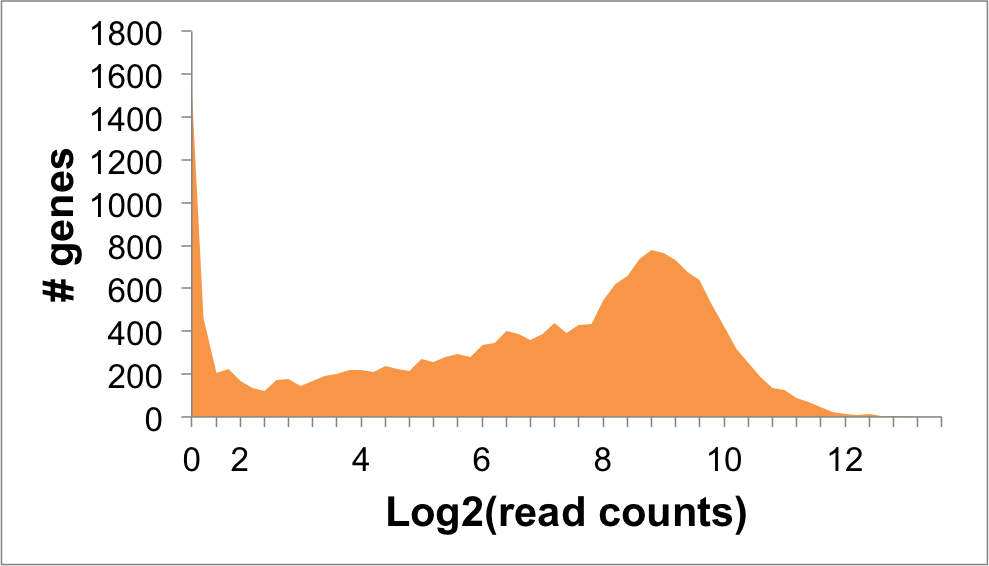
- Expression level (log2 read counts): 6.61
Expression Distribution
TP53 Expression in NALM6 Cells: 6.61