CNOT2
Gene Information
- Official Symbol: CNOT2
- Official Name: CCR4-NOT transcription complex subunit 2
- Aliases and Previous Symbols: N/A
- Entrez ID: 4848
- UniProt: Q9NZN8
- Interactions: BioGRID
- PubMed articles: Open PubMed
- OMIM: Open OMIM
Function Summary
- Entrez Summary: N/A
- UniProt Summary: Component of the CCR4-NOT complex which is one of the major cellular mRNA deadenylases and is linked to various cellular processes including bulk mRNA degradation, miRNA-mediated repression, translational repression during translational initiation and general transcription regulation. Additional complex functions may be a consequence of its influence on mRNA expression. Required for the CCR4-NOT complex structural integrity. Can repress transcription and may link the CCR4-NOT complex to transcriptional regulation; the repressive function may specifically involve the N-Cor repressor complex containing HDAC3, NCOR1 and NCOR2. Involved in the maintenance of emryonic stem (ES) cell identity. {ECO:0000269|PubMed:14707134, ECO:0000269|PubMed:16712523, ECO:0000269|PubMed:21299754, ECO:0000269|PubMed:22367759}.
Pfam Domains GO Terms
Pfam Domains
| NOT2 3 5 |
GO Terms
| RNA polymerase II transcription corepressor binding |
| positive regulation of cytoplasmic mRNA processing body assembly |
| CCR4-NOT core complex |
| regulation of cytoplasmic mRNA processing body assembly |
| poly(A)-specific ribonuclease activity |
| negative regulation of intracellular estrogen receptor signaling pathway |
| trophectodermal cell differentiation |
| CCR4-NOT complex |
| nuclear-transcribed mRNA poly(A) tail shortening |
| regulation of stem cell population maintenance |
| negative regulation of intracellular steroid hormone receptor signaling pathway |
| blastocyst formation |
| regulation of intracellular estrogen receptor signaling pathway |
| RNA phosphodiester bond hydrolysis, exonucleolytic |
| DNA damage response, signal transduction by p53 class mediator resulting in cell cycle arrest |
| intracellular signal transduction involved in G1 DNA damage checkpoint |
| signal transduction involved in mitotic cell cycle checkpoint |
| signal transduction involved in mitotic G1 DNA damage checkpoint |
| signal transduction involved in mitotic DNA damage checkpoint |
| signal transduction involved in mitotic DNA integrity checkpoint |
| nuclear-transcribed mRNA catabolic process, deadenylation-dependent decay |
| mitotic G1 DNA damage checkpoint |
| mitotic G1/S transition checkpoint |
| G1 DNA damage checkpoint |
| signal transduction involved in DNA integrity checkpoint |
| signal transduction involved in DNA damage checkpoint |
| signal transduction involved in cell cycle checkpoint |
| positive regulation of organelle assembly |
| regulation of intracellular steroid hormone receptor signaling pathway |
| DNA damage response, signal transduction by p53 class mediator |
| positive regulation of cell cycle arrest |
| transcription coregulator activity |
| P-body |
| gene silencing by RNA |
| mitotic DNA damage checkpoint |
| blastocyst development |
| negative regulation of G1/S transition of mitotic cell cycle |
| mitotic DNA integrity checkpoint |
| signal transduction in response to DNA damage |
| negative regulation of cell cycle G1/S phase transition |
| regulation of cell cycle arrest |
| signal transduction by p53 class mediator |
| negative regulation of translation |
| DNA damage checkpoint |
| DNA integrity checkpoint |
| negative regulation of cellular amide metabolic process |
| regulation of G1/S transition of mitotic cell cycle |
| gene silencing |
| mitotic cell cycle checkpoint |
| RNA phosphodiester bond hydrolysis |
| regulation of cell cycle G1/S phase transition |
| cell cycle checkpoint |
| nuclear-transcribed mRNA catabolic process |
| negative regulation of mitotic cell cycle phase transition |
| mRNA catabolic process |
| regulation of organelle assembly |
| negative regulation of cell cycle phase transition |
| RNA catabolic process |
| positive regulation of protein complex assembly |
| positive regulation of cell cycle process |
| nucleic acid phosphodiester bond hydrolysis |
| negative regulation of mitotic cell cycle |
| negative regulation of cell cycle process |
| regulation of translation |
| nucleobase-containing compound catabolic process |
| positive regulation of cell cycle |
| in utero embryonic development |
| regulation of cellular amide metabolic process |
| regulation of mitotic cell cycle phase transition |
| heterocycle catabolic process |
| cellular nitrogen compound catabolic process |
| aromatic compound catabolic process |
| regulation of cell cycle phase transition |
| regulation of protein complex assembly |
| organic cyclic compound catabolic process |
| positive regulation of cellular component biogenesis |
| posttranscriptional regulation of gene expression |
| negative regulation of cell cycle |
| mitotic cell cycle process |
| positive regulation of organelle organization |
| regulation of mitotic cell cycle |
| chordate embryonic development |
| embryo development ending in birth or egg hatching |
| mitotic cell cycle |
| mRNA metabolic process |
| regulation of cell cycle process |
| cellular response to DNA damage stimulus |
| negative regulation of transcription by RNA polymerase II |
| anatomical structure formation involved in morphogenesis |
| cellular macromolecule catabolic process |
| regulation of cellular component biogenesis |
| embryo development |
| cell cycle process |
| negative regulation of cellular protein metabolic process |
| macromolecule catabolic process |
| negative regulation of protein metabolic process |
| regulation of cell cycle |
| negative regulation of transcription, DNA-templated |
| positive regulation of cellular component organization |
| negative regulation of nucleic acid-templated transcription |
| negative regulation of RNA biosynthetic process |
| negative regulation of signal transduction |
| regulation of organelle organization |
| negative regulation of RNA metabolic process |
| cell cycle |
| negative regulation of cell communication |
| negative regulation of signaling |
| negative regulation of cellular macromolecule biosynthetic process |
| negative regulation of nucleobase-containing compound metabolic process |
| negative regulation of macromolecule biosynthetic process |
| negative regulation of cellular biosynthetic process |
| negative regulation of biosynthetic process |
| negative regulation of response to stimulus |
| RNA metabolic process |
| intracellular signal transduction |
| cellular response to stress |
| negative regulation of gene expression |
| organic substance catabolic process |
| cellular catabolic process |
| membrane |
CRISPR Data
Compound Hit Most Correlated Genes in Chemogenomics Tissues where Essential in the Avana Dataset (DepMap 20Q1)
Compound Hit
Tissues where Essential in the Avana Dataset (DepMap 20Q1)
Global Fraction of Cell Lines Where Essential: 21/739
| Tissue | Fraction Of Cell Lines Where Essential |
|---|---|
| 1290807.0 | 0/1 |
| 909776.0 | 0/1 |
| bile duct | 1/28 |
| blood | 0/28 |
| bone | 1/26 |
| breast | 2/33 |
| central nervous system | 0/56 |
| cervix | 0/4 |
| colorectal | 0/17 |
| esophagus | 1/13 |
| fibroblast | 0/1 |
| gastric | 0/16 |
| kidney | 0/21 |
| liver | 0/20 |
| lung | 3/75 |
| lymphocyte | 0/16 |
| ovary | 1/26 |
| pancreas | 0/24 |
| peripheral nervous system | 0/16 |
| plasma cell | 0/15 |
| prostate | 1/1 |
| skin | 3/24 |
| soft tissue | 0/9 |
| thyroid | 0/2 |
| upper aerodigestive | 0/22 |
| urinary tract | 1/29 |
| uterus | 0/5 |
Essentiality in NALM6
- Essentiality Rank: 16805
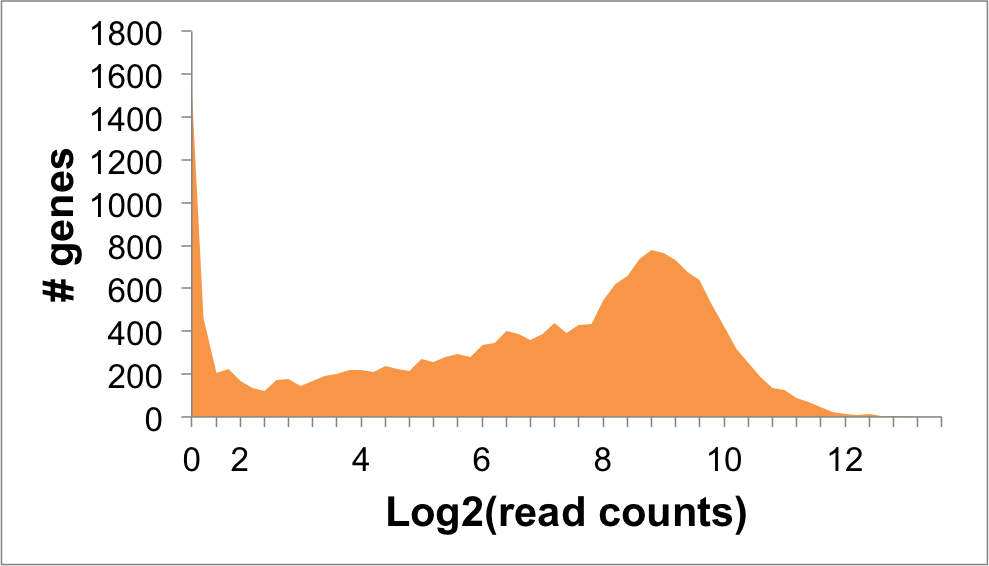
- Expression level (log2 read counts): 6.57
Expression Distribution
CNOT2 Expression in NALM6 Cells: 6.57