BCL2L1
Gene Information
- Official Symbol: BCL2L1
- Official Name: BCL2 like 1
- Aliases and Previous Symbols: N/A
- Entrez ID: 598
- UniProt: Q07817
- Interactions: BioGRID
- PubMed articles: Open PubMed
- OMIM: Open OMIM
Function Summary
- Entrez Summary: The protein encoded by this gene belongs to the BCL-2 protein family. BCL-2 family members form hetero- or homodimers and act as anti- or pro-apoptotic regulators that are involved in a wide variety of cellular activities. The proteins encoded by this gene are located at the outer mitochondrial membrane, and have been shown to regulate outer mitochondrial membrane channel (VDAC) opening. VDAC regulates mitochondrial membrane potential, and thus controls the production of reactive oxygen species and release of cytochrome C by mitochondria, both of which are the potent inducers of cell apoptosis. Alternative splicing results in multiple transcript variants encoding two different isoforms. The longer isoform acts as an apoptotic inhibitor and the shorter isoform acts as an apoptotic activator. [provided by RefSeq, Dec 2015]. COMPLETENESS: complete on the 3' end.
- UniProt Summary: Potent inhibitor of cell death. Inhibits activation of caspases. Appears to regulate cell death by blocking the voltage- dependent anion channel (VDAC) by binding to it and preventing the release of the caspase activator, CYC1, from the mitochondrial membrane. Also acts as a regulator of G2 checkpoint and progression to cytokinesis during mitosis. Isoform Bcl-X(S) promotes apoptosis.
Pfam Domains GO Terms
Pfam Domains
| BH4 |
| Bcl-2 |
GO Terms
| apoptotic process in bone marrow cell |
| suppression by virus of host apoptotic process |
| cellular process regulating host cell cycle in response to virus |
| negative regulation by symbiont of host programmed cell death |
| modulation by virus of host apoptotic process |
| negative regulation by symbiont of host apoptotic process |
| response to cycloheximide |
| BH3 domain binding |
| Bcl-2 family protein complex |
| modulation of programmed cell death in other organism involved in symbiotic interaction |
| modulation of apoptotic process in other organism |
| modulation of programmed cell death in other organism |
| modulation by organism of apoptotic process in other organism involved in symbiotic interaction |
| modulation by symbiont of host apoptotic process |
| modulation by symbiont of host programmed cell death |
| hepatocyte apoptotic process |
| response to fungicide |
| modulation by virus of host cellular process |
| negative regulation of release of cytochrome c from mitochondria |
| negative regulation of endoplasmic reticulum stress-induced intrinsic apoptotic signaling pathway |
| mitochondrion morphogenesis |
| release of cytochrome c from mitochondria |
| negative regulation of protein localization to plasma membrane |
| negative regulation of execution phase of apoptosis |
| negative regulation of protein localization to cell periphery |
| modulation by symbiont of host cellular process |
| epithelial cell apoptotic process |
| cellular response to gamma radiation |
| negative regulation of protein localization to membrane |
| negative regulation of intrinsic apoptotic signaling pathway in response to DNA damage |
| signal transduction in absence of ligand |
| extrinsic apoptotic signaling pathway in absence of ligand |
| regulation of endoplasmic reticulum stress-induced intrinsic apoptotic signaling pathway |
| cellular response to virus |
| modulation by virus of host morphology or physiology |
| negative regulation of extrinsic apoptotic signaling pathway in absence of ligand |
| cellular response to alkaloid |
| negative regulation of signal transduction in absence of ligand |
| negative regulation of extrinsic apoptotic signaling pathway via death domain receptors |
| regulation of intrinsic apoptotic signaling pathway in response to DNA damage |
| modification by symbiont of host morphology or physiology |
| regulation of execution phase of apoptosis |
| neuron apoptotic process |
| negative regulation of response to endoplasmic reticulum stress |
| regulation of extrinsic apoptotic signaling pathway in absence of ligand |
| regulation of release of cytochrome c from mitochondria |
| ovarian follicle development |
| neuron death |
| negative regulation of mitochondrion organization |
| regulation of extrinsic apoptotic signaling pathway via death domain receptors |
| response to gamma radiation |
| positive regulation of intrinsic apoptotic signaling pathway |
| apoptotic mitochondrial changes |
| synaptic vesicle membrane |
| cellular response to ionizing radiation |
| cellular response to amino acid stimulus |
| regulation of mitochondrial membrane potential |
| intrinsic apoptotic signaling pathway in response to DNA damage |
| regulation of mitochondrial membrane permeability |
| negative regulation of response to DNA damage stimulus |
| regulation of membrane permeability |
| regulation of response to endoplasmic reticulum stress |
| female gonad development |
| regulation of cytokinesis |
| development of primary female sexual characteristics |
| regulation of protein localization to plasma membrane |
| negative regulation of intrinsic apoptotic signaling pathway |
| extrinsic apoptotic signaling pathway |
| negative regulation of extrinsic apoptotic signaling pathway |
| female sex differentiation |
| modification of morphology or physiology of other organism involved in symbiotic interaction |
| negative regulation of cellular protein localization |
| response to alkaloid |
| response to amino acid |
| regulation of protein localization to cell periphery |
| mitochondrial membrane organization |
| male gonad development |
| development of primary male sexual characteristics |
| negative regulation of neuron apoptotic process |
| response to ionizing radiation |
| intrinsic apoptotic signaling pathway |
| mitotic cell cycle checkpoint |
| regulation of extrinsic apoptotic signaling pathway |
| modification of morphology or physiology of other organism |
| male sex differentiation |
| interaction with host |
| regulation of intrinsic apoptotic signaling pathway |
| mitochondrial outer membrane |
| regulation of cell division |
| fertilization |
| positive regulation of apoptotic signaling pathway |
| cellular response to radiation |
| regulation of mitochondrion organization |
| regulation of protein localization to membrane |
| cell cycle checkpoint |
| response to ketone |
| regulation of neuron apoptotic process |
| negative regulation of neuron death |
| cellular response to acid chemical |
| gonad development |
| mitochondrial transport |
| development of primary sexual characteristics |
| regulation of response to DNA damage stimulus |
| negative regulation of apoptotic signaling pathway |
| response to alcohol |
| nuclear membrane |
| germ cell development |
| sex differentiation |
| response to virus |
| apoptotic signaling pathway |
| response to antibiotic |
| negative regulation of mitotic cell cycle |
| regulation of neuron death |
| cellular response to abiotic stimulus |
| cellular response to environmental stimulus |
| response to acid chemical |
| cellular process involved in reproduction in multicellular organism |
| mitochondrial matrix |
| negative regulation of organelle organization |
| in utero embryonic development |
| mitochondrial inner membrane |
| regulation of apoptotic signaling pathway |
| reproductive structure development |
| reproductive system development |
| regulation of membrane potential |
| response to radiation |
| mitochondrion organization |
| protein kinase binding |
| protein heterodimerization activity |
| centrosome |
| response to toxic substance |
| negative regulation of intracellular signal transduction |
| cell part morphogenesis |
| regulation of cellular protein localization |
| spermatogenesis |
| cell junction |
| cell population proliferation |
| endocytosis |
| male gamete generation |
| negative regulation of cell cycle |
| mitotic cell cycle process |
| cellular response to organonitrogen compound |
| regulation of mitotic cell cycle |
| chordate embryonic development |
| positive regulation of apoptotic process |
| positive regulation of programmed cell death |
| embryo development ending in birth or egg hatching |
| cellular response to nitrogen compound |
| developmental process involved in reproduction |
| regulation of growth |
| cytokine-mediated signaling pathway |
| import into cell |
| mitotic cell cycle |
| gamete generation |
| positive regulation of cell death |
| viral process |
| negative regulation of cellular component organization |
| regulation of cellular response to stress |
| regulation of cell cycle process |
| cellular response to DNA damage stimulus |
| symbiotic process |
| interspecies interaction between organisms |
| cellular component morphogenesis |
| multicellular organismal reproductive process |
| sexual reproduction |
| multicellular organism reproduction |
| membrane organization |
| protein homodimerization activity |
| negative regulation of apoptotic process |
| negative regulation of programmed cell death |
| regulation of cellular localization |
| positive regulation of cell population proliferation |
| response to organic cyclic compound |
| apoptotic process |
| embryo development |
| multi-organism reproductive process |
| negative regulation of cell death |
| cell cycle process |
| response to organonitrogen compound |
| cellular response to cytokine stimulus |
| endoplasmic reticulum |
| positive regulation of intracellular signal transduction |
| response to drug |
| regulation of protein localization |
| programmed cell death |
| cellular response to oxygen-containing compound |
| identical protein binding |
| response to nitrogen compound |
| cell death |
| response to cytokine |
| response to abiotic stimulus |
| regulation of cell cycle |
| cellular response to endogenous stimulus |
| mitochondrion |
| negative regulation of signal transduction |
| regulation of organelle organization |
| response to other organism |
| response to external biotic stimulus |
| response to biotic stimulus |
| cell cycle |
| negative regulation of cell communication |
| negative regulation of signaling |
| reproductive process |
| reproduction |
| response to endogenous stimulus |
| regulation of response to stress |
| regulation of apoptotic process |
| response to oxygen-containing compound |
| regulation of programmed cell death |
| regulation of cell population proliferation |
| negative regulation of response to stimulus |
| cell development |
| positive regulation of signal transduction |
| regulation of cell death |
| intracellular signal transduction |
| cellular response to stress |
| positive regulation of cell communication |
| positive regulation of signaling |
| regulation of intracellular signal transduction |
| vesicle-mediated transport |
CRISPR Data
Compound Hit Most Correlated Genes in Chemogenomics Tissues where Essential in the Avana Dataset (DepMap 20Q1)
Compound Hit
Most Correlated Genes in Chemogenomics
| Gene | Correlation |
|---|---|
| ZFAND5 | 0.65 |
| ATP13A1 | 0.636 |
| SMG7 | 0.58 |
| SMG5 | 0.548 |
| PSMD1 | 0.526 |
| MNT | 0.521 |
| SMG1 | 0.52 |
| PSMD11 | 0.511 |
| PLCG2 | 0.499 |
| TBC1D3G | 0.498 |
| PSMC2 | 0.487 |
| TBC1D3C | 0.486 |
| SMG6 | 0.484 |
| DDTL | 0.482 |
| PSMA6 | 0.475 |
| FRG1 | 0.473 |
| PSMC6 | 0.471 |
| PSMD13 | 0.469 |
| EIF3L | 0.467 |
| SCAF1 | 0.466 |
| EIF3K | 0.461 |
| TBC1D3H | 0.454 |
| CHD4 | 0.452 |
| PSMC1 | 0.448 |
| TBC1D3I | 0.441 |
| TBC1D3K | 0.44 |
| CDC73 | 0.44 |
| TBC1D3E | 0.44 |
| RPS28 | 0.439 |
| TBC1D3L | 0.439 |
| ZNF106 | 0.436 |
| TBC1D3F | 0.435 |
| MYO1H | 0.434 |
| RPS3 | 0.433 |
| RANBP1 | 0.431 |
| TCEB3CL2 | 0.429 |
| MCM3AP | 0.426 |
| PAN2 | 0.426 |
| NUP188 | 0.425 |
| WDR43 | 0.424 |
| DNTTIP2 | 0.422 |
| ADRM1 | 0.422 |
| TERF2 | 0.421 |
| NUP54 | 0.42 |
| RFC1 | 0.417 |
| RPS14 | 0.415 |
| OGFR | 0.414 |
| NDC1 | 0.413 |
| SAMD4B | 0.413 |
| NFE2L1 | 0.412 |
| RPS27A | 0.412 |
| TBC1D3 | 0.412 |
| MIER3 | 0.409 |
| CCDC64B | 0.408 |
| UPF1 | 0.408 |
| HAP1 | 0.407 |
| COPE | 0.407 |
| AHCTF1 | 0.406 |
| MDM2 | 0.405 |
| SSH2 | 0.405 |
| KPNB1 | 0.404 |
| DYNC1I2 | 0.404 |
| VASN | 0.402 |
| PSMA1 | 0.402 |
| SUPT6H | 0.402 |
| USP9X | 0.401 |
Tissues where Essential in the Avana Dataset (DepMap 20Q1)
Global Fraction of Cell Lines Where Essential: 310/739
| Tissue | Fraction Of Cell Lines Where Essential |
|---|---|
| 1290807.0 | 1/1 |
| 909776.0 | 1/1 |
| bile duct | 14/28 |
| blood | 12/28 |
| bone | 7/26 |
| breast | 11/33 |
| central nervous system | 20/56 |
| cervix | 2/4 |
| colorectal | 11/17 |
| esophagus | 3/13 |
| fibroblast | 0/1 |
| gastric | 8/16 |
| kidney | 13/21 |
| liver | 15/20 |
| lung | 41/75 |
| lymphocyte | 6/16 |
| ovary | 11/26 |
| pancreas | 6/24 |
| peripheral nervous system | 6/16 |
| plasma cell | 3/15 |
| prostate | 0/1 |
| skin | 4/24 |
| soft tissue | 5/9 |
| thyroid | 1/2 |
| upper aerodigestive | 7/22 |
| urinary tract | 8/29 |
| uterus | 2/5 |
Essentiality in NALM6
- Essentiality Rank: 367
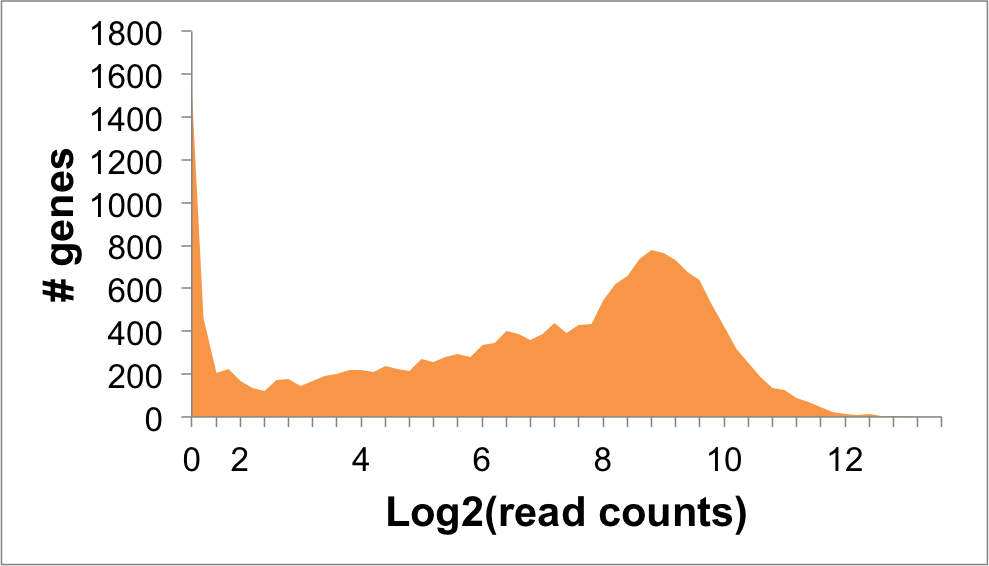
- Expression level (log2 read counts): 5.36
Expression Distribution
BCL2L1 Expression in NALM6 Cells: 5.36