MDM2
Gene Information
- Official Symbol: MDM2
- Official Name: MDM2 proto-oncogene
- Aliases and Previous Symbols: N/A
- Entrez ID: 4193
- UniProt: Q00987
- Interactions: BioGRID
- PubMed articles: Open PubMed
- OMIM: Open OMIM
Function Summary
- Entrez Summary: This gene encodes a nuclear-localized E3 ubiquitin ligase. The encoded protein can promote tumor formation by targeting tumor suppressor proteins, such as p53, for proteasomal degradation. This gene is itself transcriptionally-regulated by p53. Overexpression or amplification of this locus is detected in a variety of different cancers. There is a pseudogene for this gene on chromosome 2. Alternative splicing results in a multitude of transcript variants, many of which may be expressed only in tumor cells. [provided by RefSeq, Jun 2013].
- UniProt Summary: N/A
Pfam Domains GO Terms
Pfam Domains
| SWIB |
| zf-RanBP |
GO Terms
| response to formaldehyde |
| cellular response to vitamin B1 |
| NEDD8 ligase activity |
| transcription factor catabolic process |
| response to vitamin B1 |
| cellular response to actinomycin D |
| traversing start control point of mitotic cell cycle |
| response to actinomycin D |
| response to water-immersion restraint stress |
| receptor serine/threonine kinase binding |
| cellular response to UV-C |
| amyloid fibril formation |
| 5S rRNA binding |
| response to ether |
| peroxisome proliferator activated receptor binding |
| ligase activity |
| cellular response to estrogen stimulus |
| negative regulation of DNA damage response, signal transduction by p53 class mediator |
| response to UV-C |
| SUMO transferase activity |
| positive regulation of vascular associated smooth muscle cell migration |
| response to magnesium ion |
| atrial septum development |
| positive regulation of protein export from nucleus |
| regulation of vascular associated smooth muscle cell migration |
| negative regulation of intrinsic apoptotic signaling pathway by p53 class mediator |
| negative regulation of cell cycle arrest |
| cellular response to vitamin |
| atrioventricular valve morphogenesis |
| atrioventricular valve development |
| response to immobilization stress |
| cellular response to gamma radiation |
| regulation of intrinsic apoptotic signaling pathway by p53 class mediator |
| negative regulation of signal transduction by p53 class mediator |
| blood vessel remodeling |
| ribonucleoprotein complex binding |
| response to isoquinoline alkaloid |
| negative regulation of protein processing |
| negative regulation of protein maturation |
| response to morphine |
| positive regulation of vascular smooth muscle cell proliferation |
| response to iron ion |
| disordered domain specific binding |
| regulation of DNA damage response, signal transduction by p53 class mediator |
| cellular response to alkaloid |
| cardiac atrium development |
| endocardial cushion morphogenesis |
| positive regulation of G1/S transition of mitotic cell cycle |
| positive regulation of smooth muscle cell migration |
| regulation of protein export from nucleus |
| endocardial cushion development |
| protein destabilization |
| positive regulation of cell cycle G1/S phase transition |
| regulation of vascular smooth muscle cell proliferation |
| mesenchyme morphogenesis |
| heart valve morphogenesis |
| response to cocaine |
| DNA damage response, signal transduction by p53 class mediator resulting in cell cycle arrest |
| response to gamma radiation |
| signal transduction involved in mitotic G1 DNA damage checkpoint |
| signal transduction involved in mitotic DNA integrity checkpoint |
| intracellular signal transduction involved in G1 DNA damage checkpoint |
| signal transduction involved in mitotic DNA damage checkpoint |
| signal transduction involved in mitotic cell cycle checkpoint |
| scaffold protein binding |
| regulation of smooth muscle cell migration |
| heart valve development |
| positive regulation of nucleocytoplasmic transport |
| mitotic G1/S transition checkpoint |
| mitotic G1 DNA damage checkpoint |
| G1 DNA damage checkpoint |
| protein autoubiquitination |
| p53 binding |
| protein sumoylation |
| regulation of protein processing |
| cellular response to nutrient |
| regulation of protein maturation |
| endocytic vesicle membrane |
| cellular response to ionizing radiation |
| cellular response to hydrogen peroxide |
| signal transduction involved in DNA integrity checkpoint |
| signal transduction involved in DNA damage checkpoint |
| signal transduction involved in cell cycle checkpoint |
| ventricular septum development |
| cardiac septum morphogenesis |
| response to estrogen |
| positive regulation of mitotic cell cycle phase transition |
| response to anesthetic |
| DNA damage response, signal transduction by p53 class mediator |
| negative regulation of response to DNA damage stimulus |
| positive regulation of cell cycle arrest |
| ubiquitin binding |
| negative regulation of cysteine-type endopeptidase activity involved in apoptotic process |
| positive regulation of proteasomal ubiquitin-dependent protein catabolic process |
| cellular response to UV |
| positive regulation of smooth muscle cell proliferation |
| response to vitamin |
| negative regulation of cysteine-type endopeptidase activity |
| positive regulation of cell cycle phase transition |
| mitotic DNA damage checkpoint |
| negative regulation of intrinsic apoptotic signaling pathway |
| regulation of heart rate |
| positive regulation of ubiquitin-dependent protein catabolic process |
| tissue remodeling |
| negative regulation of G1/S transition of mitotic cell cycle |
| mitotic DNA integrity checkpoint |
| signal transduction in response to DNA damage |
| positive regulation of proteasomal protein catabolic process |
| negative regulation of cell cycle G1/S phase transition |
| regulation of nucleocytoplasmic transport |
| regulation of cell cycle arrest |
| protein N-terminus binding |
| cardiac septum development |
| response to alkaloid |
| cellular response to light stimulus |
| cellular response to antibiotic |
| response to hydrogen peroxide |
| signal transduction by p53 class mediator |
| positive regulation of proteolysis involved in cellular protein catabolic process |
| regulation of proteasomal ubiquitin-dependent protein catabolic process |
| cardiac chamber morphogenesis |
| cardiac ventricle development |
| cellular response to reactive oxygen species |
| DNA damage checkpoint |
| regulation of smooth muscle cell proliferation |
| positive regulation of cellular protein catabolic process |
| response to UV |
| DNA integrity checkpoint |
| response to ionizing radiation |
| regulation of G1/S transition of mitotic cell cycle |
| positive regulation of mitotic cell cycle |
| mitotic cell cycle checkpoint |
| regulation of ubiquitin-dependent protein catabolic process |
| positive regulation of intracellular protein transport |
| negative regulation of neuron projection development |
| regulation of intrinsic apoptotic signaling pathway |
| protein localization to nucleus |
| regulation of cell cycle G1/S phase transition |
| cardiac chamber development |
| cellular response to radiation |
| regulation of signal transduction by p53 class mediator |
| negative regulation of cell projection organization |
| regulation of proteasomal protein catabolic process |
| response to ammonium ion |
| cellular response to hypoxia |
| cell cycle checkpoint |
| response to reactive oxygen species |
| cellular response to decreased oxygen levels |
| positive regulation of intracellular transport |
| negative regulation of mitotic cell cycle phase transition |
| cellular response to toxic substance |
| cellular response to oxygen levels |
| regulation of cysteine-type endopeptidase activity involved in apoptotic process |
| response to nutrient |
| regulation of proteolysis involved in cellular protein catabolic process |
| positive regulation of protein catabolic process |
| regulation of response to DNA damage stimulus |
| mesenchyme development |
| ubiquitin protein ligase activity |
| negative regulation of apoptotic signaling pathway |
| negative regulation of neuron differentiation |
| negative regulation of cell cycle phase transition |
| regulation of intracellular protein transport |
| cellular response to nutrient levels |
| cellular response to oxidative stress |
| regulation of cysteine-type endopeptidase activity |
| regulation of heart contraction |
| negative regulation of endopeptidase activity |
| protein domain specific binding |
| ubiquitin-protein transferase activity |
| regulation of cellular protein catabolic process |
| heart morphogenesis |
| negative regulation of peptidase activity |
| cellular response to extracellular stimulus |
| cellular response to peptide hormone stimulus |
| synapse |
| protein deubiquitination |
| nuclear body |
| positive regulation of cell cycle process |
| regulation of protein stability |
| regulation of blood circulation |
| negative regulation of neurogenesis |
| ubiquitin protein ligase binding |
| protein modification by small protein removal |
| response to xenobiotic stimulus |
| response to antibiotic |
| negative regulation of mitotic cell cycle |
| response to light stimulus |
| negative regulation of nervous system development |
| peptidyl-lysine modification |
| cellular response to abiotic stimulus |
| cellular response to environmental stimulus |
| proteasome-mediated ubiquitin-dependent protein catabolic process |
| positive regulation of cellular protein localization |
| negative regulation of cell cycle process |
| cellular response to peptide |
| response to steroid hormone |
| negative regulation of cell development |
| cellular response to external stimulus |
| response to hypoxia |
| enzyme binding |
| proteasomal protein catabolic process |
| regulation of intracellular transport |
| negative regulation of proteolysis |
| response to decreased oxygen levels |
| positive regulation of proteolysis |
| positive regulation of cellular catabolic process |
| response to metal ion |
| positive regulation of cell cycle |
| response to oxygen levels |
| regulation of protein catabolic process |
| response to oxidative stress |
| response to peptide hormone |
| regulation of apoptotic signaling pathway |
| cellular response to drug |
| regulation of mitotic cell cycle phase transition |
| regulation of endopeptidase activity |
| positive regulation of protein transport |
| positive regulation of catabolic process |
| response to radiation |
| regulation of peptidase activity |
| regulation of cell cycle phase transition |
| negative regulation of hydrolase activity |
| supramolecular fiber organization |
| positive regulation of establishment of protein localization |
| response to peptide |
| blood vessel development |
| regulation of neuron projection development |
| response to nutrient levels |
| cellular response to growth factor stimulus |
| positive regulation of cell migration |
| negative regulation of intracellular signal transduction |
| response to toxic substance |
| vasculature development |
| cardiovascular system development |
| positive regulation of cell motility |
| heart development |
| ubiquitin-dependent protein catabolic process |
| response to extracellular stimulus |
| response to growth factor |
| modification-dependent protein catabolic process |
| response to inorganic substance |
| positive regulation of cellular component movement |
| regulation of cellular protein localization |
| cellular response to organic cyclic compound |
| modification-dependent macromolecule catabolic process |
| positive regulation of locomotion |
| tissue morphogenesis |
| negative regulation of cell cycle |
| regulation of system process |
| proteolysis involved in cellular protein catabolic process |
| protein-containing complex |
| mitotic cell cycle process |
| cellular response to organonitrogen compound |
| cellular response to hormone stimulus |
| cellular protein catabolic process |
| regulation of mitotic cell cycle |
| regulation of neuron differentiation |
| cellular response to nitrogen compound |
| mitotic cell cycle |
| protein catabolic process |
| protein ubiquitination |
| regulation of plasma membrane bounded cell projection organization |
| viral process |
| negative regulation of cellular component organization |
| regulation of protein transport |
| regulation of cell projection organization |
| negative regulation of cell differentiation |
| regulation of proteolysis |
| regulation of cellular response to stress |
| protein localization to organelle |
| regulation of peptide transport |
| regulation of establishment of protein localization |
| regulation of cell cycle process |
| protein modification by small protein conjugation |
| cellular response to DNA damage stimulus |
| symbiotic process |
| negative regulation of catalytic activity |
| regulation of neurogenesis |
| interspecies interaction between organisms |
| regulation of cellular catabolic process |
| zinc ion binding |
| regulation of cell migration |
| response to lipid |
| nucleolus |
| negative regulation of transcription by RNA polymerase II |
| circulatory system development |
| peptidyl-amino acid modification |
| negative regulation of apoptotic process |
| negative regulation of programmed cell death |
| cellular macromolecule catabolic process |
| response to hormone |
| regulation of cell motility |
| positive regulation of cell population proliferation |
| regulation of cellular localization |
| response to organic cyclic compound |
| regulation of nervous system development |
| regulation of cell development |
| negative regulation of developmental process |
| animal organ morphogenesis |
| regulation of locomotion |
| protein modification by small protein conjugation or removal |
| positive regulation of transport |
| regulation of catabolic process |
| negative regulation of cell death |
| regulation of cellular component movement |
| cell cycle process |
| response to organonitrogen compound |
| response to drug |
| regulation of protein localization |
| negative regulation of cellular protein metabolic process |
| macromolecule catabolic process |
| cellular response to oxygen-containing compound |
| organonitrogen compound catabolic process |
| identical protein binding |
| response to nitrogen compound |
| negative regulation of protein metabolic process |
| negative regulation of molecular function |
| response to abiotic stimulus |
| regulation of cell cycle |
| negative regulation of transcription, DNA-templated |
| negative regulation of multicellular organismal process |
| cellular response to endogenous stimulus |
| negative regulation of nucleic acid-templated transcription |
| negative regulation of RNA biosynthetic process |
| negative regulation of signal transduction |
| proteolysis |
| regulation of hydrolase activity |
| negative regulation of RNA metabolic process |
| cell cycle |
| negative regulation of cell communication |
| negative regulation of signaling |
| negative regulation of cellular macromolecule biosynthetic process |
| negative regulation of nucleobase-containing compound metabolic process |
| negative regulation of macromolecule biosynthetic process |
| response to endogenous stimulus |
| regulation of response to stress |
| negative regulation of cellular biosynthetic process |
| generation of neurons |
| regulation of apoptotic process |
| negative regulation of biosynthetic process |
| response to oxygen-containing compound |
| protein-containing complex assembly |
| regulation of programmed cell death |
| cellular protein localization |
| cellular macromolecule localization |
| positive regulation of cellular protein metabolic process |
| establishment of protein localization |
| regulation of cell population proliferation |
| negative regulation of response to stimulus |
| neurogenesis |
| regulation of cell death |
| intracellular signal transduction |
| cellular response to stress |
| positive regulation of protein metabolic process |
| negative regulation of gene expression |
| tissue development |
| organic substance catabolic process |
| cellular catabolic process |
| regulation of cell differentiation |
| regulation of intracellular signal transduction |
| protein-containing complex subunit organization |
| regulation of transport |
| positive regulation of gene expression |
CRISPR Data
Compound Hit Most Correlated Genes in Chemogenomics Tissues where Essential in the Avana Dataset (DepMap 20Q1)
Compound Hit
Most Correlated Genes in Chemogenomics
| Gene | Correlation |
|---|---|
| ZFAND5 | 0.543 |
| C14orf93 | 0.529 |
| TBC1D3C | 0.523 |
| RPL35 | 0.515 |
| POLR2J3 | 0.509 |
| SSH2 | 0.508 |
| TCEB3CL2 | 0.504 |
| TBC1D3G | 0.488 |
| POLE | 0.488 |
| SMG7 | 0.486 |
| VASN | 0.483 |
| COPE | 0.481 |
| TBC1D3L | 0.48 |
| TBC1D3K | 0.48 |
| TBC1D3E | 0.479 |
| TBC1D3I | 0.478 |
| SUPT6H | 0.476 |
| MT1E | 0.47 |
| PRIM1 | 0.469 |
| PSMD1 | 0.467 |
| RAD21 | 0.464 |
| TBC1D3H | 0.464 |
| FBXW9 | 0.462 |
| CDCA3 | 0.461 |
| RPS3A | 0.457 |
| CBWD6 | 0.456 |
| TCEB3C | 0.456 |
| C1QTNF9B | 0.456 |
| CBWD5 | 0.455 |
| PDE4DIP | 0.452 |
| CBWD3 | 0.449 |
| PSMB4 | 0.448 |
| RPS2 | 0.445 |
| PSMC1 | 0.445 |
| ORC1 | 0.442 |
| TBC1D3 | 0.442 |
| TCEB3CL | 0.442 |
| GOLGA8O | 0.44 |
| CCNA2 | 0.435 |
| S1PR4 | 0.435 |
| RAD51 | 0.432 |
| ATP13A1 | 0.431 |
| TBC1D3F | 0.429 |
| PSMB1 | 0.426 |
| SCAF1 | 0.426 |
| NUPL1 | 0.426 |
| SLC4A1 | 0.426 |
| CHD4 | 0.425 |
| NUP155 | 0.424 |
| SUPT5H | 0.424 |
| NDC80 | 0.423 |
| NUP188 | 0.423 |
| UQCRH | 0.423 |
| RPS5 | 0.423 |
| GOLGA6L3 | 0.423 |
| LAD1 | 0.422 |
| RPS12 | 0.419 |
| RNF4 | 0.419 |
| CWC22 | 0.418 |
| PSMB2 | 0.418 |
| TFIP11 | 0.417 |
| RPL38 | 0.417 |
| BYSL | 0.417 |
| HIST2H3C | 0.416 |
| HIST2H3A | 0.416 |
| PSMD6 | 0.415 |
| KRT78 | 0.413 |
| NOL12 | 0.413 |
| CDC73 | 0.413 |
| DDX56 | 0.413 |
| PSMD11 | 0.413 |
| PSMD3 | 0.413 |
| TRAIP | 0.412 |
| MYO1H | 0.41 |
| NUP205 | 0.41 |
| AKIRIN2 | 0.409 |
| EXOSC9 | 0.409 |
| CKAP5 | 0.408 |
| SLC38A7 | 0.408 |
| SMG1 | 0.408 |
| KCTD17 | 0.408 |
| ANKLE2 | 0.407 |
| CHMP2A | 0.407 |
| NPIPB8 | 0.407 |
| CGB2 | 0.405 |
| BCL2L1 | 0.405 |
| RILPL2 | 0.405 |
| RPS3 | 0.405 |
| RBBP5 | 0.405 |
| RANBP2 | 0.404 |
| TICRR | 0.404 |
| NOP16 | 0.403 |
| PSMD7 | 0.403 |
| WDR43 | 0.403 |
| RNF113A | 0.402 |
| PSMC6 | 0.402 |
| RPS6 | 0.401 |
Tissues where Essential in the Avana Dataset (DepMap 20Q1)
Global Fraction of Cell Lines Where Essential: 94/739
| Tissue | Fraction Of Cell Lines Where Essential |
|---|---|
| 1290807.0 | 0/1 |
| 909776.0 | 1/1 |
| bile duct | 2/28 |
| blood | 2/28 |
| bone | 1/26 |
| breast | 1/33 |
| central nervous system | 5/56 |
| cervix | 0/4 |
| colorectal | 0/17 |
| esophagus | 0/13 |
| fibroblast | 0/1 |
| gastric | 2/16 |
| kidney | 13/21 |
| liver | 2/20 |
| lung | 6/75 |
| lymphocyte | 1/16 |
| ovary | 5/26 |
| pancreas | 0/24 |
| peripheral nervous system | 0/16 |
| plasma cell | 2/15 |
| prostate | 0/1 |
| skin | 13/24 |
| soft tissue | 2/9 |
| thyroid | 0/2 |
| upper aerodigestive | 0/22 |
| urinary tract | 3/29 |
| uterus | 0/5 |
Essentiality in NALM6
- Essentiality Rank: 2161
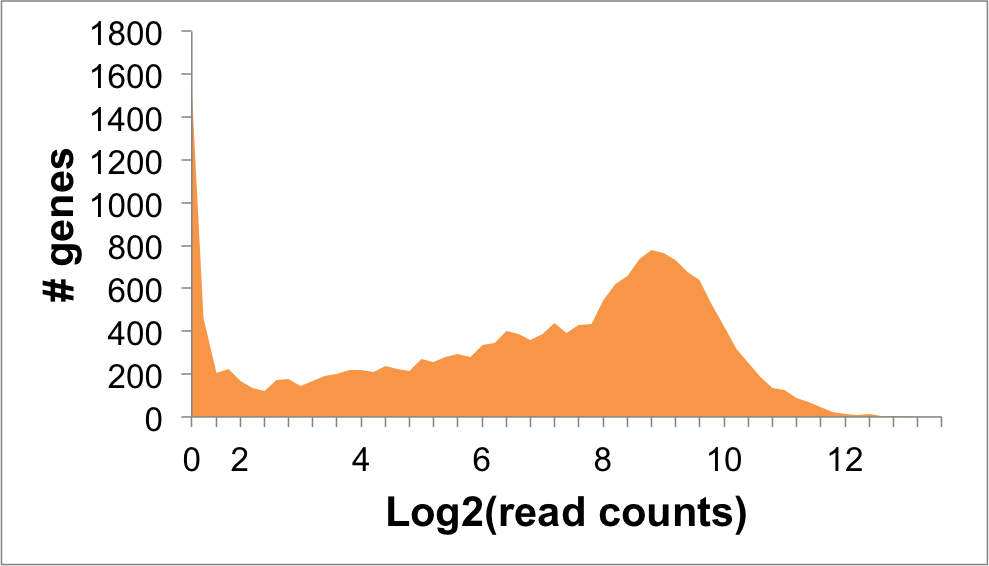
- Expression level (log2 read counts): 8.46
Expression Distribution
MDM2 Expression in NALM6 Cells: 8.46